 English
 Español
NEWS
NEWS
NEWS
NEWS
NEWS
NEWS
NEWS
NEWS
NEWS
NEWS
NEWS
NEWS
NEWS
NEWS
NEWS
NEWS

Shen Yiru — International Sales Manager
Home / Author / Shen Yiru — International Sales Manager / U5QTH-100-A/W Fast Temperature and Humidity Cycling Chamber: Precision Testing for Demanding Laboratory Applications
U5QTH-100-A/W Fast Temperature and Humidity Cycling Chamber: Precision Testing for Demanding Laboratory Applications
Content
- 1 Purpose of a Fast Temperature and Humidity Cycling Chamber
- 2 Core Product Configuration
- 3 Advanced Structural Design
- 4 Balanced Temperature and Humidity Control
- 5 Selectable Rapid Temperature Change Rates
- 6 High-Temperature Air Circulation System
- 7 Refrigeration Protection and Stainless Steel Water Tray
- 8 Electrical Quality and Operational Safety
- 9 Manufacturing Strengths and Engineering Approach
- 10 Advantages Compared with Basic Environmental Chambers
- 11 Laboratory Workflow and Testing Efficiency
- 12 Recommended Installation Considerations
- 13 Operating Practices for Reliable Results
- 14 Customization and Project Support
- 15 Why the U5QTH-100-A/W Is a Strong Choice
- 16 Frequently Asked Questions
- 16.1 What is the capacity of the U5QTH-100-A/W chamber?
- 16.2 What temperature ranges are available?
- 16.3 What temperature change rates can be selected?
- 16.4 Can the chamber perform humidity testing during temperature cycling?
- 16.5 Why is water vapor partial pressure control useful?
- 16.6 What type of interior material is used?
- 16.7 Why is the circulation motor important?
- 16.8 How does the stainless steel water tray protect the refrigeration system?
- 16.9 Does the chamber include safety protection?
- 16.10 Who can benefit from this chamber?
- 16.11 Can the chamber be customized?
- 16.12 What should be confirmed before purchase?
- 17 Conclusion
- 18 References
- 19 Product: U5QTH-100-A/W Fast Temperature & Humidity Cycling Chamber
Reliable environmental testing is essential when products must perform under changing temperature and humidity conditions. Electronics, automotive components, aerospace assemblies, batteries, sensors, communication equipment, medical devices, packaging materials, and industrial parts may all experience rapid environmental transitions during transportation, storage, installation, or operation. A laboratory test chamber must therefore do more than create hot and cold conditions. It must control temperature and humidity accurately, change conditions quickly, protect test specimens from unnecessary stress, and provide a safe and repeatable working environment.
The U5QTH-100-A/W Fast Temperature and Humidity Cycling Chamber is designed for laboratories and production quality departments that require controlled rapid temperature and humidity testing in a compact 100-liter workspace. Its structural design, temperature and humidity control system, imported core electrical components, high-temperature circulation motor, refrigeration protection arrangement, and selectable temperature change rates combine to support demanding test programs.
Unlike a basic heating or cooling cabinet, this type of chamber is intended for dynamic testing. It can expose a specimen to programmed changes between low and high temperatures while maintaining appropriate humidity control where required. The result is a practical platform for reliability verification, accelerated stress testing, environmental conditioning, and compliance-oriented laboratory work.
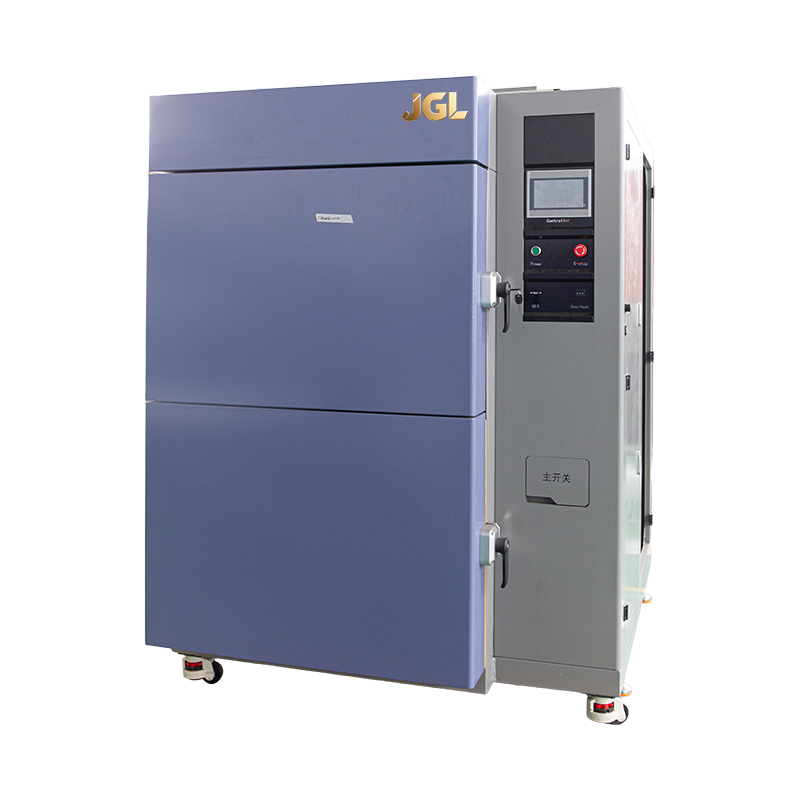
U5QTH-100-A/W Fast Temperature & Humidity Cycling Chamber
Purpose of a Fast Temperature and Humidity Cycling Chamber
Many product failures do not occur because a component remains at one temperature for a short period. Instead, failures may develop after repeated transitions between hot and cold conditions, especially when moisture is present. Differences in thermal expansion between materials can create mechanical stress. Condensation can affect electrical insulation and circuit performance. Seals, coatings, adhesives, solder joints, connectors, and composite structures may all respond differently to environmental cycling.
A fast temperature and humidity cycling chamber helps engineers reproduce these conditions in a controlled space. A typical test program may include a low-temperature dwell, a transition to a high-temperature condition, a high-temperature dwell, a return to low temperature, and repeated cycling. Humidity can be introduced or controlled during selected stages to simulate damp heat, moisture exposure, or condensation-related conditions.
The purpose is not simply to make the chamber change temperature as quickly as possible. The chamber must also manage airflow, temperature uniformity, moisture balance, refrigeration load, condensation, and component protection. A rapid test without stable control can produce inconsistent results. The U5QTH-100-A/W addresses this challenge through an integrated structure and balanced temperature and humidity control design.
Typical Applications
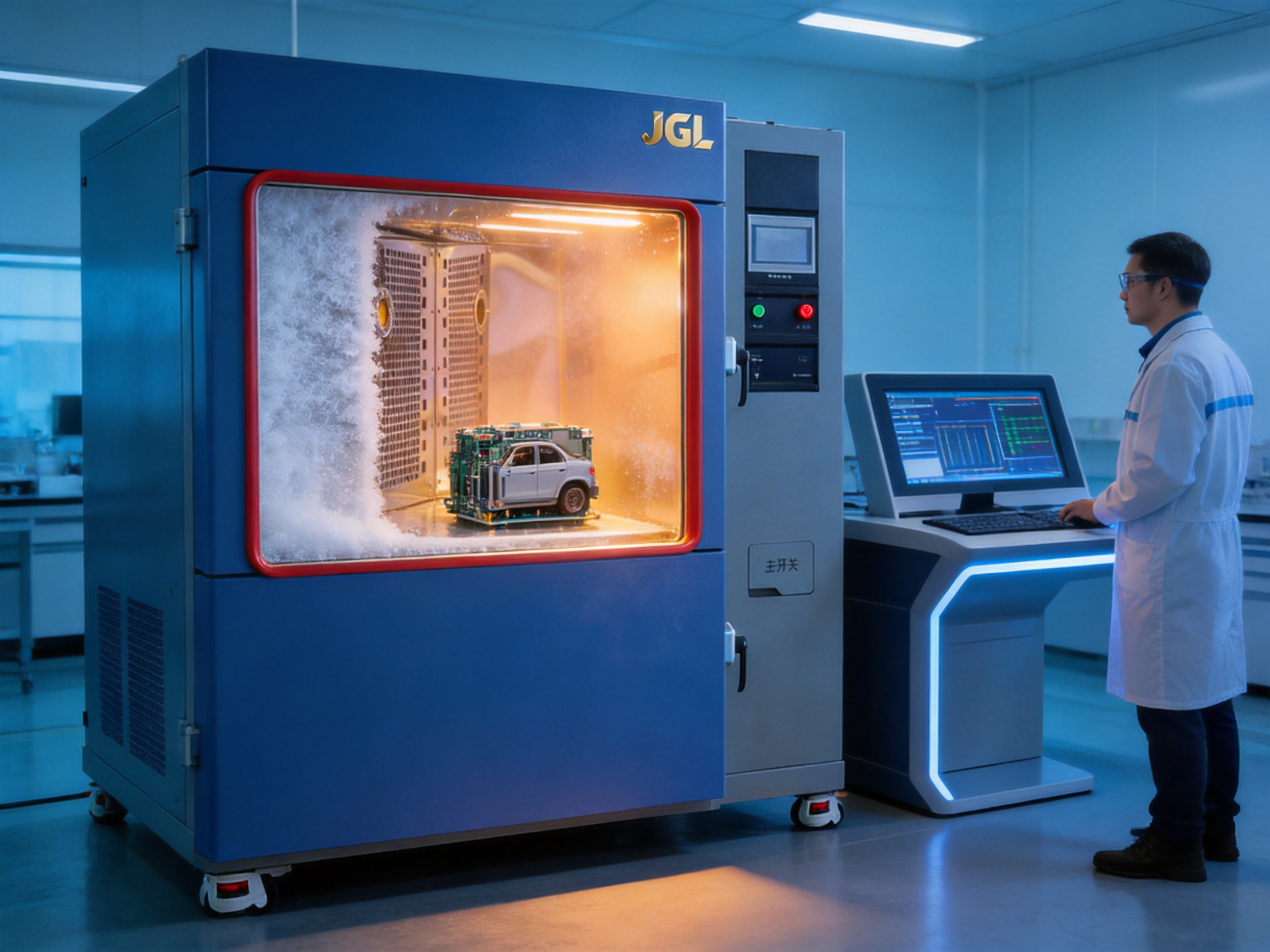
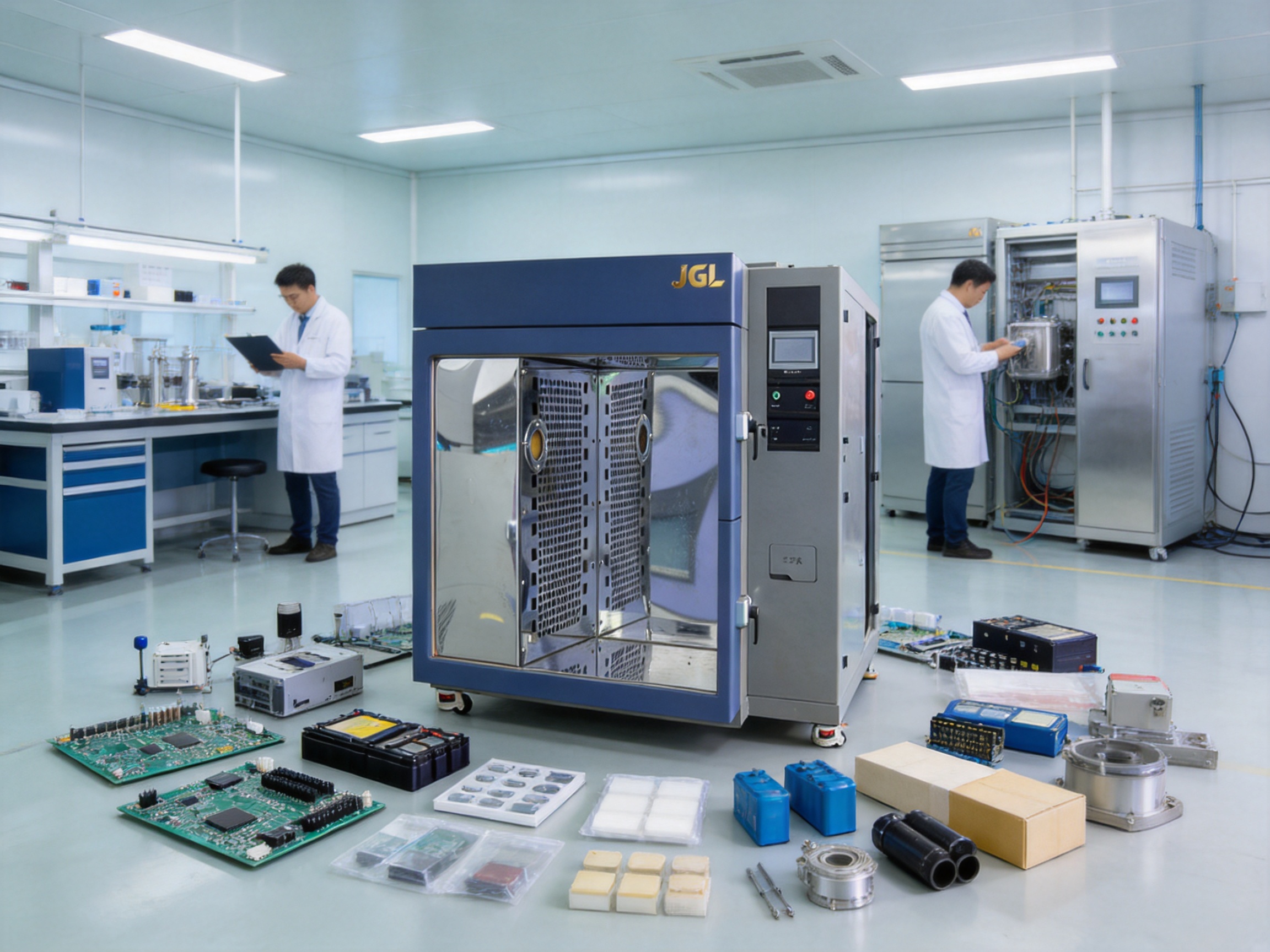
The 100-liter capacity is suitable for small and medium-sized test specimens, assemblies, laboratory samples, and batches of components. Typical application areas include electronic test instruments, printed circuit boards, sensors, control modules, automotive electronics, communication equipment, battery-related components, plastics, rubber products, coatings, packaging, and precision mechanical parts.
Research and development departments can use the chamber to compare materials, evaluate prototype designs, and identify weak points before mass production. Quality control departments can apply repeatable environmental cycles to incoming materials or finished products. Manufacturers can also use it for process verification, reliability screening, and failure analysis.
Because the chamber supports selectable average or linear temperature change rates, users can match the test profile to the relevant product specification or internal validation procedure. The available rates include 5°C/min, 10°C/min, 15°C/min, and 20°C/min, subject to the selected configuration and operating conditions.
Core Product Configuration
The U5QTH-100-A/W has a nominal chamber capacity of 100 liters. The working space is listed at 500 × 400 × 500 millimeters in width, depth, and height. This size offers a practical balance between test volume and equipment footprint. It is large enough for many laboratory specimens while remaining appropriate for facilities where floor space is limited.
The product is available with temperature-range configurations listed as -40°C to +150°C and -70°C to +180°C. These ranges indicate that the chamber can be configured for different levels of low-temperature and high-temperature testing. Users should confirm the selected model, heating and refrigeration configuration, humidity operating limits, and temperature transition performance before ordering.
The listed overall dimensions are approximately 780 × 1600 × 1710 millimeters, while the equipment weight is listed as approximately 650 kilograms or 820 kilograms depending on the selected temperature configuration. The heavier configuration is consistent with a more demanding refrigeration and high-temperature system. Final dimensional, weight, power, and installation requirements should be confirmed in the technical quotation for the chosen version.
| Specification | Available or Listed Value | Practical Significance |
|---|---|---|
| Product model | U5QTH-100-A/W | Fast temperature and humidity cycling chamber |
| Nominal capacity | 100 L | Suitable for laboratory samples, assemblies, and component batches |
| Temperature range configuration | -40°C to +150°C | Suitable for broad environmental cycling and reliability tests |
| Alternative temperature range configuration | -70°C to +180°C | Suitable for more severe low- and high-temperature testing |
| Working chamber dimensions | 500 × 400 × 500 mm | Compact interior for controlled specimen testing |
| Overall dimensions | 780 × 1600 × 1710 mm | Important for laboratory layout and delivery planning |
| Approximate equipment weight | 650 kg or 820 kg, depending on configuration | Requires suitable flooring and handling arrangements |
| Temperature change rate options | 5°C/min, 10°C/min, 15°C/min, and 20°C/min | Allows test profiles to be matched to different requirements |
| Interior construction | Film-coated mirror stainless steel plates | Supports cleanability, corrosion resistance, and long-term durability |
| Circulation motor | Panasonic motor with high-temperature-resistant bearings | Supports air circulation under elevated-temperature conditions |
Advanced Structural Design
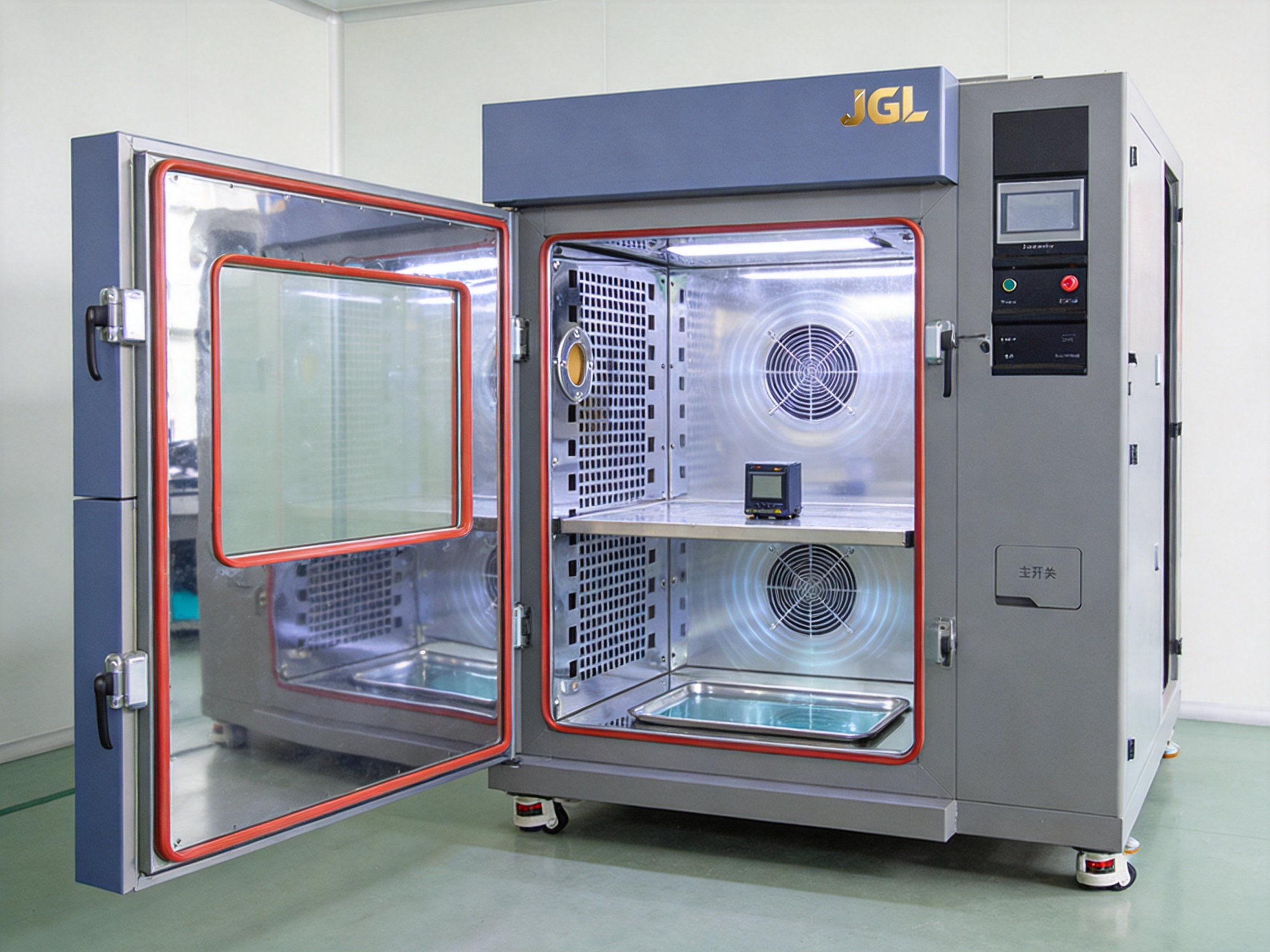
A test chamber’s mechanical structure influences usability, durability, and test repeatability. The U5QTH-100-A/W uses a rational structural arrangement intended to support frequent laboratory operation. The internal chamber is manufactured from film-coated mirror stainless steel plates. This type of interior surface is well suited to environmental testing because it is smooth, easy to clean, and resistant to the effects of repeated exposure to heat and moisture.
The reflective stainless steel interior also contributes to a professional laboratory environment. A smooth surface reduces locations where dust, residue, or moisture can accumulate. This is particularly valuable when a chamber is used for different specimens or when contamination control is important. Operators can inspect the chamber more easily and maintain a consistent internal condition between test programs.
The door incorporates damping hinges that allow the opening angle to be adjusted freely. This feature may appear simple, but it has practical importance. A controlled door movement can reduce sudden impact on the frame, improve operator comfort, and support safer loading and unloading. It also allows the door to remain in a convenient position during specimen placement, cleaning, or inspection.
A well-designed door and enclosure must preserve sealing performance while the chamber experiences repeated thermal expansion and contraction. The structural design therefore needs to accommodate mechanical stress, temperature differences, and frequent use. The chamber’s construction is intended to provide a stable enclosure for the circulation and control systems rather than functioning as a basic insulated cabinet.
Balanced Temperature and Humidity Control
The heart of a temperature and humidity chamber is its control system. The U5QTH-100-A/W uses an advanced balanced temperature and humidity control system that combines dynamic proportional-integral-derivative control with water vapor partial pressure control. This approach is intended to improve the precision and stability of the chamber environment during changing test conditions.
Temperature and humidity are closely connected. When the air temperature changes, the amount of water vapor that air can hold also changes. If the control system manages only temperature while treating humidity as a separate and static variable, the actual chamber condition may drift during rapid transitions. A balanced control strategy considers the relationship between thermal energy and moisture content, allowing the system to respond more intelligently to changing conditions.
Dynamic PID Control
PID control is widely used in industrial and laboratory equipment because it can continuously compare the actual chamber condition with the programmed set point. The proportional component responds to the size of the error. The integral component helps correct accumulated deviation. The derivative component anticipates the direction and speed of change. Dynamic adjustment of these control parameters can help the chamber respond to different operating stages, including heating, cooling, humidification, dehumidification, and stabilization.
Rapid cycling places greater demands on control logic than steady-state testing. During a fast transition, the system must avoid unnecessary overshoot while still reaching the target condition efficiently. During a dwell period, it must reduce fluctuation and maintain uniformity. A dynamic PID strategy supports this balance by adjusting control action according to the changing thermal and moisture load.
Water Vapor Partial Pressure Control
Water vapor partial pressure control provides an additional method for managing humidity. Instead of relying only on a simple relative humidity target, the system can regulate the partial pressure associated with water vapor in the chamber atmosphere. This is important because relative humidity varies with temperature even when the actual quantity of water vapor remains similar.
For example, air that appears stable at one temperature may show a significantly different relative humidity after heating or cooling. Controlling water vapor partial pressure helps the chamber maintain a more meaningful moisture condition during transitions. This can improve the repeatability of damp heat and temperature-humidity cycling programs.
In practical operation, the controller coordinates heating, refrigeration, humidification, dehumidification, and air circulation. The objective is to establish the programmed condition while avoiding unnecessary oscillation. For laboratories that compare products or investigate failure mechanisms, stable environmental control is essential because it makes differences between test specimens easier to interpret.
Selectable Rapid Temperature Change Rates
One of the defining features of the U5QTH-100-A/W is its selection of rapid temperature change rates. Users can choose average or linear rates of 5°C/min, 10°C/min, 15°C/min, or 20°C/min, depending on the configuration and test requirements. This flexibility allows one chamber platform to support different test intensities.
A 5°C/min rate may be appropriate for general reliability testing, material evaluation, and situations where a controlled transition is preferred. Higher rates can be used when the objective is to reproduce severe thermal shock or to accelerate the exposure of weaknesses related to thermal expansion mismatch. The correct rate should always be selected based on the specimen design, applicable test method, chamber load, and required safety margin.
It is important to distinguish between a nominal temperature change rate and the actual rate achieved under every operating condition. Chamber performance can be affected by specimen mass, specimen heat capacity, starting temperature, humidity load, power supply, refrigeration conditions, and the distance between the programmed set points. A responsible test plan should define the ramp requirement clearly and verify actual performance using calibrated measurement equipment.
Advantages of Multiple Rate Selection
Multiple rate selection improves laboratory flexibility. A facility may need to perform moderate cycling on one product and aggressive transitions on another. Without selectable rates, it may need separate chambers or compromise the test procedure. The U5QTH-100-A/W can support a wider range of programs within one 100-liter system.
Rate selection also supports staged product development. Early prototypes may be exposed to moderate transitions to identify design issues without excessive damage. Later validation stages may use faster rates to confirm robustness. This can help engineers build a more informative reliability profile over the product life cycle.
For production quality teams, selectable rates can help align internal testing with customer specifications or industry requirements. For research laboratories, they allow the relationship between transition speed and failure mechanism to be investigated. This makes the chamber useful not only as a pass-or-fail tool, but also as an instrument for engineering analysis.
High-Temperature Air Circulation System
Uniform air circulation is necessary for reliable environmental testing. If air movement is weak or unstable, different areas of the chamber may experience different temperatures and humidity levels. A specimen may then receive a condition that differs from the value shown by the sensor. The U5QTH-100-A/W uses a Panasonic circulation motor with built-in high-temperature-resistant bearings rated up to 200°C.
The use of a motor designed for elevated-temperature service provides an important operating advantage. During high-temperature testing, the motor and bearing assembly are exposed to thermal stress. A component that is not designed for this environment may experience premature wear, increased friction, noise, or reduced circulation performance. High-temperature-resistant bearings help the circulation system remain dependable when the chamber operates near its upper range.
Stable circulation supports temperature uniformity and humidity distribution. It also helps transfer heat between the chamber air and the test specimen. During cooling, circulation assists the movement of conditioned air around the load. During heating, it reduces stagnant hot zones and promotes a more consistent chamber atmosphere.
The circulation system must be balanced with the chamber’s internal geometry, heater arrangement, refrigeration evaporator, humidity system, and specimen placement. The use of a dedicated high-temperature motor is therefore one part of a broader design approach. Operators should still follow loading instructions, avoid blocking air outlets, and preserve adequate clearance around specimens.
Refrigeration Protection and Stainless Steel Water Tray
Refrigeration systems in environmental chambers must manage low temperatures, moisture, frost, and condensate. When humid air is cooled, water may condense on cold surfaces. At sufficiently low temperatures, that moisture can freeze. Frost accumulation can reduce heat transfer efficiency, restrict airflow, and place additional stress on the refrigeration system.
The U5QTH-100-A/W uses a full-size stainless steel water tray as part of its refrigeration protection arrangement. The tray is designed to help prevent compressor frost and reduce the risk of condensate water causing corrosion on the casing. Stainless steel is appropriate for this application because it offers resistance to moisture and repeated temperature changes.
Condensation management is particularly important in a chamber that combines humidity control with low-temperature operation. A poorly managed condensate path can lead to water accumulation, corrosion, unpleasant maintenance conditions, or inconsistent testing. A dedicated tray creates a more controlled path for collected water and helps protect critical equipment surfaces.
The water tray should be inspected and maintained according to the operating manual. Drainage, cleaning, and frost removal procedures should be part of the laboratory’s preventive maintenance program. Proper maintenance ensures that the protective arrangement continues to perform effectively during long-term use.
Electrical Quality and Operational Safety
The chamber uses core electrical components from top-tier imported brands. High-quality electrical components can support reliable switching, sensing, control, and protection. In an environmental chamber, electrical reliability is important because the equipment may operate continuously while coordinating heaters, compressors, fans, humidification devices, sensors, alarms, and safety circuits.
Component selection should be considered together with wiring quality, cabinet layout, grounding, insulation, protective devices, and inspection procedures. A reliable component can only perform properly when it is installed in a well-engineered electrical system. The product’s design emphasis on imported core components reflects an effort to build dependable control and power-management functions into the chamber.
Leakage Protection
The U5QTH-100-A/W includes a dedicated leakage protection design to improve operational safety. Leakage protection is important for equipment that combines electrical systems with water, steam, condensation, and metal enclosures. If insulation deterioration or an abnormal electrical path occurs, protective devices can help reduce the risk of electric shock, equipment damage, or unsafe operation.
Safety protection does not replace proper installation. The chamber should be connected to a suitable power supply with appropriate grounding and protection. Installation should be performed by qualified personnel, and the electrical requirements should be confirmed before shipment. Operators should also inspect cables, plugs, grounding connections, door seals, drainage components, and visible wiring during routine maintenance.
Safety functions should be tested periodically according to the operating instructions and the facility’s safety management system. A laboratory that uses high-temperature, low-temperature, and humidity equipment should establish clear procedures for emergency shutdown, specimen removal, water management, and access control.
Manufacturing Strengths and Engineering Approach
The product is supplied by Jiangsu Baisheng Industrial Co., Ltd., a technology-driven enterprise founded in 2010 and focused on laboratory equipment and safety testing instruments. The company combines product research and development with manufacturing supply and international trade experience. This combination is valuable for customers seeking more than a standard catalog product because environmental chambers often require configuration, application review, installation planning, and after-sales technical communication.
The company’s development history began with a research and development studio specializing in electronic testing. This background is relevant to the U5QTH-100-A/W because environmental chambers are frequently used alongside electronic test instruments and reliability analysis systems. Experience in electronic testing can help a supplier understand the practical relationship between environmental exposure, electrical performance, measurement accuracy, and product safety.
In 2016, the organization developed its first independently developed production line and launched laboratory equipment with independent intellectual property rights. This progression from technical development to production indicates a manufacturing approach based on engineering capability rather than simple resale. It also supports the ability to adapt product structures, control systems, and configurations to different applications.
The company later adopted a “technology plus trade” development strategy and increased research and development investment. For international customers, this combination can simplify communication. A supplier with technical personnel and export experience may be better positioned to clarify specifications, prepare documentation, discuss installation conditions, and coordinate customized requirements.
Design-to-Production Integration
The U5QTH-100-A/W illustrates the importance of integrating mechanical, electrical, thermal, and control engineering. The chamber structure must support insulation and sealing. The circulation system must work with the internal airflow path. The refrigeration system must be protected from frost and condensate. The humidity system must respond to changing temperature. The electrical system must control all functions while maintaining safety.
When these elements are designed separately, performance problems may appear at the interfaces. For example, a powerful refrigeration unit is not sufficient if condensate is poorly managed. A fast heater is not sufficient if air circulation creates temperature gradients. A precise sensor is not sufficient if the control response is poorly tuned. The product’s combined features suggest an integrated design philosophy in which each subsystem supports the others.
Quality Management and Product Refinement
The company further improved its quality management system in 2022 and reported that its products passed rigorous technical specification certifications. Customers should request the specific certification documents applicable to the purchased model and destination market. Even when a chamber is technically advanced, project documentation should confirm the relevant electrical, safety, environmental, and performance requirements.
Continuous product refinement is especially important for environmental test chambers. Experience gained from field operation can lead to improvements in insulation, sealing, control algorithms, drainage, component selection, maintenance access, and user interface design. A supplier that maintains an active research and development function is better positioned to make such improvements over time.
Advantages Compared with Basic Environmental Chambers
The U5QTH-100-A/W offers several advantages over a basic temperature cabinet or entry-level humidity chamber. The first is its focus on rapid temperature change. Basic units may provide heating and cooling but may not be designed for repeated high-speed transitions. The U5QTH-100-A/W is specifically configured to offer several temperature rate options, including rates up to 20°C/min under suitable conditions.
The second advantage is its combined temperature and humidity control approach. A simple chamber may maintain temperature and relative humidity at stable conditions but struggle during rapid changes. Dynamic PID regulation and water vapor partial pressure control are intended to improve the relationship between temperature movement and moisture management.
The third advantage is component suitability. The high-temperature Panasonic circulation motor and 200°C-rated bearings are selected for demanding thermal conditions. Imported core electrical components support a quality-oriented control and protection system. These choices can help reduce the risk of performance degradation when the chamber is used frequently.
The fourth advantage is refrigeration protection. The full-size stainless steel water tray addresses frost and condensate management, two issues that can affect long-term reliability. This feature reflects attention to maintenance and equipment protection rather than focusing only on headline temperature range.
The fifth advantage is practical usability. Damping hinges with adjustable door opening angles make routine loading and unloading more convenient. The film-coated mirror stainless steel interior is easier to inspect and clean. The compact 100-liter format allows many laboratories to conduct demanding tests without investing in a very large walk-in system.
| Evaluation Area | Basic Chamber Limitation | U5QTH-100-A/W Design Advantage |
|---|---|---|
| Temperature transitions | May support only slow or fixed-rate changes | Offers selectable 5°C/min, 10°C/min, 15°C/min, and 20°C/min options |
| Humidity response | May treat humidity as a separate steady-state function | Uses balanced temperature and humidity control with water vapor partial pressure management |
| High-temperature circulation | Standard motors may experience greater stress at elevated temperatures | Uses a high-temperature-resistant circulation motor and bearings rated up to 200°C |
| Condensate handling | Limited water management may increase maintenance needs | Includes a full-size stainless steel water tray for refrigeration protection |
| Interior durability | Interior surfaces may be difficult to clean or inspect | Uses film-coated mirror stainless steel plates |
| Operator access | Door movement may be abrupt or inconvenient | Damping hinges support controlled and adjustable opening |
| Safety design | May provide limited leakage protection | Includes a dedicated leakage protection design |
Laboratory Workflow and Testing Efficiency
Equipment efficiency is not determined only by power consumption. It also includes how quickly a laboratory can prepare a test, load specimens, establish conditions, complete a cycle, inspect results, and repeat the procedure. A chamber that provides flexible temperature rates and stable environmental control can help reduce unnecessary waiting time and improve the productivity of engineering teams.
The 100-liter working volume is useful for organized sample testing. It can accommodate multiple small components or a single larger assembly while avoiding the excess internal volume of a large chamber. A properly sized test space can also reduce the amount of air and material that must be conditioned during each program, although actual energy performance depends on the operating profile, ambient conditions, load, and selected configuration.
Fast transitions may shorten the time required to complete a defined number of cycles. This can support quicker design feedback, earlier detection of defects, and more efficient validation schedules. However, test speed should not be pursued at the expense of measurement quality. The selected rate must remain appropriate for the specimen and the intended test method.
The stainless steel interior and adjustable damping door also support routine operation. Operators can clean the working space between tests, position specimens more conveniently, and inspect the chamber without unnecessary obstruction. These small workflow improvements become significant in laboratories that run environmental tests every day.
Recommended Installation Considerations
Before installation, the user should review the chamber’s final technical documentation, electrical requirements, ventilation needs, drainage arrangement, ambient temperature limits, floor loading, and access route. The listed equipment weight can reach approximately 820 kilograms for one configuration, so the installation surface must be suitable for the load.
The overall dimensions of approximately 780 × 1600 × 1710 millimeters should be considered together with door clearance, service access, lifting equipment, corridors, elevators, and laboratory entry points. Adequate clearance around the chamber allows technicians to inspect the refrigeration system, electrical cabinet, water system, and drainage components.
The chamber should be installed in a clean, dry, and well-ventilated environment away from excessive dust, direct sunlight, corrosive gases, vibration, and sources of unusual heat. Ambient conditions can influence refrigeration performance and energy consumption. A stable installation environment also supports more consistent test results.
Electrical installation should include correct grounding and protection. Water supply and drainage arrangements should follow the supplier’s instructions. If the chamber uses a humidification water system, water quality requirements should be observed to reduce scale and contamination. Operators should never bypass safety devices or operate the chamber with damaged wiring, seals, or protective covers.
Operating Practices for Reliable Results
Test specimens should be positioned so that air can circulate around them. Overloading the chamber or blocking air outlets can create local temperature and humidity differences. The specimen mass should remain within the recommended load range, particularly when high-speed transitions are required.
Before starting a program, the user should confirm the temperature range, humidity limits, ramp rate, dwell time, cycle count, alarm settings, and specimen monitoring method. If electrical or mechanical performance is being measured during exposure, sensor cables and feedthroughs should be installed without compromising the chamber seal.
Calibration is another important part of reliable environmental testing. Temperature and humidity sensors should be checked at planned intervals using traceable reference equipment. Calibration records should be retained with test reports. If a test involves safety-critical products or customer qualification, the laboratory should define acceptance limits for uniformity, stability, transition rate, and recovery time.
After a low-temperature and high-humidity test, condensation may be present. The chamber should be allowed to return to a safe condition before the door is opened if the procedure requires it. Operators should use appropriate protective equipment when handling hot, cold, wet, or potentially damaged specimens.
Preventive Maintenance
Routine maintenance can extend service life and preserve performance. The interior should be cleaned using methods compatible with the stainless steel and film-coated surfaces. The water tray and drain path should be inspected regularly. Frost, residue, or standing water should not be allowed to accumulate.
The door seal should be checked for damage, deformation, and contamination. A compromised seal may increase heat loss, reduce humidity control, and introduce unstable operating conditions. Damping hinges should be inspected to ensure that the door opens and closes smoothly.
Air circulation components should be checked for abnormal noise, vibration, or reduced airflow. The refrigeration system, electrical cabinet, sensors, safety devices, and control functions should be inspected according to the service schedule. Maintenance should be conducted by qualified personnel, particularly when refrigeration circuits or high-voltage components are involved.
Customization and Project Support
Laboratory testing requirements vary widely. Some customers need a standard 100-liter chamber, while others require a particular temperature range, ramp rate, power supply, communication interface, fixture arrangement, specimen access port, or monitoring configuration. A technology-driven manufacturer can review these requirements and determine whether the standard U5QTH-100-A/W configuration is suitable or whether adjustments are needed.
Customization should begin with a clear application review. Important questions include the specimen dimensions, weight, heat generation, number of specimens, temperature profile, humidity profile, transition rate, cycle count, installation environment, and data-recording requirements. This information helps avoid selecting a chamber based only on nominal capacity or maximum temperature.
The company’s experience in precision laboratory equipment and safety testing instruments provides a foundation for technical communication during this process. Its research and development capability can support product-line expansion and customized solutions. International trade experience can also assist with export packaging, shipping coordination, documentation, and communication with overseas customers.
Customers should request a formal technical specification before placing an order. The document should identify the exact temperature range, humidity range, transition performance, uniformity, stability, power supply, dimensions, weight, warranty terms, installation requirements, and acceptance criteria. This ensures that the delivered equipment matches the intended testing program.
Why the U5QTH-100-A/W Is a Strong Choice
The U5QTH-100-A/W is a strong choice for organizations that need more capability than a conventional temperature chamber but do not require a large walk-in environmental room. Its 100-liter capacity provides a focused working space for components and assemblies. Its selectable rapid temperature rates support flexible cycling programs. Its balanced temperature and humidity control system is designed for precise environmental management during dynamic changes.
The chamber also demonstrates attention to the details that influence long-term operation. The high-temperature circulation motor supports demanding thermal conditions. The stainless steel water tray helps manage frost and condensate. The film-coated mirror stainless steel interior supports cleanability and durability. The damping hinges improve access, while leakage protection contributes to safer operation.
These advantages are strengthened by the manufacturer’s technical background. The company’s development from an electronic testing research studio into a producer of laboratory equipment reflects a foundation in engineering and application knowledge. Its R&D team, quality management improvements, product certification efforts, and international supply experience support customers seeking reliable and customizable laboratory solutions.
For companies developing products in competitive markets, environmental testing is a direct investment in product confidence. A well-controlled chamber can expose weaknesses before they reach customers, support more efficient design iteration, and provide documented evidence of reliability. The U5QTH-100-A/W is designed to contribute to that process through controlled temperature, humidity, airflow, refrigeration, and safety performance.
Frequently Asked Questions
What is the capacity of the U5QTH-100-A/W chamber?
The nominal capacity is 100 liters. The listed working chamber dimensions are 500 × 400 × 500 millimeters. This capacity is suitable for many electronic components, small assemblies, materials, and laboratory samples.
What temperature ranges are available?
The supplied specifications list a -40°C to +150°C configuration and a -70°C to +180°C configuration. These represent different equipment options. The customer should confirm the required range and final model configuration before ordering.
What temperature change rates can be selected?
The chamber offers average or linear temperature change rate options of 5°C/min, 10°C/min, 15°C/min, and 20°C/min. Actual performance depends on the selected configuration, specimen load, temperature interval, and operating conditions.
Can the chamber perform humidity testing during temperature cycling?
Yes. The product is designed as a fast temperature and humidity cycling chamber. Its balanced temperature and humidity control system uses dynamic PID control and water vapor partial pressure control to manage changing environmental conditions.
Why is water vapor partial pressure control useful?
Relative humidity changes when temperature changes, even if the amount of water vapor remains similar. Water vapor partial pressure control helps the system manage the moisture condition more consistently during temperature transitions.
What type of interior material is used?
The inner chamber uses film-coated mirror stainless steel plates. The smooth surface supports cleanability, inspection, corrosion resistance, and long-term laboratory use.
Why is the circulation motor important?
Air circulation helps distribute temperature and humidity throughout the working space. The chamber uses a Panasonic motor with high-temperature-resistant bearings rated up to 200°C, supporting circulation under elevated-temperature conditions.
How does the stainless steel water tray protect the refrigeration system?
The full-size stainless steel water tray helps manage condensate and reduce the risk of compressor frost and condensate water corrosion on the casing. It should still be inspected and maintained as part of routine service.
Does the chamber include safety protection?
The product includes a unique leakage protection design intended to improve operational safety. Correct grounding, qualified installation, regular inspection, and compliance with the operating manual remain essential.
Who can benefit from this chamber?
Users may include electronics manufacturers, automotive suppliers, research laboratories, quality departments, safety testing organizations, materials laboratories, and product development teams that need controlled rapid temperature and humidity cycling.
Can the chamber be customized?
Customization may be possible depending on the application and technical requirements. Customers should provide details about temperature range, humidity profile, transition rate, specimen size, load, power supply, data requirements, and installation conditions for technical evaluation.
What should be confirmed before purchase?
Before purchase, customers should confirm the exact model, temperature range, humidity range, temperature change rate, chamber dimensions, overall dimensions, weight, power requirements, installation conditions, drainage, calibration documentation, warranty, service arrangements, and acceptance criteria.
Conclusion
The U5QTH-100-A/W Fast Temperature and Humidity Cycling Chamber provides a focused solution for laboratories that need rapid, repeatable, and controlled environmental transitions. Its 100-liter capacity, selectable temperature rates, balanced humidity control, high-temperature circulation system, refrigeration protection, stainless steel interior, adjustable damping hinges, and leakage protection design address the practical requirements of modern reliability testing.
Its value also comes from the engineering and manufacturing capabilities behind the product. A company with a background in electronic testing, dedicated research and development, independent production experience, quality management improvements, and international technical support can offer more than equipment alone. It can help customers select an appropriate configuration, integrate the chamber into a laboratory workflow, and develop customized solutions when standard specifications are not enough.
For product developers and quality engineers, the chamber can support earlier failure discovery, more efficient validation, and better control over environmental test conditions. When installed correctly, operated within its specifications, and maintained systematically, it can become an important part of a laboratory’s long-term precision testing infrastructure.
References
1. Product specification and technical information for the U5QTH-100-A/W Fast Temperature and Humidity Cycling Chamber.
2. Manufacturer-provided information concerning structural design, control systems, component selection, refrigeration protection, and safety features.
3. General principles of environmental testing for electronic, mechanical, material, and industrial products.
4. General laboratory practices for temperature and humidity measurement, calibration, specimen placement, and preventive maintenance.
5. General engineering principles for proportional-integral-derivative control and water vapor partial pressure management.
6. General guidance for safe installation and operation of laboratory refrigeration, heating, humidification, and electrical equipment.
Product: U5QTH-100-A/W Fast Temperature & Humidity Cycling Chamber

PREV:Advanced Ion Beam Etching and Thin Film Deposition for Precision Material Processing
NEXT:Dual-Layer Explosion-Proof Thermal Test Chamber for High-Risk Temperature Testing
NEXT:Dual-Layer Explosion-Proof Thermal Test Chamber for High-Risk Temperature Testing
Interested in cooperation or have questions?
Featured Products
Related products
Quick Link
Contact Information
- Tel: +86-13861043568
- E-mail: 1840784112@qq.com
- Add: Tianting District, Changzhou City, Jiangsu Province, China, No. 6 Hecircuit
Scan Code
Copyright © JIANGSU BAISHENG INDUSTRIAL CO., LTD.
All Rights Reserved. Privacy Custom Precision Laboratory Testing Equipment Manufacturers
