 English
 Español
NEWS
NEWS
NEWS
NEWS
NEWS
NEWS
NEWS
NEWS
NEWS
NEWS
NEWS
NEWS
NEWS
NEWS
NEWS
NEWS

Shen Yiru — International Sales Manager
Home / Author / Shen Yiru — International Sales Manager / Dual-Layer Explosion-Proof Thermal Test Chamber for High-Risk Temperature Testing
Dual-Layer Explosion-Proof Thermal Test Chamber for High-Risk Temperature Testing
Content
- 1 Why Explosion-Proof Thermal Testing Requires Specialized Equipment
- 2 Product Architecture and Dual-Layer Configuration
- 3 Explosion-Proof Safety System
- 4 Thermal Performance and Temperature Range
- 5 Manufacturing Strengths and Engineering Capability
- 6 Advantages Compared with Conventional Competitor Equipment
- 7 Applications Across Major Industries
- 8 Control, Monitoring, and Test Repeatability
- 9 Technical Specifications
- 10 Installation and Operating Considerations
- 11 How to Select the Correct Configuration
- 12 Quality Assurance and Project Support
- 13 Frequently Asked Questions
- 13.1 What is the main purpose of the U2T(H)-EX150-A?
- 13.2 What does the dual-layer design mean?
- 13.3 Can the two compartments operate at different temperatures?
- 13.4 Which temperature range should a customer choose?
- 13.5 Is the chamber suitable for battery testing?
- 13.6 Does the chamber eliminate all risks during an explosion or fire event?
- 13.7 What is the advantage of the dual-evaporator system?
- 13.8 What does frost-free operation provide?
- 13.9 Can the chamber be customized?
- 13.10 What information should be supplied when requesting a quotation?
- 13.11 How should the listed capacity be interpreted?
- 13.12 Who manufactures the equipment?
- 14 Conclusion
- 15 References
- 16 Product: U2T(H)-EX150-A Dual-Layer Explosion-Proof Thermal Test Chamber
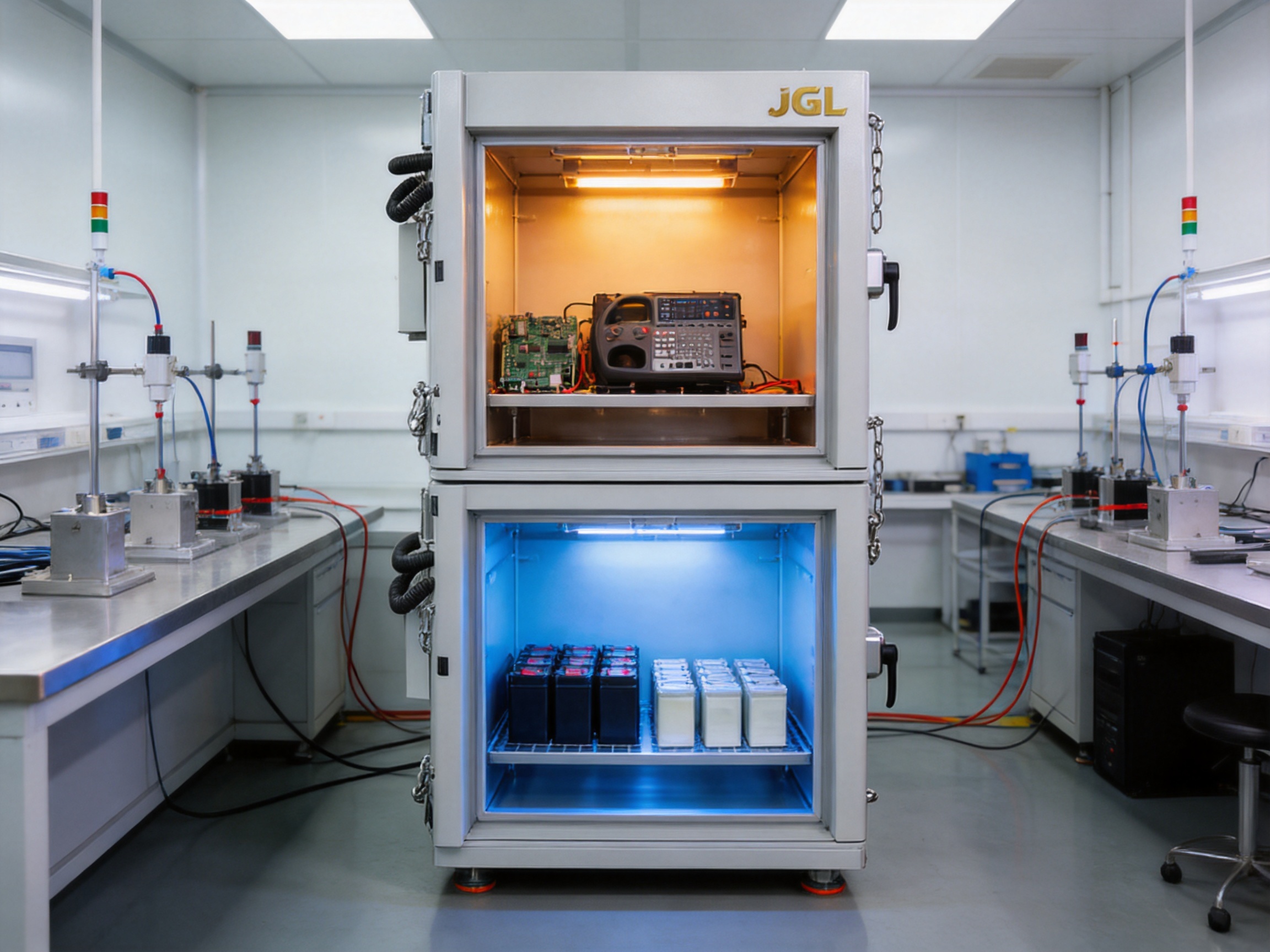
Modern laboratories and industrial test centers increasingly require environmental test equipment that can do more than generate high and low temperatures. The chamber must also protect operators, contain abnormal events, support repeatable test conditions, and remain dependable through long production and research cycles. The U2T(H)-EX150-A Dual-Layer Explosion-Proof Thermal Test Chamber is designed for this demanding class of application.
Built for high-risk thermal testing, the chamber combines two independent testing compartments, explosion-proof construction, automatic fire protection, pressure relief, rapid water injection, and a dual-evaporator refrigeration concept. These features create a controlled environment for testing electronic products, batteries, chemical materials, automotive components, aerospace parts, and other products that may release heat, smoke, gas, or pressure during temperature exposure.
Unlike a conventional single-compartment temperature chamber, the dual-layer arrangement allows separate upper and lower testing spaces to be configured for different thermal conditions. This can improve laboratory productivity, reduce equipment duplication, and provide a practical way to compare product behavior under contrasting temperatures. At the same time, the safety architecture is designed for applications where ordinary environmental chambers may not provide sufficient protection.
The equipment is manufactured by JIANGSU BAISHENG INDUSTRIAL CO., LTD., a China-based technology-driven supplier of laboratory equipment and safety testing instruments. The company combines research and development capability with engineering production and international supply experience, enabling customers to request equipment configurations that correspond to their test standards, sample characteristics, and site requirements.
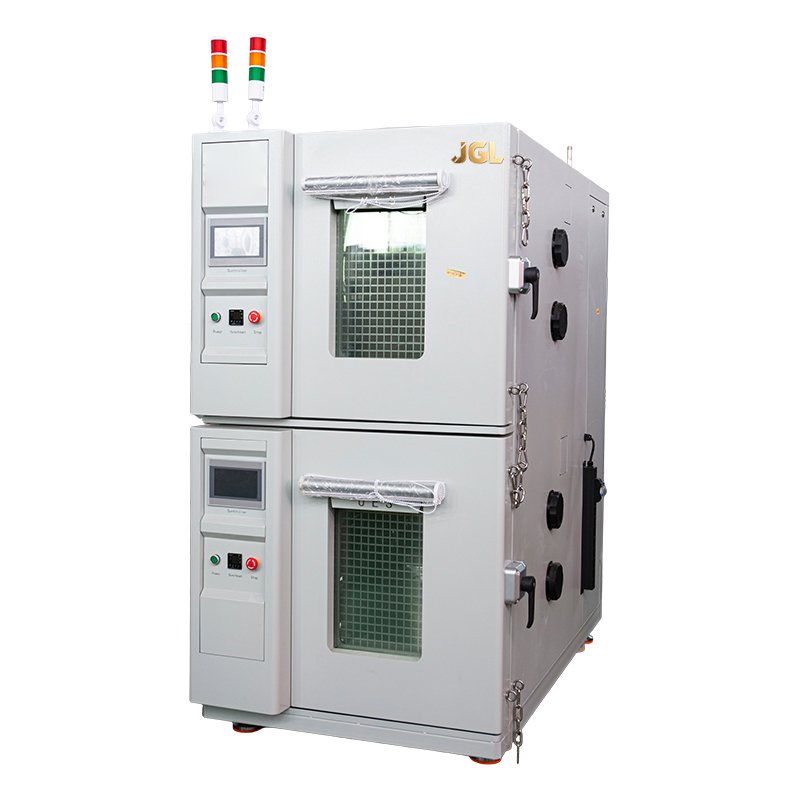
U2T(H)-EX150-A Dual-Layer Explosion-Proof Thermal Test Chamber
Why Explosion-Proof Thermal Testing Requires Specialized Equipment
Temperature testing can expose weaknesses that are not visible during normal operation. Batteries may experience internal short circuits or thermal runaway. Electronic assemblies can develop insulation failures. Chemical materials may emit combustible vapor. Plastics and composites can release smoke or volatile compounds. Automotive and aerospace components may also contain stored energy, flammable materials, or pressurized sections.
In a conventional thermal chamber, the main design priority is usually temperature uniformity and control accuracy. In a higher-risk application, these requirements remain important, but they are only part of the equipment specification. The chamber must also account for ignition prevention, containment, smoke detection, fire suppression, pressure management, operator protection, and safe handling after a test event.
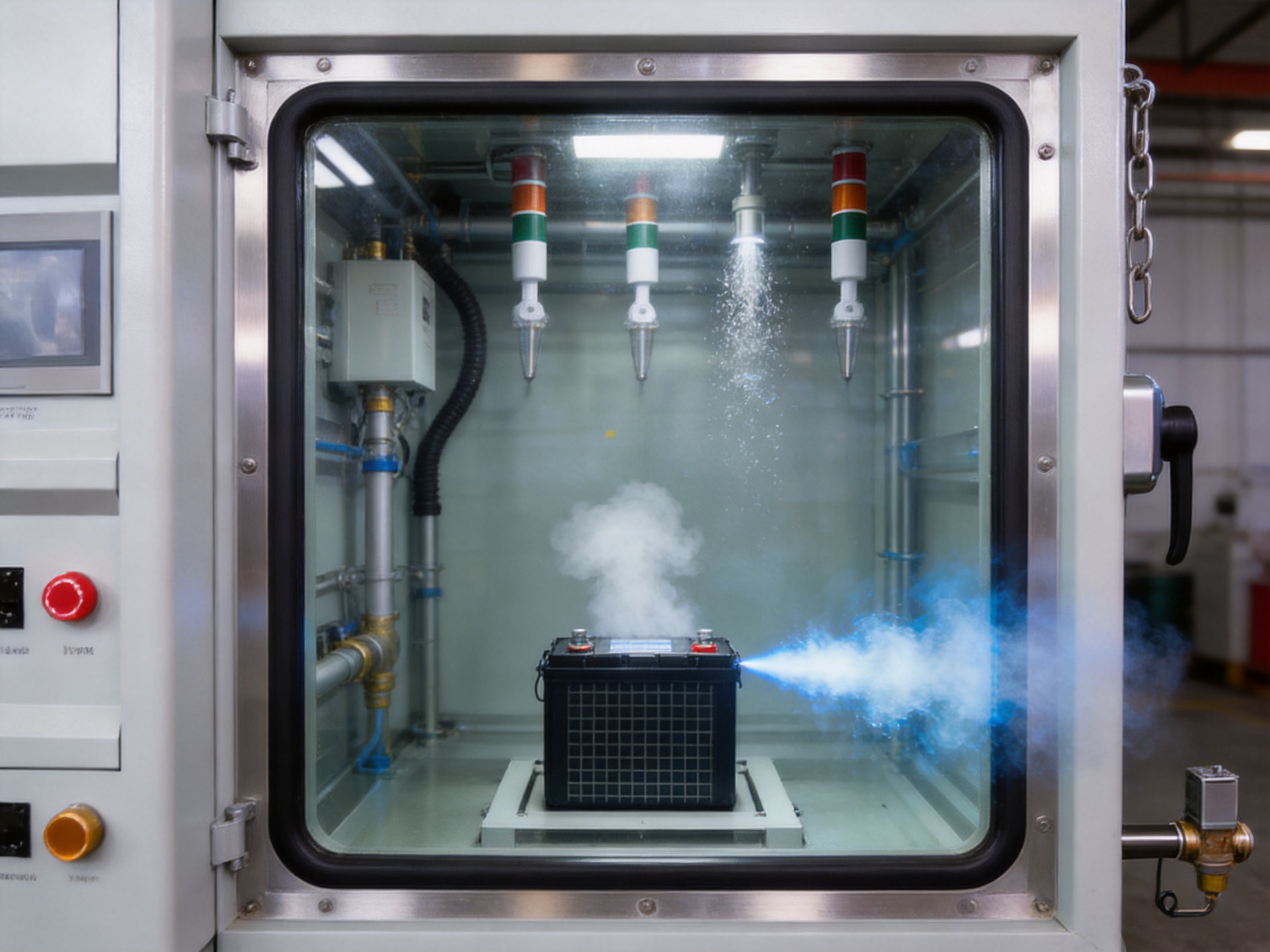
The U2T(H)-EX150-A addresses these needs through a coordinated safety system rather than relying on a single protective component. The explosion-proof door chain and reinforced viewing window help maintain the physical integrity of the chamber. Smoke detection provides an early indication of abnormal conditions. Fine water mist and automatic extinguishing functions help suppress developing fire. A rapid water injection device provides a fast response option, while a pressure relief device helps manage excessive internal pressure.
This layered approach is important because no single safety feature can address every possible failure mode. Fire detection without suppression may provide warning but not intervention. A pressure relief device without a strong enclosure may not offer sufficient containment. A reinforced door without monitoring may delay recognition of an abnormal event. By combining several protective functions, the chamber is better suited to applications where sample failure is possible or expected.
Product Architecture and Dual-Layer Configuration
The defining feature of this model is its two-level chamber structure. The upper and lower compartments are designed as separate testing areas, allowing laboratories to carry out high-temperature and low-temperature tests in parallel or to establish different thermal profiles for different samples. This arrangement is particularly useful when a laboratory needs to compare materials, components, or products under opposite environmental conditions.
Independent compartments can also support staged testing. For example, one section may be used for a high-temperature aging program while the other is used for low-temperature startup testing. A product family can therefore be evaluated under multiple conditions without waiting for one long test cycle to finish before starting another. This can reduce scheduling conflicts and increase the useful output of a laboratory.
The two-layer design also makes efficient use of floor space. Two separate single-chamber units may require more installation area, duplicated control systems, and additional service connections. A dual-layer unit consolidates the testing functions into one integrated machine. This does not eliminate the need for proper ventilation, clearance, utilities, or safety review, but it can improve the ratio between testing capacity and occupied floor area.
The supplied studio dimension is listed as 500 × 500 × 600 millimeters for each of the two compartments. The product information also identifies the nominal capacity as 150 liters. Because configuration terminology and capacity calculations can vary between projects, the final usable volume, fixture arrangement, and installation drawing should be confirmed with the manufacturer before ordering. This is especially important when large battery modules, automotive assemblies, or custom test fixtures are involved.
The overall machine dimensions are approximately 1,100 × 1,750 × 1,800 millimeters. The listed weight is approximately 550 kilograms for one temperature configuration and 650 kilograms for another. These figures should be considered during site planning, floor-load assessment, delivery preparation, and positioning of the chamber inside the laboratory or production facility.
Explosion-Proof Safety System
Reinforced Door and Explosion-Proof Chain
The chamber door is a key safety boundary. The U2T(H)-EX150-A uses an explosion-proof chain and reinforced door structure to help control access and maintain enclosure stability during testing. The chain assists in preventing uncontrolled opening, while the reinforced assembly is intended to provide additional resistance when the test sample produces abnormal pressure or a rapid release of energy.
Door safety is especially important during battery abuse testing, thermal aging of energy-storage products, and evaluation of combustible materials. Operators should never open the chamber during an active event unless the approved operating procedure specifically permits it and the system has confirmed that conditions are safe. The chamber’s mechanical and control protections are intended to support this disciplined approach.
Explosion-Proof Viewing Window
The explosion-proof viewing window allows operators to observe samples without immediately opening the door. Visual monitoring may help identify changes in sample condition, smoke development, flame, deformation, leakage, or other abnormal behavior. The reinforced window is designed to form part of the chamber’s protective enclosure rather than serving as an ordinary inspection panel.
Observation capability can also improve test documentation. Operators may correlate temperature data with visible sample changes and record the sequence of events more accurately. For research laboratories, this can assist in failure analysis. For quality departments, it can provide useful evidence when comparing production batches or validating a new product design.
Automatic Fire Extinguishing
The automatic fire extinguishing system is intended to respond when a fire-related event is detected. Its value lies in reducing dependence on manual intervention during the first moments of an incident. An automated response may help limit fire development, reduce damage to the chamber, and provide additional time for personnel to follow emergency procedures.
The system should be integrated into the laboratory’s broader safety plan. This includes regular inspection, appropriate extinguishing-agent management, testing of alarms, verification of water or utility connections, and training for operators. Automatic equipment is most effective when supported by preventive maintenance and clearly documented response procedures.
Smoke Detection and Fine Water Mist
Smoke detection provides a monitoring layer before or during a visible flame event. Fine water mist sprinklers are included to support fire suppression while limiting the quantity of water introduced into the test area compared with a conventional large-volume discharge. The fine mist approach may assist with heat absorption and fire control, although the appropriate extinguishing strategy depends on the sample, chemistry, and test environment.
For battery and chemical testing, the laboratory should evaluate whether water mist is compatible with the materials being tested and whether additional extinguishing measures are required. The chamber’s integrated safety functions should always be reviewed alongside applicable electrical, fire, environmental, and occupational safety requirements.
Rapid Water Injection Device
The rapid water injection device is designed to provide a quick response when a test protocol or abnormal event calls for accelerated cooling or fire-control action. In applications involving batteries or heat-generating samples, rapid cooling can be an important part of preventing escalation. The device may also support specific customer procedures that require a controlled and immediate water-delivery function.
Rapid water injection is not a replacement for a properly designed test plan. Sample placement, fixture strength, water compatibility, drainage, and post-test handling must all be considered. Nevertheless, having a dedicated response mechanism integrated into the chamber can be a major advantage over retrofitting an improvised system after installation.
Explosion-Proof Pressure Relief
A thermal event may produce a sudden increase in internal pressure. The explosion-proof pressure relief device is designed to help manage this risk by providing a controlled relief path when pressure exceeds the intended operating condition. This feature supports the chamber enclosure and reduces the likelihood that pressure will be released through an uncontrolled structural failure point.
Pressure relief design must be coordinated with the building’s exhaust, ventilation, and safe-discharge arrangements. The final installation should account for the direction of relief, the location of personnel, nearby equipment, and the potential characteristics of the test sample. Customers should request the applicable technical drawings and confirm site requirements before commissioning.
Thermal Performance and Temperature Range
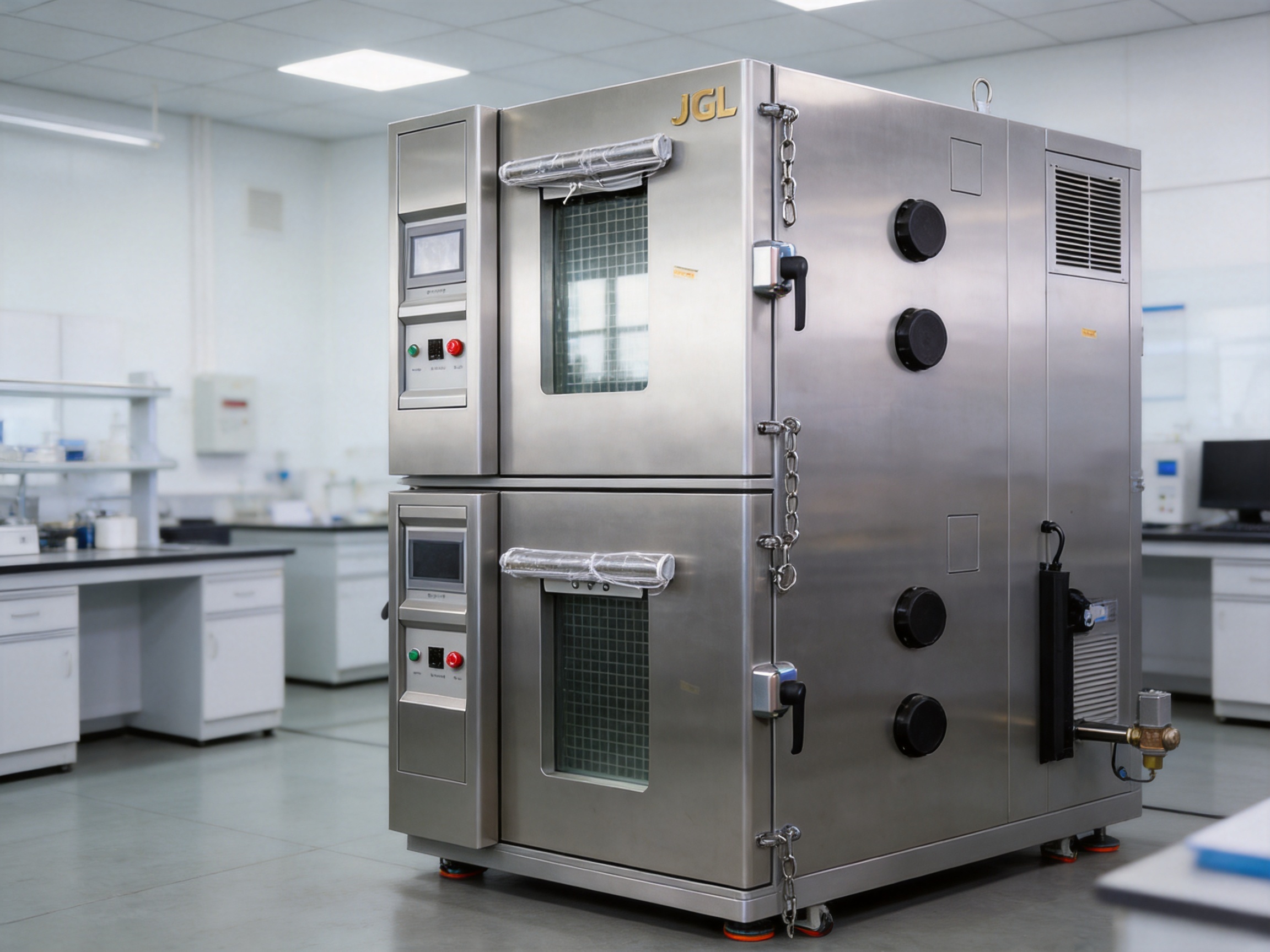
The U2T(H)-EX150-A is specified for demanding high- and low-temperature testing. The available temperature ranges are listed as -40°C to +150°C and -70°C to +180°C, corresponding to different equipment configurations. The appropriate range should be selected according to the required test standard, sample type, ramp profile, and duration of exposure.
The -40°C to +150°C configuration is suitable for many electronics, industrial components, materials, and automotive applications. It covers a broad span between deep cold and elevated temperature aging. The -70°C to +180°C configuration extends the low-temperature capability and raises the upper operating limit, supporting more severe qualification programs and specialized research.
Temperature range alone does not determine overall test performance. A complete assessment should also consider heating rate, cooling rate, temperature recovery, uniformity, sensor placement, sample heat load, door-opening frequency, and control resolution. The chamber is designed to support rapid heating and cooling cycles with uniform temperature distribution, but the actual result depends on the installed configuration and test load.
The dual-evaporator concept is one of the product’s important technical advantages. Separate evaporator arrangements can help maintain the thermal requirements of the two compartments more independently than a simplified shared refrigeration structure. This supports more stable operation when the upper and lower chambers are running different programs or carrying different sample loads.
Independent thermal management may also reduce cross-influence between compartments. In a conventional shared system, the heat load generated in one area can affect the refrigeration response of another area. A dual-evaporator arrangement is intended to provide improved separation and better control of each testing space. The exact control logic and refrigeration architecture should be verified in the project specification, but the design direction is especially valuable for simultaneous contrasting tests.
Frost-Free Operation
The product information highlights technology for stable, year-round operation without frost. Frost accumulation can reduce heat-transfer efficiency, restrict airflow, affect sensors, and create inconsistent test conditions. It can also increase maintenance requirements and extend recovery time after repeated low-temperature cycles.
A frost-free or frost-reduction design helps maintain reliable operation over extended testing schedules. This is particularly beneficial for laboratories that run frequent low-temperature tests, operate in changing seasonal conditions, or need to reduce downtime caused by manual defrosting. Stable refrigeration performance also contributes to repeatability, because the chamber’s thermal response is less likely to change as ice builds up on internal components.
Frost-free operation should not be interpreted as maintenance-free operation. Door seals, drainage, filters, refrigeration components, sensors, and fire-protection devices still require routine inspection. Correct sample loading and avoidance of unnecessary door opening remain important for maintaining thermal performance.
Manufacturing Strengths and Engineering Capability
The performance of an explosion-proof chamber depends not only on its listed features but also on how the enclosure, refrigeration system, control cabinet, sensors, safety devices, and internal fixtures are designed and assembled. JIANGSU BAISHENG INDUSTRIAL CO., LTD. positions itself as a technology-driven enterprise rather than a conventional trading company. Its stated strength is a dedicated research and development team focused on precision design, technical specifications, and customized laboratory solutions.
This engineering-oriented approach is significant for complex equipment. A standard catalog chamber may be appropriate for general environmental testing, but high-risk applications often require modifications. These may include special cable ports, custom sample fixtures, additional sensors, interlocked doors, altered pressure-relief arrangements, water connections, data interfaces, or compatibility with a customer’s existing safety system.
The company’s history began with a research and development studio specializing in electronic testing. The founding team included engineers with experience in laboratory equipment and safety compliance testing. This technical background provides a foundation for understanding the relationship between test objectives, equipment configuration, and operator safety.
In 2016, the organization moved from a technical studio toward an enterprise structure and completed its first independently developed production line. The company later adopted a “technology plus trade” development strategy, increasing research investment, introducing technical talent, and expanding overseas markets. This combination of engineering and international project experience can help with communication across different application sectors and purchasing environments.
By 2022, the company had further developed its quality management system, while its products underwent technical specification certifications and related verification activities. The company continued product innovation and digitalization initiatives through 2025. For customers, this history indicates a supplier focused on product development, process improvement, and expansion of application scenarios rather than only reselling standard equipment.
Precision Design and Assembly
A high-quality chamber requires dimensional consistency in the enclosure, accurate sealing around doors and viewing windows, correct positioning of sensors, and reliable assembly of refrigeration and fire-protection systems. These details influence thermal uniformity, pressure behavior, energy use, and long-term stability.
Precision design also supports repeatable manufacturing. When components and interfaces are standardized within a product family, the manufacturer can improve assembly consistency, simplify inspection, and make future service more manageable. At the same time, a modular design can allow special requirements to be incorporated without redesigning the entire chamber.
Integrated Safety Engineering
Safety features are most effective when they are designed as a complete system. The door chain, viewing window, smoke detection, water mist, rapid injection, pressure relief, and automatic extinguishing functions must work together with the control system. A safety signal should be able to trigger the correct response, while operators should receive clear information about the chamber state.
The manufacturer’s focus on laboratory and safety compliance testing supports this integrated approach. During project development, the customer can discuss sample hazards, test sequences, emergency actions, and site conditions so that the final configuration is aligned with the intended application.
Customization and International Supply
Different industries use different test fixtures, standards, sample sizes, and reporting requirements. A battery manufacturer may need special cable routing and event recording. An electronics company may require communication with automated test equipment. An aerospace supplier may need strict documentation, traceability, and controlled test procedures. A chemical laboratory may focus on ventilation, material compatibility, and pressure management.
JIANGSU BAISHENG INDUSTRIAL CO., LTD. provides customized laboratory equipment solutions and has experience combining technical development with international trade. This can simplify the process of discussing specifications, arranging production, preparing shipping documentation, and coordinating installation requirements for overseas customers.
Advantages Compared with Conventional Competitor Equipment
Higher Safety Readiness Than a Standard Environmental Chamber
Many standard thermal chambers are designed primarily for non-hazardous samples. They may provide temperature control but lack integrated fire suppression, pressure relief, or reinforced explosion-resistant access components. The U2T(H)-EX150-A is designed specifically for higher-risk test scenarios, giving it a stronger safety orientation than a basic environmental chamber.
This does not mean that the product removes all risk or can be used without a site safety assessment. Instead, its advantage is that protective functions are incorporated into the equipment from the beginning. This is generally more effective than attempting to add independent safety devices after installing a chamber intended only for ordinary samples.
More Efficient Use of Laboratory Space
A dual-layer chamber can offer two testing spaces within one integrated footprint. Compared with purchasing two separate chambers, the configuration may reduce floor-space demand, duplicated control interfaces, and some facility requirements. It can also improve operator efficiency because both compartments are accessible from the same general equipment area.
The benefit is especially relevant to laboratories with limited room or a high volume of qualification work. The customer should still verify whether both compartments can be loaded and serviced comfortably, and whether the installation layout provides sufficient clearance for door operation and emergency access.
Simultaneous Contrasting Temperature Tests
One of the strongest competitive advantages is the ability to perform different thermal programs in the upper and lower compartments. A conventional single-chamber unit normally requires one temperature profile at a time. Two separate units can provide parallel testing, but they require additional space and capital expenditure.
The dual-layer arrangement supports comparison testing, production screening, accelerated aging, cold-start evaluation, and development work where samples must be exposed to different temperatures during the same operating period. The dual-evaporator concept further supports independent thermal control and helps reduce the risk of one compartment interfering with the other.
Reduced Frost-Related Downtime
Frequent defrosting can interrupt schedules and increase operating costs. The frost-free technology identified for this product is intended to support stable operation throughout the year. In a busy laboratory, reliable availability can be as important as the maximum temperature range because missed test windows may delay product release, failure analysis, or customer delivery.
Better Preparedness for Abnormal Events
The combination of smoke detection, automatic extinguishing, fine water mist, rapid water injection, and pressure relief provides more complete event preparedness than a chamber equipped only with an over-temperature alarm. These features may help the laboratory respond more quickly to thermal events and reduce the consequences of sample failure.
Competitor comparison should always be based on verified specifications rather than marketing descriptions alone. Buyers should compare the number and type of safety sensors, the behavior of interlocks, the extinguishing method, pressure-relief rating, temperature performance under load, control-recording capability, service response, and documentation supplied with the equipment.
Applications Across Major Industries
Electronics and Semiconductor Testing
Electronic products can experience performance drift, insulation breakdown, solder-joint fatigue, display defects, connector failure, and battery-related hazards when subjected to temperature extremes. The chamber can be used to evaluate circuits, semiconductor devices, power supplies, sensors, communication modules, and finished electronic assemblies.
High- and low-temperature cycles can reveal defects that remain hidden under room-temperature conditions. The dual-layer structure allows a development team to test separate samples at contrasting temperatures or to run a controlled comparison between an aging program and a cold-start program.
Battery and Energy-Storage Research
Battery testing is one of the most demanding applications for an explosion-proof thermal chamber. Cells and modules may generate large amounts of heat, smoke, gas, or pressure when damaged, overcharged, internally shorted, or exposed to extreme temperature. A chamber for this work must be selected with careful attention to sample energy, chemistry, test standard, fixture design, ventilation, suppression, and emergency procedures.
The U2T(H)-EX150-A provides several features relevant to battery research, including smoke detection, automatic fire suppression, fine water mist, rapid water injection, reinforced viewing protection, and pressure relief. These functions can support thermal abuse tests, low-temperature performance evaluations, high-temperature storage, cycling studies, and safety investigations.
Battery customers should provide detailed sample information before final configuration. Important data includes nominal voltage, maximum energy, chemistry, cell or module dimensions, expected failure behavior, charging equipment, cable requirements, and the intended test sequence. This information allows the chamber and its safety systems to be matched more appropriately to the actual hazard.
Materials and Chemical Testing
Polymers, plastics, composites, coatings, adhesives, and chemical materials can change mechanically or chemically across a wide temperature range. Testing may assess brittleness, softening, expansion, contraction, discoloration, outgassing, chemical stability, or resistance to repeated thermal cycling.
When materials may release flammable vapor or smoke, the explosion-proof construction and monitoring system become especially important. Test fixtures should be selected to prevent unwanted reactions, and the laboratory should establish procedures for sample disposal, chamber cleaning, and contamination control.
Automotive Components
Automotive electronics, sensors, wiring assemblies, battery parts, lighting systems, interior materials, and mechanical components must often withstand severe temperature changes. A dual-layer chamber can help suppliers and vehicle manufacturers run multiple qualification programs in parallel.
For example, one compartment may be used for high-temperature endurance while another evaluates low-temperature activation. This supports development programs in which different components must be qualified on a similar schedule. The chamber can also assist with failure reproduction by exposing samples to temperature conditions associated with field complaints or accelerated aging models.
Aerospace and Industrial Equipment
Aerospace and industrial systems are expected to remain reliable in challenging environments. Thermal testing can identify material weakness, electronic instability, seal failure, and assembly defects before products reach service. The ability to program temperature profiles and monitor chamber conditions supports structured qualification and quality assurance programs.
Because aerospace and industrial customers often require extensive records, the control interface and data-management configuration should be reviewed during procurement. Customers may request additional data outputs, alarm logs, calibration documentation, or integration with laboratory information systems.
Control, Monitoring, and Test Repeatability
Precise thermal testing depends on more than reaching a target temperature. The chamber must follow the programmed profile, maintain stable conditions, recover after disturbances, and record relevant test information. The U2T(H)-EX150-A includes a digital control interface for programming temperature profiles and monitoring chamber conditions.
A digital controller can support multi-step sequences such as heating, soaking, cooling, dwell periods, cycling, and return-to-ambient stages. It can also display current temperature, setpoint, alarm state, and operating status. For production environments, programmed recipes can help reduce variation between operators and improve repeatability across batches.
Monitoring should include the chamber temperature and, where required, sample temperature or additional safety signals. A customer may need to specify the number and type of sensors, the alarm thresholds, the behavior of door interlocks, and the response to smoke or pressure events. These details should be documented before acceptance testing.
Test repeatability is also affected by sample placement. Products should not block airflow, touch chamber walls unless the method requires it, or exceed the recommended heat load. The same fixture arrangement should be used when comparing results. Operators should record sample mass, loading position, cable routing, program name, and any unusual event during the test.
Technical Specifications
The following table summarizes the principal specifications supplied for the U2T(H)-EX150-A. Some figures are presented as alternative configurations, so the final quotation and technical agreement should identify the selected temperature range, weight, usable volume, and chamber arrangement.
| Specification | Listed Value |
|---|---|
| Product model | U2T(H)-EX150-A |
| Product type | Dual-layer explosion-proof high- and low-temperature test chamber |
| Nominal capacity | 150 L, subject to final configuration confirmation |
| Temperature range option 1 | -40°C to +150°C |
| Temperature range option 2 | -70°C to +180°C |
| Studio dimensions | 500 × 500 × 600 mm for each of two compartments, as listed |
| Overall dimensions | 1,100 × 1,750 × 1,800 mm |
| Approximate machine weight option 1 | 550 kg |
| Approximate machine weight option 2 | 650 kg |
| Safety equipment | Explosion-proof door chain, reinforced viewing window, smoke detection, fine water mist, automatic extinguishing, rapid water injection, and pressure relief |
| Thermal system | Dual-evaporator design with frost-free operating technology |
| Control method | Digital programming and monitoring interface |
Installation and Operating Considerations
Before installation, the customer should review the chamber’s power supply, grounding, ventilation, drainage, water supply, exhaust route, pressure-relief direction, and service clearance. The overall dimensions and weight should be checked against doorways, elevators, loading areas, and floor capacity.
The chamber should be placed in an area appropriate for the hazards associated with the samples. Emergency exits, fire-protection equipment, electrical isolation, and operator observation points should remain accessible. The pressure-relief path must not discharge toward personnel or sensitive equipment.
Water-based protection systems require suitable connections and drainage. The laboratory should determine how water, sample residue, and contaminated liquid will be contained after an event. If the test material reacts with water, the safety assessment must consider whether additional or alternative suppression measures are needed.
Operators should receive training before using the system. Training should cover normal startup and shutdown, loading procedures, programming, alarm interpretation, emergency stopping, fire-system status, pressure-relief precautions, post-event access, and routine cleaning. Only authorized personnel should modify safety settings or service the equipment.
Maintenance should include inspection of door seals, hinges, chains, viewing windows, sensors, smoke detectors, spray nozzles, water connections, pressure-relief components, electrical terminals, refrigeration parts, and controller alarms. Maintenance intervals should be based on operating frequency, sample hazards, environmental conditions, and manufacturer recommendations.
How to Select the Correct Configuration
Customers should begin by defining the most severe expected test condition rather than selecting a temperature range solely by habit. Consider the lowest and highest temperatures, ramp rate, dwell time, number of cycles, sample heat generation, sample quantity, and whether both compartments will run simultaneously.
The next step is to characterize the sample hazard. Identify whether the product can ignite, release smoke, emit combustible gas, generate pressure, leak liquid, or react with water. Battery customers should provide cell chemistry and energy information. Chemical and material customers should provide safety data and expected decomposition products where available.
Fixture and cable requirements are also important. Samples may need charging cables, measurement wires, current sensors, thermocouples, pressure lines, or communication connections. The location and size of cable ports can influence both safety and temperature uniformity. These requirements should be included in the technical specification before manufacturing begins.
Finally, the customer should identify documentation and validation needs. These may include factory acceptance testing, temperature calibration, alarm verification, safety-interlock testing, pressure-relief documentation, control-system records, operating manuals, spare-parts lists, and training. Clear documentation reduces ambiguity during installation and qualification.
Quality Assurance and Project Support
For a complex chamber, quality assurance should begin during design review. The supplier and customer should confirm the intended application, safety classification, temperature performance, chamber dimensions, control functions, utilities, and acceptance criteria. This process is particularly important when the equipment will be used for regulated products or high-energy samples.
Factory inspection may include visual checks, dimensional verification, door and window inspection, temperature testing, controller validation, alarm testing, and review of fire-protection functions. The specific inspection plan should reflect the customer’s risk assessment and applicable standards.
JIANGSU BAISHENG INDUSTRIAL CO., LTD. emphasizes precision craftsmanship, long-term innovation, integrity, and win-win cooperation. These values support a project-based supply model in which the equipment is developed around the customer’s technical goals rather than treated as an interchangeable commodity. The company’s research background and international trade capability can assist customers from initial inquiry through production, shipment, and application support.
Customers seeking a quotation should provide the target temperature range, sample type, maximum sample energy, compartment usage, required test standards, site voltage, water and drainage conditions, installation location, and desired data functions. More complete information enables a more accurate proposal and reduces the risk of later modifications.
Frequently Asked Questions
What is the main purpose of the U2T(H)-EX150-A?
The chamber is designed for high- and low-temperature testing of products that may present elevated thermal, smoke, fire, or pressure risks. It is suitable for electronics, batteries, materials, automotive components, aerospace parts, chemical products, and industrial equipment.
What does the dual-layer design mean?
The chamber contains upper and lower testing compartments. These compartments can be used for separate thermal programs, allowing contrasting high- and low-temperature tests to be performed in parallel or enabling different samples to be tested under different conditions.
Can the two compartments operate at different temperatures?
The product description identifies the upper and lower compartments as independent testing areas and highlights the use of dual evaporators. The exact simultaneous operating limits, temperature combinations, and control logic should be confirmed in the final technical specification.
Which temperature range should a customer choose?
The listed options are -40°C to +150°C and -70°C to +180°C. The correct choice depends on the required test standard, sample behavior, ramp profile, and maximum and minimum exposure temperatures. Customers should select the range that covers the most severe planned test with suitable operating margin.
Is the chamber suitable for battery testing?
It is designed for applications that can involve battery-related thermal and safety risks and includes smoke detection, automatic extinguishing, fine water mist, rapid water injection, reinforced viewing protection, and pressure relief. However, the suitability of the final configuration depends on battery chemistry, energy level, sample size, charging method, and the customer’s safety assessment.
Does the chamber eliminate all risks during an explosion or fire event?
No. The chamber’s safety systems are intended to reduce and manage risk, not eliminate it completely. Safe operation still requires appropriate sample limits, installation controls, operator training, maintenance, emergency procedures, and compliance with applicable regulations and test standards.
What is the advantage of the dual-evaporator system?
A dual-evaporator arrangement is intended to provide more independent thermal management for the two compartments. It can support different operating conditions and help reduce thermal interaction between the upper and lower testing spaces.
What does frost-free operation provide?
Frost-free technology is intended to reduce ice accumulation during low-temperature operation. This can help maintain heat-transfer efficiency, reduce defrost-related interruptions, and support more consistent performance over repeated tests.
Can the chamber be customized?
Customization should be discussed during the technical review. Possible project-specific items may include fixtures, cable ports, sensors, control functions, data interfaces, water connections, alarm logic, and installation arrangements. The manufacturer should confirm what can be modified for the selected configuration.
What information should be supplied when requesting a quotation?
Provide the required temperature range, sample dimensions and mass, sample energy or chemical characteristics, intended test sequence, compartment usage, heating or cooling load, test standards, power supply, site dimensions, ventilation and drainage conditions, and desired monitoring or data-recording functions.
How should the listed capacity be interpreted?
The supplied product information lists a nominal capacity of 150 liters and compartment dimensions of 500 × 500 × 600 millimeters for two compartments. Because listed capacity and geometric volume may be expressed differently depending on the configuration, the customer should confirm the final usable volume and internal arrangement before purchase.
Who manufactures the equipment?
The equipment is manufactured and supplied by JIANGSU BAISHENG INDUSTRIAL CO., LTD., a technology-driven Chinese company specializing in laboratory equipment, safety testing instruments, research and development, customized solutions, and international trade support.
Conclusion
The U2T(H)-EX150-A Dual-Layer Explosion-Proof Thermal Test Chamber is designed for laboratories that require both demanding temperature performance and a higher level of safety readiness. Its two independent testing compartments support parallel or contrasting thermal programs, while the dual-evaporator system helps provide separate temperature management. The listed temperature options extend from -40°C to +150°C or from -70°C to +180°C, depending on the selected configuration.
The equipment’s strongest distinction is its integrated protection system. The explosion-proof door chain, reinforced viewing window, automatic fire extinguishing, smoke detection, fine water mist, rapid water injection, and pressure-relief device address multiple stages of a potential abnormal event. Frost-free operating technology and digital control further support stable, repeatable testing throughout the year.
Compared with a basic single-compartment environmental chamber, this design offers greater testing flexibility, better use of laboratory space, and stronger preparation for hazardous sample behavior. Compared with purchasing two separate chambers, it may provide a more consolidated solution for facilities that need parallel testing while controlling floor-space and equipment complexity.
Its value ultimately depends on correct configuration. Customers should evaluate sample hazards, energy levels, temperature requirements, facility utilities, ventilation, drainage, safety procedures, and data needs before finalizing the purchase. With careful engineering review and appropriate operating discipline, the U2T(H)-EX150-A can serve as a versatile platform for electronics qualification, battery research, material evaluation, automotive development, aerospace testing, and industrial quality assurance.
References
1. Product technical information for the U2T(H)-EX150-A Dual-Layer Explosion-Proof Thermal Test Chamber, supplied by the manufacturer.
2. Manufacturer company profile, engineering history, product development information, and stated core values of JIANGSU BAISHENG INDUSTRIAL CO., LTD.
3. General principles of environmental testing for electronic and electrical products under high- and low-temperature conditions.
4. General laboratory guidance for fire prevention, pressure management, emergency response, and safe operation of environmental test equipment.
5. General battery safety testing practices relating to thermal exposure, smoke detection, fire suppression, sample containment, and post-test handling.
Product: U2T(H)-EX150-A Dual-Layer Explosion-Proof Thermal Test Chamber
PREV:U5QTH-100-A/W Fast Temperature and Humidity Cycling Chamber: Precision Testing for Demanding Laboratory Applications
NEXT:Rapid Temperature and Humidity Cycling Chambers for Precision Environmental Testing
NEXT:Rapid Temperature and Humidity Cycling Chambers for Precision Environmental Testing
Interested in cooperation or have questions?
Featured Products
Related products
Quick Link
Contact Information
- Tel: +86-13861043568
- E-mail: 1840784112@qq.com
- Add: Tianting District, Changzhou City, Jiangsu Province, China, No. 6 Hecircuit
Scan Code
Copyright © JIANGSU BAISHENG INDUSTRIAL CO., LTD.
All Rights Reserved. Privacy Custom Precision Laboratory Testing Equipment Manufacturers
