 English
 Español

NEWS
NEWS
NEWS
NEWS
NEWS
NEWS
NEWS
NEWS
NEWS
NEWS
NEWS
NEWS
NEWS
NEWS
NEWS
NEWS

Peng Shulan — Regional Sales Consultant
Home / Author / Peng Shulan — Regional Sales Consultant / Rapid Thermal and Humidity Test Systems for Reliable Environmental Qualification
Rapid Thermal and Humidity Test Systems for Reliable Environmental Qualification
Content
- 1 Why Rapid Thermal and Humidity Testing Matters
- 2 Product Overview
- 3 Core Technical Advantages
- 4 Comparison with Conventional Environmental Chambers
- 5 Advanced Manufacturing and Engineering Strengths
- 6 Applications Across Multiple Industries
- 7 Recommended Test Planning Practices
- 8 Installation, Operation, and Maintenance Considerations
- 9 Energy Efficiency and Environmental Responsibility
- 10 How to Select the Appropriate Configuration
- 11 Frequently Asked Questions
- 11.1 What is the main purpose of the U5QTH-150-A/W?
- 11.2 What is the working capacity?
- 11.3 What temperature ranges are available?
- 11.4 Which temperature change rates can be selected?
- 11.5 How does the system control humidity?
- 11.6 Why is the stainless-steel interior beneficial?
- 11.7 What is the function of the damped hinge?
- 11.8 Why is the circulation fan temperature rating important?
- 11.9 How does the condensate tray protect the chamber?
- 11.10 Can the chamber be used for batteries?
- 11.11 What industries can use this equipment?
- 11.12 What should be confirmed before ordering?
- 12 Conclusion
- 13 References
- 14 Product: U5QTH-150-A/W Rapid Thermal and Humidity Test System
Modern products are expected to perform consistently under changing environmental conditions. Electronic assemblies, automotive components, batteries, aerospace parts, polymers, coatings, and many other products may experience rapid temperature changes, high or low humidity, condensation, and repeated thermal stress during transportation, storage, or operation. Environmental testing makes it possible to identify weaknesses before products reach customers or enter demanding service environments.
The U5QTH-150-A/W Rapid Thermal and Humidity Test System is designed for this purpose. With a 150-liter working capacity, a temperature range that can extend from -40°C to +150°C or, in an available configuration, from -70°C to +180°C, the system provides a controlled environment for accelerated reliability testing. Its design combines rapid heating and cooling, accurate humidity regulation, stable air circulation, a durable stainless-steel chamber, and safety-oriented operating features.
This article examines the equipment’s operating concept, structural advantages, control technology, energy-conscious design, applications, manufacturing strengths, maintenance requirements, and selection considerations. It also explains why a carefully engineered rapid thermal and humidity chamber can offer advantages over conventional temperature chambers and less specialized environmental testing equipment.
Why Rapid Thermal and Humidity Testing Matters
Products rarely operate under a single constant temperature. During manufacturing, shipping, installation, and field use, equipment may move repeatedly between warm and cold environments. A device transported from a cold warehouse into a humid production area can experience condensation. An automotive component may be exposed to cold starts, engine heat, road moisture, and repeated day-and-night temperature cycles. A battery pack can undergo thermal variation while charging, discharging, or operating outdoors.
These environmental changes can create mechanical, electrical, chemical, and material-related stresses. Differences in thermal expansion between connected materials may loosen joints, crack solder connections, distort seals, or damage protective coatings. Moisture can reduce insulation resistance, accelerate corrosion, affect sensor accuracy, and create leakage paths. Repeated exposure may reveal defects that cannot be identified through visual inspection or short-duration functional testing.
A rapid thermal and humidity test system allows engineers to reproduce these conditions in a controlled and repeatable manner. Rather than waiting for seasonal changes or relying on uncontrolled outdoor exposure, a laboratory can define the temperature, humidity, ramp rate, dwell time, and cycle sequence. This makes it easier to compare designs, validate materials, identify failure mechanisms, and improve manufacturing consistency.
Environmental chambers are especially important during research and development. They help engineering teams evaluate prototypes before investing in mass production tooling. They also support quality assurance by allowing finished products to be sampled and tested against internal specifications. For manufacturers serving automotive, electronics, battery, aerospace, and industrial markets, this type of equipment can shorten development cycles while improving confidence in product reliability.
Product Overview
The U5QTH-150-A/W is a compact but capable environmental test system intended for rapid temperature and humidity testing. Its nominal capacity is 150 liters, making it suitable for small and medium-sized components, assemblies, material samples, and grouped test specimens. The internal studio dimensions are listed as 500 millimeters in width, 500 millimeters in depth, and 600 millimeters in height.
The system is available with different temperature performance configurations. One listed range is -40°C to +150°C, while another is -70°C to +180°C. The appropriate configuration should be selected according to the required test standard, sample characteristics, ramp rate, and operating profile. The system can also be supplied with selectable temperature variation rates of 5°C per minute, 10°C per minute, 15°C per minute, or 20°C per minute, depending on the selected model configuration and test requirements.
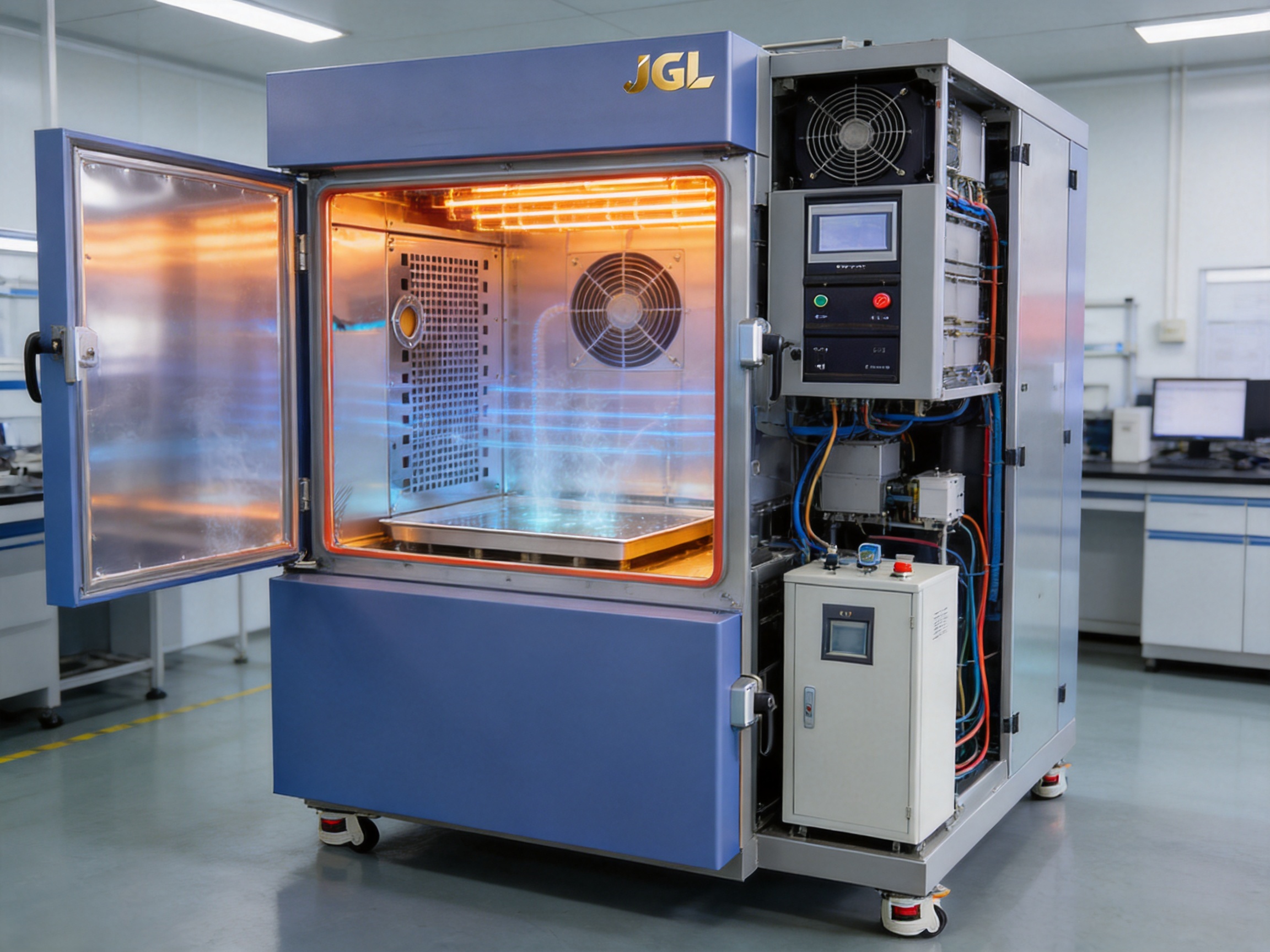
Its environmental control system combines dynamic proportional-integral-derivative regulation with water vapor partial pressure control. This approach is intended to provide stable temperature and humidity conditions while reducing unwanted fluctuations during demanding test cycles. Air movement is supported by Panasonic circulation fans with high-temperature-resistant bearings rated up to 200°C, helping distribute heat and moisture throughout the working space.
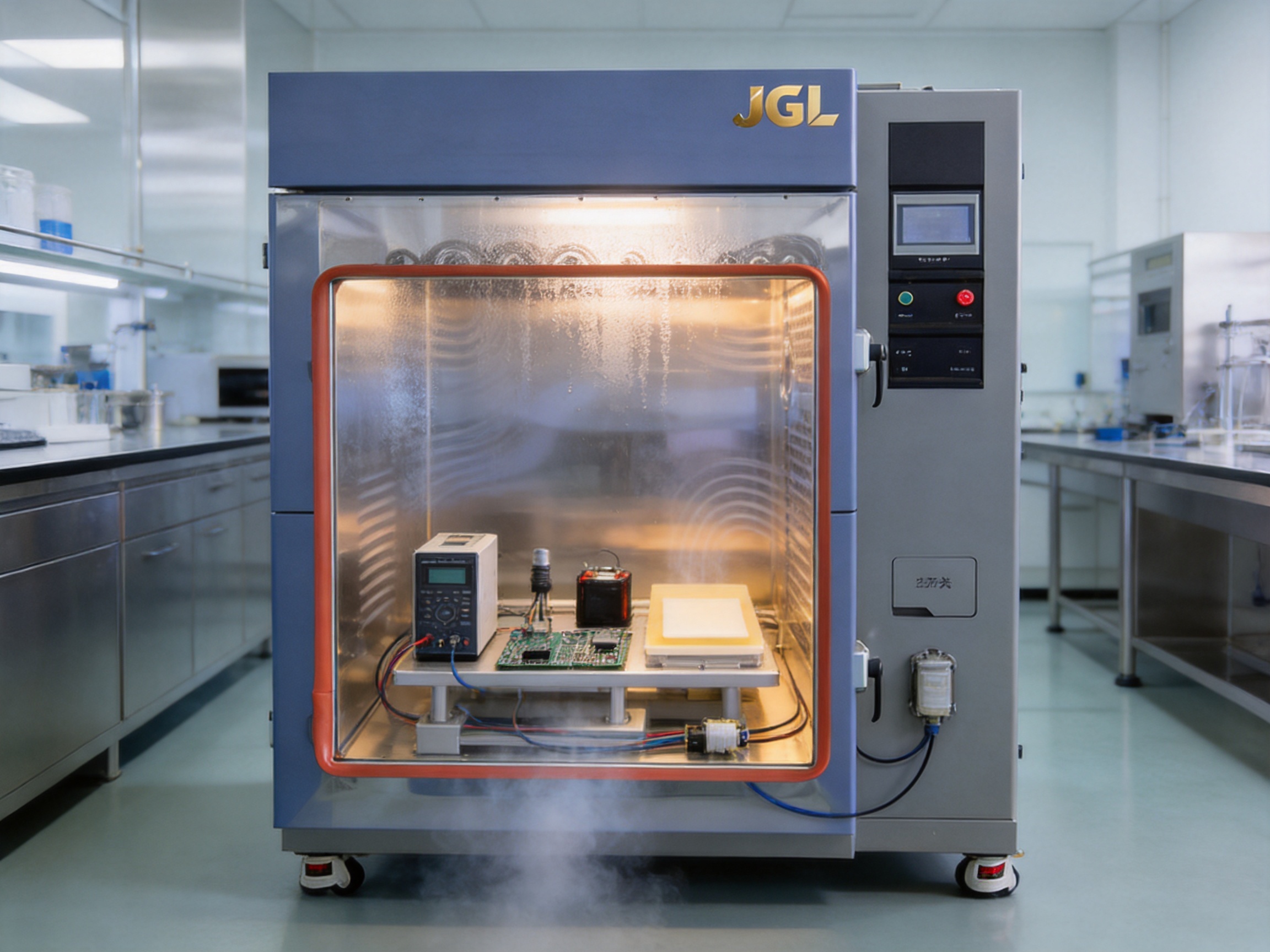
The chamber interior uses mirror-finished stainless steel with a protective film. This material choice supports corrosion resistance, cleaning convenience, and long-term durability. A full-size stainless-steel condensate tray helps manage moisture and protects important refrigeration components from condensation-related corrosion.
The design also includes a damped hinge mechanism. Instead of limiting the door to a small number of fixed positions, the hinge allows flexible adjustment of the door opening angle. This can improve operator access, reduce unnecessary door movement, and make loading and unloading more convenient.
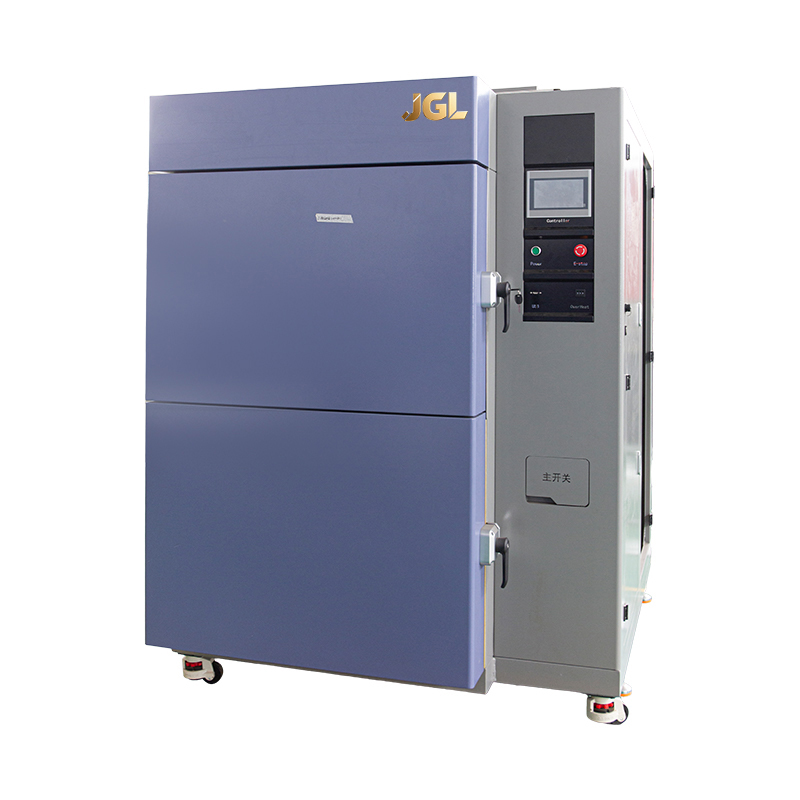
U5QTH-150-A/W Rapid Thermal and Humidity Test System
Core Technical Advantages
High-Precision Temperature and Humidity Regulation
Environmental testing is only useful when the conditions inside the chamber are controlled accurately and maintained consistently. If the temperature or humidity fluctuates excessively, test results may become difficult to interpret. A sample could appear to fail because of a control disturbance rather than because of its actual design weakness. Conversely, an unstable chamber could conceal a problem by failing to reproduce the intended stress profile.
The U5QTH-150-A/W addresses this challenge through dynamic PID control and water vapor partial pressure regulation. PID control continuously evaluates the difference between the target condition and the measured condition, then adjusts the relevant heating, cooling, humidification, or dehumidification functions. Dynamic regulation is valuable when the chamber is changing rapidly, when a test sample introduces a thermal load, or when the door has recently been opened.
Water vapor partial pressure control provides an additional method for managing humidity. Relative humidity changes with temperature, so humidity control based only on a simple percentage reading may become less stable during rapid temperature transitions. Controlling the water vapor condition in relation to the chamber temperature helps the system respond more appropriately during combined temperature and humidity testing.
For laboratories, this means better repeatability from one test cycle to the next. Stable conditions make it easier to identify whether changes in product performance are caused by temperature, moisture, mechanical stress, material aging, or an interaction between several factors.
Selectable Rapid Temperature Change Rates
Different products require different environmental stress profiles. A sensitive electronic module may need a moderate ramp rate to simulate transportation or field conditions. An accelerated reliability program may require a more aggressive temperature transition. The U5QTH-150-A/W supports selectable rates of 5°C per minute, 10°C per minute, 15°C per minute, and 20°C per minute in applicable configurations.
This range gives laboratories greater flexibility than a conventional chamber designed primarily for slow temperature changes. Users can select a suitable rate for the test objective, sample mass, material limitations, and applicable procedures. Faster transitions may reveal solder fatigue, bonding weakness, seal failure, delamination, dimensional mismatch, or electrical instability more quickly than gradual environmental changes.
Rapid temperature capability must be supported by coordinated refrigeration, heating, airflow, and control technology. Increasing the heating power alone does not guarantee uniform or repeatable results. The chamber must also remove heat quickly, prevent excessive overshoot, and maintain balanced air movement. The U5QTH-150-A/W is designed as an integrated system in which these functions work together.
Durable Stainless-Steel Interior
The mirror-finished stainless-steel interior is designed to withstand repeated exposure to temperature changes and moisture. The protective film provides an additional surface treatment intended to improve resistance to corrosion and make the chamber easier to maintain. A smooth interior also reduces areas where dust, residue, or moisture can accumulate.
Stainless steel is particularly appropriate for humidity testing because condensation may occur during certain test sequences. Ordinary painted surfaces can become vulnerable to scratches, coating degradation, or corrosion if they are repeatedly exposed to moisture. A durable stainless-steel work area helps protect the chamber structure and supports long-term use in laboratories with demanding test schedules.
The reflective interior surface can also assist with heat distribution by reducing unnecessary absorption by the chamber walls. Although uniformity depends on the complete system design, including airflow and sensor placement, the interior finish contributes to a clean and stable testing environment.
Efficient and Uniform Air Circulation
Temperature and humidity must be distributed throughout the chamber rather than concentrated near the heating, cooling, or humidification sources. Uneven airflow can create hot spots, cold spots, or localized humidity differences. Samples placed in different positions may then experience different conditions, reducing the reliability of comparisons.
The equipment uses Panasonic circulation fans with high-temperature-resistant bearings rated up to 200°C. The fan selection supports operation across a demanding temperature range and helps maintain continuous air movement. Proper circulation improves heat transfer, supports more uniform humidity distribution, and reduces the time required for the chamber to reach a stable condition.
High-temperature-resistant fan components are also important for durability. Bearings operating near their thermal limits can experience accelerated wear, increased noise, or reduced performance. Selecting components with an appropriate temperature rating helps improve operating stability during repeated high-temperature testing.
Condensate Management and Refrigeration Protection
Humidity testing naturally creates moisture inside the chamber. During cooling, water may condense on surfaces and collect in the lower part of the system. If condensate is not managed effectively, it can contribute to corrosion, odor, contamination, or damage to nearby components.
The U5QTH-150-A/W incorporates a full-size stainless-steel condensate tray. The tray is designed to collect moisture and reduce the risk of condensation reaching sensitive refrigeration components. Its stainless-steel construction supports resistance to corrosion and simplifies cleaning during routine maintenance.
Protecting the compressor and refrigeration system is essential for long-term reliability. Condensation-related corrosion can gradually affect tubing, supports, electrical connections, and other components. A well-designed condensate collection structure therefore provides more than simple housekeeping; it contributes to the service life and stability of the complete chamber.
Safety-Oriented Electrical Design
Environmental chambers often operate continuously for extended periods. They may be used overnight, during unattended qualification sequences, or as part of a production quality program. Safety protection must therefore be considered alongside temperature performance.
The system includes a unique leakage protection design intended to enhance operational safety. Leakage protection can help reduce hazards associated with abnormal electrical conditions and supports safer operation during long testing cycles. Operators should still follow all applicable electrical safety procedures, confirm proper grounding, avoid unauthorized modifications, and perform periodic inspections.
Safety also depends on the chamber’s mechanical structure, door sealing, control logic, over-temperature protection, refrigeration protection, and emergency procedures. A responsible laboratory should establish operating instructions that cover loading limits, sample compatibility, water management, test termination, alarm response, and maintenance.
Comparison with Conventional Environmental Chambers
Not all environmental chambers serve the same purpose. A basic temperature chamber may be suitable for steady-state heat or cold exposure, but it may not provide the rapid ramp rates, humidity regulation, or refrigeration protection needed for more complex qualification programs. A general-purpose humidity chamber may offer moisture control but lack the cooling capacity or dynamic response required for rapid thermal cycling.
The U5QTH-150-A/W is positioned for laboratories that need multiple capabilities in one system. Its main advantages over less specialized equipment include selectable rapid temperature variation, combined temperature and humidity control, dynamic PID regulation, water vapor partial pressure management, durable stainless-steel construction, high-temperature-rated circulation fans, and condensate protection.
Compared with improvised testing methods, such as placing samples in separate hot and cold rooms, an integrated system offers better control over transition timing and test repeatability. It also reduces manual handling, which can introduce delays, contamination, or uncontrolled exposure. Compared with outdoor testing, a chamber offers a defined environment that can be repeated throughout the year.
The chamber’s 150-liter size offers a practical balance between capacity and footprint. Very large chambers may be unnecessary for small components and can require more floor space, energy, and operating resources. Extremely small chambers may not accommodate assembled samples or multiple specimens. The 150-liter working area can support a broad range of research and quality applications while remaining suitable for laboratory installation.
| Parameter | U5QTH-150-A/W Specification | Practical Significance |
|---|---|---|
| Working capacity | 150 liters | Suitable for components, assemblies, material samples, and grouped specimens |
| Temperature range, configuration 1 | -40°C to +150°C | Supports general rapid thermal and humidity qualification |
| Temperature range, configuration 2 | -70°C to +180°C | Supports more demanding low- and high-temperature programs |
| Selectable temperature change rates | 5°C/min, 10°C/min, 15°C/min, and 20°C/min | Allows test profiles to be matched to product and procedure requirements |
| Interior dimensions | 500 × 500 × 600 mm | Provides a compact working space for laboratory samples |
| Overall dimensions | 780 × 1700 × 1810 mm | Supports installation planning and laboratory space allocation |
| Approximate equipment weight | 950 kg or 1000 kg, depending on configuration | Requires suitable floor capacity and delivery planning |
| Interior construction | Protective-film-coated mirror-finished stainless steel | Supports corrosion resistance, cleaning, and durability |
| Control approach | Dynamic PID and water vapor partial pressure regulation | Improves response, stability, and repeatability |
| Circulation fan | Panasonic fan with bearings rated up to 200°C | Supports stable airflow at elevated temperature |
| Condensate management | Full-size stainless-steel condensate tray | Helps protect refrigeration components from moisture-related damage |
Because performance depends on the selected configuration, test load, ambient conditions, and operating procedure, laboratories should confirm final technical specifications before ordering. In particular, users should verify the required temperature range, ramp rate under actual load, humidity operating limits, electrical supply, installation conditions, and applicable test standards.
Advanced Manufacturing and Engineering Strengths
Research and Development as a Production Foundation
The manufacturer behind the system developed from an engineering and electronic testing background. Its predecessor began as a research and development studio specializing in electronic testing, with a founding team experienced in laboratory equipment and safety compliance testing. This origin is significant because environmental test systems require more than sheet-metal fabrication. They combine refrigeration, heating, humidity control, electrical protection, mechanical design, airflow management, sensors, and software-based control.
The company later established an independent production line for high-end laboratory equipment and continued investing in research and development. This technology-focused history supports a design approach in which product structure, control performance, component selection, and safety functions are considered as one system rather than as unrelated parts.
For customers, an engineering-centered supplier can provide advantages during specification, customization, installation, and troubleshooting. Laboratory applications often differ in sample size, temperature profile, monitoring requirements, and operating schedule. A supplier with in-house technical capability is better positioned to evaluate these variables and recommend a suitable configuration.
Integrated Mechanical and Thermal Design
The system demonstrates an integrated approach through the combination of its chamber structure, damped hinge, stainless-steel interior, circulation fan, refrigeration protection, and control system. Each feature contributes to a broader performance objective.
The damped hinge, for example, is not only a convenience feature. Flexible door positioning can reduce operator strain and support controlled access during sample loading. The stainless-steel interior provides a durable surface for repeated temperature and humidity exposure. The fan and airflow system support uniformity, while the condensate tray protects the refrigeration section. Dynamic control then coordinates the thermal and humidity functions around the chamber’s physical structure.
This type of integration is an important manufacturing strength because environmental chamber performance depends on interaction between components. A high-performance compressor cannot compensate for poor airflow. A precise sensor cannot compensate for condensation damage. A powerful heater cannot provide reliable results if control response is unstable. The complete system must be engineered and assembled as a coordinated unit.
Internationally Recognized Core Components
The product uses core electrical components from leading international brands. The purpose of this component strategy is to support long-term reliability, stable operation, and easier access to replacement resources. Established components can also contribute to consistent electrical performance and reduce uncertainty during maintenance.
The use of Panasonic circulation fans is one example of component selection focused on demanding operating conditions. High-temperature-resistant bearings are particularly relevant to rapid thermal testing because the circulation system may operate repeatedly across a broad temperature range.
Component selection should always be combined with correct assembly, wiring, inspection, and control programming. Recognized parts are valuable, but the final quality of an environmental chamber also depends on how those parts are integrated. The manufacturer’s emphasis on engineering design and quality management is therefore an important complement to its component strategy.
Quality Management and Product Development
The company has continued to improve its quality management system and has subjected products to rigorous technical specification assessments. Quality management in this field should cover incoming component inspection, structural fabrication, refrigeration assembly, electrical wiring, control system testing, chamber sealing, temperature performance, humidity performance, safety functions, and final inspection.
Continuous product development is also necessary because laboratory users increasingly require energy efficiency, digital control, repeatable data, compact installation, and flexible test programming. The manufacturer’s technology-plus-trade development strategy supports communication with international customers while maintaining attention to product engineering.
For overseas buyers, technical communication is particularly important. A successful project may involve clarifying sample loading, electrical standards, shipping access, floor conditions, ambient temperature, water quality, drainage, training, spare parts, and service expectations. A supplier experienced in international trade can help coordinate these practical requirements alongside the technical specification.
Customization Capability
Laboratories often need equipment adapted to specific test programs. Customization may involve temperature range, ramp rate, specimen fixture, monitoring interface, access ports, power supply, software functions, or external dimensions. Not every modification is appropriate for every configuration, so requirements should be reviewed during the quotation and engineering stages.
A manufacturer with its own research and development resources can assess whether a requested change affects cooling capacity, airflow, chamber uniformity, structural strength, or safety. This is preferable to treating customization as a simple cosmetic adjustment. Proper engineering review helps ensure that modifications do not compromise the reliability of the complete system.
Applications Across Multiple Industries
Electronics and Electrical Components
Electronic products can be sensitive to rapid temperature and humidity changes. Circuit boards, connectors, displays, sensors, power supplies, communication modules, and control units may experience dimensional changes, condensation, insulation degradation, or solder fatigue during environmental cycling.
The U5QTH-150-A/W can be used to evaluate electrical stability, startup behavior, insulation resistance, signal quality, enclosure sealing, and mechanical integrity. Testing can be performed on individual components or assembled submodules, provided the sample size and operating conditions are compatible with the chamber.
Automotive Components
Automotive electronics and mechanical components may encounter severe environmental variation. Engine compartments can become hot, while parked vehicles may be exposed to freezing conditions. Exterior components may experience humidity, condensation, and repeated thermal changes. Interior electronics may be exposed to temperature transitions caused by heating and air conditioning.
The chamber can support development and quality testing for sensors, control modules, lighting components, connectors, displays, relays, seals, wiring assemblies, and other vehicle parts. Rapid cycles can help identify weaknesses before components proceed to vehicle-level validation.
Batteries and Energy Storage Systems
Battery components and energy storage products require careful environmental evaluation. Temperature affects electrochemical behavior, electrical resistance, charging performance, and safety margins. Humidity may influence corrosion, insulation, connectors, enclosure seals, and auxiliary electronics.
The chamber can be used for suitable battery-related component and module tests when the sample size, energy level, and safety requirements are compatible. Laboratories must conduct a detailed hazard assessment before testing batteries or other energy storage products. The chamber’s temperature control and safety functions should not be considered a substitute for specialized battery abuse-test equipment, fire protection, gas detection, or facility-level safety systems when those are required.
Materials and Polymer Testing
Polymers, elastomers, adhesives, coatings, composites, and sealants can change behavior as temperature and moisture vary. Repeated cycles may cause swelling, shrinkage, embrittlement, softening, cracking, delamination, or loss of adhesion.
Environmental exposure in the U5QTH-150-A/W can help compare candidate materials, evaluate formulation changes, and estimate durability under accelerated conditions. Researchers can combine chamber exposure with tensile testing, microscopy, electrical measurements, dimensional inspection, or mass analysis to understand the underlying failure mechanisms.
Aerospace and High-Reliability Components
Aerospace products often require high confidence in performance because maintenance, repair, and replacement can be difficult or costly. Avionics modules, sensors, control electronics, connectors, materials, and sealed assemblies may be exposed to significant temperature variation during service.
The chamber can support preliminary qualification, design verification, process validation, and reliability improvement activities. The exact test profile should be developed according to the applicable aerospace specification, product category, and customer requirements. Environmental chamber testing is one part of a broader qualification program that may also include vibration, altitude, shock, electromagnetic compatibility, and other evaluations.
3C and Consumer Products
Consumer electronics and 3C products are frequently transported across climates and used in environments ranging from cold outdoor conditions to warm, humid indoor spaces. Smartphones, wearable devices, computers, communication products, chargers, small appliances, and accessories may require rapid temperature and humidity testing during development.
The 150-liter capacity can be useful for individual products, subassemblies, or groups of smaller samples. Manufacturers can use the equipment to compare suppliers, assess enclosure design, verify sealing strategies, and investigate field returns associated with environmental exposure.
Recommended Test Planning Practices
A reliable environmental test begins with a clearly defined objective. Engineers should determine whether the goal is design comparison, accelerated aging, failure analysis, production screening, qualification, or compliance verification. Each objective may require a different temperature range, humidity level, ramp rate, dwell period, number of cycles, and acceptance criterion.
Samples should be prepared consistently. Record the sample identification, condition, manufacturing batch, dimensions, electrical status, and pre-test performance. If the samples are powered during testing, define the operating mode and make sure cables, fixtures, and feedthroughs do not obstruct airflow or compromise the door seal.
Do not overload the working space. Samples should be positioned to allow air to circulate around them. Large objects placed directly against chamber walls may create local airflow restrictions and affect uniformity. If several samples are tested together, their arrangement should be documented so that the test can be repeated accurately.
Choose the ramp rate carefully. The fastest available rate is not automatically the best choice. Some products may be damaged by a transition that is more severe than the intended service condition. The rate should reflect the test objective, applicable standard, material limitations, and expected field exposure.
Before beginning a long test, verify the chamber’s water supply, drainage, electrical connection, door seal, sensor status, alarm settings, and data recording system. Confirm that the ambient temperature and ventilation conditions are within the equipment’s operating requirements. Establish procedures for responding to power failure, sample malfunction, unexpected condensation, or an alarm condition.
Installation, Operation, and Maintenance Considerations
Installation Planning
The listed overall dimensions are approximately 780 millimeters in width, 1700 millimeters in depth, and 1810 millimeters in height. The equipment weight is approximately 950 kilograms or 1000 kilograms, depending on the selected configuration. These values should be considered before delivery.
The installation site should have adequate floor capacity, doorway clearance, elevator capacity, ventilation, electrical service, and access for maintenance. The chamber should not be placed where surrounding equipment blocks airflow or exposes it to excessive heat, dust, vibration, or water. Sufficient clearance should be reserved around service areas, control panels, doors, and refrigeration components.
Because the system may operate at very low and very high temperatures, the laboratory should verify the required ambient operating conditions. Electrical supply, grounding, circuit protection, and connection methods must be confirmed with the equipment documentation and local regulations. Water quality and drainage arrangements should also be reviewed for humidity operation.
Routine Operation
Operators should inspect samples before loading and confirm that they are compatible with the planned conditions. Materials that release corrosive vapors, flammable substances, excessive dust, or large quantities of liquid may require a specialized chamber or additional safety controls. The chamber should never be used beyond its rated purpose without a technical assessment.
Allow the chamber to reach the required condition before starting a formal test when the procedure calls for stabilized conditions. Monitor the sample as well as the chamber. A product may generate heat, release moisture, or respond electrically in a way that affects the environment. The test record should include chamber conditions, sample status, alarms, interruptions, and observations.
Cleaning and Condensate Control
The stainless-steel interior and condensate tray should be cleaned according to the operating schedule and the level of use. Remove residues promptly, especially if samples contain chemicals, oils, salts, or materials that may promote corrosion. Do not use cleaning agents that could damage the protective film or stainless-steel finish.
Check the condensate tray and drainage path for standing water, blockage, or corrosion. Moisture should not be allowed to remain in areas where it can contact electrical components or refrigeration parts. A clean and unobstructed condensate system supports both hygiene and equipment reliability.
Inspection and Calibration
Temperature and humidity sensors should be checked and calibrated at intervals appropriate to the laboratory’s quality system and test requirements. Calibration records should be retained. If test results are used for customer qualification or regulatory documentation, calibration traceability may be particularly important.
Inspect the door gasket, hinge, latch, wiring, fan noise, refrigeration behavior, and alarm functions regularly. Unusual vibration, reduced cooling performance, unstable humidity, or repeated alarms should be investigated before the chamber is used for critical testing.
Preventive maintenance can reduce downtime and help preserve performance. Maintenance intervals should reflect operating frequency, temperature range, humidity usage, environmental cleanliness, and manufacturer recommendations. Any repair involving refrigeration, electrical protection, or control programming should be performed by qualified personnel.
Energy Efficiency and Environmental Responsibility
Environmental test systems consume energy because they must heat, cool, humidify, and dehumidify a controlled volume. Efficient operation therefore depends on both equipment design and user practices. The U5QTH-150-A/W is designed with energy-conscious technology intended to reduce unnecessary consumption while maintaining thermal and humidity performance.
Dynamic control can support energy efficiency by adjusting output according to actual conditions rather than operating heating and cooling functions at full capacity continuously. Stable airflow can also help the chamber reach its target condition efficiently. Proper door management is important because unnecessary opening allows conditioned air to escape and forces the system to recover.
Users can further reduce energy use by selecting a chamber size appropriate to the sample load, avoiding excessive empty space when a smaller system is suitable, arranging samples to support airflow, and using the shortest test duration that meets the purpose of the program. Regular maintenance also matters because dirty filters, damaged seals, obstructed airflow, or degraded refrigeration performance can increase energy demand.
Environmental responsibility includes safe management of refrigerants, condensate, cleaning materials, and end-of-life components. Laboratories should follow applicable environmental regulations and service procedures. Energy efficiency should be considered together with test reliability; reducing consumption must never compromise the accuracy or validity of the test.
How to Select the Appropriate Configuration
The first selection factor is the required temperature range. A laboratory performing standard thermal and humidity cycling may need the -40°C to +150°C configuration. More demanding applications may require the -70°C to +180°C option. The choice should be based on the actual test method rather than on maximum capability alone.
The second factor is ramp rate. Determine whether the procedure requires 5°C per minute, 10°C per minute, 15°C per minute, or 20°C per minute. Ask whether the specified rate must be achieved with an empty chamber or with the intended product load. Actual loaded performance is more relevant to practical testing.
The third factor is working capacity. The internal dimensions of 500 × 500 × 600 millimeters provide a defined space, but the usable area may be reduced by fixtures, cable routing, sample clearances, or special monitoring equipment. Review the largest sample and the number of specimens expected in each test.
The fourth factor is humidity operation. Confirm the required humidity range, temperature-humidity combinations, water supply, drainage, and any limitations associated with low-temperature operation. Humidity capability is not identical at every temperature, so the complete performance map should be reviewed during technical discussions.
The fifth factor is facility compatibility. Check the chamber’s electrical requirements, overall dimensions, mass, lifting route, floor load, ventilation, ambient conditions, and service access. A technically suitable chamber can still create installation problems if these issues are not assessed early.
Finally, consider service, spare parts, operator training, documentation, calibration, and response time. A laboratory depends on its environmental chamber for valuable testing, so lifecycle support should be evaluated alongside purchase price and initial specifications.
Frequently Asked Questions
What is the main purpose of the U5QTH-150-A/W?
The system is designed for rapid temperature change and humidity testing. It helps laboratories evaluate product stability, material durability, electrical performance, corrosion resistance, sealing, and reliability under controlled environmental stress.
What is the working capacity?
The nominal working capacity is 150 liters. The listed internal dimensions are 500 millimeters wide, 500 millimeters deep, and 600 millimeters high.
What temperature ranges are available?
The provided specifications list a -40°C to +150°C configuration and a -70°C to +180°C configuration. The correct range depends on the selected model and should be confirmed before purchase.
Which temperature change rates can be selected?
Applicable configurations offer selectable rates of 5°C per minute, 10°C per minute, 15°C per minute, and 20°C per minute. Final performance should be confirmed under the intended sample load and test procedure.
How does the system control humidity?
The system uses a balanced temperature and humidity control approach that combines dynamic PID regulation with water vapor partial pressure control. This supports stable and repeatable environmental conditions during changing temperatures.
Why is the stainless-steel interior beneficial?
The mirror-finished stainless-steel interior with protective film supports durability, corrosion resistance, cleaning convenience, and long-term use in a moist testing environment. It also provides a stable chamber surface for repeated thermal cycling.
What is the function of the damped hinge?
The damped hinge allows the door opening angle to be adjusted more freely. This can improve sample access, operator convenience, and control of door movement during loading and unloading.
Why is the circulation fan temperature rating important?
The Panasonic circulation fans use bearings rated for temperatures up to 200°C. This supports reliable airflow during high-temperature operation and repeated thermal transitions.
How does the condensate tray protect the chamber?
The full-size stainless-steel condensate tray collects moisture produced during humidity and cooling operation. It helps reduce the chance that condensate will reach refrigeration components and contribute to corrosion or damage.
Can the chamber be used for batteries?
It may be suitable for compatible battery components or modules after a detailed safety assessment. Laboratories must evaluate battery energy, chemistry, size, failure modes, ventilation, fire protection, gas generation, and applicable procedures. Specialized battery safety equipment may be required for abuse testing.
What industries can use this equipment?
Applications include electronics, electrical components, automotive parts, aerospace products, batteries, energy storage systems, polymers, coatings, composites, materials, and 3C products.
What should be confirmed before ordering?
Users should confirm the temperature range, ramp rate, humidity requirements, sample dimensions, electrical supply, installation space, floor capacity, water and drainage requirements, data-recording needs, safety provisions, calibration expectations, and after-sales support.
Conclusion
The U5QTH-150-A/W Rapid Thermal and Humidity Test System is designed for laboratories that need more than basic hot-and-cold exposure. Its combination of rapid temperature variation, humidity regulation, dynamic PID control, water vapor partial pressure management, durable stainless-steel construction, flexible door operation, high-temperature circulation fans, condensate protection, and leakage safety features makes it suitable for demanding product development and reliability programs.
Its advantages are supported by an engineering-oriented manufacturing background. The manufacturer’s experience in electronic testing, independent product development, technical research, international component selection, production-line construction, quality system improvement, and overseas project coordination provides a foundation for delivering customized laboratory equipment solutions.
For customers, the most important benefit is not simply a broad temperature range or a fast ramp rate. It is the ability to create controlled, repeatable, and meaningful environmental stress conditions. When the chamber is correctly selected, installed, operated, maintained, and integrated into a disciplined test plan, it can help reveal product weaknesses earlier, support more informed design decisions, improve quality assurance, and strengthen confidence in field reliability.
As products become more compact, interconnected, energy-dense, and globally distributed, environmental qualification will remain a critical part of engineering practice. A well-designed rapid thermal and humidity system provides the controlled laboratory foundation needed to meet that challenge.
References
1. Product specification and technical information for the U5QTH-150-A/W Rapid Thermal and Humidity Test System.
2. Manufacturer-provided information concerning chamber structure, control technology, component selection, applications, and production capabilities.
3. General laboratory practices for temperature, humidity, thermal cycling, material aging, and environmental reliability testing.
4. General engineering principles for proportional-integral-derivative control, air circulation, condensate management, and refrigeration system protection.
5. General laboratory equipment maintenance practices covering calibration, electrical safety, cleaning, inspection, and preventive service.
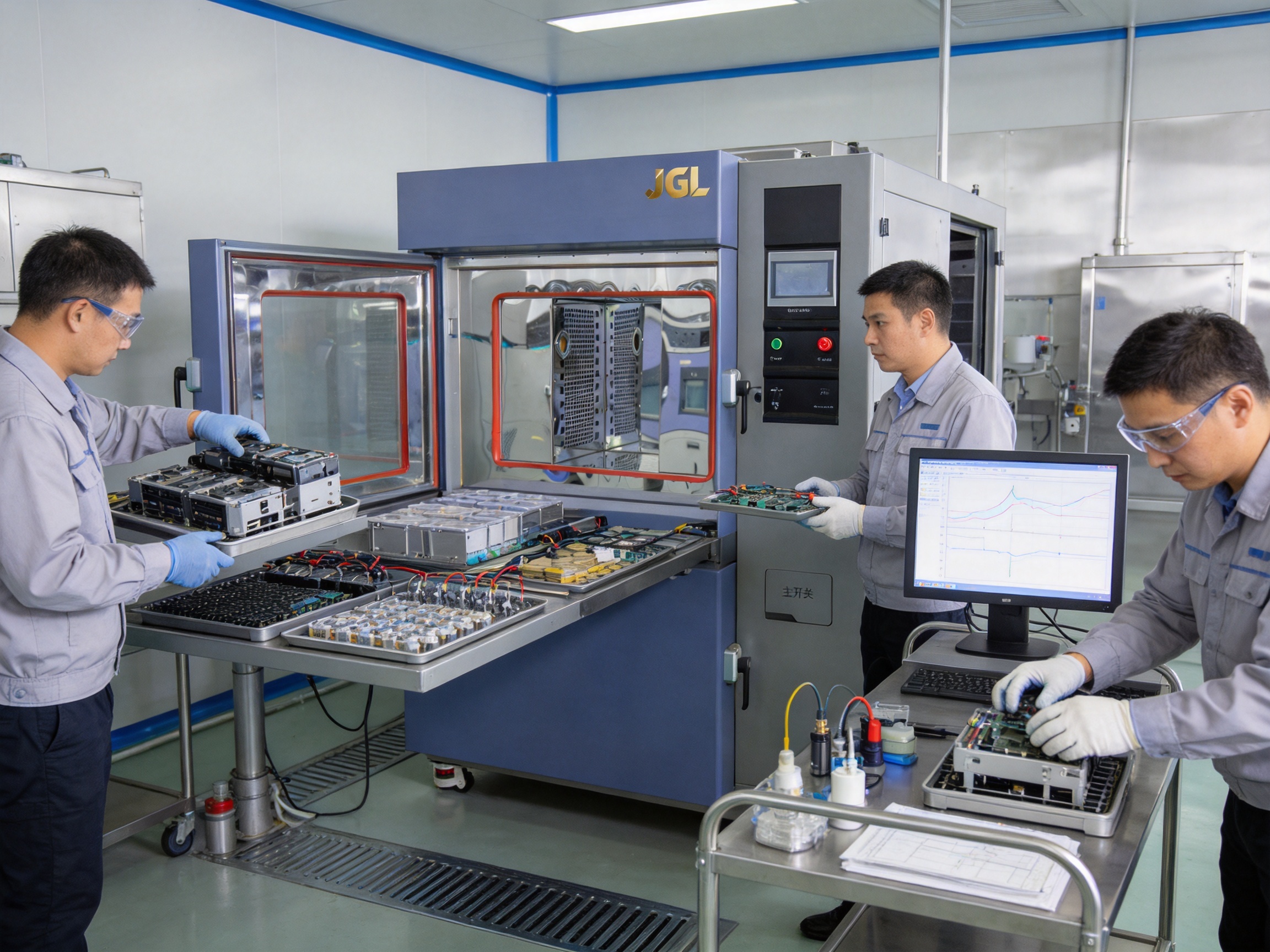
Product: U5QTH-150-A/W Rapid Thermal and Humidity Test System

PREV:UT-100-A High and Low Temperature Environmental Test Chamber: Precision, Reliability, and Flexible Laboratory Performance
NEXT:Multi-Beam Ion Beam Processing Systems for Precision Surface Engineering
NEXT:Multi-Beam Ion Beam Processing Systems for Precision Surface Engineering
Interested in cooperation or have questions?
Featured Products
Related products
Quick Link
Contact Information
- Tel: +86-13861043568
- E-mail: 1840784112@qq.com
- Add: Tianting District, Changzhou City, Jiangsu Province, China, No. 6 Hecircuit
Scan Code
Copyright © JIANGSU BAISHENG INDUSTRIAL CO., LTD.
All Rights Reserved. Privacy Custom Precision Laboratory Testing Equipment Manufacturers
