 English
 Español
NEWS
NEWS
NEWS
NEWS
NEWS
NEWS
NEWS
NEWS
NEWS
NEWS
NEWS
NEWS
NEWS
NEWS
NEWS
NEWS

Peng Shulan — Regional Sales Consultant
Home / Author / Peng Shulan — Regional Sales Consultant / Precision High and Low Temperature Test Cabinets for Reliable Environmental Testing
Precision High and Low Temperature Test Cabinets for Reliable Environmental Testing
Content
- 1 Why Precision Environmental Testing Matters
- 2 Product Overview and Technical Configuration
- 3 Precision Temperature and Humidity Control
- 4 Energy Efficiency and Operating Stability
- 5 Airflow Design and Panasonic Fan Technology
- 6 Chamber Construction and Corrosion Resistance
- 7 Condensate Management and Refrigeration Reliability
- 8 Advantages Compared with Basic Environmental Cabinets
- 9 Advanced Manufacturing and Engineering Strengths
- 10 Applications in Electronics and 3C Products
- 11 Applications in Automotive Components
- 12 Applications in Materials Testing
- 13 Applications in Product Development and Quality Inspection
- 14 Recommended Operating Practices
- 15 Maintenance and Service Considerations
- 16 How to Select the Appropriate Configuration
- 17 Technical Value for Global Laboratory Users
- 18 Quality, Reliability, and Competitive Position
- 19 Implementation in a Laboratory Test Program
- 20 Q&A
- 20.1 What is the main purpose of the UT-150-A?
- 20.2 What temperature ranges are available?
- 20.3 How large is the working chamber?
- 20.4 Does the cabinet control humidity?
- 20.5 What type of control system does it use?
- 20.6 Why are the Panasonic fans important?
- 20.7 What is the benefit of the film-coated mirror stainless-steel interior?
- 20.8 How is condensate managed?
- 20.9 Can the chamber be used for continuous testing?
- 20.10 What industries can use this cabinet?
- 20.11 Can the equipment be customized?
- 20.12 What should be checked before installation?
- 20.13 How often should the chamber be calibrated?
- 20.14 What makes this product different from a basic temperature cabinet?
- 21 Conclusion
- 22 References
- 23 Product: UT-150-A Precision High and Low Temperature Test Cabinet
Modern products must perform reliably across changing temperatures, demanding operating conditions, and long service intervals. Electronics, automotive components, electrical appliances, plastics, metals, composites, and advanced materials may be exposed to freezing environments, elevated temperatures, repeated thermal transitions, and controlled humidity conditions before they are released to the market. A precision environmental test chamber provides the controlled space required to reproduce these conditions safely and repeatedly.
The UT-150-A precision high and low temperature test cabinet is designed for this purpose. With a 150-liter working capacity, a temperature range reaching from -40°C to +150°C in one configuration, and a broader option extending from -70°C to +180°C, the cabinet supports product development, quality inspection, reliability verification, and material evaluation. Its compact internal volume is suitable for laboratories and production testing areas that require high control accuracy without installing a large walk-in system.
More than a simple heating and cooling enclosure, the UT-150-A combines a balanced environmental control system, dynamic PID regulation, water vapor partial pressure control, optimized airflow, durable interior materials, and selected electrical and refrigeration components. These features help users achieve stable test conditions, reduce unnecessary energy consumption, and improve the repeatability of test results.
The equipment is manufactured and supplied by JIANGSU BAISHENG INDUSTRIAL CO., LTD., a technology-driven laboratory equipment enterprise established in 2010. The company combines research and development capabilities with manufacturing coordination and international trade experience. Its development history reflects a gradual transition from electronic testing research to independently developed laboratory equipment, followed by broader engineering, quality management, and overseas market capabilities.
This article explains the design, performance advantages, applications, manufacturing strengths, and selection considerations of the UT-150-A precision high and low temperature test cabinet.
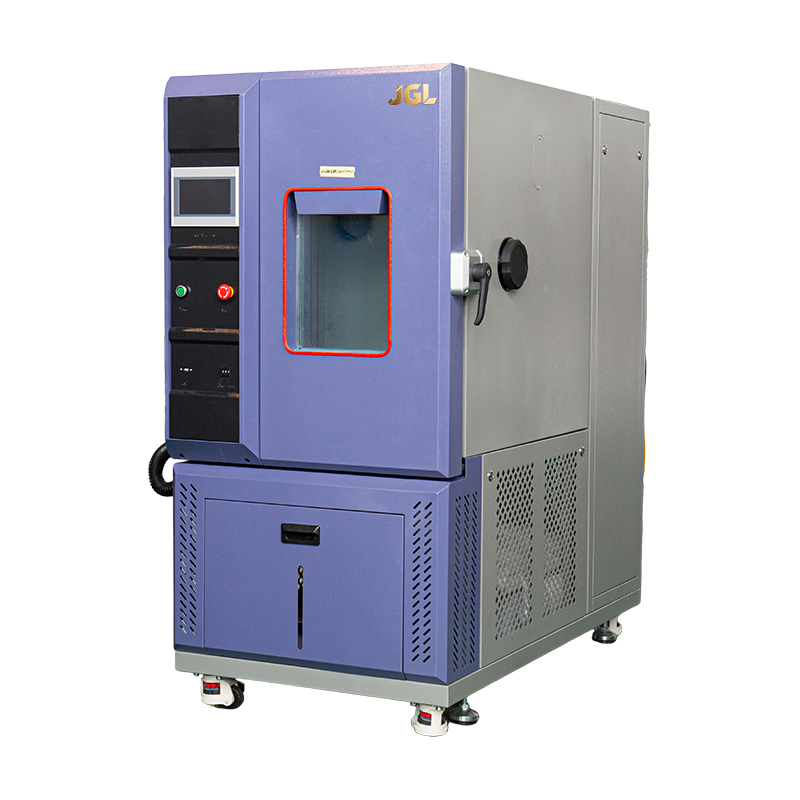
UT-150-A Precision High and Low Temperature Test Cabinet
Why Precision Environmental Testing Matters
Temperature can affect nearly every physical and electrical characteristic of a product. Batteries may experience changes in capacity and internal resistance. Electronic assemblies may develop intermittent faults when solder joints, connectors, or circuit boards expand and contract. Plastics can become brittle at low temperatures or soften at high temperatures. Adhesives, coatings, seals, and insulation materials may lose their intended performance when exposed to conditions beyond normal room temperature.
Testing under uncontrolled conditions makes it difficult to determine whether a product passed or failed because of its design, the surrounding environment, or fluctuations in the test equipment. A precision test cabinet reduces this uncertainty by creating a defined and repeatable environment. The operator can set a target temperature, allow the chamber to stabilize, place the specimen inside, and monitor its response over a specified period.
For development engineers, controlled testing can reveal weaknesses before mass production. For quality departments, it can provide a consistent inspection method between production batches. For material laboratories, it can support comparative studies involving thermal endurance, dimensional change, aging, and compatibility. For automotive and electronics manufacturers, it can help validate components that may be used in engine compartments, vehicle cabins, outdoor devices, industrial controls, or portable equipment.
Precision is especially important when a test includes small temperature differences or long exposure times. If the actual chamber temperature drifts significantly from the programmed value, the test may not represent the intended operating condition. Uneven airflow can also produce hot or cold zones, causing specimens in different locations to experience different environments. The UT-150-A addresses these concerns through controlled air circulation, regulated heating and refrigeration, and a balanced environmental design.
Product Overview and Technical Configuration
The UT-150-A has a nominal capacity of 150 liters. Its studio, or working chamber, measures 500 millimeters in width, 500 millimeters in depth, and 600 millimeters in height. This size provides enough space for many small and medium-sized components while preserving a relatively compact laboratory footprint.
Two temperature configurations are identified in the supplied product specifications. The first offers a range of -40°C to +150°C. The second offers a range of -70°C to +180°C. These configurations allow users to select equipment according to the severity of their test requirements. The lower-temperature version is suitable for many general environmental tests, while the extended version is intended for applications requiring deeper cold exposure or higher-temperature operation.
The external dimensions are approximately 780 millimeters wide, 1,550 millimeters deep, and 1,760 millimeters high. The listed equipment weight is approximately 350 kilograms for one configuration and 380 kilograms for the other. Because the equipment is substantial and includes refrigeration hardware, installation should be planned with suitable floor loading, ventilation, electrical supply, access clearance, and service space.
| Specification | Configuration One | Configuration Two |
|---|---|---|
| Product model | UT-150-A | UT-150-A |
| Nominal capacity | 150 liters | 150 liters |
| Temperature range | -40°C to +150°C | -70°C to +180°C |
| Working chamber dimensions | 500 × 500 × 600 mm | 500 × 500 × 600 mm |
| Overall dimensions | 780 × 1,550 × 1,760 mm | 780 × 1,550 × 1,760 mm |
| Approximate weight | 350 kg | 380 kg |
| Primary control approach | Dynamic PID and vapor pressure control | Dynamic PID and vapor pressure control |
The working volume is deliberately practical rather than oversized. A smaller chamber can reduce the amount of air that must be heated or cooled, which may support faster stabilization and lower operating energy compared with a much larger cabinet used for small specimens. At the same time, the 150-liter volume provides greater flexibility than a very small benchtop chamber.
Precision Temperature and Humidity Control
The control system is one of the most important factors distinguishing a professional environmental chamber from a basic heating or cooling box. The UT-150-A uses dynamic proportional-integral-derivative control to regulate environmental conditions. PID control continuously evaluates the difference between the programmed set point and the measured chamber condition. It then adjusts the relevant heating, cooling, and control actions to reduce that difference.
The proportional response addresses the immediate gap between the target and actual values. The integral response helps correct accumulated deviation over time. The derivative response helps anticipate changes and reduce unnecessary overshoot. A dynamic approach is valuable because the chamber load is not constant. The behavior of the system changes when a specimen is inserted, when the door is opened, when the temperature program changes, or when the equipment transitions between heating and refrigeration.
The product information also identifies water vapor partial pressure control as part of the high-accuracy environmental simulation strategy. Water vapor partial pressure is related to the amount of water vapor present in the air and its contribution to the total pressure. Managing this condition helps the chamber maintain a more controlled humidity environment, particularly when testing involves moisture-sensitive products or temperature changes that can alter condensation risk.
Balanced temperature and humidity control is important because temperature and moisture are interdependent. Cooling air can bring it closer to its dew point, while heating can reduce relative humidity. A system that controls only temperature may not provide the stable environmental conditions required for reliable humidity-sensitive testing. The UT-150-A is designed to coordinate these environmental variables rather than treating them as isolated functions.
Stable control does not mean that every test reaches its target instantly. The stabilization time depends on the selected temperature, specimen mass, specimen material, starting conditions, loading arrangement, and programmed rate of change. The value of a precision cabinet is that the transition and final condition can be managed consistently from one test to another.
For laboratories, repeatability is often more useful than simply achieving an extreme temperature. If the same test can be performed under the same controlled conditions, engineers can compare design revisions, suppliers, materials, and production batches with greater confidence.
Energy Efficiency and Operating Stability
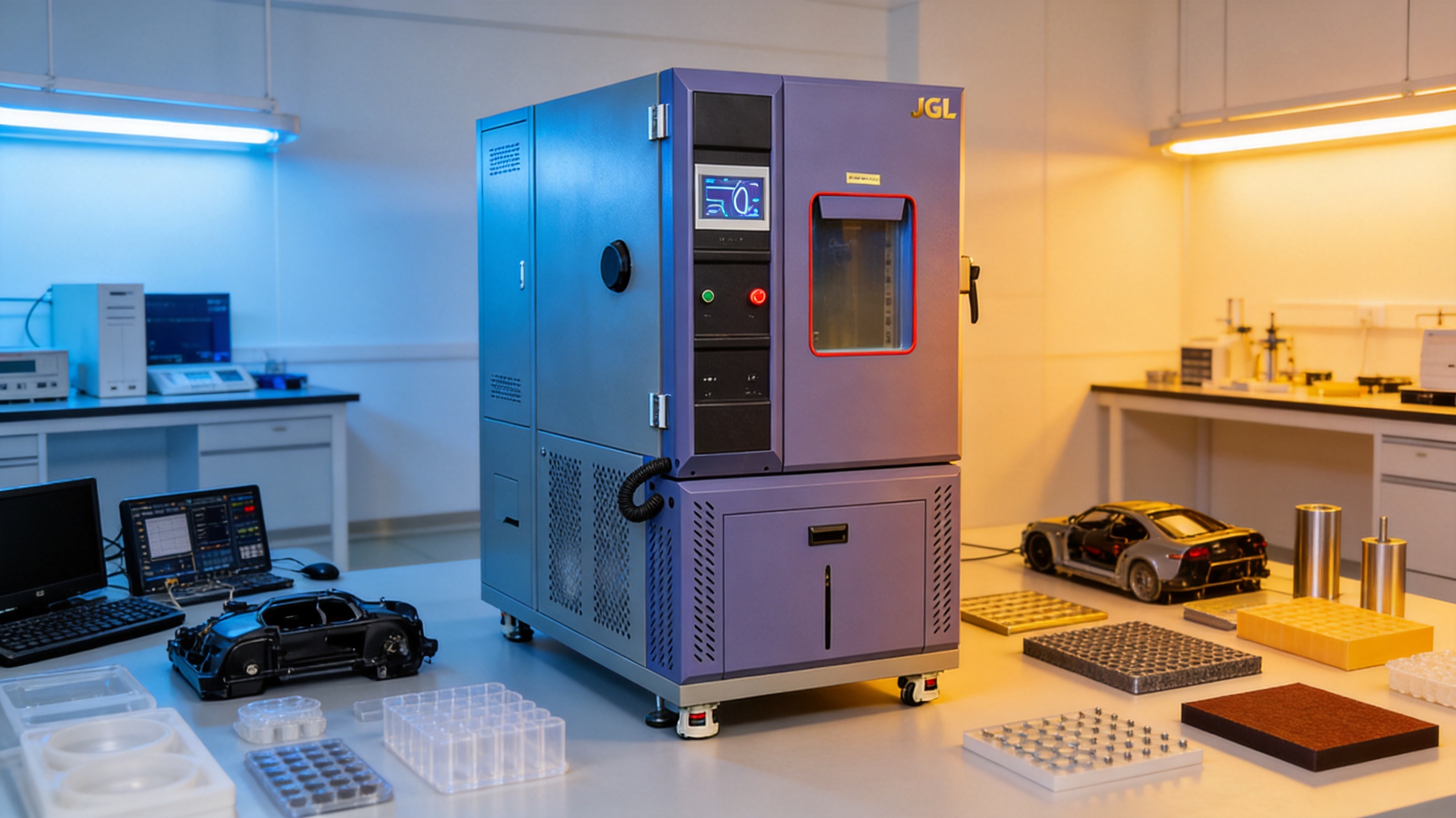
Environmental chambers can consume substantial energy because they must repeatedly heat, cool, and sometimes remove moisture from the working space. Energy use increases when the cabinet is poorly insulated, when the refrigeration system is inefficient, when the airflow is unbalanced, or when the controller frequently overshoots and corrects the set point.
The UT-150-A incorporates an optimized control and equipment design intended to reduce unnecessary energy consumption while maintaining test stability. Dynamic control helps limit excessive heating and cooling actions. A correctly matched refrigeration system can provide the required low-temperature performance without operating inefficiently under every condition. Careful airflow management also helps distribute energy throughout the working chamber.
Energy efficiency is beneficial for more than utility costs. Lower unnecessary heat generation can improve laboratory comfort and reduce the burden on room ventilation or air conditioning. Stable operation also helps protect specimens from unintended thermal cycling caused by aggressive control behavior.
The cabinet is intended for continuous operation, making component reliability especially important. In a research laboratory, a test may run overnight or for several days. In quality inspection, the chamber may be used repeatedly during each production shift. The use of selected electrical components and durable air-circulation equipment supports the demands of regular operation.
Operators can further improve efficiency through appropriate loading practices. The chamber should not be packed so tightly that airflow becomes restricted, and it should not be operated empty for long periods unless the test procedure requires it. Specimens should be arranged with sufficient space around them, and the door should remain closed during exposure whenever possible. Routine inspection of seals, filters, condensate paths, and refrigeration performance can also help preserve efficiency over the service life of the cabinet.
Airflow Design and Panasonic Fan Technology
Uniform airflow is essential in a temperature test cabinet. Even if the sensor records the correct temperature at one location, specimens in other locations may experience different conditions if air circulation is weak or poorly distributed. This is particularly important when testing several components at once or when specimens have different thermal masses.
The UT-150-A is fitted with Panasonic fans using bearings designed for high-temperature resistance up to 200°C. These fans support continuous air movement throughout the working chamber and are selected to remain dependable under demanding thermal conditions. Consistent circulation helps reduce temperature stratification and improves the uniformity of the environment around the test specimen.
High-temperature-resistant bearings are valuable because fan assemblies operate continuously during many environmental tests. Bearing degradation can lead to increased noise, reduced airflow, vibration, or eventual fan failure. A fan designed for the chamber’s operating conditions provides a stronger foundation for long-term stability than a general-purpose component used beyond its intended range.
Airflow must be strong enough to promote uniformity but controlled enough to avoid damaging delicate specimens or creating excessive turbulence. The chamber’s internal layout, fan location, duct arrangement, and control logic work together to direct air through the working space. Operators should avoid blocking air outlets or placing large specimens directly against circulation paths.
Compared with basic temperature cabinets that rely on limited natural convection, a forced-air environmental chamber offers more consistent conditions around the test load. This advantage becomes increasingly important when the test objective involves comparison, qualification, or formal documentation.
Chamber Construction and Corrosion Resistance
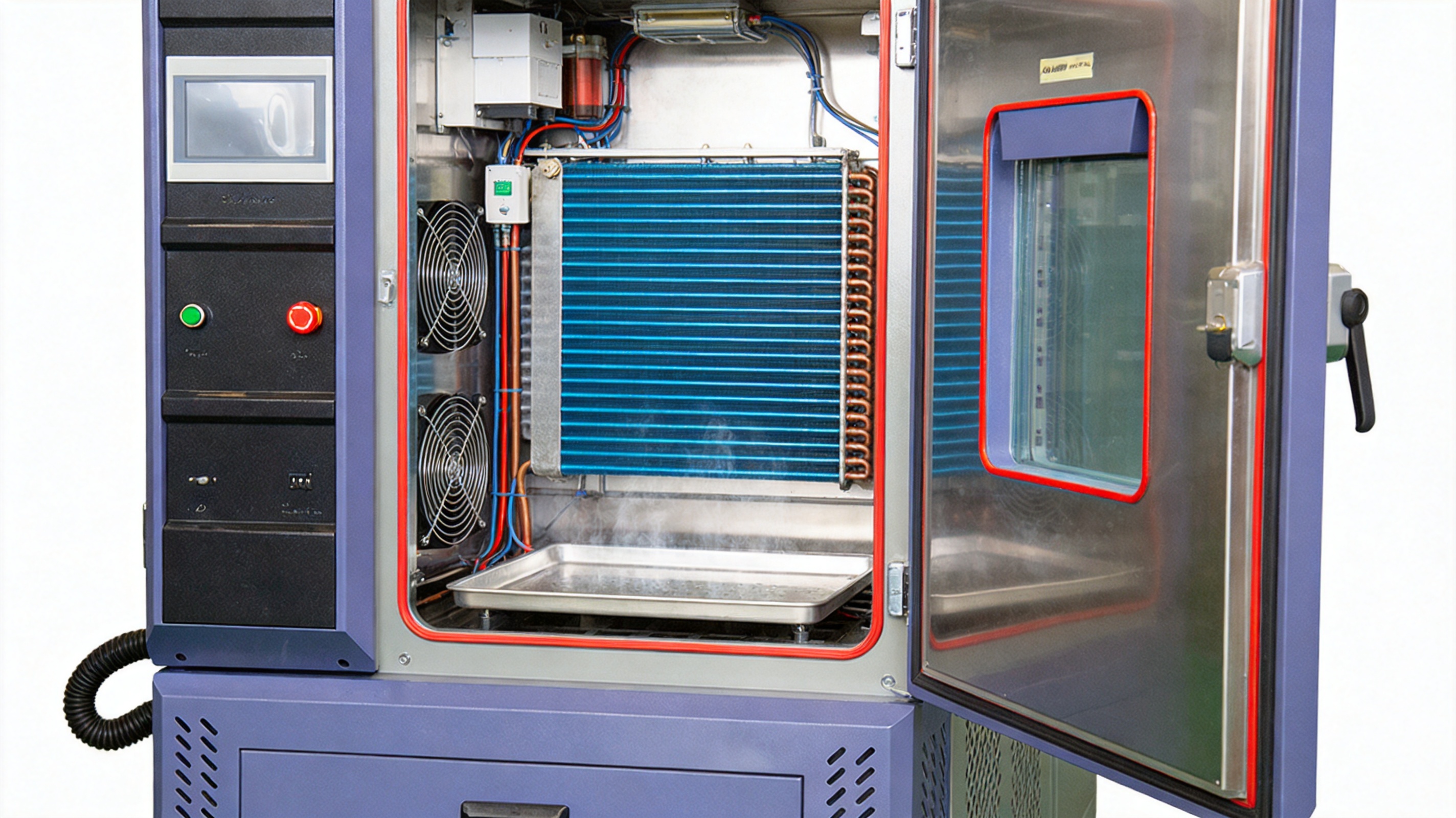
The inner chamber is made from film-coated mirror stainless steel. This material provides a smooth, corrosion-resistant surface that is suitable for repeated exposure to humidity, condensation, and temperature changes. The reflective finish also makes the interior easier to inspect and clean.
Corrosion resistance is especially important in humidity testing. Condensation may form when a specimen or chamber surface is below the dew point. If moisture remains in contact with ordinary metal surfaces, oxidation and surface deterioration can occur. A stainless-steel interior with a protective finish helps reduce this risk and supports a longer service life.
The smooth interior is also practical for maintenance. Dust, residue, and moisture are easier to identify and remove from a clean, reflective surface. A well-maintained interior helps prevent contamination from affecting later tests. Laboratories handling materials, coatings, or small components should establish cleaning procedures that are compatible with the chamber’s internal finish.
The doors use adjustable damping hinges. These hinges help provide controlled door movement and reduce the likelihood of sudden impact during opening or closing. Damping hardware can improve operator comfort and reduce mechanical stress on the door, frame, and sealing system. It also allows the door action to be adjusted as required during service.
Door construction is a critical part of environmental chamber performance. A reliable seal limits the exchange of room air with chamber air. Unwanted air leakage can slow stabilization, increase energy consumption, and affect humidity control. Operators should inspect the door seal regularly and avoid closing the door on cables, packaging, or other objects that may create a gap.
Condensate Management and Refrigeration Reliability
Low-temperature and humidity tests can produce condensate during cooling, warming, or defrosting. Water must be collected and directed away from sensitive components. If condensate remains on ordinary metal surfaces, corrosion may develop and eventually affect the cabinet structure or refrigeration system.
The UT-150-A includes a stainless-steel condensate tray. The tray is designed to resist corrosion from defrosting condensate water and to protect the compressor casing and surrounding equipment. This detail may appear simple, but condensate management has a direct effect on long-term reliability.
Refrigeration performance is also central to the lower end of the temperature range. Achieving -40°C requires a refrigeration system capable of removing heat efficiently and maintaining control under changing loads. The extended configuration reaching -70°C requires an even more demanding refrigeration design and may involve additional system complexity. Accurate control depends not only on the compressor but also on heat exchangers, refrigerant circuits, insulation, sensors, defrost management, and controller coordination.
A reliable refrigeration system should operate predictably across repeated cycles. Rapid transitions between ambient, high temperature, and low temperature create mechanical and thermal stresses. Proper component selection and engineering integration help reduce the risk of unstable performance.
Users should follow the manufacturer’s operating and maintenance guidance for refrigeration equipment. Adequate room ventilation, suitable ambient conditions, clean heat rejection surfaces, and timely service are important for preserving low-temperature capability. The chamber should also be allowed to complete appropriate defrost or recovery procedures when required by the test program.
Advantages Compared with Basic Environmental Cabinets
The UT-150-A offers several advantages over basic temperature cabinets and general-purpose heating or cooling enclosures. The first is its broader environmental control concept. Instead of relying only on a simple thermostat, it combines dynamic PID regulation with water vapor partial pressure control to support more precise simulation.
The second advantage is the combination of a practical capacity and an extensive temperature range. A 150-liter working volume is large enough for many component-level tests but small enough for laboratory use. The option to reach -70°C or +180°C expands the range of possible applications beyond standard room-temperature reliability checks.
The third advantage is attention to construction details. Film-coated mirror stainless steel, adjustable damping hinges, a stainless-steel condensate tray, and high-temperature-resistant fan bearings all address common sources of wear or instability. These features can reduce maintenance concerns and support more dependable long-term use.
The fourth advantage is the focus on repeatability. A balanced temperature and humidity system, controlled airflow, and selected electrical components help create consistent test conditions. Repeatability is a major distinction between professional laboratory equipment and low-cost cabinets intended only for approximate temperature exposure.
The fifth advantage is suitability for continuous operation. Product development, qualification testing, and quality control often involve extended test cycles. Equipment designed around durable components and controlled energy use can deliver better value when it is operated frequently or for long periods.
Finally, the equipment is backed by a supplier with a technical development background rather than a purely trading-oriented business model. The company’s history includes electronic testing research, independently developed production lines, increased research and development investment, and quality system improvements. This background supports a more engineering-oriented approach to product customization and technical communication.
Advanced Manufacturing and Engineering Strengths
Reliable environmental test equipment depends on more than the visible cabinet. Manufacturing quality must be maintained across mechanical fabrication, thermal insulation, refrigeration assembly, electrical integration, sensor installation, control programming, wiring, inspection, and final testing. A weakness in any one of these areas can affect the overall system.
JIANGSU BAISHENG INDUSTRIAL CO., LTD. began with a technical foundation in electronic testing. According to the supplied company history, its predecessor was a research and development studio established in 2013. The founding engineers had experience in laboratory equipment and safety compliance testing. This technical origin is relevant because it places emphasis on measurement, controlled conditions, and application-specific performance.
In 2016, the organization developed its first independently developed production line and launched laboratory equipment with independent intellectual property rights. This transition from a technical studio to an enterprise capable of organized production reflects a move toward repeatable manufacturing processes. Product development can be translated into documented fabrication, assembly, inspection, and delivery procedures.
In 2019, the company adopted a technology and trade development strategy. It increased research and development investment, introduced high-level technical personnel, and expanded overseas markets. For environmental test chambers, international market experience can improve the ability to communicate technical specifications, adapt equipment to different customer requirements, and support export-oriented documentation and service.
By 2022, the company had further improved its quality management system, and its products passed rigorous technical specification certifications according to the supplied information. Quality management is important in chamber manufacturing because performance depends on controlled consistency. The same model must be assembled with stable materials, correctly installed sensors, reliable wiring, and repeatable control parameters.
The company’s stated focus on precision design supports customization. Laboratories may require different temperature ranges, test volumes, access ports, shelving arrangements, communication interfaces, humidity capabilities, or safety functions. A manufacturer with an internal research and development team can evaluate these requirements from a system perspective rather than simply combining unrelated components.
Advanced manufacturing also involves component selection. The UT-150-A uses premium international electrical components and Panasonic fans with high-temperature-resistant bearings. Selecting dependable components can improve electrical safety, service life, and operational consistency. However, component quality must be combined with correct installation, appropriate protection, accurate wiring, and final functional inspection.
Manufacturing strength is also visible in the integration of mechanical and thermal design. The stainless-steel chamber, door hardware, fan system, condensate tray, refrigeration system, and controller must work as one coordinated unit. A cabinet may have strong individual components but still perform poorly if the airflow, sensor position, insulation, and control settings are not properly matched.
The company’s stated values, summarized as precision in craftsmanship and innovation for the long term, align with the needs of laboratory equipment users. A test chamber is often purchased as a long-term asset. Customers therefore need not only a product that reaches a specified temperature but also a supplier that can provide technical clarification, configuration support, spare parts coordination, and ongoing product improvement.
Applications in Electronics and 3C Products
Electronic products and 3C products are sensitive to temperature-related changes. Circuit boards, connectors, displays, batteries, sensors, cables, housings, and adhesives may respond differently to cold and heat. The UT-150-A can be used to expose these parts to controlled temperatures and evaluate their operation, appearance, dimensional stability, and reliability.
During product development, engineers can place prototypes in the chamber to investigate startup behavior at low temperature, operation at elevated temperature, and recovery after exposure. These tests can identify design weaknesses before production tooling is finalized. The chamber can also support comparison between alternative materials or component suppliers.
For quality inspection, a defined temperature cycle can be applied to samples from different batches. If a product experiences a fault after a controlled exposure, the quality team can investigate whether the cause is related to manufacturing variation, material selection, assembly quality, or design margin.
Environmental testing may also be combined with electrical monitoring. For example, a device can operate while the chamber follows a programmed temperature profile. Engineers can record voltage, current, signal quality, communication performance, switching behavior, or fault codes. The test cabinet provides the environmental condition while external instruments collect product data.
Applications in Automotive Components
Automotive components are exposed to wide temperature variations during storage, transport, operation, and seasonal use. Interior electronics may face cold starts and cabin heat. Engine-bay components may experience elevated temperatures and rapid changes. Sensors, control modules, lighting parts, connectors, seals, and plastic housings all require suitable thermal performance.
The UT-150-A is appropriate for component-level environmental simulation and reliability verification. Its temperature range allows engineers to assess whether a part maintains mechanical integrity, electrical functionality, and acceptable appearance across selected conditions.
Testing can involve a static exposure at a fixed temperature, a sequence of high and low temperature steps, or repeated cycles. The exact procedure should be determined by the relevant product specification, customer requirement, or industry test method. The chamber’s role is to provide stable and repeatable conditions for that procedure.
Automotive suppliers can also use the cabinet during failure analysis. A component that operates correctly at room temperature but fails in a cold or hot environment can be returned to the chamber for controlled reproduction. Reproducing the failure helps engineers identify the root cause and verify corrective actions.
Applications in Materials Testing
Materials respond to temperature through expansion, contraction, softening, hardening, aging, embrittlement, and changes in chemical or mechanical properties. Plastics may become brittle at low temperature. Rubber and sealing materials may lose elasticity. Coatings can crack or delaminate. Metals and composites may experience dimensional or stress-related changes.
The UT-150-A can support thermal endurance and comparative material evaluation. Test specimens can be weighed, measured, inspected, or mechanically tested before and after exposure. When the chamber is used as part of a broader laboratory procedure, it can help establish how a material behaves under controlled environmental stress.
Material tests are often more meaningful when specimen preparation and chamber loading are standardized. Samples should have consistent dimensions, surface condition, orientation, and exposure time. The number and placement of specimens should also be documented. These practices help distinguish true material differences from test variation.
The chamber’s corrosion-resistant interior is useful for material testing because it can be maintained between experiments. Users should still assess whether a particular chemical, vapor, coating, or specimen could react with chamber surfaces or seals. Special applications may require additional materials or customized protection.
Applications in Product Development and Quality Inspection
In product development, the chamber can be integrated into a staged verification process. Early prototypes may undergo exploratory thermal exposure. Design revisions can then be compared under the same conditions. Later, production-intent samples can be tested for confirmation. This approach allows environmental testing to support decisions throughout the development cycle rather than only at the end.
In quality inspection, the cabinet can be used for incoming material checks, process verification, batch sampling, and final product evaluation. A documented test procedure can specify sample quantity, preconditioning, temperature set points, exposure times, stabilization requirements, and acceptance criteria.
The 150-liter capacity is useful for laboratories that need to test several small items or one medium-sized assembly without investing in a large industrial chamber. It can also serve as a dedicated chamber for a particular test method, reducing scheduling conflicts with larger equipment.
Because the equipment is designed for continuous operation, it can support repeated quality testing throughout the working day. Its energy-saving design may be beneficial in facilities where multiple environmental tests are performed regularly.
Recommended Operating Practices
Before beginning a test, the operator should confirm that the selected temperature range matches the cabinet configuration. The specimen should be suitable for the planned temperature and humidity conditions, and any hazardous reaction, pressure buildup, or material release should be assessed in advance.
The chamber should be installed on a stable, level surface with sufficient clearance around the equipment. The surrounding room should provide appropriate ventilation and ambient conditions for heat rejection. The electrical supply should match the equipment requirements, and protective devices should be installed according to the applicable facility rules.
Specimens should be distributed to allow air circulation. Large surfaces should not completely block fan outlets or return paths. If multiple specimens are tested, their locations should be recorded so that the same arrangement can be repeated. Sensitive items may require fixtures that prevent movement during temperature cycling.
After loading, the door should be closed securely. The operator should allow the chamber to stabilize before beginning measurements unless the test method specifically defines a different procedure. The actual chamber condition, specimen condition, and test duration should be recorded rather than relying only on the programmed set point.
At the end of a low-temperature test, opening the door immediately in a warm, humid room may cause condensation. A controlled recovery process can reduce moisture formation and protect both the specimens and the chamber. The appropriate recovery procedure depends on the test conditions and the equipment operating instructions.
Maintenance and Service Considerations
Routine maintenance helps preserve accuracy, safety, and service life. Operators should inspect the door seal for wear, contamination, deformation, or damage. The inner chamber should be cleaned using methods compatible with the film-coated stainless-steel surface. Condensate paths and the stainless-steel tray should be checked for blockage or residue.
Fan performance should be monitored through airflow, unusual noise, vibration, or temperature behavior. A reduction in circulation can affect uniformity even if the controller continues to display a normal set point. Refrigeration components should be inspected and serviced by qualified personnel, particularly when the cabinet is used frequently at very low temperatures.
Temperature sensors and control instruments should be checked periodically against a suitable reference. Calibration intervals should be determined by the laboratory’s quality system, usage intensity, risk assessment, and applicable test requirements. Calibration records should identify the instrument, date, reference standard, measured deviation, and any corrective action.
Electrical connections should be inspected during scheduled service. Loose terminals, damaged insulation, or abnormal heating can create safety and reliability risks. Maintenance should always follow the equipment documentation and applicable safety procedures.
How to Select the Appropriate Configuration
The first selection factor is the lowest and highest temperature required by the test program. Customers requiring general high and low temperature testing may select the -40°C to +150°C configuration. Applications involving deeper cold or higher heat should consider the -70°C to +180°C configuration.
The second factor is specimen size and quantity. The 500 × 500 × 600 millimeter working chamber should be compared with the actual specimen dimensions, fixture requirements, cable routing, and airflow clearance. The usable capacity is not simply the total geometric volume; space must be reserved for circulation and safe placement.
The third factor is humidity functionality. If a test requires defined humidity or water vapor conditions, the customer should confirm the required humidity range, control accuracy, ramp characteristics, and measurement method with the supplier. Different test programs may require different humidity capabilities.
The fourth factor is testing frequency. A laboratory performing occasional development checks may prioritize flexibility and ease of use. A production facility running repeated cycles may place greater emphasis on energy efficiency, service access, data recording, and long-term component durability.
The fifth factor is customization. Depending on the application, customers may need access ports, additional shelves, special fixtures, external communication, safety interlocks, product monitoring connections, or modified internal materials. These requirements should be discussed before manufacturing so that they can be incorporated into the system design.
Technical Value for Global Laboratory Users
International laboratory users often need equipment that combines clear specifications with practical communication and configuration support. The supplier’s technology and trade background is intended to address both needs. The company has developed its business through research and development, production-line establishment, quality system improvement, and overseas market expansion.
For international purchasing teams, important evaluation points include product configuration, installation requirements, operating conditions, maintenance responsibilities, packaging, delivery arrangements, documentation, and after-sales support. A technically capable manufacturer can help clarify these issues before purchase and reduce the risk of selecting a cabinet that does not match the intended test procedure.
Customization is another important consideration. Laboratories differ in voltage standards, room layouts, specimen sizes, safety policies, and data management requirements. A manufacturer with an internal engineering capability can review these variables and propose a configuration rather than offering only a fixed product.
At the same time, customers should request complete technical information for their specific order. The temperature range, humidity performance, uniformity, fluctuation, recovery time, power requirements, safety functions, and calibration approach should be confirmed in writing. The supplied specifications provide the main product framework, while the final technical agreement should define the exact purchased configuration.
Quality, Reliability, and Competitive Position
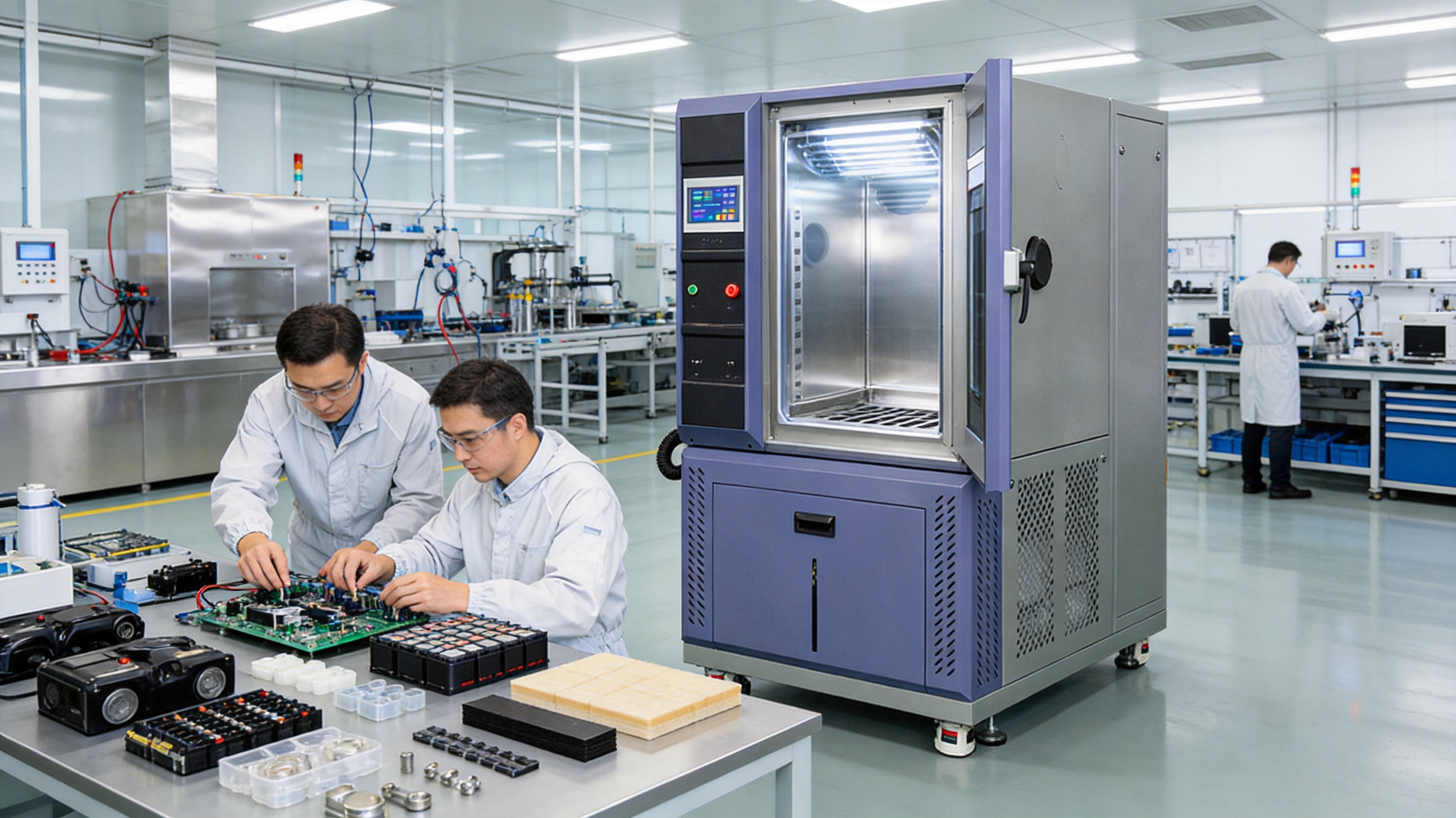
The competitive value of the UT-150-A lies in the combination of performance range, control precision, internal durability, airflow stability, energy awareness, and application flexibility. Competing products may provide one or two of these characteristics, but a professional laboratory cabinet must coordinate all of them.
A broad temperature range alone does not guarantee useful test performance. The chamber must also control the target condition, circulate air evenly, protect against condensation, and maintain mechanical integrity during repeated cycles. The UT-150-A’s balanced system approach is intended to address these requirements together.
Premium components also have value when they are properly integrated. International-brand electrical elements and high-temperature-resistant Panasonic fan bearings can support dependable operation, but the final result depends on correct assembly, wiring, controller configuration, and inspection. The company’s technical development background provides a foundation for this integration.
The product is also competitive in terms of laboratory practicality. Its 150-liter volume can fit many component-level applications, while the cabinet remains more manageable than a large floor-standing chamber intended for bulky assemblies. The corrosion-resistant interior and condensate tray support maintenance, and adjustable damping hinges contribute to everyday usability.
For organizations seeking custom precision laboratory equipment, the ability to discuss modifications with a research and development team can be as important as the standard specification. Requirements may evolve as a test program develops. A supplier that understands laboratory workflows can help adapt the equipment to new applications while preserving the underlying environmental control principles.
Implementation in a Laboratory Test Program
A successful environmental test program begins with a clearly defined objective. The laboratory should identify whether the test is intended to discover design weaknesses, verify a specification, compare materials, support quality inspection, or reproduce a field failure. The objective determines the temperature profile, specimen arrangement, exposure duration, and measurement plan.
The next step is to create a test procedure. The procedure should define the starting condition, ramp or transition requirements, set points, stabilization criteria, dwell time, number of cycles, specimen monitoring, and acceptance criteria. If humidity is involved, the procedure should define the target condition and the method for confirming it.
Before routine testing, the laboratory should perform an equipment qualification or verification process appropriate to its quality system. This may include checking temperature uniformity, fluctuation, recovery, sensor agreement, door sealing, and alarm operation. The results can establish confidence that the cabinet is suitable for the intended work.
During routine operation, each test should be traceable. Records may include the operator, date, equipment identification, specimen identification, program settings, actual chamber data, observations, deviations, and final disposition. Such records make the environmental chamber a useful part of a broader quality system rather than an isolated appliance.
When the chamber is used for failure analysis, the original failure condition should be documented carefully. Engineers should avoid changing several variables at once because that can make the cause difficult to identify. Controlled temperature exposure, followed by electrical or mechanical evaluation, can help separate thermal effects from other potential causes.
Q&A
What is the main purpose of the UT-150-A?
The UT-150-A is designed for controlled high and low temperature environmental testing. It can support product development, quality inspection, reliability testing, environmental simulation, stress testing, and material evaluation for electronics, 3C products, automotive components, electrical appliances, plastics, metals, and composites.
What temperature ranges are available?
The supplied specifications identify a -40°C to +150°C configuration and a -70°C to +180°C configuration. Customers should select the configuration according to the lowest and highest conditions required by their test procedure and confirm the final specification before ordering.
How large is the working chamber?
The working chamber measures 500 × 500 × 600 millimeters and has a nominal capacity of 150 liters. Specimens should be arranged with adequate clearance for air circulation rather than filling the entire geometric volume.
Does the cabinet control humidity?
The product information describes water vapor partial pressure control and a balanced temperature and humidity control system. The exact humidity range, accuracy, and operating conditions should be confirmed for the selected configuration and application.
What type of control system does it use?
The cabinet uses dynamic PID control to regulate environmental conditions. This approach helps respond to changing loads, door openings, temperature transitions, and the effects of specimen insertion while reducing deviation from the programmed set point.
Why are the Panasonic fans important?
The cabinet uses Panasonic fans with bearings resistant to temperatures up to 200°C. These fans support continuous air circulation and help maintain more consistent conditions throughout the chamber, particularly during elevated-temperature operation.
What is the benefit of the film-coated mirror stainless-steel interior?
The interior provides corrosion resistance, a smooth surface, and easier maintenance. These characteristics are useful when the chamber is exposed to humidity, condensation, and repeated temperature changes.
How is condensate managed?
The equipment includes a stainless-steel condensate tray designed to resist corrosion from defrosting condensate water. Proper condensate management helps protect the compressor casing and surrounding components.
Can the chamber be used for continuous testing?
Yes. The product is designed for reliable operation under continuous use. Actual operating schedules should follow the manufacturer’s instructions, maintenance recommendations, and the requirements of the specific test method.
What industries can use this cabinet?
Typical applications include electronics, electrical appliances, 3C products, automotive components, advanced materials, plastics, metals, and composites. The cabinet can be used by research laboratories, engineering departments, quality inspection teams, and manufacturing organizations.
Can the equipment be customized?
The supplier specializes in precision laboratory equipment and provides custom solutions. Potential customization areas may include temperature range, chamber arrangement, fixtures, access ports, monitoring connections, and other application-specific requirements. All modifications should be confirmed with the engineering team before production.
What should be checked before installation?
Users should confirm floor strength, equipment clearance, room ventilation, ambient conditions, electrical supply, delivery access, and service space. The final installation requirements depend on the selected configuration and local facility conditions.
How often should the chamber be calibrated?
Calibration frequency depends on the laboratory’s quality system, usage intensity, risk assessment, and applicable standards. Temperature sensors and control performance should be checked against suitable reference equipment, with results recorded and reviewed.
What makes this product different from a basic temperature cabinet?
The UT-150-A combines dynamic PID regulation, water vapor partial pressure control, forced-air circulation, a broad temperature range, selected electrical components, high-temperature-resistant fans, a corrosion-resistant interior, and stainless-steel condensate management. This integrated design supports more repeatable and durable laboratory testing.
Conclusion
The UT-150-A precision high and low temperature test cabinet is designed for organizations that require dependable environmental simulation in a compact 150-liter format. Its available temperature ranges, from -40°C to +150°C or from -70°C to +180°C, make it suitable for a wide range of development, inspection, and reliability applications.
Its main strengths include dynamic PID control, water vapor partial pressure management, optimized energy use, premium electrical components, Panasonic high-temperature-resistant fans, a film-coated mirror stainless-steel interior, adjustable damping hinges, and a stainless-steel condensate tray. Together, these features address the key requirements of stable, repeatable, and maintainable environmental testing.
The supplier’s development history adds further value. Its foundation in electronic testing research, transition to independent production, investment in research and development, overseas market experience, and quality system improvement support an engineering-oriented approach to laboratory equipment manufacturing. This is important for customers seeking not only a standard cabinet but also technical assistance and customized precision testing solutions.
When correctly selected, installed, operated, and maintained, the UT-150-A can become an important part of a laboratory’s product development and quality assurance system. It enables engineers to test with greater consistency, identify weaknesses earlier, compare materials more accurately, and build stronger evidence for product reliability.
References
1. Product specification and application information supplied for the UT-150-A precision high and low temperature test cabinet.
2. Company profile and development history supplied by JIANGSU BAISHENG INDUSTRIAL CO., LTD.
3. General principles of environmental testing for electronic products, components, and materials.
4. General laboratory practices for temperature and humidity control, specimen handling, calibration, and test traceability.
5. General engineering principles for PID control, forced-air circulation, refrigeration systems, condensate management, and corrosion-resistant chamber construction.
Product: UT-150-A Precision High and Low Temperature Test Cabinet
PREV:Advanced AC/DC Withstanding Voltage and Insulation Resistance Testing for Modern Electrical Safety
NEXT:Double-Layer Explosion-Proof Temperature Test Chamber for Safer High and Low Temperature Testing
NEXT:Double-Layer Explosion-Proof Temperature Test Chamber for Safer High and Low Temperature Testing
Interested in cooperation or have questions?
Featured Products
Related products
Quick Link
Contact Information
- Tel: +86-13861043568
- E-mail: 1840784112@qq.com
- Add: Tianting District, Changzhou City, Jiangsu Province, China, No. 6 Hecircuit
Scan Code
Copyright © JIANGSU BAISHENG INDUSTRIAL CO., LTD.
All Rights Reserved. Privacy Custom Precision Laboratory Testing Equipment Manufacturers
