 English
 Español
NEWS
NEWS
NEWS
NEWS
NEWS
NEWS
NEWS
NEWS
NEWS
NEWS
NEWS
NEWS
NEWS
NEWS
NEWS
NEWS

Peng Shulan — Regional Sales Consultant
Home / Author / Peng Shulan — Regional Sales Consultant / Double-Layer Explosion-Proof Temperature Test Chamber for Safer High and Low Temperature Testing
Double-Layer Explosion-Proof Temperature Test Chamber for Safer High and Low Temperature Testing
Content
- 1 Product Overview
- 2 Key Technical Specifications
- 3 Why Explosion-Proof Temperature Testing Matters
- 4 Double-Layer Structure: More Testing Capacity Without More Floor Space
- 5 Safety Advantages Over Conventional Competitor Chambers
- 6 Temperature Control and Year-Round Stability
- 7 Applications in Battery Testing
- 8 Applications in Electronics and Components
- 9 Applications in Material Science and Industrial Quality Assurance
- 10 Manufacturing Strength Behind the Chamber
- 11 Precision Structural Manufacturing
- 12 Advanced Refrigeration and Dual Evaporator Integration
- 13 Integrated Safety System Manufacturing
- 14 Digital Control and User-Friendly Operation
- 15 Customization Capability and Application Support
- 16 Quality Management and Long-Term Reliability
- 17 Competitive Advantages Summary
- 18 Best Practices for Using the Chamber
- 19 Q&A Section
- 19.1 Q1: What is the main purpose of the U2T(H)-EX80-A double-layer explosion-proof temperature test chamber?
- 19.2 Q2: Why is a double-layer structure useful?
- 19.3 Q3: What temperature ranges are available?
- 19.4 Q4: How does the chamber improve safety during battery testing?
- 19.5 Q5: What is the benefit of the explosion-proof viewing window?
- 19.6 Q6: Why are dual evaporators important?
- 19.7 Q7: Is the chamber suitable only for batteries?
- 19.8 Q8: How does this product compare with ordinary high and low temperature chambers?
- 19.9 Q9: What makes the manufacturer’s production capability important?
- 19.10 Q10: Can the chamber support customized testing requirements?
- 20 Conclusion
- 21 References
- 22 Product: U2T(H)-EX80-A Double-Layer Explosion-Proof Temperature Test Chamber
Modern laboratories and industrial quality departments face a difficult challenge: they must test increasingly powerful batteries, electronics, chemical materials, and advanced components under extreme thermal conditions, while also keeping operators, facilities, and test data protected. A conventional temperature chamber may be sufficient for simple environmental simulation, but it is not enough when the sample has a potential risk of ignition, gas release, pressure rise, thermal runaway, or explosive reaction. For these demanding applications, the U2T(H)-EX80-A double-layer explosion-proof temperature test chamber offers a safer, more efficient, and more flexible solution.
The product is designed as a double-layer high and low temperature test chamber with reinforced explosion-proof protection, integrated fire prevention systems, rapid emergency response functions, and precise temperature control. It provides two independent test spaces in a compact vertical structure, allowing laboratories to conduct simultaneous experiments, comparative tests, or batch verification without occupying the floor area of two separate chambers. For battery research, electronics validation, materials testing, automotive parts development, and aerospace component qualification, this structure can significantly improve testing efficiency.
Beyond its safety configuration, the chamber is also built for long-term reliability. Its design includes an explosion-proof chain at the door, a reinforced explosion-proof viewing window, automatic fire extinguishing, smoke detection, fine water mist sprinkler protection, a rapid water injection device, and an explosion-proof pressure relief device. The use of dual evaporators supports stable temperature operation and helps maintain reliable performance throughout the year without frost-related disruption. These features make the U2T(H)-EX80-A a strong choice for laboratories that require controlled thermal environments and enhanced risk control.
JIANGSU BAISHENG INDUSTRIAL CO., LTD. supports the product with a technology-driven manufacturing philosophy. The company’s background in research, precision engineering, electronic testing, and laboratory safety equipment gives it the ability to provide customized solutions instead of only standard equipment supply. Its manufacturing strength is reflected in structural design, refrigeration system integration, safety mechanism coordination, electrical control development, quality inspection, and application-oriented customization. The result is a test chamber built not only to reach temperature setpoints, but also to manage real-world hazards that may occur during high-risk testing.
U2T(H)-EX80-A Double-Layer Explosion-Proof Temperature Test Chamber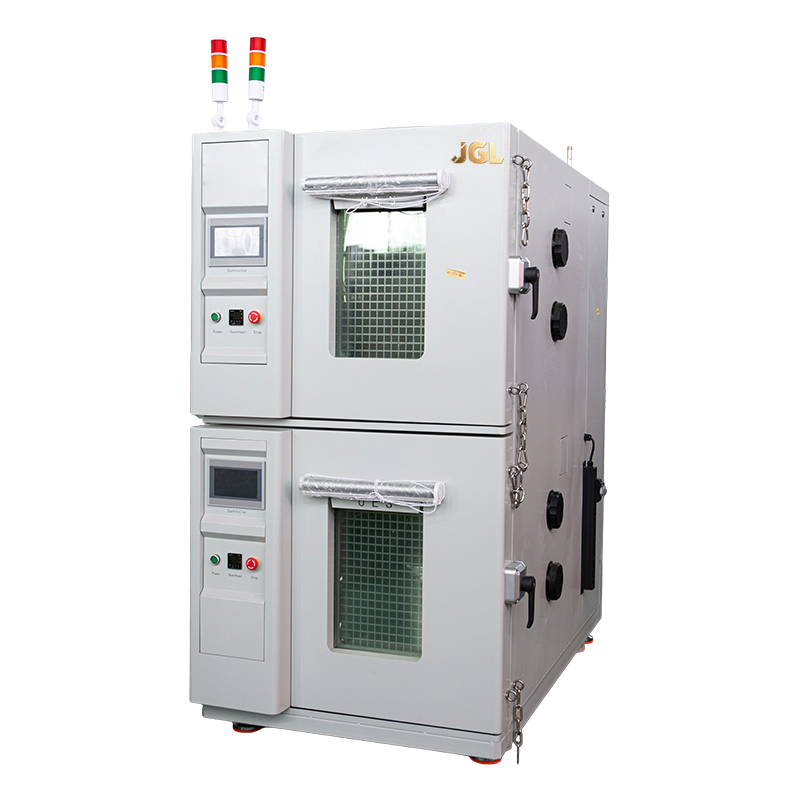
Product Overview
The U2T(H)-EX80-A is a double-layer explosion-proof high and low temperature test chamber intended for controlled environmental testing where safety is a major concern. It is suitable for use with lithium-ion batteries, nickel-metal hydride batteries, electronic modules, polymer materials, composites, chemical samples, automotive components, and other products that must be validated under high and low temperature conditions. The chamber can simulate thermal stress, temperature cycling, storage temperature, operating temperature, and accelerated environmental exposure.
Its double-layer structure is one of its most practical advantages. Instead of using one large chamber or two separate machines, the product provides upper and lower compartments in a single unit. This arrangement is useful when users need to compare two samples under different conditions, repeat a test under the same temperature program, or separate risky samples while maintaining efficient workflow. For laboratories with limited floor space, the vertical double-layer configuration helps reduce equipment footprint and improve daily testing capacity.
The chamber is available with temperature performance configurations including -40℃ to +150℃ and -70℃ to +180℃. The internal studio size is 500 × 400 × 400 mm for each layer, creating two practical test spaces. Overall dimensions are approximately 1100 × 1600 × 1380 mm, with machine weight depending on configuration. This size is especially suitable for laboratories that need medium-capacity testing with strong safety features but do not want an oversized walk-in chamber.
The product is not only a temperature chamber with additional safety accessories. Its architecture integrates safety as a complete system. The door, viewing window, pressure relief, fire suppression, smoke detection, water injection, temperature control, refrigeration layout, and monitoring interface work together. This system-level approach is important because explosion-proof testing requires more than a single protective component. Real safety comes from coordinated prevention, detection, containment, and emergency response.
Key Technical Specifications
| Item | Specification | Practical Meaning |
| Product Type | Double-layer explosion-proof high and low temperature test chamber | Two test compartments in one integrated system for safer and more efficient testing |
| Model | U2T(H)-EX80-A | Designed for medium-capacity explosion-proof temperature testing |
| Capacity | 80 L | Suitable for batteries, electronics, materials, and component-level validation |
| Temperature Range Option 1 | -40℃ to +150℃ | Appropriate for common high and low temperature reliability testing |
| Temperature Range Option 2 | -70℃ to +180℃ | Supports more demanding extreme thermal simulation |
| Studio Dimensions | 500 × 400 × 400 mm × 2 | Independent upper and lower spaces for simultaneous testing |
| Overall Dimensions | 1100 × 1600 × 1380 mm | Compact vertical layout compared with two separate chambers |
| Machine Weight | Approximately 450 kg or 560 kg depending on configuration | Reflects robust structure, refrigeration system, and reinforced protection |
| Safety Systems | Explosion-proof chain, explosion-proof viewing window, pressure relief, smoke detection, sprinkler, fire extinguishing, rapid water injection | Multi-layer protection for high-risk thermal testing |
| Temperature Stability Support | Dual evaporator design | Improves uniformity, recovery, and year-round frost-free operation |
Why Explosion-Proof Temperature Testing Matters
Temperature testing is essential in product development because heat and cold can reveal weaknesses that remain hidden at room temperature. Batteries may swell, leak, vent, or enter thermal runaway. Electronic components may experience solder joint fatigue, insulation failure, signal drift, or material cracking. Polymers and composites may become brittle at low temperature or soften at high temperature. Automotive and aerospace parts may fail if expansion, contraction, or humidity-related stress affects their performance. Testing these risks in a controlled chamber helps manufacturers identify problems before products reach the market.
However, some tests create hazards. When battery cells are charged, discharged, stored, or thermally abused, they may release flammable gases. Certain chemical samples can react under heat. Electronic devices under fault conditions can short circuit, smoke, or ignite. A standard test chamber may not be designed to manage these incidents. If internal pressure rises or combustion occurs, the chamber must protect operators and reduce damage to surrounding equipment. This is why explosion-proof design is critical.
The U2T(H)-EX80-A addresses this challenge with multiple protective layers. The reinforced door and viewing window improve containment. The explosion-proof chain reduces the risk of uncontrolled door movement during a pressure event. The pressure relief device provides an emergency pathway to manage sudden internal pressure rise. Smoke detection identifies early signs of combustion. The fine water mist sprinkler and automatic fire extinguishing system respond quickly to reduce fire spread. The rapid water injection device adds another emergency control measure when fast intervention is required.
Compared with ordinary temperature chambers, this product is more suitable for laboratories where the test object itself may become dangerous. It allows users to conduct thermal testing with higher confidence because it is engineered to handle abnormal events, not only normal temperature cycling. For organizations developing batteries, energy storage modules, portable electronics, electric tools, drones, medical devices, sensors, and new materials, this difference can be decisive.
Double-Layer Structure: More Testing Capacity Without More Floor Space
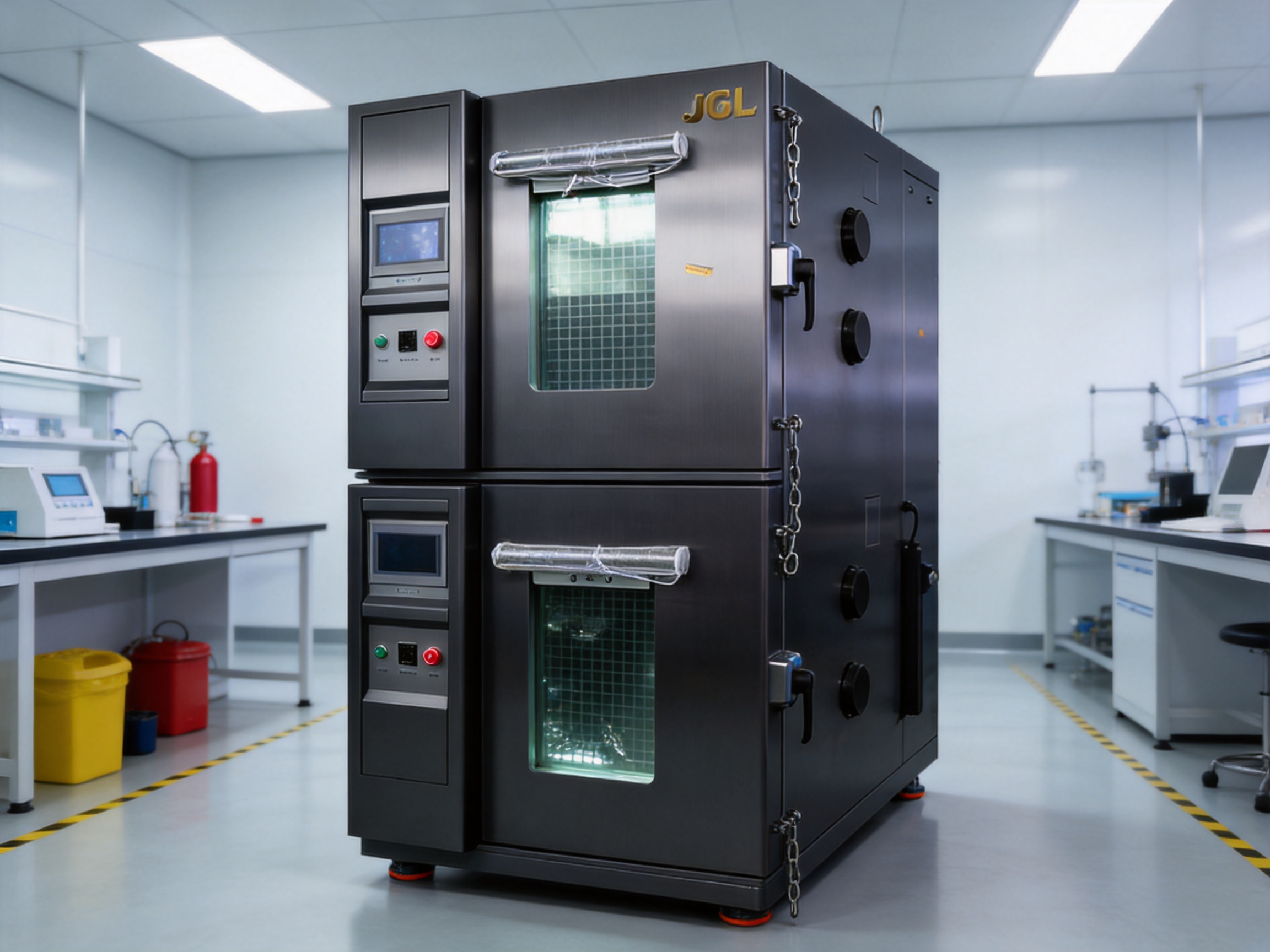
One of the most important competitive advantages of the chamber is its double-layer structure. Many laboratories must test multiple samples every day, but space is limited. Installing two separate explosion-proof chambers increases cost, power requirements, floor area, maintenance work, and facility planning complexity. A double-layer unit solves this problem by stacking two test spaces in one engineered platform.
The upper and lower chambers can support different testing plans depending on configuration and user requirements. In research and development, one layer can be used for a new battery formulation while the other layer runs a reference sample. In quality control, two batches can be tested at the same time. In reliability engineering, one compartment can conduct high-temperature storage while the other performs low-temperature exposure. This flexibility improves laboratory scheduling and shortens project cycles.
The double-layer design also supports safer sample separation. If two test samples have different risk levels, they do not need to be placed in the same internal space. This can reduce interference and improve incident isolation. For battery testing, separating samples is especially useful because one cell’s failure should not directly affect another test if avoidable. The product’s structure helps laboratories maintain order, traceability, and risk management.
From an investment perspective, the double-layer chamber can deliver better cost efficiency than purchasing two independent explosion-proof chambers. Users benefit from shared structural design, integrated controls, consolidated footprint, and coordinated manufacturing quality. In many competitor products, users must choose between capacity and compactness. The U2T(H)-EX80-A provides both.
Safety Advantages Over Conventional Competitor Chambers
Not every chamber described as “safe” offers the same level of protection. Some competitor products may include only basic over-temperature protection or a simple door lock. Others may be adapted from standard temperature chambers with limited reinforcement. The U2T(H)-EX80-A is different because its safety design is comprehensive and application-specific.
Reinforced Door Protection
The explosion-proof chain installed at the door is a practical safety feature. During abnormal pressure release, the door area is one of the most critical parts of the chamber. A reinforced door system helps prevent sudden opening, uncontrolled movement, or accidental impact. This is especially important when testing batteries or samples that may vent gas. Compared with chambers that only rely on standard hinges or latches, this design provides an additional mechanical protection layer.
Explosion-Proof Viewing Window
Observation is valuable during testing, but a normal glass window can become a weak point. The explosion-proof viewing window allows users to monitor the sample while improving resistance to internal events. This design supports both visibility and safety. Operators can inspect sample status without opening the chamber, reducing exposure to heat, gas, smoke, or pressure.
Automatic Fire Extinguishing System
The integrated automatic fire extinguishing system is a major advantage for high-risk testing. If combustion begins, rapid response is critical. Manual intervention may be delayed because operators must first identify the issue, approach the equipment, and decide how to respond. An automatic system reduces response time and helps control incidents in the early stage. For laboratories that test batteries or electronic assemblies, this feature can protect both personnel and valuable facility assets.
Smoke Detection and Fine Water Mist Sprinkler
Smoke detection provides early warning, while fine water mist sprinkler protection helps suppress fire without using excessive water volume. Fine mist can absorb heat, reduce oxygen concentration near the flame, and limit fire expansion. Compared with basic alarms, this combination provides both detection and action. Compared with heavy water discharge systems, fine mist is more controlled and suitable for sensitive laboratory environments.
Rapid Water Injection Device
The rapid water injection device gives users another emergency response method. In certain thermal runaway or ignition scenarios, quick cooling or suppression is required. The ability to introduce water rapidly can be valuable for reducing temperature and controlling reaction escalation. This feature demonstrates that the chamber is designed for realistic abnormal conditions rather than only ideal test cycles.
Explosion-Proof Pressure Relief Device
Pressure rise is one of the most serious risks in enclosed testing. A pressure relief device provides a controlled response path, helping reduce stress on the chamber body and door system. Competitor products without proper pressure relief may face higher structural risk if internal gas generation occurs. The U2T(H)-EX80-A’s pressure relief design contributes to safer operation and better equipment protection.
Temperature Control and Year-Round Stability
Safety is essential, but a test chamber must also perform as an accurate environmental simulation system. The U2T(H)-EX80-A is engineered for high and low temperature testing across demanding ranges. Depending on configuration, it can support -40℃ to +150℃ or -70℃ to +180℃. These ranges cover common reliability standards and more severe stress testing conditions.
Temperature control quality affects test credibility. If the chamber has poor uniformity, slow recovery, unstable cooling, or frost accumulation, test results may become inconsistent. The product’s dual evaporator design helps improve thermal distribution and operating stability. Dual evaporators can enhance cooling balance, reduce localized temperature variation, and support more reliable performance during cycling. This is especially useful in a double-layer structure where uniform operation is required in both compartments.
The chamber also emphasizes stable operation throughout the year without frost. In many laboratories, frost formation can affect airflow, reduce cooling efficiency, increase maintenance frequency, and interrupt testing schedules. A frost-related shutdown is more than an inconvenience; it can invalidate long-duration tests and delay project deadlines. By focusing on frost-free stability, the U2T(H)-EX80-A improves practical uptime and lowers operational risk.
Fast heating and cooling capability is another key advantage. Products in electronics, battery, automotive, and aerospace fields often need to pass thermal cycling tests. The chamber must move between temperature setpoints efficiently while maintaining control. Its advanced temperature regulation system supports programmed temperature changes, allowing users to create repeatable test profiles. This is important for quality assurance, certification preparation, and comparative product development.
Applications in Battery Testing
Battery testing is one of the most important application areas for this chamber. Lithium-ion batteries, nickel-metal hydride batteries, and other rechargeable chemistries must be validated under both normal and abnormal thermal conditions. Temperature affects capacity, internal resistance, charging behavior, aging speed, safety behavior, and failure risk. A well-designed test chamber helps engineers understand these effects and improve battery design.
During high-temperature exposure, batteries may experience accelerated aging, gas generation, separator degradation, electrolyte decomposition, or swelling. During low-temperature testing, batteries may show reduced capacity, lithium plating risk, poor discharge performance, or mechanical stress. Thermal cycling can reveal seal weakness, material mismatch, and manufacturing defects. Because some battery tests may create smoke, fire, or pressure, explosion-proof chamber design is highly valuable.
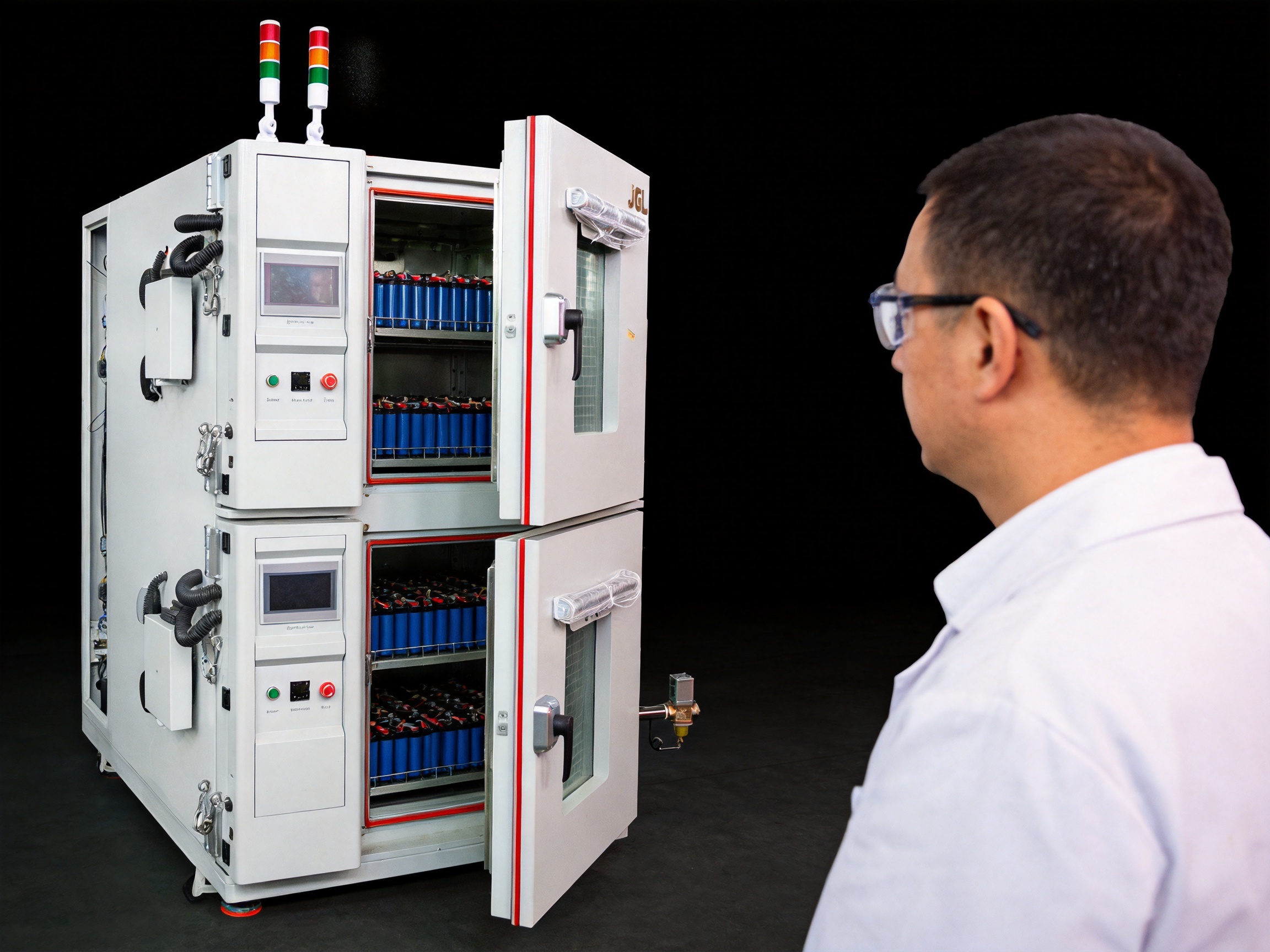
The U2T(H)-EX80-A is suitable for cell-level testing, small module evaluation, material screening, and production quality sampling. The double-layer design allows engineers to test two cell groups at once or compare different chemistries under similar conditions. The viewing window makes it possible to observe swelling or venting behavior without opening the door. Smoke detection and automatic suppression provide essential response capability.
For battery manufacturers and energy storage developers, the chamber can improve development speed and safety culture. Instead of using a standard chamber and adding improvised external precautions, laboratories can use a purpose-built system. This supports better compliance planning, clearer operating procedures, and more reliable data collection.
Applications in Electronics and Components
Electronic components and assemblies are highly sensitive to temperature. Semiconductors, sensors, printed circuit boards, connectors, displays, relays, and power modules may all behave differently under thermal stress. High temperature can accelerate oxidation, insulation aging, solder fatigue, and component drift. Low temperature can cause brittleness, condensation-related concerns, and start-up failure. Thermal cycling can reveal weak solder joints and material expansion mismatch.
The U2T(H)-EX80-A provides a controlled platform for evaluating these risks. Its temperature range supports storage testing, operating temperature simulation, and accelerated reliability analysis. The double-layer format is helpful for electronics laboratories that must test many samples with different configurations. For example, one layer may test a prototype control board while the other tests a production board. Engineers can compare performance under similar conditions and shorten the decision cycle.
Explosion-proof protection is also relevant for electronics. Power electronics, battery-powered devices, capacitors, chargers, and embedded energy storage products can fail in hazardous ways. Short circuits, overheating, smoke, and combustion are possible in fault testing. The chamber’s safety systems help reduce risk while allowing realistic test conditions.
For manufacturers of consumer electronics, automotive electronics, industrial controllers, communication devices, and aerospace instruments, environmental reliability is a core requirement. A chamber that combines temperature accuracy with strong safety design gives engineering teams a better foundation for product validation.
Applications in Material Science and Industrial Quality Assurance
Materials can change dramatically under thermal stress. Polymers may soften, crack, shrink, expand, or lose mechanical strength. Composites may delaminate or develop internal stress. Adhesives may lose bonding performance. Coatings may blister, harden, discolor, or become brittle. Chemical materials may change phase, release gas, oxidize, or react. A high and low temperature chamber allows researchers to evaluate these behaviors before materials are used in real products.
The U2T(H)-EX80-A supports material testing where safety cannot be ignored. Some materials release fumes or gases at elevated temperature. Some experimental formulations may be unstable. The chamber’s smoke detection, pressure relief, viewing protection, and fire suppression systems help laboratories perform research more responsibly. Its precise temperature programming also supports repeatable experiments, which are essential for material comparison.
Industrial quality assurance teams can use the chamber to validate incoming materials, finished products, and process changes. For automotive parts, it can test plastic housings, electrical connectors, battery components, sensors, and small assemblies. For aerospace products, it can support qualification of materials and electronic modules under severe temperature exposure. For general manufacturing, it can verify product durability before shipment.
In competitive markets, reliability testing is not only a technical requirement; it is also a business advantage. Products that survive harsh thermal environments are less likely to fail in customer use. A robust explosion-proof temperature test chamber helps manufacturers improve quality, reduce warranty claims, and strengthen brand reputation.
Manufacturing Strength Behind the Chamber
The performance of a temperature chamber depends heavily on manufacturing quality. Even the best design can fail if sheet metal fabrication, insulation assembly, refrigeration installation, wiring, safety system integration, or calibration is poorly executed. JIANGSU BAISHENG INDUSTRIAL CO., LTD. differentiates itself through a technology-driven approach and a strong engineering foundation.
The company was founded in 2010 and has developed from a technical background in electronic testing and laboratory equipment. Its predecessor began as a research and development studio focused on electronic testing, with engineers experienced in laboratory equipment and safety compliance. This history matters because the company understands the practical needs of testing laboratories rather than simply assembling standard machines. Its evolution into an entity enterprise with independent production capability strengthened its ability to control quality and customize solutions.
Unlike a traditional trading company, the manufacturer emphasizes R&D, precision design, and technical refinement. Its team focuses on laboratory equipment, safety testing instruments, and application-specific engineering. This allows the U2T(H)-EX80-A to be developed with a deeper understanding of explosion-proof testing, temperature control, and user workflow. The result is equipment that reflects both manufacturing capability and field experience.
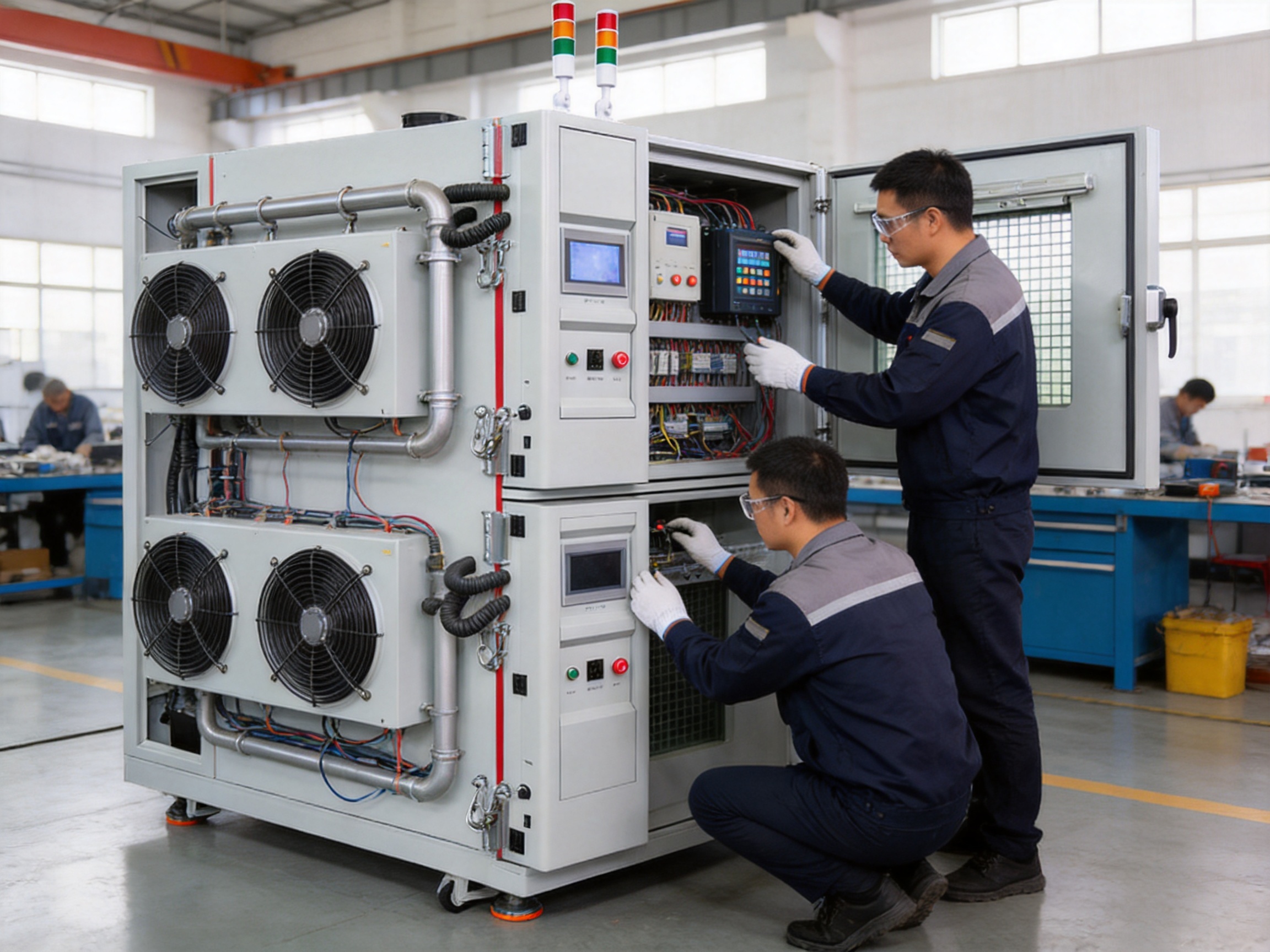
The company’s manufacturing process includes structural design, material selection, precision fabrication, refrigeration system assembly, electrical control integration, safety device installation, software and interface programming, system commissioning, and final inspection. Each stage affects the chamber’s reliability. For example, the explosion-proof door must fit accurately, the sealing system must resist thermal deformation, the refrigeration piping must be clean and properly brazed, and the sensors must be positioned for reliable detection.
Precision Structural Manufacturing
A chamber body must be strong, stable, and thermally efficient. For an explosion-proof chamber, structural reliability is even more important. The outer shell, inner liner, door frame, hinges, window frame, pressure relief assembly, and mounting points must be carefully engineered. Poor alignment can lead to air leakage, temperature instability, condensation, mechanical wear, or safety weakness.
The manufacturing process for the U2T(H)-EX80-A emphasizes precision sheet metal processing and reinforced assembly. The chamber body is designed to support both thermal insulation and mechanical protection. The door system is built to withstand repeated use while maintaining sealing performance. The explosion-proof chain and viewing window are installed as part of a coordinated safety structure, not as decorative add-ons.
Compared with low-cost competitor equipment, this level of structural attention provides clear benefits. A poorly built chamber may look similar from the outside, but it can lose temperature stability, consume more energy, develop frost, or fail under abnormal pressure. A robust structure protects the refrigeration system, control system, and safety systems by giving them a stable platform.
The double-layer structure also requires higher manufacturing precision than a single-compartment chamber. The two studios must be integrated without compromising airflow, insulation, service access, or safety. The vertical layout must remain stable and ergonomic. JIANGSU BAISHENG INDUSTRIAL CO., LTD. addresses these requirements through engineering coordination between mechanical design, refrigeration design, and electrical design.
Advanced Refrigeration and Dual Evaporator Integration
Cooling performance is one of the most technically demanding parts of a high and low temperature chamber. To reach low temperatures such as -40℃ or -70℃, the refrigeration system must be properly designed, assembled, and tuned. Components must be selected for temperature range, load capacity, reliability, and long-term service. Piping layout, refrigerant control, airflow, evaporator design, and defrost strategy all influence performance.
The U2T(H)-EX80-A benefits from a dual evaporator approach. Dual evaporators support more balanced thermal management and help maintain stable operation in the double-layer structure. This is especially valuable when different samples create different heat loads. The system is designed to maintain uniform temperatures while reducing frost-related issues.
Manufacturing quality in refrigeration is critical. Clean pipe processing, reliable welding or brazing, leak testing, vacuum drying, refrigerant charging, and performance commissioning all affect long-term stability. The company’s technical background supports disciplined assembly and inspection. A chamber that can reach a low setpoint in a factory test but cannot maintain stability in daily operation is not acceptable for professional laboratories. The U2T(H)-EX80-A is designed for practical use, not only for catalog specifications.
Compared with competitor chambers that use simplified cooling structures, the dual evaporator design offers stronger stability, better recovery, and more dependable performance during long tests. For users who run multi-day or multi-week tests, this stability reduces the chance of invalid results and repeated testing.
Integrated Safety System Manufacturing
Explosion-proof safety is not achieved by adding one strong part. It requires integration of mechanical, electrical, detection, suppression, and control elements. The U2T(H)-EX80-A includes multiple safety mechanisms that must be installed and tested as a system. This includes the explosion-proof door chain, reinforced viewing window, automatic fire extinguishing system, smoke detection, fine water mist sprinkler, rapid water injection device, and pressure relief device.
The manufacturing challenge is coordination. Smoke sensors must be positioned to detect early signs effectively. Sprinkler coverage must reach the test space. The pressure relief device must be integrated with the chamber structure. Electrical wiring must be protected from heat, moisture, and mechanical stress. Control logic must respond correctly to abnormal signals. Maintenance access must be considered without weakening the structure.
This is where engineering-focused manufacturing becomes important. A company with real R&D capability can design the interaction between components instead of simply purchasing safety accessories. The chamber’s safety design reflects a layered philosophy: prevent failure when possible, detect abnormal conditions early, contain the event, and provide emergency response.
For end users, this integrated approach offers peace of mind. It also supports more professional laboratory management. Operators can establish test procedures around built-in safety functions rather than relying only on external emergency measures.
Digital Control and User-Friendly Operation
Professional test equipment must be powerful but also usable. The U2T(H)-EX80-A includes digital controls for temperature programming and monitoring. Users can set temperature profiles, monitor real-time conditions, and manage test operation with precision. A clear interface reduces training difficulty and helps prevent operational mistakes.
In daily laboratory work, repeatability is essential. Users may need to run the same test profile many times for different samples. Digital programming supports consistent execution and easier documentation. When combined with stable temperature control, it improves data reliability.
User-friendly operation is also a safety advantage. If controls are confusing, operators may make errors in setpoint entry, alarm handling, or emergency response. A well-designed interface helps users understand chamber status and respond appropriately. This is particularly important for high-risk tests involving batteries or chemical materials.
The company’s experience in electronic testing instruments supports the development of practical control systems. The chamber is designed for real laboratory workflow, where engineers and technicians need clear operation, reliable alarms, and manageable maintenance.
Customization Capability and Application Support
Different users have different testing needs. A battery laboratory may need special fixtures, additional monitoring ports, or safety interlocks. An electronics manufacturer may require cable ports for powered testing. A materials laboratory may need specific sample holders or program profiles. A quality assurance department may prioritize repeatability, documentation, and easy maintenance. Standard equipment cannot always satisfy these requirements.
JIANGSU BAISHENG INDUSTRIAL CO., LTD. emphasizes customized laboratory equipment solutions. Its R&D-oriented structure allows it to adapt products based on user applications. This customization ability is an important advantage over suppliers that only provide fixed models. For international customers, the combination of engineering capability and foreign trade experience helps translate technical requirements into practical equipment solutions.
Customization can include chamber configuration, temperature range selection, safety features, control interface options, sample access design, monitoring functions, and service planning. The goal is not unnecessary complexity, but correct matching between equipment and application. When the chamber is properly matched to the test purpose, users gain better safety, efficiency, and data quality.
This consultative approach is valuable in emerging fields such as battery technology, energy storage, electric vehicles, drones, advanced electronics, and new materials. Testing requirements evolve quickly, and laboratories need equipment partners that can respond with technical understanding.
Quality Management and Long-Term Reliability
A test chamber is a long-term investment. Users expect it to operate reliably for years, often under demanding schedules. Quality management therefore matters as much as initial performance. The company has continued to improve its quality management system and product technical specifications. This supports consistent manufacturing and dependable delivery.
Quality control for the U2T(H)-EX80-A can include material inspection, structural checking, refrigeration leak testing, electrical safety inspection, sensor verification, controller testing, temperature performance validation, safety device testing, and final operational review. Each inspection step reduces the risk of field problems.
Long-term reliability also depends on maintainability. The chamber must allow service access to refrigeration components, electrical parts, sensors, and safety systems. A design that is difficult to maintain may increase downtime and cost. Engineering-focused manufacturers consider maintenance during design and production.
Compared with low-cost alternatives, a well-manufactured chamber may have a higher initial value but lower total ownership risk. Failed tests, repeated experiments, equipment downtime, sample loss, and safety incidents can cost far more than the difference between a basic chamber and a professionally engineered explosion-proof model. The U2T(H)-EX80-A is intended for users who consider safety and reliability part of their productivity strategy.
Competitive Advantages Summary
The U2T(H)-EX80-A stands out in the market because it combines capacity, safety, temperature performance, manufacturing quality, and customization potential. Its advantages are not limited to one feature; they come from the complete design philosophy.
First, the double-layer structure improves testing efficiency and reduces floor space requirements. Laboratories can run more work without purchasing two independent machines. Second, the safety system is comprehensive, including mechanical reinforcement, pressure relief, fire detection, automatic suppression, fine water mist sprinkler protection, and rapid water injection. Third, the dual evaporator design supports stable year-round operation and reduces frost-related disruption. Fourth, the temperature ranges support both standard and extreme thermal testing. Fifth, the manufacturer’s R&D and precision manufacturing background allows better customization and application support.
Against competitors that offer ordinary temperature chambers, the advantage is safety. Against competitors that provide basic explosion-proof modifications, the advantage is system integration. Against competitors that offer large but inefficient equipment, the advantage is compact double-layer productivity. Against suppliers with limited engineering capability, the advantage is customized design and technical support.
For decision-makers, the chamber is suitable when the testing program involves valuable samples, potential hazards, strict safety expectations, limited laboratory space, and the need for repeatable thermal performance. It is not merely a purchase of equipment; it is an investment in safer testing infrastructure.
Best Practices for Using the Chamber
To obtain the best performance from an explosion-proof temperature test chamber, users should establish clear operating procedures. Even with advanced safety systems, responsible use remains essential. Test samples should be evaluated for risk level before placement. Battery samples should be inspected for physical damage, correct wiring, and proper fixtures. Chemical materials should be reviewed for potential gas release or reaction behavior. Operators should understand emergency procedures and alarm meanings.
Samples should be placed to allow proper airflow. Blocking airflow can reduce temperature uniformity and affect test results. If powered testing is required, cables should be routed through appropriate access ports and secured to prevent short circuits. Test programs should be designed according to relevant standards, product requirements, and engineering goals.
Regular maintenance is also important. Smoke detection systems, sprinkler components, pressure relief mechanisms, door seals, viewing windows, refrigeration performance, and control sensors should be inspected according to the maintenance plan. A chamber with safety systems must remain ready for abnormal events. Preventive maintenance protects both performance and safety.
Data recording is recommended for professional testing. Temperature profiles, sample information, alarm events, visual observations, and test results should be documented. This improves traceability and supports quality assurance, certification preparation, and engineering analysis.
Q&A Section
Q1: What is the main purpose of the U2T(H)-EX80-A double-layer explosion-proof temperature test chamber?
A1: Its main purpose is to provide controlled high and low temperature testing for samples that may present safety risks, such as batteries, electronics, chemical materials, and industrial components. It combines temperature simulation with explosion-proof protection, fire detection, fire suppression, pressure relief, and emergency water injection.
Q2: Why is a double-layer structure useful?
A2: The double-layer structure provides two test compartments in one machine. This allows users to run two tests at the same time, compare samples, separate different risk levels, or increase throughput without requiring the floor space and cost of two separate chambers.
Q3: What temperature ranges are available?
A3: The chamber supports configurations such as -40℃ to +150℃ and -70℃ to +180℃. The selection depends on the user’s testing requirements and the severity of the intended thermal simulation.
Q4: How does the chamber improve safety during battery testing?
A4: It improves safety through a reinforced explosion-proof door system, explosion-proof viewing window, smoke detection, automatic fire extinguishing, fine water mist sprinkler protection, rapid water injection, and pressure relief. These features help manage risks such as smoke, fire, gas release, and pressure rise.
Q5: What is the benefit of the explosion-proof viewing window?
A5: The viewing window allows operators to observe the sample without opening the chamber. This is important when testing batteries or materials that may swell, smoke, ignite, or release gas. The reinforced design improves safety compared with ordinary observation windows.
Q6: Why are dual evaporators important?
A6: Dual evaporators help improve temperature distribution, cooling balance, recovery performance, and year-round stability. They are especially useful in a double-layer chamber because both compartments require reliable temperature control.
Q7: Is the chamber suitable only for batteries?
A7: No. Although it is highly suitable for battery testing, it can also be used for electronic components, sensors, power modules, polymers, composites, chemical materials, automotive parts, aerospace components, and industrial quality assurance applications.
Q8: How does this product compare with ordinary high and low temperature chambers?
A8: Ordinary chambers mainly provide temperature control. The U2T(H)-EX80-A adds comprehensive explosion-proof and fire safety systems, making it more appropriate for high-risk samples. It also provides a double-layer design for improved testing efficiency.
Q9: What makes the manufacturer’s production capability important?
A9: Explosion-proof temperature chambers require precise structural fabrication, refrigeration engineering, safety system integration, electrical control, and quality inspection. The manufacturer’s R&D background and precision manufacturing process help ensure that the chamber is reliable, safe, and suitable for customized laboratory needs.
Q10: Can the chamber support customized testing requirements?
A10: Yes. The manufacturer focuses on customized laboratory testing equipment solutions. Depending on the application, users may request suitable temperature ranges, safety configurations, monitoring features, sample access options, or other engineering adaptations.
Conclusion
The U2T(H)-EX80-A double-layer explosion-proof temperature test chamber is designed for laboratories and manufacturers that cannot compromise on safety, efficiency, or reliability. It meets the growing need for controlled thermal testing of high-risk and high-value samples, especially in battery development, electronics validation, materials research, automotive quality assurance, and aerospace component testing.
Its competitive strength comes from the combination of a compact double-layer structure, comprehensive explosion-proof safety systems, dual evaporator temperature stability, digital control, and application-oriented manufacturing. The chamber is not a basic environmental test cabinet with minor safety additions. It is an integrated testing platform developed for real laboratory risks, where temperature performance and emergency protection must work together.
Backed by the engineering and manufacturing capabilities of JIANGSU BAISHENG INDUSTRIAL CO., LTD., the product reflects a technology-driven approach to precision laboratory equipment. The company’s experience in R&D, production, quality management, and international customization enables it to provide reliable solutions for customers seeking professional laboratory testing equipment made in China.
For organizations developing safer batteries, more reliable electronics, stronger materials, and better industrial products, the U2T(H)-EX80-A provides a practical path toward safer testing, faster development, and more dependable quality assurance.
References
1. International Electrotechnical Commission. Environmental Testing Standards for Electrical and Electronic Products.
2. International Organization for Standardization. Laboratory Equipment Safety and Quality Management Guidelines.
3. National Fire Protection Association. Principles of Fire Detection and Automatic Suppression Systems.
4. Battery Safety Handbook. Thermal Runaway, Abuse Testing, and Laboratory Risk Control Practices.
5. Environmental Simulation Engineering Manual. Temperature Cycling, Thermal Shock, and Reliability Testing Methods.
6. Refrigeration System Design Guide for Low-Temperature Environmental Test Chambers.
Product: U2T(H)-EX80-A Double-Layer Explosion-Proof Temperature Test Chamber
PREV:Precision High and Low Temperature Test Cabinets for Reliable Environmental Testing
NEXT:No next article
NEXT:No next article
Interested in cooperation or have questions?
Featured Products
Related products
Quick Link
Contact Information
- Tel: +86-13861043568
- E-mail: 1840784112@qq.com
- Add: Tianting District, Changzhou City, Jiangsu Province, China, No. 6 Hecircuit
Scan Code
Copyright © JIANGSU BAISHENG INDUSTRIAL CO., LTD.
All Rights Reserved. Privacy Custom Precision Laboratory Testing Equipment Manufacturers
