 English
 Español
NEWS
NEWS
NEWS
NEWS
NEWS
NEWS
NEWS
NEWS
NEWS
NEWS
NEWS
NEWS
NEWS
NEWS
NEWS
NEWS

Peng Shulan — Regional Sales Consultant
Home / Author / Peng Shulan — Regional Sales Consultant / Dual-Layer Explosion-Proof Thermal Test Chamber for High-Risk Temperature Testing
Dual-Layer Explosion-Proof Thermal Test Chamber for High-Risk Temperature Testing
Content
- 1 Why Explosion-Proof Thermal Testing Requires Specialized Equipment
- 2 Dual-Layer Architecture and Laboratory Productivity
- 3 Temperature Performance and Dual-Evaporator Technology
- 4 Integrated Explosion-Proof Safety Design
- 5 Control, Monitoring, and Test Repeatability
- 6 Applications Across Multiple Industries
- 7 Key Technical Information
- 8 Advantages Compared with Conventional Competitor Designs
- 9 Manufacturing Strengths and Engineering Capability
- 10 Customization and Project-Based Configuration
- 11 Installation, Commissioning, and Maintenance
- 12 Recommended Operating Practices
- 13 Value for Research, Validation, and Quality Assurance
- 14 How to Select the Correct Configuration
- 15 Q&A
- 15.1 What is the main purpose of the U2T(H)-EX150-A?
- 15.2 Can the two compartments operate at different temperatures?
- 15.3 What temperature ranges are available?
- 15.4 Why are dual evaporators important?
- 15.5 What safety systems are included?
- 15.6 Is the chamber suitable for battery testing?
- 15.7 Does the chamber prevent frost during low-temperature testing?
- 15.8 How should the listed capacity be interpreted?
- 15.9 What should be prepared before installation?
- 15.10 Can the chamber be customized?
- 15.11 What makes the product different from a conventional thermal chamber?
- 15.12 Who manufactures the equipment?
- 16 Conclusion
- 17 References
- 18 Product: U2T(H)-EX150-A Dual-Layer Explosion-Proof Thermal Test Chamber
Modern products are often expected to operate reliably in environments that are far more demanding than ordinary laboratory conditions. Electronic assemblies may experience rapid temperature transitions, battery cells may release heat or gas during abuse testing, chemical materials may become unstable when exposed to extreme temperatures, and automotive or aerospace components may need to maintain performance across wide thermal ranges. These applications require more than a basic temperature-controlled enclosure. They require a test system that combines accurate thermal control, reliable repeatability, rapid response, and a carefully engineered safety architecture.
The U2T(H)-EX150-A Dual-Layer Explosion-Proof Thermal Test Chamber is designed for this class of demanding work. It combines two independently controlled test compartments with explosion-proof protection, fire detection, fine water mist suppression, rapid water injection, pressure relief, dual evaporators, and frost-resistant operating technology. The result is a specialized laboratory system intended for high-risk or high-value testing in electronics, energy storage, automotive, chemical, materials, industrial, and aerospace applications.
Unlike a conventional single-compartment environmental chamber, the dual-layer structure allows separate upper and lower test spaces to operate as independent thermal environments. This arrangement can increase laboratory productivity, permit simultaneous high- and low-temperature experiments, and support comparative testing without requiring two separate machines. At the same time, the safety configuration addresses abnormal conditions that may arise during tests involving batteries, combustible materials, volatile substances, or devices susceptible to thermal runaway.
Manufactured and supplied by JIANGSU BAISHENG INDUSTRIAL CO., LTD., the chamber reflects the company’s focus on precision laboratory equipment, safety testing instruments, application-oriented engineering, and customized technical solutions. Its value is not limited to the equipment enclosure itself. The complete solution also depends on refrigeration design, control logic, safety interlocks, fire-response systems, manufacturing quality, and the ability to adapt the chamber to the customer’s test objectives.
Why Explosion-Proof Thermal Testing Requires Specialized Equipment
Temperature testing can become hazardous when the test specimen contains stored energy, flammable electrolyte, pressurized contents, combustible dust, reactive chemicals, or components that may fail unpredictably. A standard environmental chamber may control temperature effectively, but it is not necessarily designed to manage smoke, flame, overpressure, or rapid heat release. Using unsuitable equipment can expose laboratory personnel, neighboring instruments, and the facility itself to unnecessary risk.
An explosion-proof thermal chamber is engineered with a different design priority. Temperature regulation remains important, but it is integrated with mechanical reinforcement, protected electrical components, pressure management, observation safety, alarm monitoring, and emergency response. These features are intended to reduce the consequences of an abnormal event and provide a controlled response pathway if the tested product produces smoke, excessive heat, flame, or pressure.
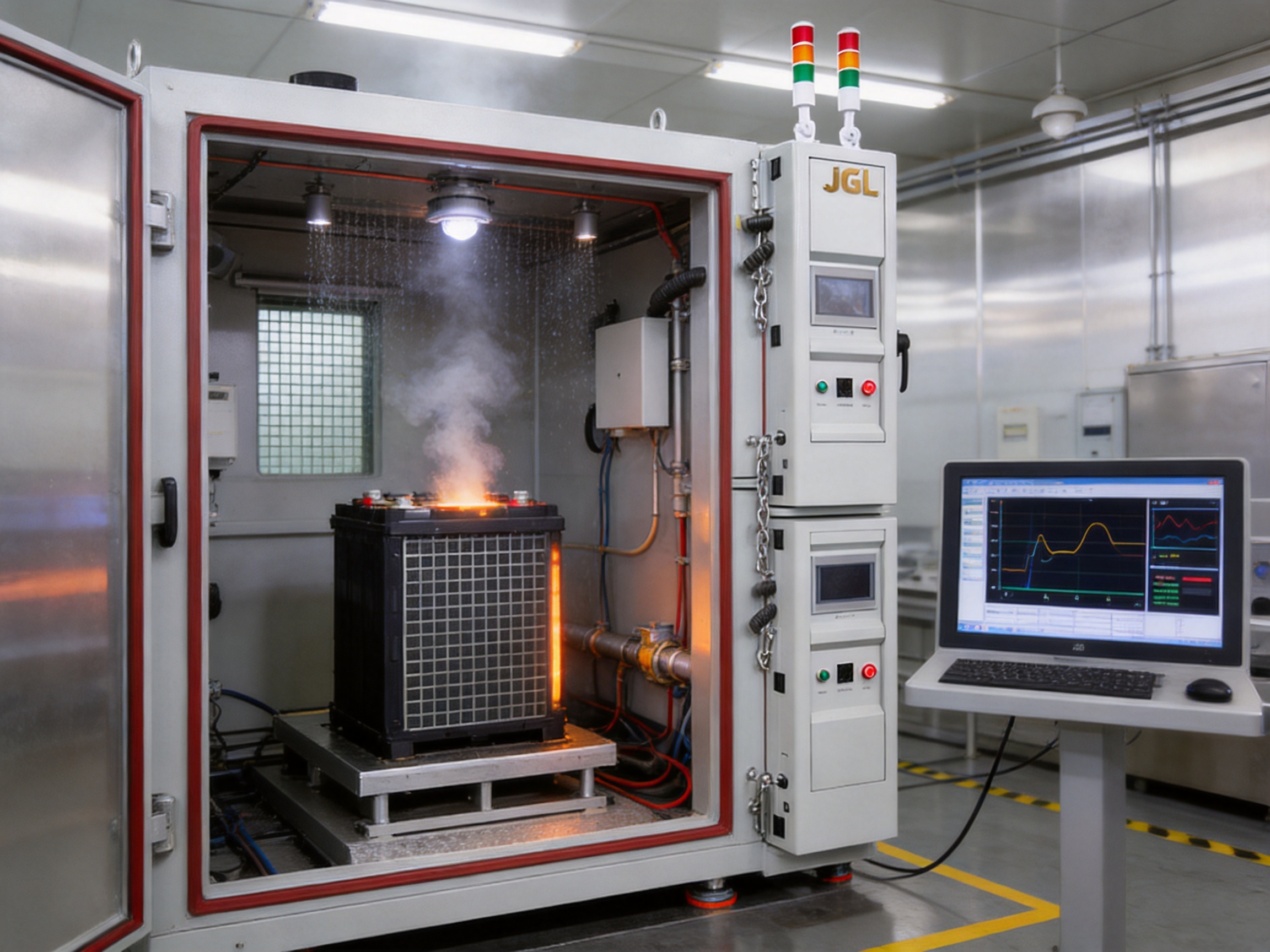
The U2T(H)-EX150-A addresses this requirement through multiple protective layers. An explosion-proof chain is installed at the door, and the viewing window is reinforced for safer observation. Smoke detection and a sprinkler system using fine water mist support early fire response. An automatic fire extinguishing system is incorporated into the equipment, while a rapid water injection device provides an additional emergency cooling or suppression mechanism. An explosion-proof pressure relief device helps manage sudden internal pressure increases.
These systems should not be viewed as isolated accessories. Their effectiveness depends on coordinated installation, control logic, maintenance, and site integration. A properly designed safety system uses sensors to identify abnormal conditions, activates the appropriate response, limits access when necessary, and provides operators with clear status information. This layered approach is especially important for battery testing and other applications in which the early signs of failure may develop quickly.
Dual-Layer Architecture and Laboratory Productivity
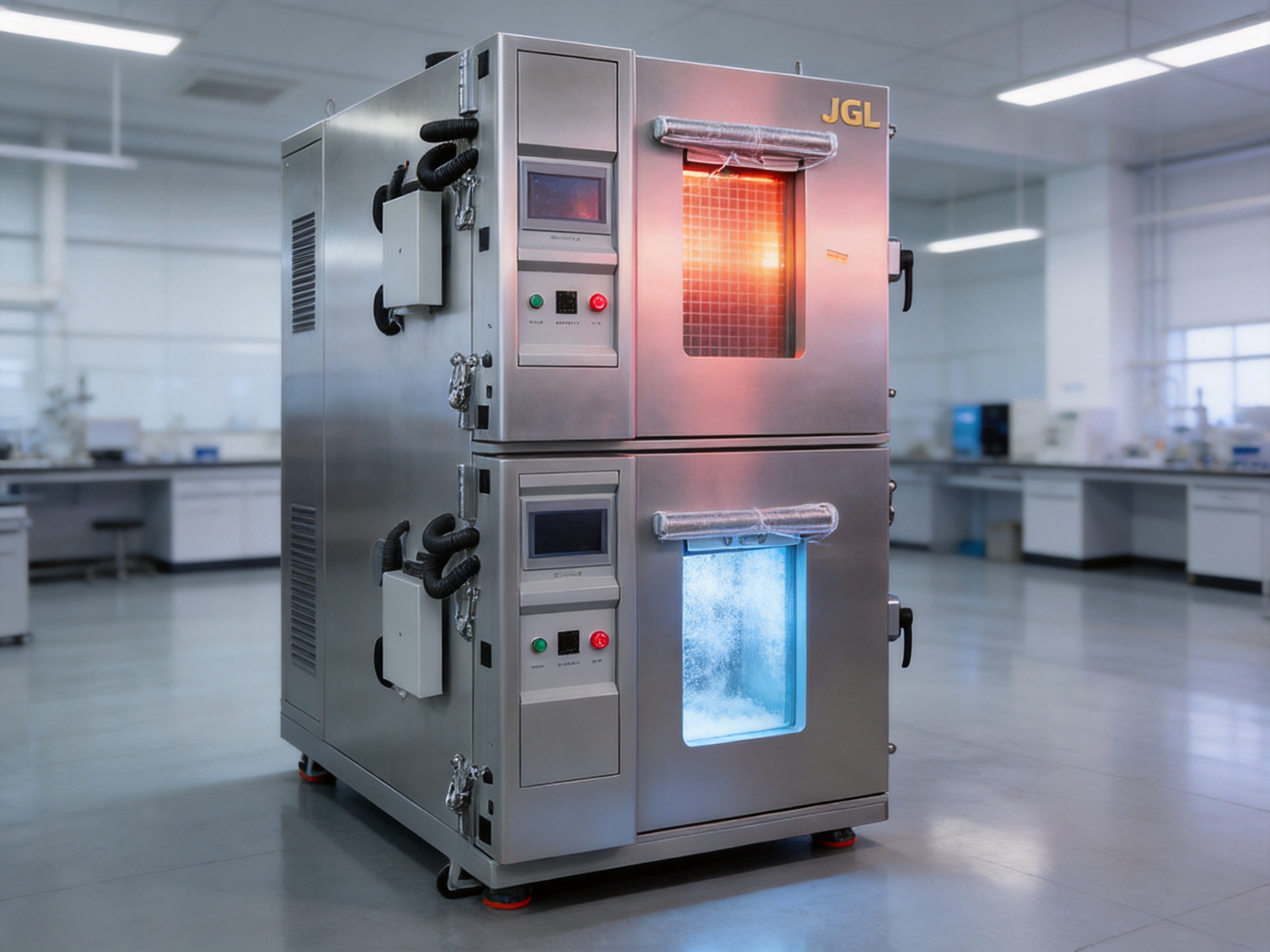
The defining feature of the product is its two-compartment construction. The upper and lower chambers provide separate test spaces for high- and low-temperature experiments. According to the supplied configuration information, each studio is listed at approximately 500 × 500 × 600 millimeters, with the two compartments arranged in a dual-layer structure. This configuration creates a compact footprint while offering two working zones.
A dual-layer chamber can provide several practical advantages. A laboratory may run a high-temperature aging test in one compartment while performing a low-temperature start-up test in the other. A development team may compare two materials, product versions, or control strategies under different conditions at the same time. Quality personnel may use the upper chamber for a qualification sequence and the lower chamber for a repeatability check. These workflows can reduce waiting time and improve utilization of laboratory space.
The two compartments are particularly valuable when test programs involve different thermal profiles. A single chamber would require one test to finish before the next begins, while two independent compartments can support parallel work. This can accelerate product development and reduce the need to purchase and maintain two separate full-size chambers.
Dual-layer construction also supports organized test planning. Samples can be grouped by temperature range, product generation, customer project, or test standard. If the control system is configured for independent programming, each compartment can follow its own setpoint, ramp rate, dwell time, and alarm limits. This gives engineers greater flexibility while maintaining a clear separation between test tasks.
However, a dual-layer structure must be engineered carefully. The refrigeration circuit, air circulation system, insulation, door sealing, wiring, safety sensors, and support structure must work together to preserve uniformity and reliability in both compartments. The use of dual evaporators is therefore important. It allows the thermal loads of the two spaces to be managed more effectively and supports independent temperature regulation rather than treating the chamber as a single undivided volume.
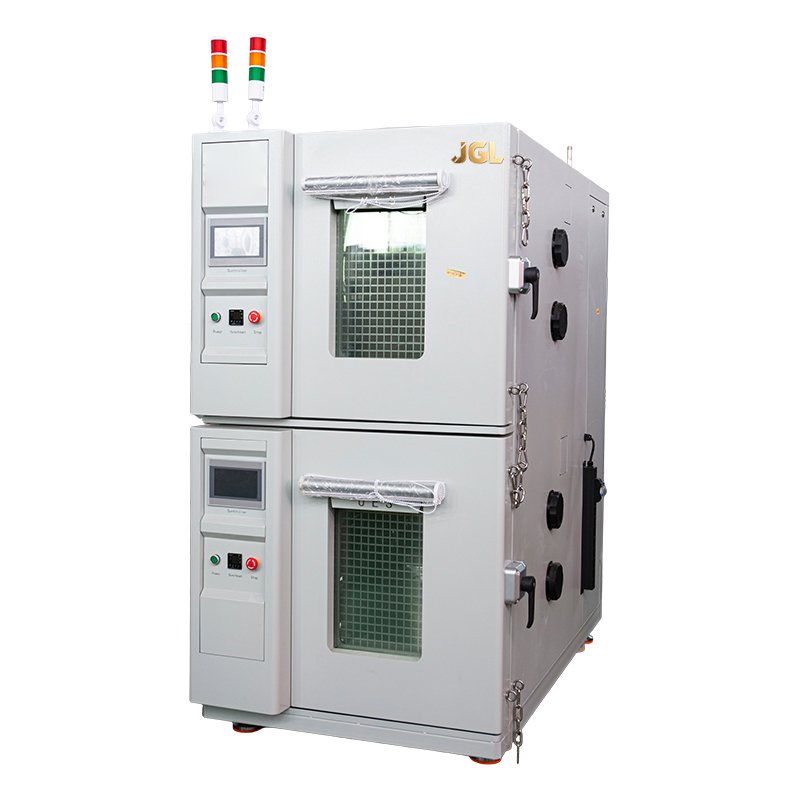
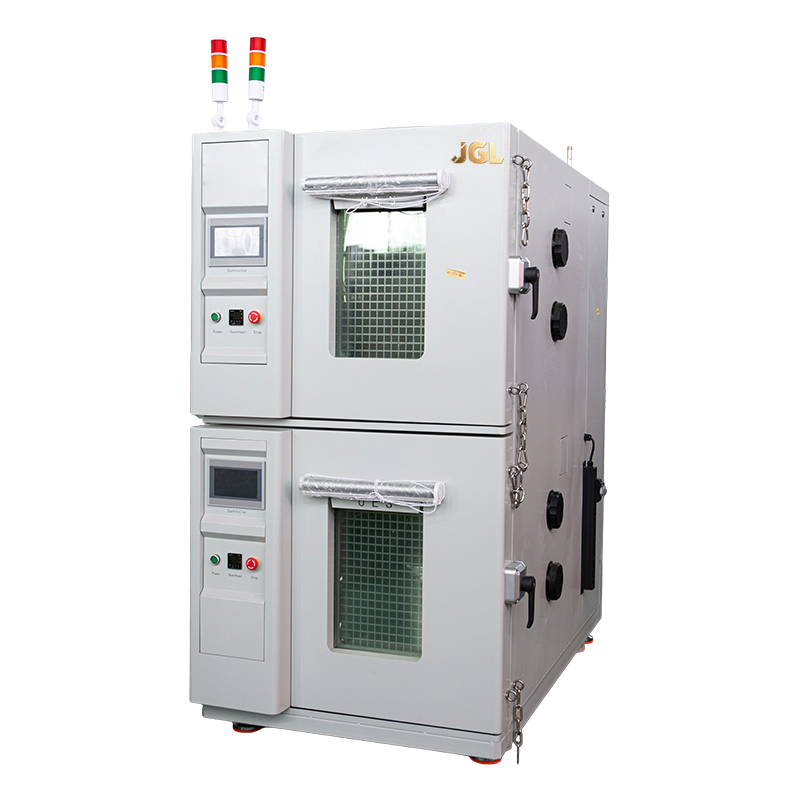
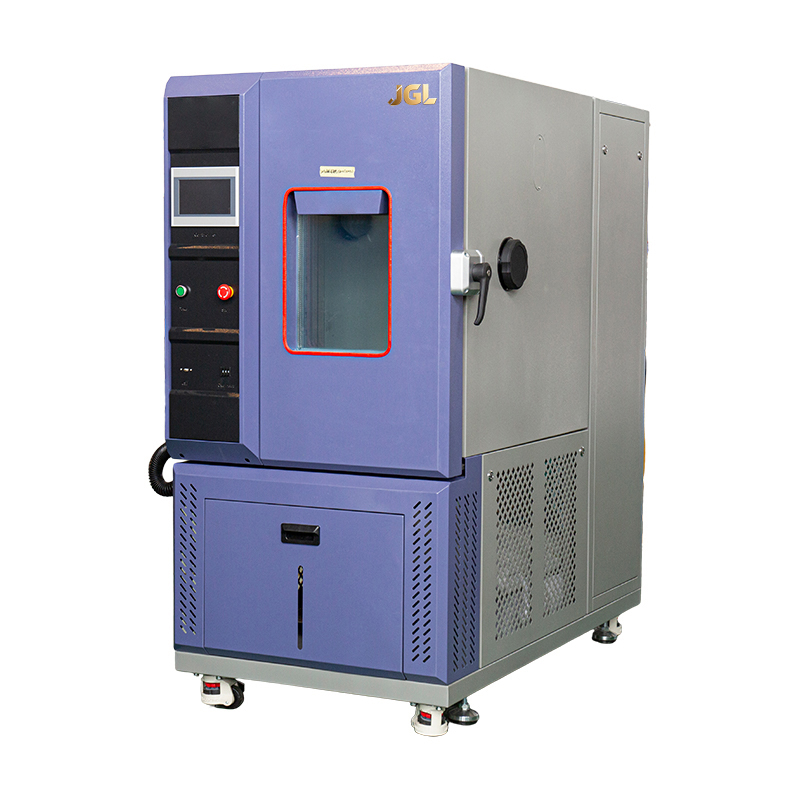
U2T(H)-EX150-A Dual-Layer Explosion-Proof Thermal Test Chamber
Temperature Performance and Dual-Evaporator Technology
The supplied technical information lists temperature configurations of approximately -40°C to +150°C and -70°C to +180°C. These ranges indicate that the equipment may be supplied in different performance versions or with different refrigeration specifications. The exact range should be confirmed according to the selected model configuration, customer test requirements, payload, ramp-rate expectations, and local operating conditions.
A broad temperature range is useful for evaluating products under both cold-start and high-temperature conditions. At the low end, engineers can investigate cold-start performance, contraction effects, low-temperature brittleness, viscosity changes, battery discharge behavior, sensor response, and condensation-related risks. At the high end, they can evaluate thermal aging, insulation performance, material deformation, electrical drift, seal integrity, and heat-related degradation.
Extreme temperature testing is not only about reaching a setpoint. The chamber must also recover from door opening, absorb the heat generated by the specimen, provide stable circulation, and maintain consistent conditions over extended dwell periods. A high-quality chamber therefore requires refrigeration capacity, heater control, fan design, sensor placement, insulation quality, and software logic that are properly matched to the intended application.
The dual-evaporator configuration is a major technical feature of this model. Separate evaporators can support the two chambers more effectively than a simple shared cooling arrangement. This design helps reduce thermal interference between compartments and makes it easier to maintain different setpoints at the same time. It may also improve the chamber’s ability to respond to changing loads, especially when one test specimen produces more heat than the other.
The supplied product information also highlights technology for stable operation throughout the year without frost. Frost accumulation can reduce heat-transfer efficiency, obstruct airflow, increase defrost interruptions, and introduce unwanted variation into long-duration testing. A frost-resistant design helps maintain stable refrigeration performance and reduces the need for frequent manual intervention. It also supports better test continuity in laboratories that operate continuously or face changing ambient humidity throughout the year.
For organizations comparing chambers, it is important to distinguish between a published temperature limit and actual application performance. Engineers should evaluate temperature uniformity, temperature fluctuation, recovery time, pull-down time, heating rate, cooling rate, load capacity, and performance with the intended specimen. JIANGSU BAISHENG INDUSTRIAL CO., LTD. can use application details to help determine whether the standard configuration is suitable or whether customized refrigeration, fixtures, sensors, or control functions are required.
Integrated Explosion-Proof Safety Design
Explosion-Proof Door Chain and Viewing Window
The door is one of the most important safety interfaces in an explosion-proof chamber. The U2T(H)-EX150-A includes an explosion-proof chain at the door and a reinforced explosion-proof viewing window. The door chain helps restrict uncontrolled opening and contributes to safer operation if pressure develops inside the chamber. The viewing window permits visual observation without requiring the operator to open the enclosure, reducing unnecessary exposure during a test.
A reinforced observation window is especially useful when engineers need to monitor a specimen for swelling, smoke, leakage, discoloration, flame, or mechanical deformation. Visual access can support earlier intervention, but it must be combined with appropriate operating procedures. Operators should never rely on visual inspection alone; sensor alarms, automatic shutdown functions, and emergency response systems remain essential.
Smoke Detection and Fine Water Mist Suppression
Smoke detection provides an early indication of abnormal specimen behavior. In battery, polymer, and chemical testing, smoke may appear before open flame or major structural failure. Detecting this condition promptly enables the chamber to activate programmed safety responses, alert operators, and stop or isolate selected functions according to the control strategy.
The sprinkler system uses fine water mist for fire suppression. Fine droplets can absorb heat efficiently and help limit the spread of fire within the test space. Water mist can also reduce the amount of water introduced compared with some conventional flooding approaches, although the correct suppression medium must always be evaluated against the specimen and the chemicals involved. The suitability of water-based suppression depends on the test material, electrical configuration, chemical compatibility, and the customer’s safety assessment.
Automatic Fire Extinguishing System
The automatic fire extinguishing system provides a further layer of protection when abnormal heat or flame is detected. Automation is important because thermal events may develop too quickly for a person to respond manually. An automatic system can initiate a response immediately after sensor confirmation, while also generating alarms and recording the event for later investigation.
Automatic suppression should be considered part of a complete risk-control plan rather than a replacement for safe test planning. Test specimens should be properly prepared, the chamber should be operated within its rated limits, and the facility should have procedures for evacuation, ventilation, emergency isolation, and post-event inspection. The chamber’s safety functions can significantly reduce risk, but they must be integrated into the laboratory’s wider safety management system.
Rapid Water Injection Device
The rapid water injection device is designed for quick response when emergency cooling or suppression is required. In applications involving cells, modules, packs, or reactive specimens, rapid cooling can help reduce heat propagation and limit the duration of a dangerous event. The exact operating mode, activation threshold, water source, flow rate, and discharge arrangement should be configured according to the test objective and site conditions.
This feature can be particularly valuable in energy-storage testing, where a damaged cell may heat adjacent cells and create a cascading event. Rapid water injection can provide an additional mitigation option, subject to compatibility with the battery chemistry and the laboratory’s hazard analysis. For other materials, an alternative extinguishing or cooling strategy may be more appropriate.
Explosion-Proof Pressure Relief
Pressure management is a fundamental element of safe chamber design. If a test specimen vents, combusts, or undergoes rapid decomposition, internal pressure may rise. The explosion-proof pressure relief device is intended to provide a controlled path for pressure release and reduce the likelihood of uncontrolled structural failure.
Pressure relief design must be evaluated in relation to the chamber volume, possible specimen energy, vent direction, installation location, surrounding equipment, and facility layout. The chamber should be positioned so that any pressure discharge is directed away from personnel and critical equipment. Customers should also confirm applicable local safety requirements before installation and commissioning.
Control, Monitoring, and Test Repeatability
A thermal chamber is only as useful as its ability to create repeatable and traceable test conditions. The U2T(H)-EX150-A includes a digital control interface for programming temperature profiles and monitoring chamber conditions. A digital system allows operators to define setpoints, dwell periods, transition sequences, alarm limits, and other test parameters in a structured manner.
Programmable control is important for tests involving repeated cycles. A product may need to move from a low-temperature dwell to a high-temperature dwell, remain at each condition for a specified time, and repeat the sequence for a defined number of cycles. Automated programming reduces operator workload and helps ensure that every test follows the same profile.
Monitoring functions also support process visibility. Operators can review current temperature, programmed setpoint, chamber status, alarm state, and safety-system activity. Depending on the selected configuration, additional data-logging, communication, or remote monitoring functions may be available. These options can help connect the chamber to laboratory information systems, quality records, or production validation workflows.
Control accuracy and uniformity depend on more than the display resolution. Sensor calibration, sensor location, airflow pattern, insulation, load arrangement, door sealing, and refrigeration response all influence the actual conditions experienced by the specimen. For this reason, chamber qualification should include mapping tests using calibrated instruments at representative locations and with representative loads.
For high-risk testing, alarm management is equally important. The control system should identify over-temperature, under-temperature, smoke, fire, abnormal pressure, door status, water-system status, refrigeration faults, and other conditions relevant to the configured equipment. Alarms should be easy to understand and should initiate clearly defined protective actions.
Applications Across Multiple Industries
Electronics and Semiconductor Testing
Electronic products are exposed to thermal stress during manufacturing, transportation, field operation, and storage. Printed circuit boards, semiconductors, sensors, power supplies, displays, connectors, and control modules may all require temperature cycling or high- and low-temperature storage tests.
The dual-layer chamber enables electronics engineers to conduct parallel experiments. One compartment can be used for low-temperature operation while the other evaluates high-temperature endurance. Engineers can compare different component suppliers, firmware versions, enclosure designs, or thermal interface materials without scheduling separate chamber sessions.
Explosion-proof protection adds value when electronic products include high-energy capacitors, rechargeable batteries, combustible coatings, or other components that may fail in a hazardous manner. It also provides an additional safety margin when testing prototypes whose failure behavior has not yet been fully characterized.
Battery and Energy-Storage Research
Battery testing is one of the most demanding applications for an explosion-proof thermal chamber. Cells and modules may be tested for capacity, charging behavior, discharge performance, storage stability, cycle life, thermal response, abuse behavior, and protection-system performance. Temperature has a direct effect on internal resistance, chemical reaction rates, available capacity, charging acceptance, and degradation mechanisms.
The U2T(H)-EX150-A is suitable for controlled thermal testing of various battery types when the selected configuration matches the specimen size, energy level, and risk assessment. Its smoke detection, automatic fire suppression, fine water mist, rapid water injection, pressure relief, and reinforced construction are designed to address the possibility of abnormal battery events.
Battery applications require careful engineering. The customer should provide information about chemistry, voltage, capacity, maximum charging current, specimen quantity, fixture design, expected failure mode, and required test standard. These details influence sensor selection, cable routing, fire-suppression strategy, ventilation, and the acceptable operating envelope.
Materials and Chemical Testing
Polymers, plastics, elastomers, composites, coatings, adhesives, insulation materials, and chemical formulations can change significantly as temperature varies. Thermal testing can reveal softening, embrittlement, cracking, discoloration, expansion, contraction, loss of adhesion, decomposition, and changes in mechanical or electrical behavior.
Some materials may also produce smoke, vapor, or combustible gases when heated. The chamber’s safety architecture is therefore relevant to material screening and accelerated aging. At the same time, chemical compatibility must be reviewed before testing. Not every chemical is compatible with water mist or water injection, and the chamber’s internal materials, seals, drainage system, and ventilation arrangement should be selected accordingly.
Automotive Components
Automotive electronics, sensors, battery components, lighting modules, wiring assemblies, interior materials, power-control units, and mechanical parts are often subjected to broad temperature ranges and repeated cycles. The dual-layer configuration can support simultaneous testing of different automotive subsystems or different stages of a qualification program.
For electric and hybrid vehicles, temperature testing is particularly important for battery-related components, charging systems, inverters, power electronics, and thermal-management systems. Explosion-proof protection and rapid emergency response can improve safety when high-energy components are evaluated under severe conditions.
Aerospace and Industrial Equipment
Aerospace components may need to operate across severe temperature transitions while maintaining electrical, mechanical, and structural reliability. Industrial control equipment, instrumentation, communication modules, and power devices may face similar environmental stress during operation or transportation.
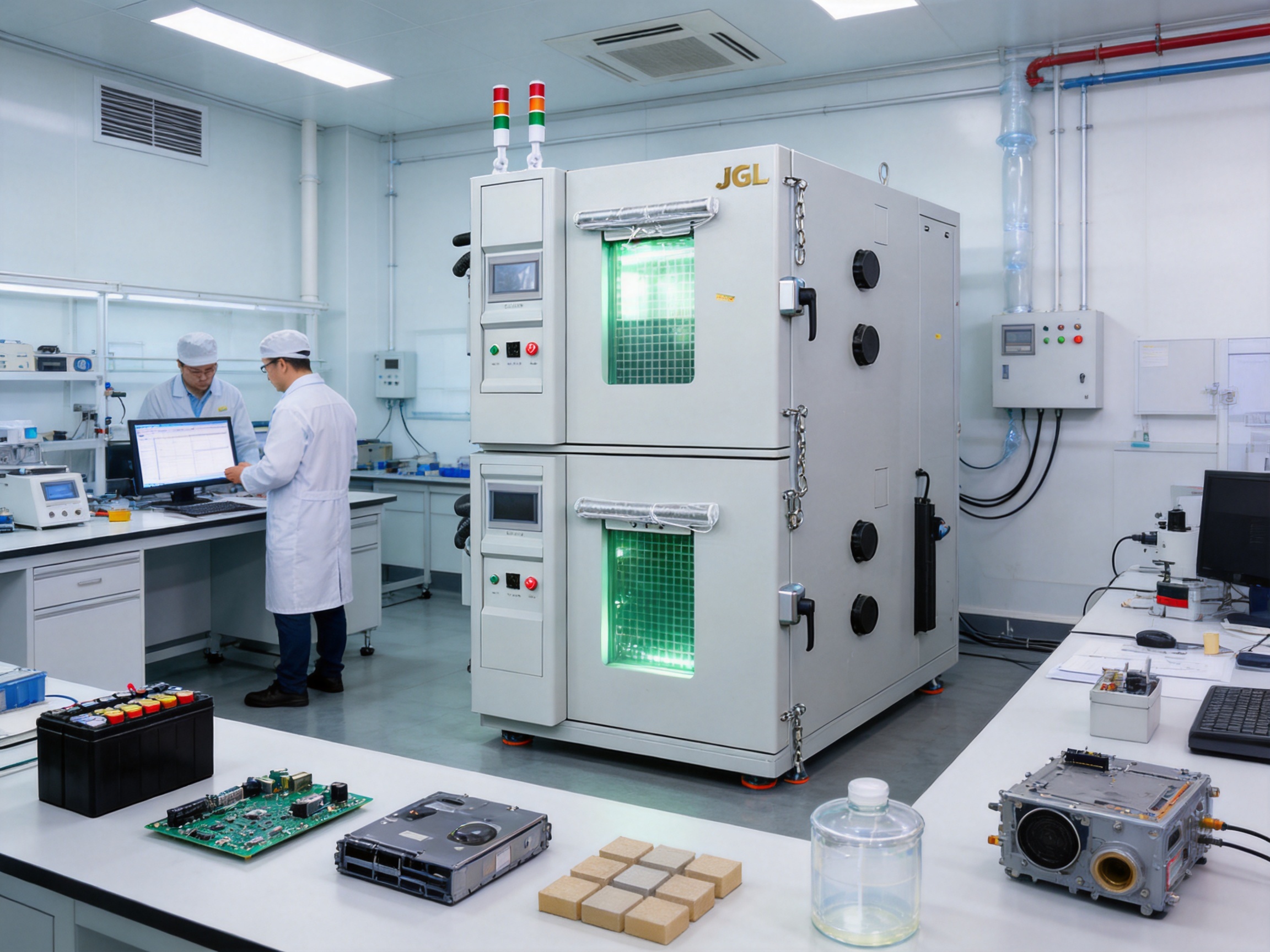
The chamber can support development verification, design validation, reliability engineering, failure analysis, and quality assurance. Its compact dual-compartment layout is useful for laboratories that must perform multiple environmental tests while conserving floor space.
Key Technical Information
The following table summarizes the principal information supplied for the U2T(H)-EX150-A. Certain values are presented as configuration alternatives because the source data lists two temperature ranges and two corresponding weight values. Customers should confirm the final specification before purchase, production, or installation.
| Item | Supplied Specification | Engineering Significance |
|---|---|---|
| Product model | U2T(H)-EX150-A | Dual-layer explosion-proof thermal test chamber |
| Product category | Double-layer explosion-proof high- and low-temperature test chamber | Designed for independent or simultaneous thermal testing |
| Nominal capacity | 150 L listed in the supplied information | Confirm whether this refers to each compartment or the selected configuration |
| Temperature range option 1 | -40°C to +150°C | Suitable for broad cold-to-high-temperature testing |
| Temperature range option 2 | -70°C to +180°C | For more demanding low- and high-temperature applications |
| Studio dimensions | 500 × 500 × 600 mm × 2 | Two upper and lower test compartments |
| Overall dimensions | 1,100 × 1,750 × 1,800 mm | Supports installation planning and laboratory layout design |
| Weight option 1 | Approximately 550 kg | Confirm according to temperature range and installed safety equipment |
| Weight option 2 | Approximately 650 kg | Confirm floor loading and transport requirements before installation |
| Safety features | Explosion-proof door chain, reinforced viewing window, smoke detection, fine water mist, automatic extinguishing, rapid water injection, pressure relief | Provides layered protection for high-risk testing |
| Thermal system | Dual evaporators and frost-resistant operating technology | Supports independent control and stable year-round operation |
| Control | Digital control interface | Enables programming and monitoring of thermal profiles |
Advantages Compared with Conventional Competitor Designs
The most important competitive advantage of the U2T(H)-EX150-A is the combination of dual-compartment productivity and integrated safety. Many conventional chambers focus primarily on temperature control. A separate safety enclosure or external fire-response system may then be required for high-risk testing. By integrating safety functions into the chamber design, this model can offer a more unified solution for laboratories that handle potentially hazardous specimens.
A second advantage is the use of dual evaporators. A simple shared refrigeration arrangement can make it more difficult to maintain different temperatures in two compartments, particularly when the loads vary. Independent evaporator support is better suited to simultaneous high- and low-temperature work and can help reduce cross-interference between the upper and lower chambers.
A third advantage is the layered emergency-response architecture. The explosion-proof door chain, reinforced viewing window, smoke detection, fine water mist, automatic extinguishing system, rapid water injection, and pressure relief device address different stages or consequences of a possible failure. No single safety feature can manage every hazard, but multiple coordinated controls can provide stronger protection than a basic chamber with only an over-temperature alarm.
Another advantage is year-round stability. Frost can be a persistent problem in low-temperature chambers, particularly in humid environments or during frequent door openings. Frost-resistant operating technology helps preserve heat-transfer performance, reduce interruptions, and improve test continuity.
The compact dual-layer layout may also reduce the equipment footprint required for parallel testing. A laboratory that would otherwise need two individual chambers may be able to consolidate selected workflows in one system. This can simplify operator access, facility planning, utilities management, and preventive maintenance.
These advantages should be assessed against the customer’s exact application. Competitor comparisons should include temperature performance under load, chamber uniformity, safety-system response, serviceability, available documentation, calibration support, customization capability, and total cost of ownership rather than relying only on nominal temperature range or chamber volume.
Manufacturing Strengths and Engineering Capability
JIANGSU BAISHENG INDUSTRIAL CO., LTD. was founded in 2010 and specializes in laboratory equipment and safety testing instruments. Its development path combines research and development, equipment manufacturing, technical specification management, and international trade. This combination is important for specialized products because customers often need both engineering support and clear communication throughout specification, production, delivery, installation, and after-sales service.
The company’s predecessor was an electronic testing research and development studio established in 2013. This technical origin gave the founding team experience in laboratory equipment and safety-compliance testing. In 2016, the organization developed into an enterprise, completed its first independently developed production line, and introduced laboratory equipment supported by independent intellectual property.
In 2019, the company adopted a technology-and-trade development strategy. It increased research and development investment, introduced technical talent, and expanded international market activity. In 2022, it further improved its quality-management system, while its products underwent rigorous technical specification certification processes. By 2025, the company continued to focus on product innovation, technological upgrading, intelligent functions, digitalization, and broader application scenarios.
For the U2T(H)-EX150-A, advanced manufacturing is not limited to fabricating the outer shell. It includes the coordination of structural design, insulation, doors, viewing windows, refrigeration components, dual evaporators, air circulation, control electronics, safety sensors, water systems, pressure relief, wiring, and commissioning. The quality of the final chamber depends on how well these systems are integrated.
A robust manufacturing process should begin with application analysis. The manufacturer needs to understand the specimen type, test profile, energy level, temperature range, ramp requirements, test duration, failure risks, and installation environment. This information guides the selection of refrigeration capacity, heater power, sensor types, safety thresholds, internal materials, and suppression arrangements.
Mechanical fabrication is also critical. The chamber body must provide structural stability, thermal insulation, reliable sealing, and support for the door and viewing window. The dual-layer frame must maintain alignment over time, while internal surfaces should be suitable for cleaning and inspection. Cable penetrations, drainage points, and service access must be designed to avoid compromising safety or thermal performance.
Electrical and control assembly require careful separation, protection, labeling, and verification. Sensors should be positioned to detect temperature and abnormal conditions effectively. Safety circuits should be checked for correct interlocking behavior. Emergency functions should be tested under controlled commissioning procedures before the chamber is released for routine use.
Refrigeration commissioning is another essential step. The system should be evaluated for pull-down behavior, heating response, stability at low and high setpoints, recovery after door opening, and operation under representative load. For a dual-layer system, the upper and lower compartments should be tested both independently and simultaneously to verify that one chamber does not adversely affect the other.
The company’s stated core values, “Precision in Craftsmanship, Innovation for the Long-Term,” are particularly relevant to this product category. Precision is needed for sensor calibration, door sealing, temperature distribution, and safety-system response. Long-term innovation is needed to improve energy efficiency, digital monitoring, automation, maintainability, and application-specific protection.
Customization and Project-Based Configuration
Explosion-proof test chambers are rarely purchased as purely generic products. The correct configuration depends on the test object and the hazards associated with it. A battery laboratory may require different fixtures and suppression logic from a polymer research department. An automotive supplier may need cable ports, communication functions, and specific cycling programs. A chemical laboratory may require corrosion-resistant materials and a carefully evaluated extinguishing medium.
Potential customization areas include temperature range, temperature ramp rate, compartment programming, specimen fixtures, cable ports, internal shelving, data acquisition, alarm outputs, remote monitoring, camera integration, ventilation, water supply, drainage, emergency-stop arrangements, and facility communication interfaces.
The customer should provide a detailed application brief before final design. This brief should identify the specimen dimensions, number of specimens, maximum mass, electrical connections, energy content, expected heat release, potential gases, test standard, cycle profile, required uniformity, and desired data records. It should also describe the installation site, ambient temperature, humidity, floor capacity, available power, water supply, drainage, and ventilation.
Early technical communication reduces the risk of selecting a chamber that is thermally suitable but insufficiently adapted to the specimen hazard. It also helps define the correct relationship between automatic suppression and the laboratory’s emergency procedures. A well-configured chamber can improve safety and testing efficiency, while an under-specified system may create unnecessary limitations.
Installation, Commissioning, and Maintenance
Installation should be planned before the equipment arrives. The overall dimensions are approximately 1,100 × 1,750 × 1,800 millimeters, and the listed weight may be approximately 550 or 650 kilograms depending on configuration. The customer should verify doorway dimensions, transport routes, floor loading, lifting requirements, service clearances, electrical capacity, water connections, drainage, and ventilation.
The pressure relief outlet must be positioned with attention to personnel safety and surrounding equipment. Water mist and rapid water injection systems require suitable supply arrangements, while drainage must be capable of handling the expected discharge. The chamber should not be installed in a location where water, smoke, or pressure release could create a secondary hazard.
Commissioning should include inspection of the chamber structure, door chain, viewing window, seals, wiring, sensors, refrigeration system, heating system, control interface, smoke detector, sprinkler system, automatic extinguishing system, rapid water injection device, and pressure relief device. Each safety function should be tested according to an approved procedure.
Preventive maintenance supports long-term performance. Operators should inspect door seals, viewing-window condition, internal surfaces, airflow paths, sensor calibration, alarm records, water lines, nozzles, drainage, pressure relief components, and refrigeration performance. Filters and heat-exchange surfaces should be kept clean where applicable. Any sign of leakage, unusual noise, unstable temperature, repeated alarms, or damaged safety hardware should be investigated before continued operation.
Calibration and verification should be scheduled according to the laboratory’s quality system and applicable standards. Temperature mapping should be repeated after major repairs, control changes, relocation, or significant modifications. Safety systems should also be function-tested at defined intervals rather than checked only when an incident occurs.
Recommended Operating Practices
Operators should review the test plan and risk assessment before loading the chamber. The specimen should be inspected for damage, leakage, loose connections, exposed conductors, or conditions that could cause an uncontrolled event. Fixtures should hold the specimen securely while allowing appropriate airflow and sensor access.
The chamber should not be overloaded. Excessive specimen mass or poor spacing can restrict airflow, increase recovery time, and create local hot spots. Samples should be distributed in accordance with the chamber’s validated loading arrangement. Cables should pass through approved ports and should not interfere with door sealing or safety mechanisms.
Temperature profiles should be reviewed before starting an automated test. Setpoints, ramp rates, dwell periods, alarm thresholds, and emergency actions should reflect the specimen’s characteristics. For high-energy or reactive samples, initial testing should normally begin with conservative conditions and close observation.
When an alarm occurs, operators should follow the approved emergency procedure rather than opening the chamber immediately. Depending on the event, the safest response may involve stopping the test, isolating power, allowing automatic suppression to operate, evacuating the area, or waiting for authorized personnel to inspect the chamber. The correct procedure depends on the specimen and facility risk assessment.
Value for Research, Validation, and Quality Assurance
The U2T(H)-EX150-A can support several stages of the product lifecycle. During research and development, engineers can use it to identify temperature-related failure mechanisms and compare material or design options. During design verification, it can help demonstrate that a product meets specified thermal requirements. During validation, it can support repeatable qualification testing under controlled conditions.
In manufacturing quality assurance, the chamber can be used for sampling inspections, accelerated aging, thermal cycling, and failure analysis. Because the two compartments can support different conditions, quality teams may conduct a reference test and an investigation test in parallel. This can shorten decision cycles when production problems or field returns require urgent evaluation.
The chamber also supports more efficient use of laboratory resources. A dual-layer system can reduce the number of separate test sessions, improve equipment utilization, and make better use of limited floor space. Its explosion-proof design may allow laboratories to perform higher-risk tests in a controlled enclosure rather than relying on improvised protective arrangements.
How to Select the Correct Configuration
Before ordering, customers should confirm the required temperature range. The supplied information includes both -40°C to +150°C and -70°C to +180°C options. The more extreme range may require different refrigeration capacity, insulation, components, electrical load, and operating conditions. Selection should be based on the actual test profile rather than choosing the widest range automatically.
Capacity should also be clarified. The product information lists a nominal capacity of 150 liters and studio dimensions of 500 × 500 × 600 millimeters for two compartments. Since the dimensional calculation of one compartment is approximately 150 liters, customers should confirm whether the listed capacity refers to one compartment, the nominal model designation, or another internal measurement convention.
Weight should be confirmed because the supplied data lists approximately 550 and 650 kilograms. The final value may depend on the temperature range, refrigeration system, suppression equipment, structural reinforcement, and other options. Floor loading, transport, lifting, and installation planning should use the final certified value.
Customers should also ask for technical information related to uniformity, fluctuation, heating and cooling rates, recovery time, noise, power consumption, calibration, alarm functions, data recording, safety-system testing, and recommended maintenance. For hazardous specimen testing, a formal application review is strongly recommended.
Q&A
What is the main purpose of the U2T(H)-EX150-A?
It is designed for high- and low-temperature testing where the test specimen may present elevated safety risks. The chamber combines two thermal test compartments with explosion-proof construction and integrated fire, smoke, water, and pressure-protection functions.
Can the two compartments operate at different temperatures?
The dual-layer design is intended to support independent upper and lower test spaces, including simultaneous high- and low-temperature testing. The exact degree of independent programming should be confirmed for the selected control configuration.
What temperature ranges are available?
The supplied specifications list -40°C to +150°C and -70°C to +180°C. These should be treated as configuration options until the final model and performance requirements are confirmed with the manufacturer.
Why are dual evaporators important?
Dual evaporators help manage the thermal loads of the two compartments separately. They can reduce thermal interference and support more stable operation when the upper and lower chambers use different setpoints or contain different specimen loads.
What safety systems are included?
The listed systems include an explosion-proof door chain, explosion-proof viewing window, automatic fire extinguishing system, smoke detection, fine water mist sprinklers, rapid water injection, and an explosion-proof pressure relief device.
Is the chamber suitable for battery testing?
It is intended to support various battery and energy-storage tests when the configuration matches the battery chemistry, size, energy level, test procedure, and facility risk assessment. The manufacturer should review the application before final selection.
Does the chamber prevent frost during low-temperature testing?
The product information highlights technology for stable operation throughout the year without frost. Actual performance depends on ambient humidity, door-opening frequency, loading, setpoint, and maintenance conditions.
How should the listed capacity be interpreted?
The supplied information lists 150 liters, while each stated compartment dimension is approximately 500 × 500 × 600 millimeters. Customers should confirm the manufacturer’s official definition of capacity for the selected configuration.
What should be prepared before installation?
The customer should prepare suitable floor space, access routes, floor loading capacity, electrical service, water supply, drainage, ventilation, pressure-relief routing, and maintenance clearance. Site requirements should be reviewed before shipment.
Can the chamber be customized?
Potential options may include temperature range, fixtures, cable ports, control functions, data logging, alarm outputs, monitoring interfaces, internal materials, ventilation, water arrangements, and other application-specific features. Customization should be defined during technical consultation.
What makes the product different from a conventional thermal chamber?
Its principal distinctions are the dual-layer independent testing concept, dual-evaporator thermal architecture, explosion-proof construction, integrated fire-response systems, rapid water injection, pressure relief, and frost-resistant operating technology.
Who manufactures the equipment?
The product is manufactured and supplied by JIANGSU BAISHENG INDUSTRIAL CO., LTD., a China-based company specializing in laboratory equipment, safety testing instruments, research and development, and customized technical solutions.
Conclusion
The U2T(H)-EX150-A Dual-Layer Explosion-Proof Thermal Test Chamber is designed for laboratories that need more than ordinary temperature control. Its two-compartment structure supports parallel testing, while dual evaporators help manage independent thermal conditions. Its explosion-proof door chain, reinforced viewing window, smoke detection, fine water mist, automatic fire extinguishing system, rapid water injection device, and pressure relief device create a layered response strategy for demanding test environments.
The product is particularly relevant to battery research, electronics qualification, materials evaluation, automotive development, chemical testing, aerospace validation, and industrial quality assurance. Its compact dual-layer arrangement can improve laboratory productivity and reduce the need for separate equipment, while its frost-resistant operating technology is intended to support stable performance over extended periods.
The strongest results will be achieved when the chamber is selected and configured according to the actual specimen, hazard profile, test standard, and site conditions. Technical confirmation is important because the supplied data includes alternative temperature ranges, weights, and a capacity value that should be clarified before purchase. With suitable application engineering, installation, commissioning, calibration, and maintenance, the chamber can become a reliable part of a modern thermal and safety-testing program.
References
1. Product specification and application information supplied for the U2T(H)-EX150-A Dual-Layer Explosion-Proof Thermal Test Chamber.
2. JIANGSU BAISHENG INDUSTRIAL CO., LTD. company profile, development history, engineering capabilities, and stated core values.
3. General laboratory practices for environmental chamber qualification, temperature mapping, calibration, and preventive maintenance.
4. General engineering principles for battery safety testing, thermal runaway mitigation, smoke detection, fire suppression, and pressure management.
5. General guidance for laboratory risk assessment, equipment installation, emergency response planning, and high-temperature material testing.
Product: U2T(H)-EX150-A Dual-Layer Explosion-Proof Thermal Test Chamber
PREV:Multi-Beam Ion Beam Processing for Precision Surface Modification and Thin Film Engineering
NEXT:Multi-Beam Ion Beam Processing for Precision Surface Modification and Thin Film Engineering
NEXT:Multi-Beam Ion Beam Processing for Precision Surface Modification and Thin Film Engineering
Interested in cooperation or have questions?
Featured Products
Related products
Quick Link
Contact Information
- Tel: +86-13861043568
- E-mail: 1840784112@qq.com
- Add: Tianting District, Changzhou City, Jiangsu Province, China, No. 6 Hecircuit
Scan Code
Copyright © JIANGSU BAISHENG INDUSTRIAL CO., LTD.
All Rights Reserved. Privacy Custom Precision Laboratory Testing Equipment Manufacturers
