 English
 Español
NEWS
NEWS
NEWS
NEWS
NEWS
NEWS
NEWS
NEWS
NEWS
NEWS
NEWS
NEWS
NEWS
NEWS
NEWS
NEWS

Luo Qinyue — Senior After-Sales Service Engineer
Home / Author / Luo Qinyue — Senior After-Sales Service Engineer / Precision High-Low Temperature Humidity Cycling Chambers for Reliable Environmental Testing
Precision High-Low Temperature Humidity Cycling Chambers for Reliable Environmental Testing
Content
- 1 Why High-Low Temperature Humidity Cycling Matters
- 2 Product Overview
- 3 Core Advantages of the UTH-150-A
- 4 Comparison with Basic Environmental Chambers
- 5 Advanced Manufacturing and Engineering Strengths
- 6 Application Areas
- 7 Manufacturing Process Considerations
- 8 Recommended Operating Practices
- 9 How the Chamber Supports Better Test Results
- 10 Customization and Technical Support
- 11 Purchasing Considerations
- 12 Quality, Reliability, and Long-Term Value
- 13 Frequently Asked Questions
- 13.1 What is the primary purpose of the UTH-150-A chamber?
- 13.2 How does dynamic PID control improve testing?
- 13.3 Why is water vapor partial pressure regulation important?
- 13.4 What material is used inside the chamber?
- 13.5 How does the chamber manage condensation?
- 13.6 What is the purpose of the Panasonic circulation fan?
- 13.7 Is the chamber suitable for unattended testing?
- 13.8 Can the chamber be customized?
- 13.9 Which industries can use this chamber?
- 13.10 What should be considered when loading samples?
- 13.11 How should the chamber be maintained?
- 13.12 Does the model name define all technical specifications?
- 14 Conclusion
- 15 References
- 16 Product: UTH-150-A High-Low Temperature Humidity Cycling Chamber
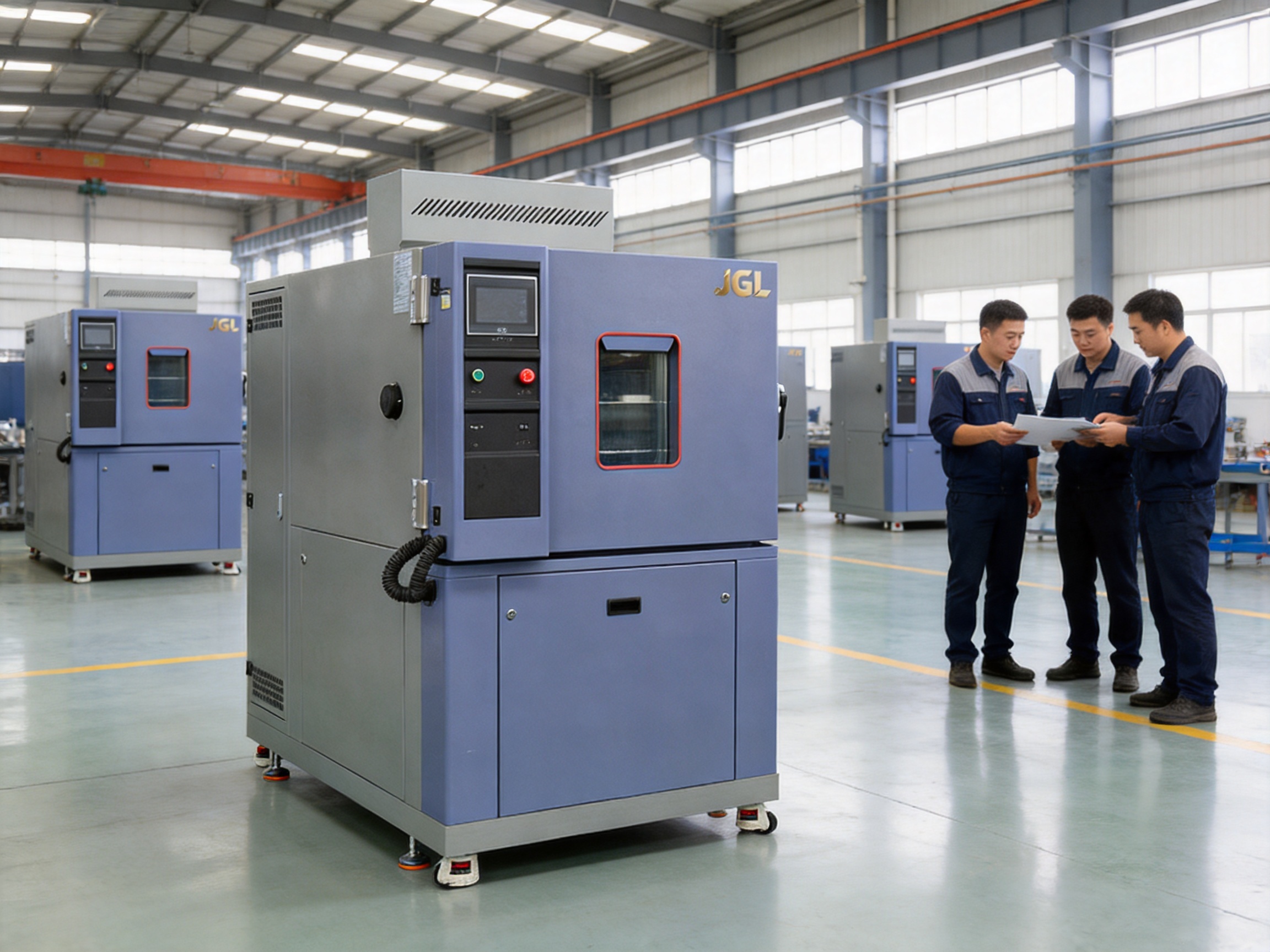
Environmental conditions can determine whether a product performs reliably throughout its service life. Electronics, batteries, automotive components, aerospace assemblies, polymers, coatings, packaging materials, and chemical products may all experience repeated changes in temperature and humidity during transportation, storage, operation, or outdoor exposure. A product that performs well under normal laboratory conditions may behave very differently when exposed to condensation, rapid thermal transitions, high humidity, low temperature, or prolonged cycling. For this reason, dependable environmental simulation equipment is an essential part of modern research, quality assurance, and production testing.
The UTH-150-A high-low temperature humidity cycling chamber is designed for this purpose. It combines controlled temperature variation, humidity regulation, balanced air circulation, durable construction, and electrical safety features in one integrated testing platform. Instead of simply heating or cooling a test space, the chamber is engineered to reproduce demanding environmental sequences with repeatable control. This enables laboratories and manufacturers to evaluate product durability, material aging, moisture resistance, insulation performance, and operational stability under controlled conditions.
The chamber is manufactured by JIANGSU BAISHENG INDUSTRIAL CO., LTD., a China-based technology-driven supplier of laboratory equipment and safety testing instruments. The company combines engineering development, precision manufacturing, international trade experience, and customized technical support. Its approach is particularly valuable for customers seeking more than a standard catalog machine. Testing requirements vary between industries, and a capable manufacturer must be able to understand application conditions, configure equipment appropriately, and provide dependable long-term service.
Why High-Low Temperature Humidity Cycling Matters
Environmental testing is intended to reveal weaknesses before a product reaches the customer. A circuit board may develop electrical instability after moisture absorption. A battery enclosure may lose sealing performance after repeated expansion and contraction. A polymer component may become brittle at low temperature and deform at elevated temperature. A coating may blister or lose adhesion when humidity and temperature change repeatedly. These failure modes may not be visible during a short, ordinary functional test.
High-low temperature humidity cycling introduces controlled environmental stress. The chamber can be programmed or operated to expose samples to different temperature and humidity conditions, allowing engineers to observe performance across a sequence rather than at a single fixed point. The resulting information can support design improvement, supplier qualification, production inspection, reliability prediction, and compliance-oriented testing.
A useful cycling chamber must do more than achieve a target temperature or relative humidity once. It must maintain conditions accurately, recover consistently after transitions, circulate air uniformly, protect the test area from contamination, and operate safely for extended periods. The UTH-150-A addresses these requirements through a combination of dynamic PID control, water vapor partial pressure regulation, robust refrigeration and water management, durable stainless steel construction, and carefully selected electrical and mechanical components.
Product Overview
The UTH-150-A is a cyclic high and low temperature humidity test chamber intended for precise environmental simulation. Its structure is designed for regular laboratory use, where operators may need to load samples, inspect specimens, clean the interior, and repeat tests over long periods. The door uses damped hinges, allowing the opening angle to be adjusted more smoothly than with a basic uncontrolled hinge arrangement. This improves accessibility and helps reduce unnecessary impact on the door, frame, and sealing structure.
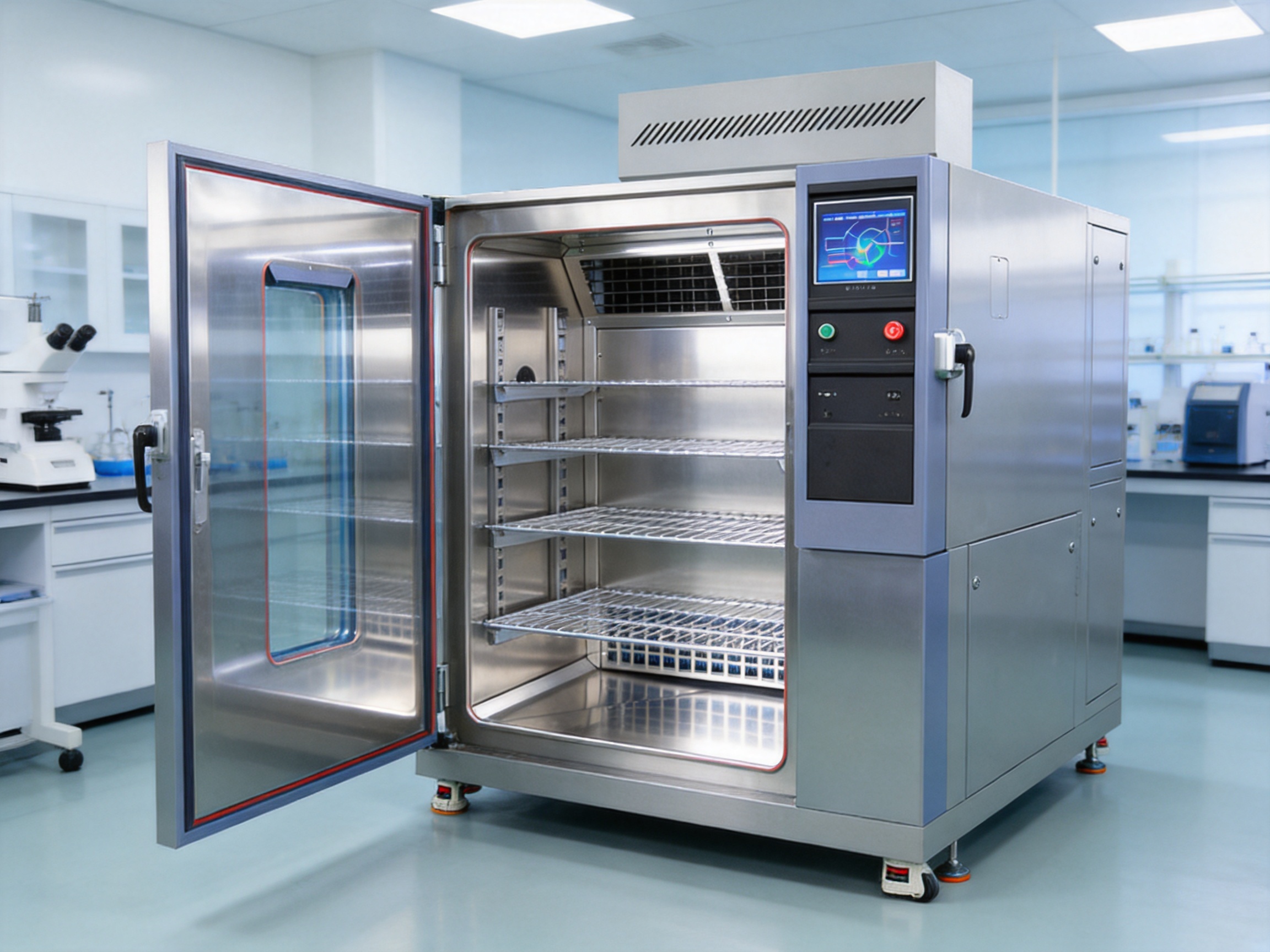
The interior is constructed from film-coated mirror-finished stainless steel. This surface is resistant to corrosion and comparatively easy to clean, an important advantage when testing materials that may release moisture, particles, or residues. The reflective, smooth finish also supports hygienic maintenance and reduces the likelihood that contaminants will remain trapped in rough internal surfaces.
At the center of the chamber’s performance is a balanced temperature and humidity control system. Dynamic PID regulation helps the equipment respond to changing conditions while minimizing overshoot and fluctuation. Water vapor partial pressure regulation contributes to more accurate humidity management, particularly when temperature changes make conventional humidity control difficult. Together, these control methods support stable, repeatable environmental cycles.
The refrigeration system includes a full-size stainless steel water tray. During low-temperature operation and defrosting, condensation can create a corrosive environment if water is allowed to collect on unsuitable surfaces. A stainless steel tray provides a more durable collection area and helps preserve chamber integrity. Stable refrigeration performance also supports reliable temperature transitions and reduces the risk that condensation management will interfere with testing.
Air circulation is supported by a Panasonic circulation fan with high-temperature bearings rated for operation up to 200°C. The fan helps promote uniform airflow throughout the working space. Although the exact uniformity of a test depends on loading, sample geometry, and selected operating conditions, strong circulation is essential for reducing local hot spots, cold spots, and humidity differences.
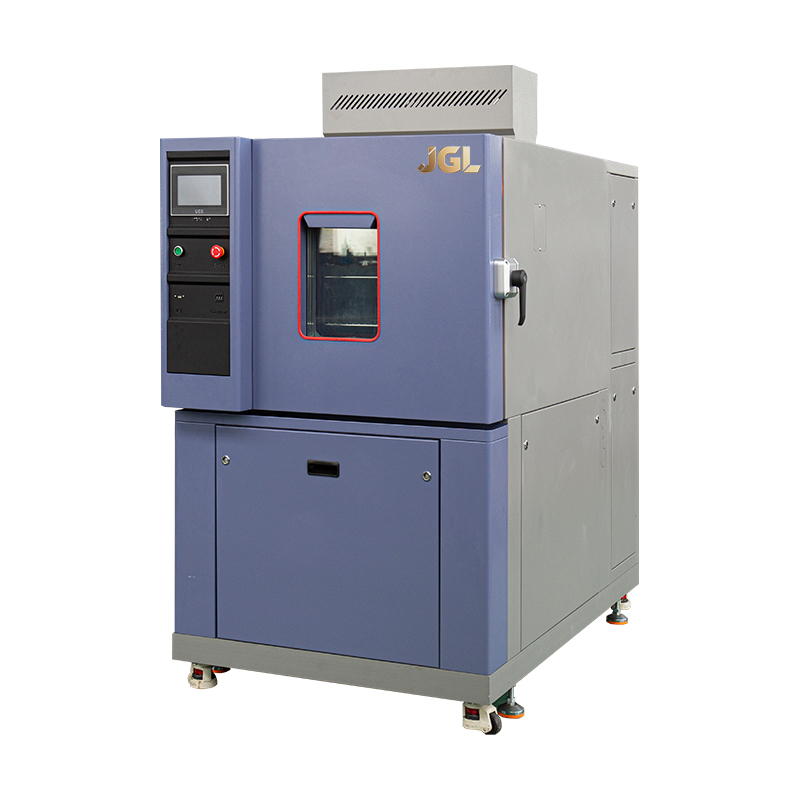
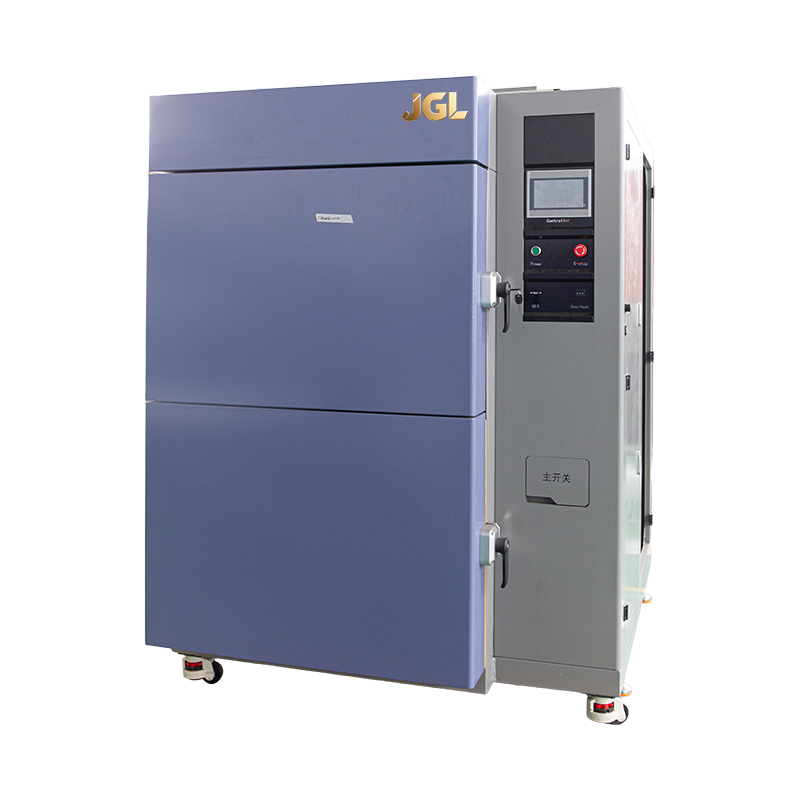
UTH-150-A High-Low Temperature Humidity Cycling Chamber
Core Advantages of the UTH-150-A
Dynamic PID Control for Stable Environmental Conditions
Proportional-integral-derivative control is widely used in laboratory environmental equipment because it can respond to deviations between the measured condition and the target setpoint. A basic control approach may react slowly or produce excessive fluctuation, especially when the chamber is loaded with samples that absorb heat or moisture. Dynamic PID control is intended to adapt the control response to changing conditions, helping the chamber approach and maintain its target more smoothly.
In high-low temperature humidity cycling, control stability is especially important. The chamber may need to transition from a cold, dry condition to a warmer, humid condition, or the reverse. Each transition changes the thermal load, condensation behavior, and moisture balance inside the chamber. A responsive control system helps reduce unnecessary oscillation and supports more consistent test results.
For electronics and battery testing, control stability can improve the reliability of performance observations. For materials, it helps distinguish genuine aging or degradation from artificial variation caused by poorly controlled environmental conditions. For quality inspection, repeatable control makes it easier to compare samples from different production batches.
Water Vapor Partial Pressure Regulation
Humidity control is often more complicated than simply adding water to the chamber. Relative humidity is related to both moisture content and temperature. When temperature changes, the amount of water vapor required to maintain a particular relative humidity also changes. If the control strategy does not account for this relationship, humidity may fluctuate or condensation may occur unexpectedly during transitions.
The UTH-150-A uses water vapor partial pressure regulation as part of its humidity management system. This approach supports more precise control of the water vapor component within the chamber atmosphere. It is particularly useful for cycling applications in which temperature and humidity must change together according to a planned test profile.
More accurate humidity management benefits tests involving corrosion, insulation, sealing, moisture absorption, electrical leakage, dimensional stability, and material aging. It also provides a stronger basis for comparing data between repeated tests, provided that the samples are loaded and the test procedure is controlled consistently.
Durable, Easy-to-Maintain Stainless Steel Interior
Internal chamber materials must withstand repeated exposure to moisture, temperature changes, cleaning procedures, and potential sample emissions. The film-coated mirror stainless steel interior used in the UTH-150-A is designed to resist corrosion and simplify routine cleaning. A smooth interior surface reduces the number of locations where dust, residue, and condensation can accumulate.
Durability inside the chamber is not merely an aesthetic consideration. Corrosion can damage surfaces, release particles, affect seals, and create maintenance problems. It may also compromise the repeatability of environmental tests. A corrosion-resistant interior helps the chamber remain suitable for long-term laboratory service.
The stainless steel water tray further supports this design philosophy. By providing a dedicated and corrosion-resistant area for defrost condensation, it reduces the exposure of other internal components to standing water. This can contribute to longer service life and more straightforward cleaning routines.
Uniform Airflow Through a High-Temperature Circulation Fan
Temperature and humidity measurements are meaningful only when the chamber atmosphere is sufficiently uniform. If one area is significantly warmer, colder, wetter, or drier than another, samples placed in different positions may experience different test conditions. Air circulation helps distribute thermal energy and moisture throughout the test space.
The UTH-150-A uses a Panasonic circulation fan fitted with high-temperature bearings rated up to 200°C. The fan is selected for demanding operating conditions and continuous circulation requirements. Its function is to maintain strong airflow while supporting reliable operation during temperature changes and extended test cycles.
Uniform airflow also supports faster recovery after the door is opened. Whenever the door is opened, the internal atmosphere is disturbed and ambient air enters the chamber. Effective circulation helps redistribute the controlled atmosphere after the door is closed, allowing the chamber to return to its intended condition more efficiently.
Leakage Protection for Safer Long-Term Testing
Environmental chambers often operate unattended for many hours or days. Electrical safety therefore becomes a key part of equipment design. The UTH-150-A incorporates a leakage protection design intended to reduce risks associated with electrical leakage during operation.
This feature is especially valuable in a system that combines electrical controls, refrigeration, heating, water supply, humidity generation, and condensation management. By integrating protection into the equipment design, the chamber provides an additional layer of safety for laboratory personnel and facilities.
Safety protection should always be used together with appropriate installation, grounding, inspection, maintenance, and operating procedures. Customers should review the final equipment configuration and electrical requirements with qualified personnel before commissioning the chamber.
Energy-Efficient Operation
Environmental chambers may operate for extended periods, and energy consumption can influence the total cost of ownership. The UTH-150-A is engineered with optimized insulation, environmentally friendly components, and a low-energy operating concept. These measures are intended to reduce unnecessary energy loss while maintaining stable test conditions.
Efficient insulation helps limit heat exchange between the working space and the surrounding laboratory. This allows the refrigeration and heating systems to work more effectively. An efficient control strategy also avoids excessive heating and cooling corrections caused by unstable regulation.
Energy efficiency benefits laboratories in several ways. It can reduce operating expenses, lower the thermal load placed on the facility, support sustainability goals, and improve the practicality of long-duration testing. Energy savings should not be evaluated only by the rated power of individual components; actual consumption also depends on setpoints, cycle profiles, ambient conditions, sample load, door openings, and maintenance quality.
Comparison with Basic Environmental Chambers
Not all temperature and humidity chambers offer the same level of control or construction quality. A basic chamber may provide heating and cooling but lack refined humidity regulation, robust condensation management, or strong airflow distribution. The distinction becomes important when testing requires repeatable cycling rather than a short exposure at one condition.
| Evaluation Area | Basic Environmental Chamber | UTH-150-A Design Approach | Customer Benefit |
|---|---|---|---|
| Temperature regulation | May rely on conventional single-loop control | Dynamic PID control for responsive adjustment | More stable transitions and improved repeatability |
| Humidity regulation | May provide limited moisture control | Water vapor partial pressure regulation | More precise humidity simulation during cycling |
| Air circulation | Standard fan with limited high-temperature capability | Panasonic fan with bearings rated up to 200°C | Reliable circulation and improved environmental uniformity |
| Interior construction | May use less corrosion-resistant surfaces | Film-coated mirror stainless steel | Improved durability and easier cleaning |
| Condensation management | Basic drainage or non-specialized collection area | Full-size stainless steel water tray | Better resistance to corrosion from defrost water |
| Electrical protection | Standard protection may be limited | Integrated leakage protection design | Additional support for safe long-duration operation |
| Energy management | May prioritize initial cost over efficiency | Optimized insulation and energy-efficient components | Potentially lower operating cost and reduced energy waste |
| Customization potential | Often limited to fixed specifications | Supported by an engineering-oriented manufacturer | Better alignment with application-specific requirements |
The table illustrates why a chamber should be assessed as a complete system rather than by temperature range alone. A nominal setpoint does not indicate how quickly the chamber reaches that condition, how evenly it is distributed, how consistently it is maintained, or how well the unit performs during repeated transitions. Control architecture, airflow, insulation, water management, safety, and serviceability all influence practical testing value.
Advanced Manufacturing and Engineering Strengths
Technology-Driven Product Development
JIANGSU BAISHENG INDUSTRIAL CO., LTD. was founded in 2010 and focuses on high-end laboratory equipment and safety testing instruments. Its development path began with electronic testing and gradually expanded into broader laboratory equipment solutions. This background is relevant to environmental chamber production because the equipment combines mechanical structure, thermal engineering, refrigeration, humidity control, electrical systems, and safety design.
The company’s predecessor was a research and development studio established in 2013 by engineers with experience in laboratory equipment and safety compliance testing. In 2016, the technical studio developed into an enterprise and completed its first independently developed production line. This evolution from engineering development to manufacturing provides a foundation for creating equipment around application requirements rather than simply reselling generic products.
In 2019, the company adopted a technology-plus-trade development strategy. This approach combines product engineering with international market knowledge. For overseas customers, such a combination can simplify communication because technical specifications, commercial requirements, export considerations, and application expectations must all be coordinated.
Integrated Mechanical and Electrical Design
A high-low temperature humidity cycling chamber requires close coordination between different engineering disciplines. The chamber enclosure must maintain structural strength and insulation performance. The refrigeration system must remove heat effectively. The heating system must respond to programmed conditions. The humidification and dehumidification functions must maintain moisture balance. Sensors and controls must communicate accurately, while electrical protection must support safe operation.
The UTH-150-A reflects an integrated design philosophy. The damped door hinges, stainless steel interior, water tray, circulation fan, refrigeration system, dynamic PID control, humidity regulation, and leakage protection are not isolated features. Their performance depends on how well they work together as a complete environmental simulation system.
Integrated design can also simplify maintenance. When the chamber layout is planned around service access, water management, airflow, and component protection, technicians can inspect important systems more efficiently. Customers should still confirm the final maintenance access and service documentation for their selected configuration, but a structured engineering approach provides a stronger basis for long-term equipment support.
Use of Reliable Core Components
The company identifies core electrical components as being sourced from first-tier international brands. This component strategy is intended to improve reliability, service life, and replacement availability. In laboratory equipment, the quality of relays, controllers, protection devices, sensors, contactors, and other electrical parts can influence both operating stability and maintenance requirements.
The use of recognized components also benefits international customers who may already be familiar with particular industrial suppliers. Familiar component platforms can make troubleshooting easier for qualified technicians and may simplify procurement when replacement parts are required. Actual component brands and specifications can vary according to customer requirements, regional electrical standards, and final configuration, so they should be confirmed during technical quotation and order review.
Quality Management and Product Refinement
By 2022, the company had further improved its quality management system, and its products passed rigorous technical specification certifications according to the supplied company information. A quality management system is valuable because it helps organize incoming inspection, assembly procedures, process controls, final testing, documentation, and corrective actions.
For environmental chambers, quality control should cover more than exterior appearance. Important inspection areas include door sealing, chamber insulation, wiring quality, sensor installation, fan operation, refrigeration response, humidity generation, condensate drainage, leakage protection, controller function, and alarm behavior. Consistent manufacturing processes reduce variation between units and help customers receive equipment that performs according to the agreed technical specification.
The company also emphasizes continuous product innovation and technological upgrading. This is important because laboratory users increasingly expect digital control, improved efficiency, better data traceability, and application-specific configurations. A manufacturer that maintains an active R&D capability is better positioned to adapt equipment to changing test standards and industry requirements.
Application Areas
Electronics and Electrical Products
Electronic products may be affected by moisture ingress, condensation, thermal expansion, insulation changes, solder-joint fatigue, corrosion, and component drift. High-low temperature humidity cycling helps manufacturers evaluate how assemblies behave when environmental stress is repeated. The test can be used during design verification, supplier qualification, failure analysis, and production quality inspection.
Printed circuit boards, connectors, displays, sensors, control modules, power supplies, and communication equipment may all require environmental evaluation. The UTH-150-A supports this work by creating controlled temperature and humidity conditions while maintaining air circulation and stable regulation.
Batteries and Energy Storage Components
Batteries and energy storage products operate under conditions that may differ significantly from the laboratory environment. Temperature influences electrochemical behavior, internal resistance, charging performance, and discharge characteristics. Humidity can affect housings, terminals, seals, insulation, and control electronics.
Environmental cycling can help identify weaknesses in packaging, sealing, connector design, thermal management, and protective coatings. The chamber does not replace dedicated battery safety equipment or abuse-testing systems, but it can be an important part of a broader battery reliability program. Test planners should establish appropriate electrical loading, monitoring, ventilation, and safety procedures for the specific battery chemistry and sample size.
Automotive Parts
Automotive components must withstand seasonal variation, engine-compartment heat, road moisture, storage conditions, and repeated temperature transitions. Sensors, lighting assemblies, electronic control units, rubber parts, interior materials, connectors, displays, and sealing components may benefit from environmental cycling tests.
The chamber can support development testing and quality control by helping engineers compare materials, verify design changes, and identify failures before vehicle integration. Stable airflow and humidity control are particularly important when the test involves multiple samples or when different batches must be compared using the same cycle profile.
Aerospace Components
Aerospace equipment is expected to maintain performance across demanding environmental conditions. Components may be exposed to changes in temperature, moisture, storage conditions, and pressure-related environments during their service life. While a temperature humidity chamber cannot reproduce every aerospace condition, it can provide useful controlled data about material behavior, electronics reliability, surface protection, and environmental durability.
Because aerospace testing is often governed by strict internal and industry procedures, users should configure the chamber and validate its performance according to the applicable test plan. The manufacturer’s engineering team can support discussions regarding sample dimensions, cycle requirements, instrumentation, and control features.
Materials, Coatings, and Chemical Products
Materials testing often focuses on aging, moisture absorption, dimensional change, adhesion, corrosion resistance, color stability, and mechanical property retention. Coatings and surface treatments may fail through blistering, cracking, delamination, or chemical reaction. Controlled humidity and temperature cycling can accelerate the discovery of such weaknesses.
For chemical products and formulated materials, compatibility and safety must be considered before chamber use. Users should evaluate whether samples may release corrosive vapors, flammable substances, or contaminants. The chamber should only be used for materials compatible with the equipment construction and the manufacturer’s safety guidance.
Manufacturing Process Considerations
Chamber Structure and Insulation
The manufacturing process begins with the physical structure of the chamber. A strong enclosure must maintain dimensional stability while supporting insulation, door sealing, internal airflow, electrical routing, and service access. Insulation quality affects energy efficiency and temperature stability, while the door structure affects heat loss, moisture leakage, and operator convenience.
The UTH-150-A uses damped hinges that allow adjustable door angles. This is a practical design feature for laboratories where operators frequently load and remove test samples. Smooth door movement helps reduce mechanical shock and supports more controlled access to the test space.
The interior’s mirror-finished stainless steel surface must be formed, joined, and finished carefully. Poor joints or rough surfaces can create cleaning difficulties and moisture accumulation points. A refined interior finish contributes to both durability and the visual quality expected in professional laboratory equipment.
Refrigeration and Thermal Assembly
The refrigeration system is responsible for removing heat from the test space and maintaining low-temperature conditions. Its design must be coordinated with the insulation, airflow, humidity system, controller, and defrost strategy. During cycling, the refrigeration assembly may experience repeated changes in load, making component selection and control tuning important.
Condensation and defrost water are managed through the full-size stainless steel tray. During manufacturing, the tray must be positioned and supported so that water is collected effectively without interfering with airflow or nearby electrical and refrigeration components. Proper drainage and accessibility are also important for routine cleaning.
Control System Integration
The control system integrates temperature sensors, humidity sensors, PID algorithms, water vapor regulation, heating, refrigeration, circulation, alarms, and safety interlocks. Correct sensor placement and calibration are essential because the controller can only regulate what it measures. The control logic must also respond appropriately when the door opens, when a safety limit is reached, or when the chamber transitions between operating modes.
Dynamic PID control requires appropriate tuning for the chamber’s thermal mass and expected sample load. A chamber with few samples behaves differently from a chamber filled with dense materials. The manufacturer’s engineering and commissioning procedures should account for these operating conditions as far as possible, while users should follow loading recommendations to preserve uniformity and control stability.
Electrical Assembly and Safety Verification
Electrical assembly includes wiring, terminals, protection devices, controllers, relays, sensors, heaters, fans, and refrigeration controls. Professional wiring practices reduce the risk of loose connections, overheating, signal interference, and maintenance errors. The leakage protection design adds an important safety layer, but safe operation also depends on correct grounding, suitable power supply, routine inspection, and proper installation.
Before shipment, a responsible manufacturing process should include functional checks of major electrical circuits, control responses, alarms, fan operation, heating, refrigeration, humidity functions, and protection systems. Customers should request the relevant factory test records and operating documentation for the final unit where required by their internal quality procedures.
Recommended Operating Practices
Correct operation is essential for achieving reliable test data. Users should inspect the chamber before starting a test, confirm that the interior is clean, verify that the water system is prepared according to the manual, and ensure that samples are positioned without blocking circulation paths.
Samples should not be packed so tightly that air cannot move around them. Excessive loading may create local temperature and humidity differences and can increase recovery time after door opening. The recommended loading arrangement should consider sample dimensions, heat generation, moisture release, and the requirements of the test method.
Door openings should be minimized during a cycle. Each opening introduces ambient air and changes the internal condition. If inspection is necessary, operators should plan access points in advance and record any interruptions so that test data can be interpreted correctly.
Routine maintenance should include inspection of the door seal, cleaning of the stainless steel interior, examination of the water tray, checking of drainage, inspection of the circulation fan, and verification of electrical protection. Sensors and control performance should be calibrated or checked at intervals appropriate to the laboratory’s quality system and test requirements.
Users should also consider the laboratory environment. Adequate clearance, ventilation, suitable ambient temperature, stable electrical supply, and appropriate floor support help the chamber operate as intended. The final installation requirements should be confirmed before delivery, especially for overseas installations or facilities with specific electrical standards.
How the Chamber Supports Better Test Results
Reliable environmental testing depends on repeatability. If the chamber produces different conditions during nominally identical cycles, engineers may struggle to determine whether a product change caused the observed result. The UTH-150-A supports repeatability through coordinated control and construction features.
Dynamic PID control helps stabilize temperature. Water vapor partial pressure regulation supports humidity accuracy. Strong air circulation reduces local variation. Stainless steel surfaces and water management resist corrosion and preserve the chamber interior. Leakage protection supports safe unattended operation. Efficient insulation helps maintain conditions without unnecessary energy loss.
These features do not eliminate the need for validation. Laboratories should perform temperature and humidity mapping, calibration, maintenance, and periodic performance verification according to their quality procedures. However, equipment designed with these controls provides a stronger starting point for validated testing than a chamber with limited control capability.
Customization and Technical Support
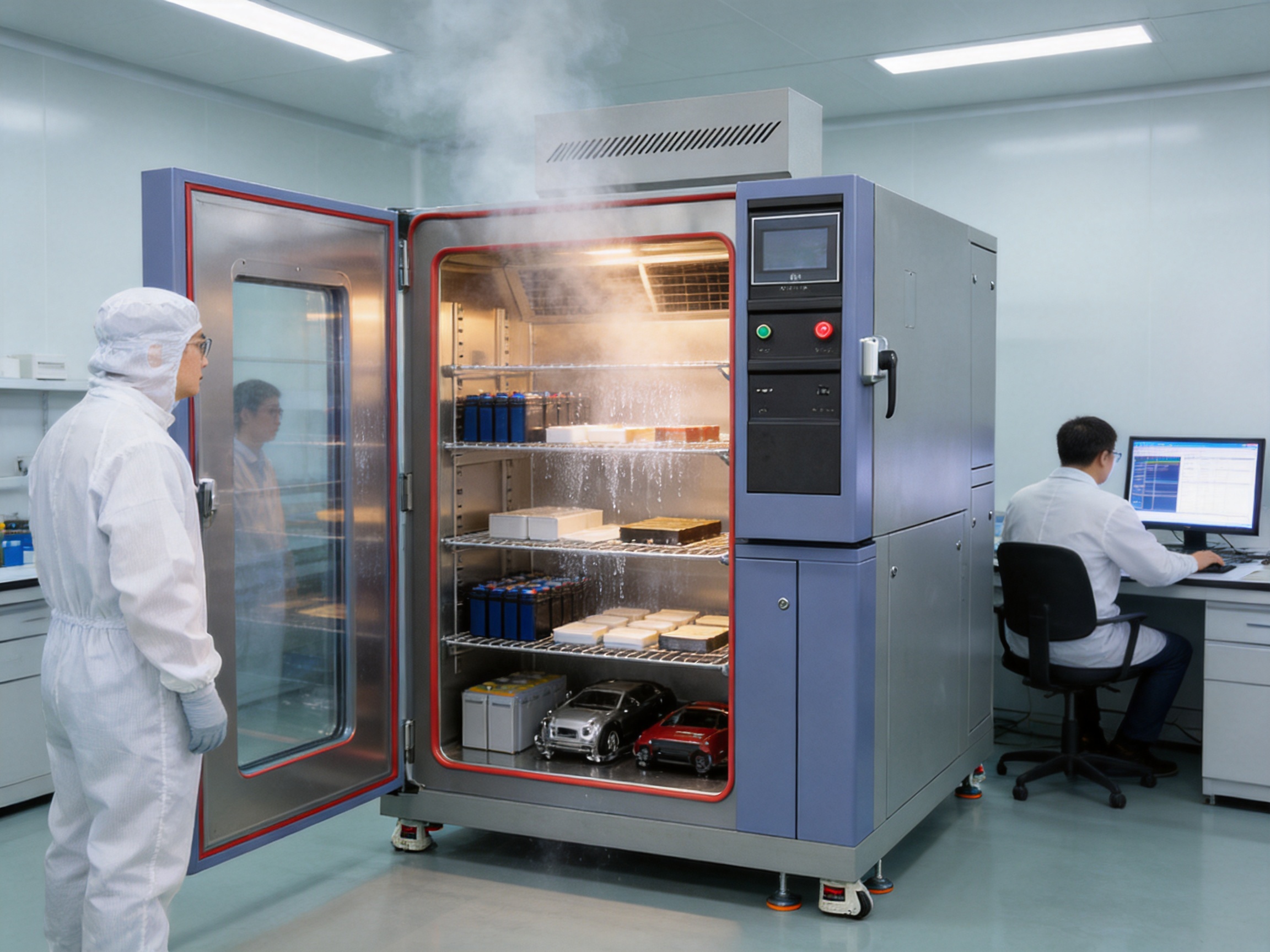
Different customers may require different chamber configurations. Test samples can vary in size, mass, heat generation, moisture release, and electrical connection requirements. Some laboratories may need special feedthroughs, monitoring ports, shelves, communication functions, alarms, or customized cycle programming. The suitability of any option depends on the final application and should be reviewed with the manufacturer before purchase.
JIANGSU BAISHENG INDUSTRIAL CO., LTD. positions its R&D capability as a key advantage in providing customized laboratory solutions. Its engineering-oriented background allows the company to discuss application requirements rather than limiting customers to a fixed standard model. This is useful for research institutions, manufacturers, inspection laboratories, and international distributors that serve multiple industries.
Technical support should begin before the order is placed. Customers should provide information about sample size, expected temperature and humidity conditions, cycle duration, loading quantity, sample heat generation, electrical requirements, applicable test standards, and desired data-recording functions. Clear technical communication helps ensure that the selected configuration is suitable for the intended work.
After installation, support may include commissioning guidance, operator training, maintenance recommendations, spare parts coordination, and troubleshooting assistance. The company’s international trade experience can also help coordinate export documentation and communication with overseas customers. Specific service arrangements should be defined in the commercial and technical agreement.
Purchasing Considerations
When comparing environmental chambers, buyers should look beyond the lowest purchase price. Important evaluation criteria include control precision, uniformity, recovery performance, humidity stability, construction materials, refrigeration reliability, component quality, safety protection, energy consumption, maintenance access, calibration support, and manufacturer responsiveness.
Buyers should request a clear technical specification that identifies the working volume, temperature and humidity ranges, allowable loading, control accuracy, uniformity, transition requirements, refrigeration configuration, electrical supply, safety functions, and optional accessories. The model name alone should not be treated as a complete specification.
It is also advisable to confirm factory acceptance procedures. These may include visual inspection, empty-chamber performance testing, temperature and humidity verification, alarm testing, leakage protection checks, and documentation review. If the chamber is to be used for regulated or customer-audited work, the buyer should discuss calibration certificates, traceability, validation support, and record formats before shipment.
The UTH-150-A is a strong choice for customers who value controlled cycling, corrosion-resistant construction, safe operation, and energy-conscious design. Its advantage is not based on one isolated feature. Rather, it comes from the combination of control technology, airflow, water management, durable materials, component selection, and engineering support.
Quality, Reliability, and Long-Term Value
Laboratory equipment creates value when it produces dependable data over many years. A chamber that is inexpensive to purchase but difficult to maintain may become costly through downtime, inconsistent results, high energy use, or repeated repairs. Conversely, a chamber with durable materials, accessible components, stable control, and manufacturer support can contribute to lower operational risk.
The UTH-150-A’s stainless steel interior and water tray are intended to resist the effects of moisture and condensation. Its high-temperature circulation fan is selected for demanding operation. Its core electrical components are sourced from established international brands. Its leakage protection supports safer operation. Its insulation and control design are intended to reduce energy waste. These features collectively support long-term value.
Reliability also depends on manufacturing discipline. The company’s history of R&D development, production-line establishment, quality management improvement, and product refinement demonstrates a commitment to building technical capability rather than relying only on trading activity. This distinction can be important when customers need customized equipment or technical assistance after delivery.
Frequently Asked Questions
What is the primary purpose of the UTH-150-A chamber?
The UTH-150-A is designed for high-low temperature and humidity cycling. It helps users simulate controlled environmental changes for electronics, batteries, automotive parts, aerospace components, materials, coatings, and other products that require reliability or aging evaluation.
How does dynamic PID control improve testing?
Dynamic PID control continuously responds to differences between measured and target conditions. It is intended to reduce unnecessary fluctuation, improve response during environmental transitions, and support more stable temperature control than a basic on-off approach.
Why is water vapor partial pressure regulation important?
Humidity depends on temperature as well as moisture content. Water vapor partial pressure regulation helps the chamber manage the moisture component of the atmosphere more precisely, especially when temperature and humidity change together during a cycle.
What material is used inside the chamber?
The chamber interior uses film-coated mirror-finished stainless steel. This material is designed to resist corrosion, support long-term durability, and make cleaning easier after testing.
How does the chamber manage condensation?
The refrigeration unit includes a full-size stainless steel water tray designed to collect defrost condensation. The corrosion-resistant tray helps protect the chamber structure and simplifies routine water management.
What is the purpose of the Panasonic circulation fan?
The fan promotes airflow throughout the working space, helping distribute temperature and humidity more evenly. Its high-temperature bearings are rated for operation up to 200°C, supporting reliable circulation under demanding conditions.
Is the chamber suitable for unattended testing?
The chamber includes a leakage protection design intended to improve operational safety during long-term testing. However, unattended operation must follow the manufacturer’s instructions, facility safety rules, installation requirements, and appropriate monitoring procedures.
Can the chamber be customized?
Customization may be possible depending on the application. Customers should discuss sample dimensions, test profiles, electrical needs, monitoring requirements, access ports, shelves, data functions, and applicable standards with the manufacturer before ordering.
Which industries can use this chamber?
Typical applications include electronics, batteries, automotive parts, aerospace components, polymers, coatings, chemicals, packaging, material aging, research and development, quality inspection, and production testing.
What should be considered when loading samples?
Samples should be arranged so that air can circulate around them. Overloading, blocking the airflow path, placing samples too close to sensors, or introducing materials that release unsafe vapors may affect performance and safety. The final loading method should follow the operating manual and test procedure.
How should the chamber be maintained?
Maintenance generally includes cleaning the interior, checking the stainless steel water tray, inspecting drainage, examining the door seal and hinges, checking the circulation fan, verifying electrical protection, and calibrating or checking sensors according to the laboratory’s quality system.
Does the model name define all technical specifications?
No. The model name identifies the product, but the complete technical specification should be confirmed in the quotation and final technical agreement. Important details include operating ranges, accuracy, uniformity, working volume, power supply, cycle capabilities, options, and applicable performance verification.
Conclusion
The UTH-150-A high-low temperature humidity cycling chamber provides a balanced solution for laboratories and manufacturers that require controlled environmental simulation. Its dynamic PID temperature control, water vapor partial pressure regulation, corrosion-resistant stainless steel interior, full-size stainless steel water tray, high-temperature circulation fan, leakage protection, and energy-efficient design address the practical demands of long-term testing.
Compared with a basic chamber, the UTH-150-A is distinguished by the way its control, mechanical, refrigeration, airflow, safety, and water management systems work together. This integrated design supports more repeatable tests, easier maintenance, safer operation, and improved long-term value.
The manufacturing strength behind the product is equally important. JIANGSU BAISHENG INDUSTRIAL CO., LTD. combines a technology-driven R&D background, independently developed production capability, international component sourcing, quality management improvements, and overseas market experience. This combination enables the company to provide not only a standard environmental chamber but also application-oriented laboratory equipment solutions.
For organizations evaluating environmental testing equipment, the most important question is not simply whether a chamber can reach a particular temperature or humidity setpoint. The broader questions are whether it can maintain that condition reliably, reproduce demanding cycles, protect samples and operators, manage condensation, control energy use, and remain serviceable over time. The UTH-150-A is designed around these requirements and offers a practical platform for dependable temperature and humidity cycling across research, inspection, and production environments.
References
1. Product information supplied for the UTH-150-A High-Low Temperature Humidity Cycling Chamber.
2. Manufacturer-provided company profile and development history for JIANGSU BAISHENG INDUSTRIAL CO., LTD.
3. General principles of temperature and humidity environmental testing for electronic products, materials, and industrial components.
4. General guidance on PID control, environmental chamber airflow, humidity regulation, condensation management, and laboratory equipment maintenance.
5. General laboratory quality practices for equipment calibration, environmental condition verification, sample loading, and long-duration testing.
Product: UTH-150-A High-Low Temperature Humidity Cycling Chamber

PREV:No previous article
NEXT:MSC300 Multi-Functional Cryogenic Chamber for Advanced Laboratory Applications
NEXT:MSC300 Multi-Functional Cryogenic Chamber for Advanced Laboratory Applications
Interested in cooperation or have questions?
Featured Products
Related products
Quick Link
Contact Information
- Tel: +86-13861043568
- E-mail: 1840784112@qq.com
- Add: Tianting District, Changzhou City, Jiangsu Province, China, No. 6 Hecircuit
Scan Code
Copyright © JIANGSU BAISHENG INDUSTRIAL CO., LTD.
All Rights Reserved. Privacy Custom Precision Laboratory Testing Equipment Manufacturers
