 English
 Español

NEWS
NEWS
NEWS
NEWS
NEWS
NEWS
NEWS
NEWS
NEWS
NEWS
NEWS
NEWS
NEWS
NEWS
NEWS
NEWS

Deng Xinyi — Product After-Sales Support Specialist
Home / Author / Deng Xinyi — Product After-Sales Support Specialist / Walk-In Dual-Layer Explosion-Proof Temperature and Humidity Chamber for Advanced Laboratory Testing
Walk-In Dual-Layer Explosion-Proof Temperature and Humidity Chamber for Advanced Laboratory Testing
Content
- 1 Why Explosion-Proof Environmental Testing Matters
- 2 Product Overview
- 3 Dual-Layer Configuration and Walk-In Accessibility
- 4 Broad Temperature Performance
- 5 Humidity Testing and Environmental Conditioning
- 6 Layered Explosion-Protection and Fire-Safety Design
- 7 Year-Round Frost-Free Stable Operation
- 8 Dual Evaporator Engineering
- 9 Manufacturing Strengths and Engineering Capability
- 10 Advantages Compared with Conventional Competitor Designs
- 11 Applications Across Industrial and Laboratory Sectors
- 12 Installation, Commissioning, and Operational Planning
- 13 Quality Management and Documentation
- 14 How to Select the Correct Configuration
- 15 Maintenance and Long-Term Reliability
- 16 Conclusion
- 17 Questions and Answers
- 17.1 What is the nominal capacity of the U2T(H)-EXZ2-W chamber?
- 17.2 What temperature ranges are available?
- 17.3 Does the chamber support humidity testing?
- 17.4 What does the dual-layer design provide?
- 17.5 Why is a walk-in structure useful?
- 17.6 What safety systems are included?
- 17.7 Is the chamber suitable for battery testing?
- 17.8 What is the purpose of the pressure relief device?
- 17.9 What does year-round frost-free operation mean?
- 17.10 What should be confirmed before ordering?
- 17.11 Can the chamber be customized?
- 17.12 How should the chamber be maintained?
- 18 References
- 19 Product: U2T(H)-EXZ2-W Walk-In Dual-Layer Explosion-Proof Temperature & Humidity Chamber
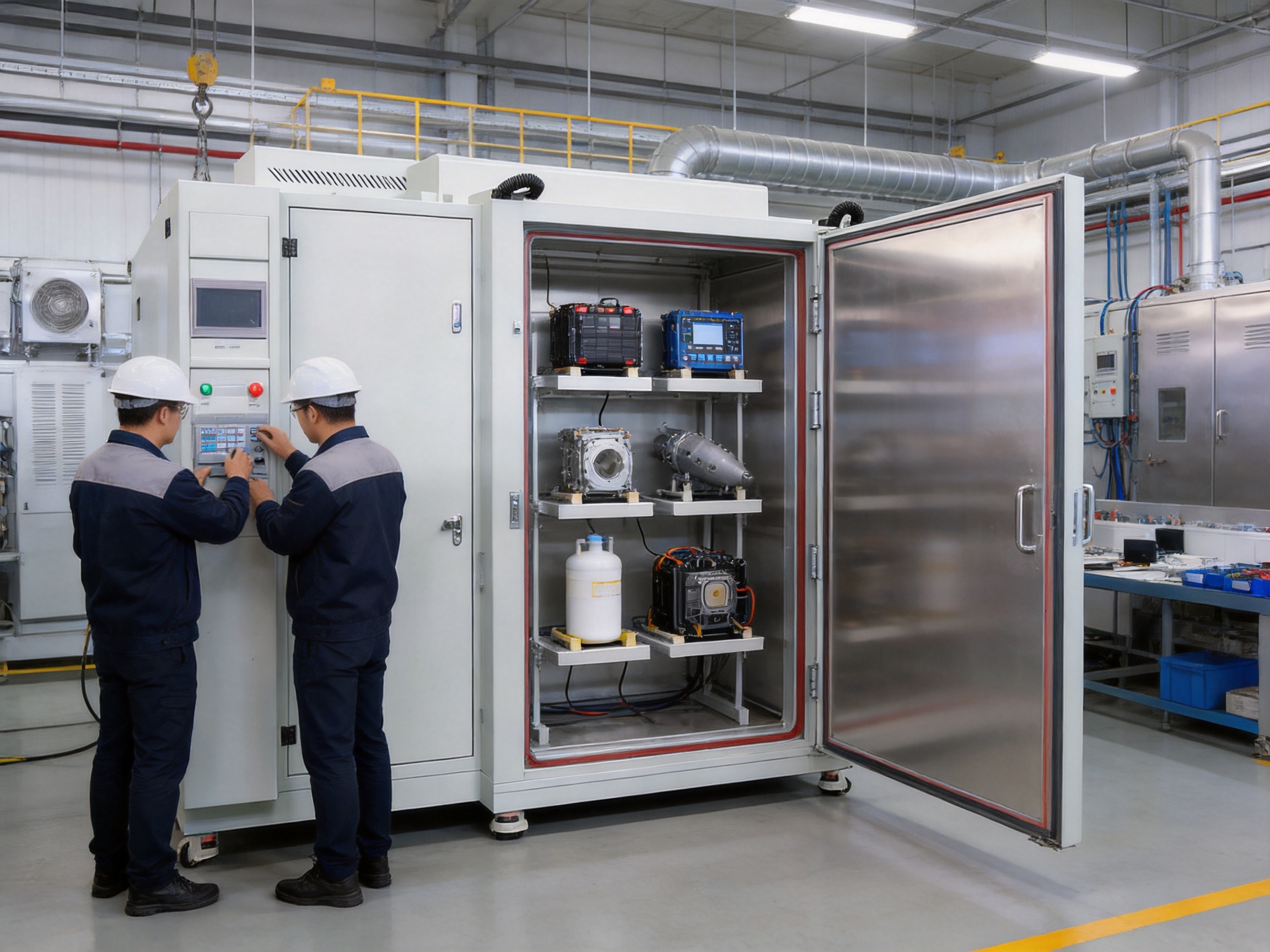
Walk-In Dual-Layer Explosion-Proof Temperature and Humidity Chamber for Advanced Laboratory Testing
Environmental testing is becoming increasingly demanding across battery manufacturing, electronics, automotive components, chemical materials, aerospace assemblies, energy storage systems, and industrial safety research. Products must be evaluated under controlled temperature and humidity conditions before they are released for production or exposed to demanding field environments. When the test articles may contain flammable materials, combustible vapors, reactive chemicals, or high-energy electrical components, a conventional laboratory chamber may not provide an adequate level of protection. Testing equipment must control environmental conditions while also supporting risk management, fire detection, pressure relief, and emergency response.
The U2T(H)-EXZ2-W Walk-In Dual-Layer Explosion-Proof Temperature & Humidity Chamber is designed for this type of demanding application. With a nominal capacity of 2000 liters, a walk-in configuration, a broad temperature range, and multiple integrated safety features, the chamber provides a controlled environment for large or multiple test samples. Its design combines environmental conditioning and explosion-protection measures in one engineered system, helping laboratories and industrial users perform repeatable testing with greater attention to personnel and equipment safety.
Manufactured by JIANGSU BAISHENG INDUSTRIAL CO., LTD., the chamber reflects a product-development approach based on research and development, customized engineering, technical manufacturing, and international project support. Rather than treating an environmental chamber as a basic heating and cooling enclosure, the company approaches the product as a complete laboratory and industrial testing platform. This approach is particularly valuable when the end user needs a walk-in chamber adapted to special sample sizes, hazardous test conditions, or complex safety requirements.
Why Explosion-Proof Environmental Testing Matters
Temperature and humidity testing is widely used to study product performance, material stability, reliability, aging, condensation resistance, thermal cycling behavior, and environmental durability. In many applications, the test sample itself may create additional risks. Lithium-ion batteries, fuel-system components, electronic power modules, chemical materials, coatings, and industrial products can release heat, smoke, vapor, or combustible gases under abnormal conditions.
A standard temperature chamber generally focuses on environmental uniformity, control accuracy, and long-term operation. An explosion-proof chamber must go further. It must consider what could happen if a sample experiences thermal runaway, leaks a combustible substance, generates smoke, ignites, or causes a pressure increase inside the working space. The chamber therefore requires coordinated safety functions rather than a single protective component.
The U2T(H)-EXZ2-W addresses this broader requirement through a combination of explosion-proof construction, automatic fire extinguishing, smoke detection, sprinkler or fine-water-mist extinguishing, rapid water injection, and pressure relief. Each function has a different role. Detection identifies abnormal conditions, suppression helps control a fire, water injection supports rapid response, and pressure relief helps manage the consequences of a sudden pressure increase. When these features are engineered as part of one system, the result is more comprehensive than simply adding an alarm to a conventional chamber.
It is important to recognize that the exact hazardous-area classification, electrical protection method, extinguishing medium, installation requirements, and compliance documentation must be confirmed for each project. The appropriate configuration depends on the test material, expected hazards, site conditions, local regulations, and customer specifications. The chamber should therefore be evaluated as an engineered solution rather than selected only by its nominal temperature range.
Product Overview
The U2T(H)-EXZ2-W is a walk-in explosion-proof high- and low-temperature humidity test chamber with a dual-layer configuration. It is intended for customers who require more internal space than a benchtop or standard floor-standing unit can provide. Its 2000-liter capacity supports larger assemblies, multiple smaller products, fixtures, and test loads that may be difficult to accommodate in a compact chamber.
The listed temperature configurations include -40°C to +150°C and -70°C to +180°C. These figures indicate that the product may be supplied in different performance versions according to the required test profile. The final temperature specification, control performance, pull-down behavior, heating rate, humidity operating range, and load conditions should be agreed during technical quotation and design review.
The studio dimensions are listed as 2000 × 1000 × 1000 mm, with a dual-unit notation of “*2.” The overall machine dimensions are approximately 2460 × 2500 × 2740 mm. Listed machine weights are approximately 1200 kg and 1300 kg, corresponding to different configurations. These dimensions and weights are important for laboratory planning, floor loading, access routes, ventilation, service clearance, and installation logistics.
| Parameter | Available or Listed Specification | Engineering Significance |
|---|---|---|
| Product model | U2T(H)-EXZ2-W | Identifies the walk-in dual-layer explosion-proof environmental chamber platform |
| Product category | Walk-In Explosion-Proof High and Low Temperature Humidity Test Chamber | Suitable for large-scale environmental and safety testing applications |
| Nominal capacity | 2000 L | Provides space for larger samples, fixtures, or multiple test articles |
| Temperature configuration | -40°C to +150°C | Supports a broad range of environmental qualification and durability tests |
| Alternative temperature configuration | -70°C to +180°C | Extends the operating envelope for more demanding thermal testing |
| Studio dimensions | 2000 × 1000 × 1000 mm, dual-layer notation | Requires careful sample layout and internal fixture planning |
| Overall dimensions | 2460 × 2500 × 2740 mm | Important for room access, placement, and service clearance |
| Approximate machine weight | 1200 kg or 1300 kg | Must be considered in floor loading and installation planning |
| Primary safety functions | Explosion-proof chain, explosion-proof viewing window, fire extinguishing, smoke detection, sprinkler or fine water mist, rapid water injection, pressure relief | Creates a layered response to abnormal thermal, smoke, fire, and pressure events |
Dual-Layer Configuration and Walk-In Accessibility
The dual-layer arrangement is one of the chamber’s key differentiating characteristics. In large environmental testing projects, internal volume alone does not determine productivity. The user must also consider how samples are loaded, how fixtures are installed, how cables and sensors are routed, and how operators can inspect the test space. A dual-layer structure can support a more organized test arrangement and may help laboratories manage separate test positions or larger groups of samples, subject to the final engineering configuration.
The walk-in format is especially useful when test articles are too large or too heavy for manual placement through a small front opening. Industrial battery packs, vehicle components, electrical cabinets, cable assemblies, thermal management systems, and large material specimens often require carts, lifting tools, or dedicated fixtures. A walk-in chamber gives users more flexibility during loading and unloading, although the exact door arrangement, access method, internal partitioning, and floor design should be confirmed in the project specification.
Large chambers also require attention to internal airflow. A well-designed test space should distribute conditioned air around the load while reducing excessive temperature or humidity gradients. The final airflow arrangement depends on the chamber structure, evaporator layout, circulation fans, sample geometry, and operating conditions. The supplied material highlights a case demonstration involving dual evaporator usage, which indicates an engineering approach intended to address the demands of a large or divided test volume.
For customers comparing this chamber with smaller single-zone products, the principal advantage is not simply a larger enclosure. It is the combination of walk-in access, dual-layer engineering, substantial test volume, and safety integration. A chamber that can accommodate the required sample without extreme crowding can make test preparation more practical and may improve the repeatability of sensor placement and sample positioning.
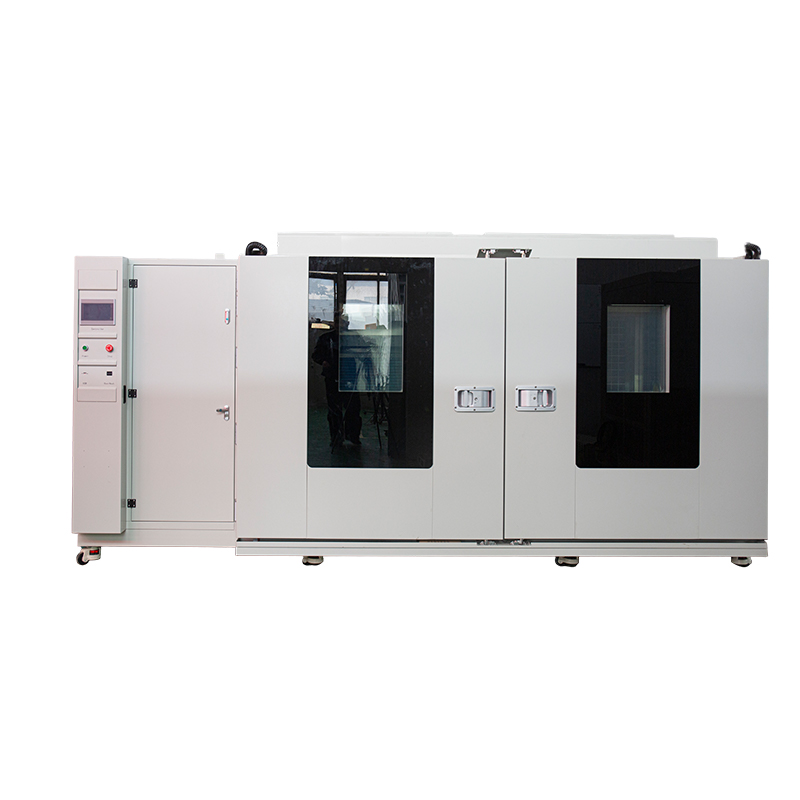
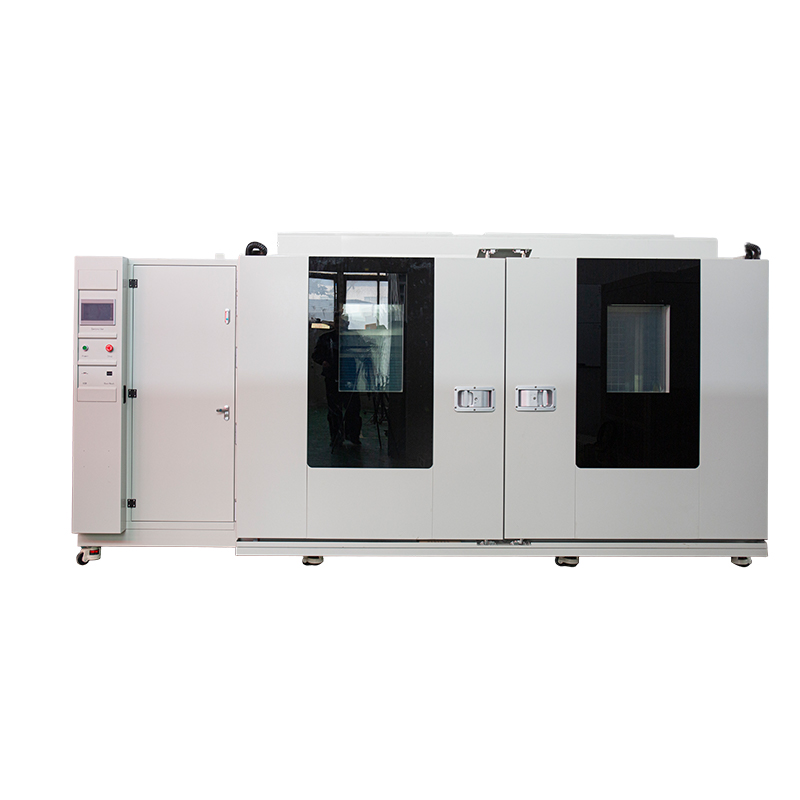
U2T(H)-EXZ2-W Walk-In Dual-Layer Explosion-Proof Temperature & Humidity Chamber
Broad Temperature Performance
Temperature range is one of the most visible specifications in an environmental chamber, but range should always be interpreted together with stability, uniformity, recovery performance, load capacity, and safety. The U2T(H)-EXZ2-W is listed with temperature options extending from -40°C to +150°C or from -70°C to +180°C. These ranges cover many common qualification programs, including cold storage simulation, low-temperature startup, thermal aging, high-temperature endurance, thermal shock preparation, and accelerated environmental exposure.
The -40°C to +150°C version may be suitable for a wide group of industrial and electronic testing applications. It offers a substantial low-temperature capability for cold-environment simulation while also reaching temperatures used for elevated-temperature durability and material evaluation. The -70°C to +180°C version is intended for customers requiring a more extreme operating envelope. Such a configuration can be valuable for specialized electronics, aerospace parts, advanced materials, energy storage research, and products designed for severe climatic or thermal conditions.
A high or low limit by itself does not guarantee that every load can reach that limit. Test articles have different thermal masses, heat generation characteristics, surface areas, and packaging conditions. Electrically powered samples may add heat to the chamber, while dense fixtures may slow temperature transitions. For that reason, the final acceptance test should define the empty-chamber performance and the loaded-chamber performance separately.
JIANGSU BAISHENG INDUSTRIAL CO., LTD. can use its engineering and customization capabilities to review the customer’s test profile before production. Important review items may include the target temperature, ramp rate, sample heat load, test duration, number of cycles, humidity requirements, sensor locations, cable entry needs, and emergency shutdown logic. This engineering review helps prevent a mismatch between a nominal specification and the real application.
Humidity Testing and Environmental Conditioning
The product is categorized as a temperature and humidity test chamber. Humidity testing is used to investigate corrosion, insulation resistance, condensation, seal performance, coating durability, material swelling, moisture absorption, and electronic reliability. In combination with high or low temperature, humidity control can reproduce conditions that are more representative of real-world service than temperature testing alone.
The supplied product information does not specify a humidity range, humidity accuracy, or humidity uniformity value. These parameters should therefore be confirmed with the manufacturer before ordering. A professional technical quotation should identify the operating humidity envelope, control method, water quality requirements, water replenishment method, drainage arrangement, condensation management, and any limitations at low temperature.
Humidity control in a large chamber can be technically demanding. The chamber must manage moisture generation, condensation, airflow, surface temperature, and sample heat release. At low temperatures, frost formation may restrict airflow or affect the working space. The product description specifically highlights year-round frost-free stable operation technology. This feature is intended to support reliable operation and reduce the operational impact of frost accumulation, subject to the conditions defined in the final technical specification.
Stable humidity performance also depends on chamber sealing, door construction, insulation, water management, and control-system tuning. The explosion-proof door chain and viewing window must be integrated without compromising the environmental seal. These details demonstrate why a hazardous-environment chamber requires coordinated mechanical, thermal, electrical, and safety engineering.
Layered Explosion-Protection and Fire-Safety Design
Explosion-Proof Chain and Viewing Window
The chamber includes an explosion-proof chain and an explosion-proof viewing window installed at the door position. The door is a critical part of any walk-in chamber because it must support repeated access while maintaining enclosure integrity. In a hazardous test environment, the door area also requires attention to observation, mechanical security, sealing, and emergency response.
An explosion-proof viewing window allows operators to observe the test condition without opening the chamber. Visual observation can help identify sample deformation, smoke development, abnormal illumination, leakage, or other changes. It also reduces the need for unnecessary door opening during a test. The exact optical construction, thermal resistance, impact resistance, and certification status of the viewing window should be confirmed according to the application and applicable standards.
Automatic Fire Extinguishing System
The automatic fire extinguishing system is designed to respond without relying exclusively on an operator being present at the moment an abnormal event begins. Automatic response is important because a thermal or fire event can develop rapidly, particularly in high-energy samples. The system should be integrated with the chamber controls so that abnormal conditions can initiate appropriate actions, such as stopping heating, disabling selected power circuits, stopping or changing airflow, activating alarms, and initiating suppression.
The exact extinguishing sequence depends on the engineering design and the material being tested. Some applications may require water-based suppression, while others may require a different agent or a specially controlled response. The product description identifies automatic fire extinguishing, smoke detection, sprinkler or fine-water-mist extinguishing, and rapid water injection as available safety functions. Customers should request a complete system description and risk assessment before testing hazardous materials.
Smoke Detection and Fine Water Mist
Smoke detection provides an early warning layer. Detecting smoke before a visible flame develops can give the control system and operators additional time to respond. The inclusion of a sprinkler and fine water mist extinguishing system indicates a design emphasis on rapid distribution of the extinguishing medium inside the chamber.
Fine water mist can provide extensive surface coverage while using a controlled quantity of water. Its suitability depends on the tested material, electrical configuration, chamber volume, drainage system, and fire scenario. The final design should address water pressure, nozzle placement, activation logic, drainage, post-event cleaning, and protection of associated equipment.
Rapid Water Injection Device
The rapid water injection device adds another response capability for emergency situations. In a high-risk test, speed can be critical. A fast-acting water supply can assist in cooling or suppressing an event, depending on the defined safety strategy. The system should be evaluated together with the sample type, internal fixtures, chamber floor, drainage, and emergency procedures.
Explosion-Proof Pressure Relief Device
A pressure relief device is intended to manage a sudden internal pressure increase. If a test sample releases combustible gases or an explosion occurs, pressure can rise rapidly. The relief system provides a designed path for pressure management instead of allowing the chamber structure or door to bear the full event load.
Pressure relief design must be connected to the installation environment. The discharge direction, safe zone, ducting, wall penetrations, structural supports, and local regulations all require review. The relief device is not a substitute for risk assessment, sample screening, ventilation design, or operating procedures. It is one component of a broader protective system.
Year-Round Frost-Free Stable Operation
Frost is a persistent challenge in low-temperature environmental chambers. When moisture freezes on the evaporator, airflow path, sample surfaces, or internal structure, it can affect heat exchange, reduce working volume, increase energy consumption, and create maintenance requirements. In a humidity chamber, frost can also disturb moisture control and make test results less consistent.
The U2T(H)-EXZ2-W highlights year-round frost-free stable operation technology. This feature is especially relevant for users who operate frequent low-temperature tests, long-duration cycles, or repeated temperature and humidity programs. Maintaining a frost-free condition can support more consistent airflow and help the chamber remain ready for continuous laboratory or production use.
The actual performance of a frost-management system depends on operating conditions. Door-opening frequency, sample moisture, humidity set point, temperature transition rate, test duration, and loading density all influence frost behavior. A complete technical agreement should define the conditions under which frost-free performance is expected and the maintenance actions required by the operator.
Compared with basic chambers that may require frequent manual defrosting or interruption of testing, a design focused on stable year-round operation can improve usability. It can also reduce the risk that frost accumulation will interfere with sensors, airflow, sample placement, or emergency equipment. For customers operating a high-throughput laboratory, this may contribute to better scheduling and equipment availability.
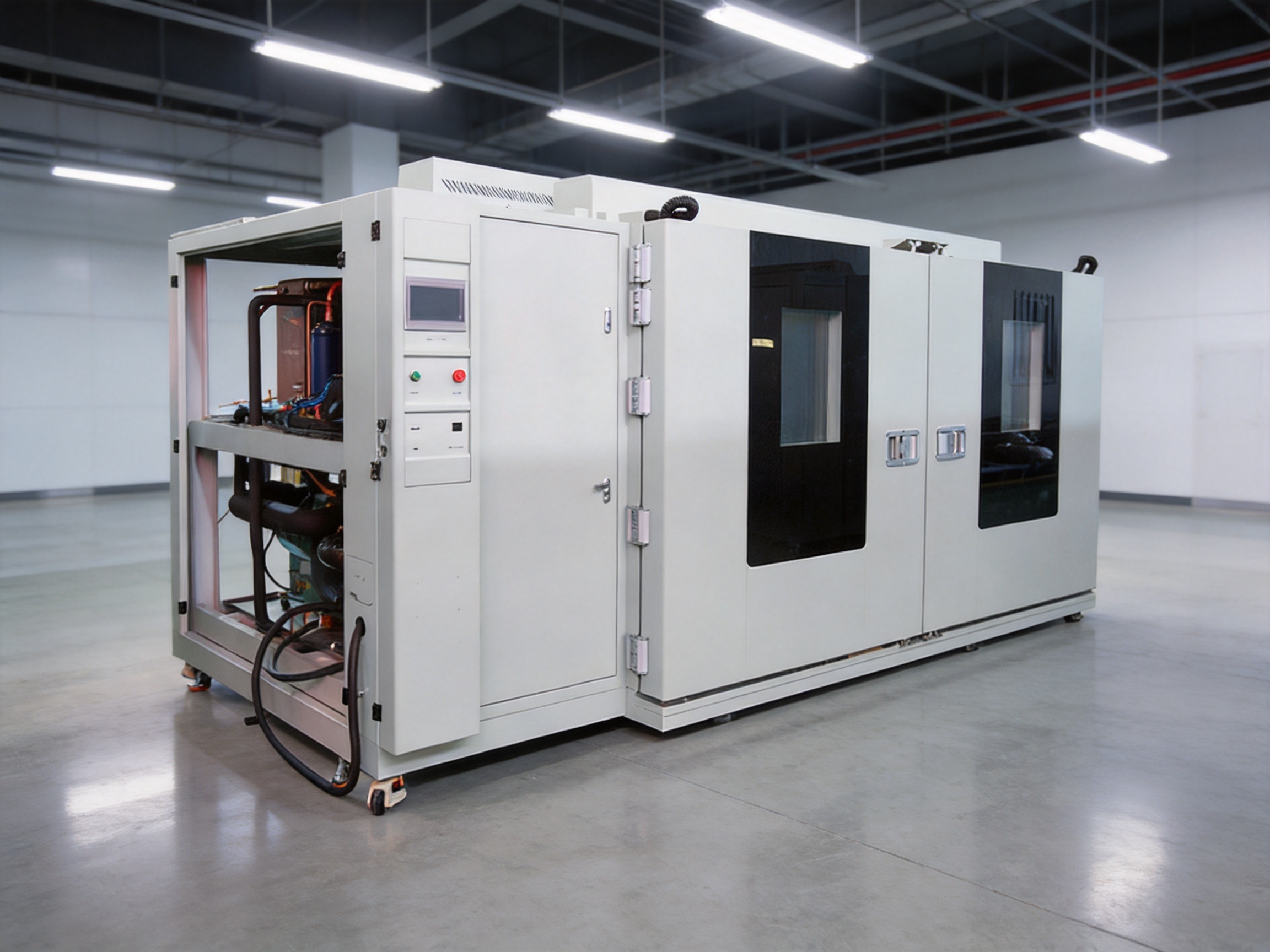
Dual Evaporator Engineering
The product information includes a case demonstration of dual evaporator usage. Dual evaporator engineering can be beneficial in a large or dual-layer chamber because the refrigeration system must remove heat efficiently across a substantial working volume. Depending on the final architecture, separate or coordinated evaporators may help address different sections of the chamber, support cooling capacity, or improve temperature distribution.
Using more than one evaporator also creates opportunities for system optimization. The control system may be designed to manage cooling demand according to the operating condition, load, or chamber zone. At partial load, the system may not need to operate every cooling component at maximum capacity. At high thermal demand, coordinated operation may help the chamber respond more effectively.
However, dual evaporator design must be matched with appropriate refrigeration controls, defrost management, airflow, insulation, condensate handling, and safety interlocks. The value of the configuration lies in its integration. A second evaporator by itself does not guarantee superior uniformity or pull-down performance. The engineering design, commissioning process, and acceptance testing remain essential.
The dual evaporator case demonstrates the company’s ability to adapt refrigeration architecture to a specific chamber structure. This is an important advantage over standardized products that offer only fixed internal arrangements. Customers with large, heavy, heat-generating, or irregularly shaped test loads can benefit from a design review that considers the actual thermal behavior of the application.
Manufacturing Strengths and Engineering Capability
JIANGSU BAISHENG INDUSTRIAL CO., LTD. was founded in 2010 and specializes in laboratory equipment and safety testing instruments. Its company profile emphasizes research and development, precision design, technical manufacturing, and customized solutions. This background is relevant to the U2T(H)-EXZ2-W because an explosion-proof walk-in chamber requires more than routine enclosure assembly.
The company’s history began with a research and development studio focused on electronic testing. This origin gave the founding team experience in laboratory equipment, electronic testing, and safety compliance requirements. In 2016, the business developed an independent production line and launched laboratory equipment with independent intellectual property rights. In 2019, it adopted a technology-plus-trade strategy, combining engineering development with international market support.
This combination can be valuable for overseas customers. International equipment projects often involve technical communication, customized documentation, installation coordination, spare parts, training, and after-sales support. A supplier with both engineering and export experience may be better positioned to coordinate these requirements than a company focused only on product trading.
Research and Development Before Production
A strong environmental chamber is normally the result of design review before fabrication begins. The manufacturer must understand the sample, test sequence, environmental limits, safety risks, facility conditions, and expected operating frequency. JIANGSU BAISHENG INDUSTRIAL CO., LTD. describes a dedicated R&D team focused on precision design and technical excellence. For a custom walk-in chamber, this capability can support the development of internal layouts, refrigeration schemes, safety systems, control logic, and access arrangements.
Design review should include thermal calculations, structural considerations, insulation selection, door design, pressure relief routing, fire-system integration, electrical protection, and maintenance access. It should also examine how operators will load samples, connect sensors, clean the chamber, respond to alarms, and restore the system after an emergency event.
Precision Fabrication and Assembly
Large chambers require accurate fabrication because dimensional errors can affect door alignment, sealing, internal airflow, equipment installation, and structural stability. Precision assembly is particularly important for a walk-in unit with a large door, viewing window, safety chain, refrigeration components, water systems, and control equipment.
The manufacturing process should include material preparation, enclosure fabrication, insulation installation, door assembly, refrigeration integration, electrical wiring, safety-system installation, controller configuration, and final inspection. The company’s emphasis on precision in craftsmanship supports a manufacturing philosophy in which each stage contributes to final performance rather than treating the chamber as a collection of unrelated parts.
Customized Configuration
Different customers may require different temperature ranges, humidity programs, sample loads, door arrangements, monitoring systems, safety interlocks, and data-recording functions. The U2T(H)-EXZ2-W platform can be discussed as a customized solution rather than a one-size-fits-all machine. The listed alternative temperature ranges and weight values already indicate that multiple configurations may be available.
Customization should be controlled through documented specifications. The customer and manufacturer should agree on chamber capacity, working dimensions, temperature range, humidity range, uniformity, stability, ramp rate, sample heat load, safety functions, utility requirements, acceptance criteria, and documentation. This process helps ensure that customization adds application value without creating ambiguity about performance.
Advantages Compared with Conventional Competitor Designs
When comparing environmental chambers from different suppliers, customers should evaluate the complete system rather than one headline specification. The U2T(H)-EXZ2-W offers several differentiating characteristics that may provide advantages over conventional standard chambers.
More Complete Safety Integration
Many standard environmental chambers are designed primarily for temperature and humidity control. The U2T(H)-EXZ2-W combines environmental conditioning with a broader safety architecture, including smoke detection, automatic fire extinguishing, fine water mist or sprinkler protection, rapid water injection, and pressure relief. This layered approach is more appropriate for applications in which a sample may create a fire, smoke, or pressure hazard.
Large Walk-In Test Capacity
A 2000-liter walk-in format provides substantially more practical loading flexibility than compact laboratory units. Customers can test larger components, use dedicated fixtures, arrange multiple samples, and reduce the need to divide a test program across several small chambers. The walk-in design may also simplify loading and unloading when samples are heavy or oversized.
Dual-Layer and Dual-Evaporator Concept
The dual-layer configuration and dual evaporator case demonstrate an engineering approach suited to larger or divided test spaces. This can help address thermal distribution and refrigeration demands that may be difficult for a single compact cooling arrangement. The actual benefit should be verified through the customer’s required uniformity and loaded-performance tests.
Extreme Temperature Options
The listed ranges of -40°C to +150°C and -70°C to +180°C allow the chamber to serve a wide range of industries. Customers can select a configuration based on their test requirements instead of purchasing a basic chamber and later discovering that the low- or high-temperature limit is insufficient.
Frost-Management Focus
Year-round frost-free stable operation technology is a practical differentiator for organizations that perform frequent low-temperature or temperature-humidity cycles. Reducing frost-related interruptions can support more consistent operation and simplify maintenance planning.
Engineering and International Project Support
The company’s background in R&D, laboratory equipment, safety testing instruments, and international trade creates a foundation for project-based cooperation. Customers may benefit from technical consultation, customized design, manufacturing coordination, and export support through one supplier. This can simplify communication compared with using separate companies for design, fabrication, and safety-system integration.
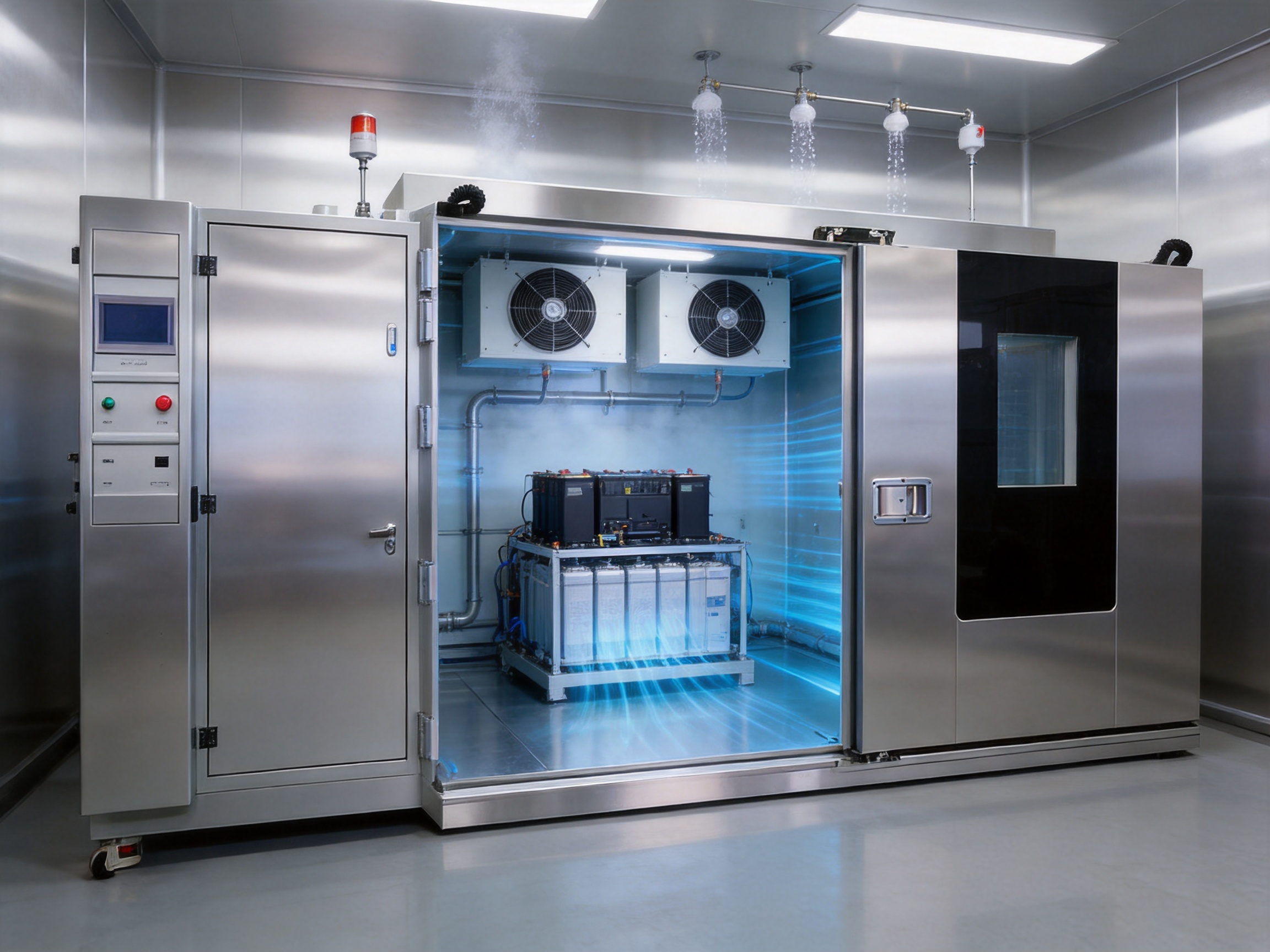
Applications Across Industrial and Laboratory Sectors
Battery and Energy Storage Testing
Battery cells, modules, packs, and energy storage components may require high- and low-temperature testing, humidity exposure, aging studies, and safety evaluation. Because batteries can release heat, smoke, gases, or flames under abnormal conditions, a chamber with integrated detection and suppression functions is particularly relevant. The correct safety design must be based on the battery chemistry, state of charge, electrical connections, expected failure mode, and applicable testing standard.
Electronic and Electrical Equipment
Electronic assemblies, power supplies, control modules, inverters, sensors, and electrical cabinets can be affected by temperature cycling, condensation, moisture ingress, and elevated-temperature aging. A walk-in chamber allows manufacturers to test complete systems or large assemblies rather than only individual circuit boards. The explosion-proof features may also be valuable where electrical products are tested with combustible materials or in a risk-controlled environment.
Automotive Components
Automotive testing often involves large components such as battery systems, electric-drive assemblies, thermal management modules, cable harnesses, instrument panels, and control units. These components can be tested under low temperatures, high temperatures, humidity exposure, and repeated environmental cycles. The walk-in structure makes it easier to install representative fixtures and instrumentation.
Chemical and Material Research
Materials, coatings, adhesives, polymers, sealants, and chemical products may require controlled temperature and humidity exposure. Some materials can release vapors or react under elevated temperatures. In such applications, the chamber’s pressure relief, smoke detection, and fire-suppression provisions should be assessed together with chemical compatibility, ventilation, and waste-management requirements.
Aerospace and Defense-Related Components
Aerospace components may be subjected to severe temperature changes, low-temperature storage, high-temperature endurance, humidity exposure, and environmental reliability testing. Large test articles often require walk-in access. The wide temperature options can support demanding qualification programs, while the customized design approach may help accommodate specialized fixtures and instrumentation.
Installation, Commissioning, and Operational Planning
Because the chamber is a large industrial system, installation planning should begin before delivery. The overall dimensions are approximately 2460 × 2500 × 2740 mm, and the machine weight may be approximately 1200 or 1300 kg depending on configuration. The customer should confirm doorway dimensions, elevator capacity, floor strength, turning radius, unloading equipment, and final placement.
Service clearance is also necessary. Refrigeration components, electrical cabinets, water systems, detection devices, and pressure relief assemblies may require inspection or maintenance. The chamber should not be installed so close to walls or other equipment that technicians cannot safely access key components.
Utility planning may include electrical power, grounding, water supply, drainage, ventilation, compressed air, network connectivity, and emergency services, depending on the final configuration. Water-based suppression requires special consideration for water pressure, storage, drainage, and post-event cleanup. Pressure relief requires a safe discharge direction and suitable structural provisions.
Commissioning should include empty-chamber testing, temperature verification, humidity verification where applicable, alarm testing, door interlock testing, smoke detection testing, fire-system verification, pressure relief inspection, water-system testing, and emergency shutdown confirmation. Loaded testing is also recommended because large samples can significantly influence chamber performance.
Operators should receive training covering normal operation, sample loading, sensor placement, alarm response, fire-system activation, emergency shutdown, water-system reset, cleaning, and routine inspection. A written operating procedure should define which materials may be tested, the maximum sample load, acceptable power connections, prohibited substances, and post-event actions.
Quality Management and Documentation
For laboratory and industrial customers, documentation is part of product quality. The manufacturer should provide clear information about the chamber configuration, operating limits, safety systems, maintenance requirements, and acceptance criteria. Documentation may include equipment drawings, electrical schematics, user manuals, spare-parts lists, inspection records, and commissioning reports.
JIANGSU BAISHENG INDUSTRIAL CO., LTD. states that it improved its quality management system and that its products passed rigorous technical specification certifications in its development history. The exact certifications applicable to the U2T(H)-EXZ2-W should be confirmed for the intended destination and application. Customers should request copies of relevant certificates, test reports, and compliance documents rather than assuming that a general company statement applies to every configuration.
Traceability is also important. Major components should be identified, and critical safety devices should have documented models, ratings, and replacement requirements. The customer should know how to obtain compatible sensors, seals, filters, valves, detection components, and control-system parts throughout the expected service life of the chamber.
How to Select the Correct Configuration
The product model provides a strong starting point, but the right configuration depends on the test program. Customers should prepare a technical requirement document before requesting a quotation. This document should describe the largest sample, total sample mass, heat generation, required temperature profile, humidity profile, test duration, cycle frequency, electrical connections, sensor quantity, and potential hazard sources.
The customer should also identify whether the chamber will be used for research, production screening, qualification testing, failure analysis, or safety testing. A production-screening application may prioritize cycle time and availability, while research testing may prioritize flexibility, data collection, and custom fixtures. Safety testing may require more advanced detection, suppression, pressure management, and remote monitoring.
Questions about the two temperature configurations should be clarified. The customer should determine whether -40°C to +150°C is sufficient or whether -70°C to +180°C is required. If humidity testing is essential, the humidity operating range at each temperature should be specified. If the sample generates heat, the permitted heat load and recovery requirement should be included.
The customer should also confirm the meaning of the dual-layer arrangement, the number of independently controlled zones if applicable, the internal access layout, the dual evaporator operating logic, and the available instrumentation. Clear technical communication at the quotation stage reduces the risk of later changes.
Maintenance and Long-Term Reliability
Regular maintenance helps preserve both environmental performance and safety. Operators should inspect door seals, viewing-window condition, safety chains, pressure relief components, water lines, nozzles, smoke detectors, and emergency controls according to the manufacturer’s schedule. Internal surfaces should be cleaned after testing materials that produce residue, dust, vapor, or leakage.
Refrigeration components require periodic inspection, particularly in a chamber that operates at very low temperatures or handles high heat loads. Airflow paths should remain unobstructed, and samples should not be positioned so close to fans, evaporators, sensors, or safety devices that they interfere with operation.
Fire-protection systems should be tested by qualified personnel. Any activation, even if caused by a false alarm, should be documented and investigated. Water-based suppression systems require attention to drainage, corrosion prevention, nozzle condition, and reset procedures. Pressure relief devices should never be blocked, modified, or redirected without engineering approval.
A maintenance program should distinguish between routine operator checks and specialist service. Operator checks may include visual inspection, cleaning, alarm review, and water-level verification. Specialist service may include refrigeration inspection, sensor calibration, electrical testing, pressure-system inspection, fire-system testing, and control-system diagnosis.
Conclusion
The U2T(H)-EXZ2-W Walk-In Dual-Layer Explosion-Proof Temperature & Humidity Chamber is designed for customers who need more than basic temperature control. Its 2000-liter walk-in capacity, broad temperature configurations, dual-layer structure, dual evaporator engineering concept, frost-free operation technology, and layered safety functions make it suitable for demanding environmental and safety testing applications.
Its most important advantage is the integration of environmental conditioning and risk-control features. The explosion-proof chain and viewing window, automatic fire extinguishing system, smoke detection, fine water mist or sprinkler protection, rapid water injection, and pressure relief device address different stages of a potential abnormal event. Together, they provide a more comprehensive platform for testing products that may generate heat, smoke, flame, combustible vapor, or pressure.
The company’s R&D background, precision-oriented manufacturing philosophy, customized engineering capability, and international project experience further strengthen the product’s value. Customers can work with JIANGSU BAISHENG INDUSTRIAL CO., LTD. to define a configuration suited to the sample, test profile, facility, and safety requirements.
As with any explosion-proof environmental test system, the final product must be selected and commissioned according to a documented risk assessment, applicable standards, site conditions, and confirmed technical specifications. When properly engineered and operated, the U2T(H)-EXZ2-W can serve as a powerful platform for laboratory research, industrial qualification, product reliability testing, and controlled safety evaluation.
Questions and Answers
What is the nominal capacity of the U2T(H)-EXZ2-W chamber?
The listed nominal capacity is 2000 liters. The actual usable space depends on the internal structure, dual-layer arrangement, fixtures, sensors, and safety clearances required for the specific application.
What temperature ranges are available?
The supplied specifications list two configurations: -40°C to +150°C and -70°C to +180°C. Customers should select the appropriate version based on the required test profile, load behavior, ramp rate, and operating frequency.
Does the chamber support humidity testing?
Yes. The product is categorized as a temperature and humidity test chamber. However, the humidity range, accuracy, uniformity, and low-temperature humidity limitations were not included in the supplied specifications and should be confirmed with the manufacturer.
What does the dual-layer design provide?
The dual-layer design is intended to support a larger or organized test space and may provide advantages for sample arrangement, internal zoning, and system integration. The exact meaning of the dual-layer configuration should be confirmed in the technical drawings and quotation.
Why is a walk-in structure useful?
A walk-in structure allows users to load larger or heavier samples, install large fixtures, and arrange multiple test articles more easily than with a compact chamber. It is particularly useful for battery packs, vehicle components, electrical cabinets, and industrial assemblies.
What safety systems are included?
The listed safety features include an explosion-proof chain, an explosion-proof viewing window, an automatic fire extinguishing system, smoke detection, a sprinkler or fine-water-mist extinguishing system, a rapid water injection device, and an explosion-proof pressure relief device.
Is the chamber suitable for battery testing?
It may be suitable for battery and energy-storage testing, subject to a project-specific risk assessment. Battery chemistry, state of charge, electrical connections, expected failure modes, sample size, and applicable standards must be reviewed before testing.
What is the purpose of the pressure relief device?
The pressure relief device is intended to help manage a sudden internal pressure increase. Its discharge direction, installation requirements, and safe-zone design must be confirmed according to the facility and applicable regulations.
What does year-round frost-free operation mean?
The product description identifies year-round frost-free stable operation technology. This is intended to reduce frost accumulation during low-temperature operation and support stable performance. Actual results depend on temperature, humidity, load, door openings, and test conditions.
What should be confirmed before ordering?
Customers should confirm the temperature version, humidity range, uniformity, stability, ramp rate, heat load, internal layout, dual-layer arrangement, safety-system details, utilities, dimensions, weight, documentation, installation conditions, acceptance criteria, and applicable compliance requirements.
Can the chamber be customized?
JIANGSU BAISHENG INDUSTRIAL CO., LTD. specializes in customized laboratory and safety testing equipment solutions. Customization should be defined through a written technical specification that clearly states performance, safety, structural, control, and documentation requirements.
How should the chamber be maintained?
Maintenance should include inspection of door seals, viewing windows, safety chains, detectors, water systems, pressure relief components, refrigeration equipment, airflow paths, sensors, and control functions. Fire-protection and pressure-related systems should be serviced by qualified personnel.
References
1. Product specification information supplied for the U2T(H)-EXZ2-W Walk-In Dual-Layer Explosion-Proof Temperature & Humidity Chamber.
2. Company profile and development history supplied by JIANGSU BAISHENG INDUSTRIAL CO., LTD.
3. General principles of environmental testing for electronic and industrial products.
4. General engineering practices for temperature and humidity test chambers.
5. General safety principles for fire detection, fire suppression, and pressure relief in hazardous test environments.
6. General laboratory equipment documentation and commissioning practices.
Product: U2T(H)-EXZ2-W Walk-In Dual-Layer Explosion-Proof Temperature & Humidity Chamber

PREV:Rapid Thermal and Humidity Test Systems for Precision Environmental Reliability Testing
NEXT:Large Walk-In Explosion-Proof Thermal and Humidity Chamber for Advanced Environmental Testing
NEXT:Large Walk-In Explosion-Proof Thermal and Humidity Chamber for Advanced Environmental Testing
Interested in cooperation or have questions?
Featured Products
Related products
Quick Link
Contact Information
- Tel: +86-13861043568
- E-mail: 1840784112@qq.com
- Add: Tianting District, Changzhou City, Jiangsu Province, China, No. 6 Hecircuit
Scan Code
Copyright © JIANGSU BAISHENG INDUSTRIAL CO., LTD.
All Rights Reserved. Privacy Custom Precision Laboratory Testing Equipment Manufacturers
