 English
 Español

NEWS
NEWS
NEWS
NEWS
NEWS
NEWS
NEWS
NEWS
NEWS
NEWS
NEWS
NEWS
NEWS
NEWS
NEWS
NEWS

Deng Xinyi — Product After-Sales Support Specialist
Home / Author / Deng Xinyi — Product After-Sales Support Specialist / Large Walk-In Explosion-Proof Thermal and Humidity Chamber for Advanced Environmental Testing
Large Walk-In Explosion-Proof Thermal and Humidity Chamber for Advanced Environmental Testing
Content
- 1 1. The Role of Environmental Testing in Product Development
- 2 2. Product Overview
- 3 3. Core Advantages Over Conventional Environmental Chambers
- 4 4. Safety Architecture for Hazardous Testing
- 5 5. Environmental Control and Technical Performance
- 6 6. Manufacturing Strengths and Engineering Approach
- 7 7. Application Areas
- 8 8. Key Specifications
- 9 9. Installation and Site Planning
- 10 10. Operating Practices for Reliable Testing
- 11 11. Maintenance and Long-Term Value
- 12 12. Why the Product and Manufacturer Are a Strong Combination
- 13 13. Procurement Questions to Ask Before Ordering
- 14 14. Frequently Asked Questions
- 14.1 Q1: What type of product is the U2T(H)-EXZ3-W?
- 14.2 Q2: What is the chamber capacity?
- 14.3 Q3: What temperature ranges are available?
- 14.4 Q4: Is the chamber suitable for battery testing?
- 14.5 Q5: What explosion-proof features are included?
- 14.6 Q6: Does the chamber include automatic fire suppression?
- 14.7 Q7: Why is a walk-in chamber better than a standard cabinet chamber?
- 14.8 Q8: How does the chamber control humidity?
- 14.9 Q9: What does frost-free technology do?
- 14.10 Q10: Can the chamber be customized?
- 14.11 Q11: What should be checked before installation?
- 14.12 Q12: How should the chamber be maintained?
- 14.13 Q13: Does the chamber replace a dedicated abuse-testing facility?
- 14.14 Q14: How can customers confirm the specifications?
- 15 15. Conclusion
- 16 References
- 17 Product: U2T(H)-EXZ3-W Large Walk-In Explosion-Proof Thermal and Humidity Chamber
Modern products are increasingly expected to operate reliably in demanding environments. Electronic assemblies may encounter severe temperature changes, condensation, and high humidity. Battery systems can be exposed to thermal stress, moisture, and abnormal operating conditions. Chemical materials, aerospace components, automotive parts, and industrial assemblies may also require controlled testing before they are approved for production or field use. These requirements have created a growing need for environmental test equipment that combines large working capacity, accurate climate control, rapid response, and dependable safety protection.
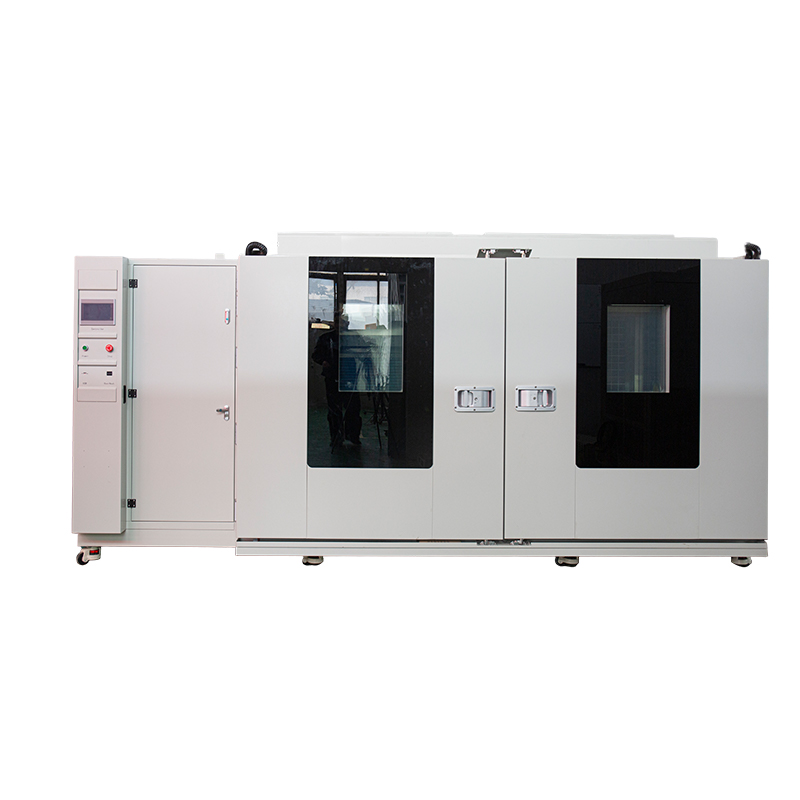
The U2T(H)-EXZ3-W large walk-in explosion-proof thermal and humidity chamber is engineered for this class of testing. It provides a controlled space for thermal and humidity testing while incorporating safety measures intended for applications in which flammable materials, combustible products, or potentially hazardous test conditions may be present. Its walk-in structure offers substantially greater accessibility than conventional cabinet-style chambers, while its explosion-proof construction, fire suppression functions, pressure relief design, and environmental control technologies create a comprehensive testing platform.
With a nominal capacity of 3000 liters, the chamber is suitable for testing larger products, assemblies, batches of components, and equipment that cannot be accommodated in standard benchtop or floor-standing chambers. The listed temperature configurations include a range from -40°C to +150°C and an extended option from -70°C to +180°C. The final operating range should be confirmed according to the selected configuration, test requirements, and technical quotation.
More than a large enclosure, this system is a coordinated environmental testing solution. It combines controlled temperature, humidity regulation, explosion-risk mitigation, fire response, observation, operator access, and long-term operating stability. These characteristics make it suitable for research and development, production validation, quality assurance, reliability engineering, safety testing, and standards-based environmental evaluation.
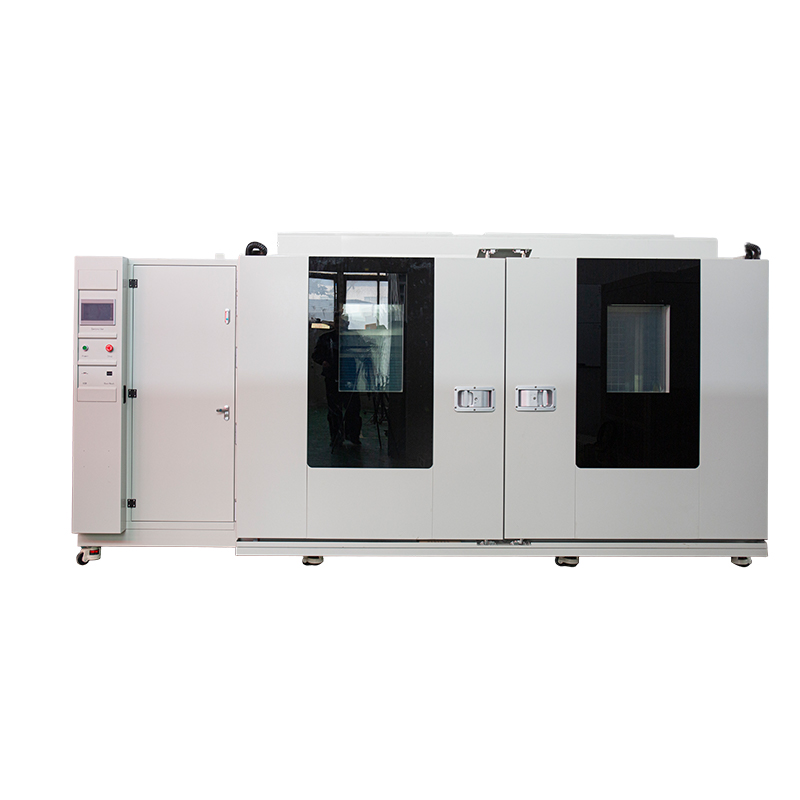
U2T(H)-EXZ3-W Large Walk-In Explosion-Proof Thermal and Humidity Chamber
1. The Role of Environmental Testing in Product Development
Environmental testing is a critical step between product design and dependable real-world operation. A product may perform correctly in a controlled laboratory or factory environment but fail when exposed to cold starts, elevated temperatures, moisture, condensation, thermal cycling, or prolonged humidity. Testing helps manufacturers identify weaknesses before products reach customers or are installed in demanding service conditions.
Temperature and humidity are especially important because they influence numerous physical and electrical properties. Moisture can reduce insulation resistance, accelerate corrosion, promote material swelling, affect adhesives, and contribute to short circuits. High temperature can accelerate aging, change viscosity, soften polymers, reduce battery performance, and increase internal pressure. Low temperature may cause brittleness, contraction, lubrication failure, reduced electrochemical activity, and changes in dimensional stability.
When these stresses are combined, the result can be more severe than either factor alone. A circuit board may tolerate dry heat but fail under humid heat. A polymer may remain stable at low temperature but crack after repeated transitions between cold and warm conditions. A battery module may require testing under controlled temperature and moisture conditions to evaluate thermal behavior, enclosure integrity, and the performance of associated safety systems.
Environmental test chambers make these conditions repeatable. Instead of relying on uncontrolled seasonal weather or inconsistent field exposure, engineers can define a test profile, reproduce it, monitor the chamber, and compare results between product versions. Repeatability improves design decisions, shortens development cycles, and supports more consistent quality control.
2. Product Overview
The U2T(H)-EXZ3-W is a large walk-in explosion-proof thermal and humidity test chamber intended for controlled testing in applications where both environmental simulation and safety management are important. Its internal space is designed to accommodate substantial specimens and equipment, while its access arrangement allows operators to place, connect, inspect, and remove test products more conveniently than in a small cabinet chamber.
The chamber is designed around several complementary objectives:
• To create stable and uniform temperature conditions across the working space.
• To control humidity through coordinated water injection, vapor regulation, and evaporation functions.
• To reduce risks associated with hazardous or potentially combustible test products.
• To provide fire detection and automatic extinguishing capability.
• To relieve abnormal pressure and help protect the chamber structure.
• To support convenient walk-in access for large components and assemblies.
• To maintain dependable operation throughout the year, including periods when frost can affect ordinary refrigeration systems.
The available information identifies a 3000-liter capacity, a listed studio dimension of 3000 × 1000 × 1000 mm × 2, overall dimensions of approximately 3460 × 2500 × 2740 mm, and a machine weight in the range of approximately 1500 to 1600 kg depending on configuration. Because the supplied specification table contains repeated entries and alternative values, users should confirm the exact chamber dimensions, temperature range, weight, and configuration before ordering or installation.
3. Core Advantages Over Conventional Environmental Chambers
3.1 Large walk-in working volume
The most immediate advantage is the walk-in format. Conventional environmental chambers often require test articles to be reduced in size, partially disassembled, or tested in sections. That approach can alter the way a product behaves because cables, cooling paths, enclosure structures, and support frames may no longer be arranged as they would be in real operation.
A walk-in chamber allows larger and more complete products to be evaluated in a more representative configuration. Engineers can place battery modules, electronic cabinets, aerospace components, automotive subsystems, chemical material assemblies, and production samples inside the chamber without reducing the test article to a small laboratory specimen.
Walk-in accessibility also improves operational efficiency. Operators can use carts, lifting tools, fixtures, and specialized mounting structures to position heavy products. Multiple specimens may be arranged in one test program, provided the loading arrangement does not compromise airflow or chamber performance. This can reduce setup time and support more productive test scheduling.
3.2 Integrated explosion-proof design
Many environmental chambers are intended for ordinary materials and nonhazardous products. However, testing batteries, solvents, chemical materials, energy storage equipment, or products with combustible components may introduce additional risks. The U2T(H)-EXZ3-W addresses this requirement with an explosion-proof design approach that includes safety chains on the chamber doors, reinforced viewing panels, and pressure relief provisions.
Safety chains help control door movement and provide an additional mechanical safeguard during operation. Reinforced viewing windows allow operators to observe test conditions while maintaining a protected barrier between the test space and the surrounding area. Pressure relief devices are intended to respond to abnormal pressure development, reducing the possibility that an unexpected internal event will impose excessive stress on the enclosure.
These features do not eliminate the need for risk assessment, correct specimen preparation, proper operating procedures, or site-level safety systems. Instead, they form part of a layered protection strategy. A suitable installation should consider the characteristics of the tested material, possible gas release, ignition sources, ventilation, drainage, power isolation, fire response, and operator access.
3.3 Built-in fire detection and suppression
A major differentiator is the integrated automatic fire extinguishing system. The chamber is described as including smoke detection and fine water mist spray. This arrangement is intended to identify a fire-related event and respond quickly by applying a controlled extinguishing medium within the test space.
Fine water mist can provide effective cooling and fire suppression while using less water than a conventional flood-type system. Reduced water volume may help limit secondary damage to test equipment and the chamber interior. It can also support faster response in a confined test volume. The exact extinguishing performance depends on the tested material, fire type, nozzle arrangement, detector settings, control logic, and installation design.
For battery, electronics, and chemical testing, fire response is particularly important. Some products may release smoke or heat before a visible flame develops. Early detection can allow the system to interrupt the test, isolate power, activate alarms, and initiate suppression. The purpose is not only to protect the test sample but also to reduce the likelihood of fire spreading beyond the chamber.
Fire suppression should be treated as one part of a complete safety program. The installation may require coordination with local fire protection requirements, facility emergency procedures, water supply arrangements, drainage, alarm interfaces, and inspection schedules.
3.4 Broad temperature capability
The supplied product information lists a standard temperature range of approximately -40°C to +150°C and an alternative extended range of approximately -70°C to +180°C. This broad operating capability allows users to conduct low-temperature exposure, high-temperature storage, thermal cycling, and combined temperature-humidity programs.
Low-temperature testing can reveal brittle behavior, contraction-related stress, cold-start problems, reduced battery output, and changes in material flexibility. High-temperature testing can accelerate aging, expose thermal deformation, evaluate insulation and sealing performance, and reveal weaknesses in cooling or heat dissipation systems.
The availability of different temperature configurations allows the chamber to be matched to the actual testing program rather than forcing every customer into one standard specification. However, the extended range may affect refrigeration architecture, insulation, heating capacity, operating time, utility requirements, and overall cost. These factors should be reviewed during technical design.
3.5 Stable humidity regulation
Humidity control is not simply a matter of adding water to the chamber. It requires careful management of water injection, evaporation, condensation, airflow, refrigeration, and temperature interaction. The chamber uses fast water injection devices, dual evaporators, dynamic PID control, and vapor partial pressure regulation to support stable humidity performance.
Dynamic PID control continuously compares the actual chamber condition with the programmed set point and adjusts the relevant control elements. This helps reduce overshoot and maintain a more consistent environment during transitions. Vapor partial pressure regulation provides a more precise method of managing moisture in relation to temperature, especially when the test profile includes changing thermal conditions.
Dual evaporators are intended to improve stabilization and support more uniform environmental conditions. A well-designed evaporator arrangement can help distribute cooling capacity and reduce localized temperature differences. The actual uniformity achieved will also depend on airflow design, specimen loading, chamber insulation, sensor placement, and the selected operating program.
3.6 Year-round operating stability
Seasonal conditions can influence environmental chamber performance. External cold, high ambient humidity, and changing facility temperatures may cause frost formation, unstable refrigeration, longer recovery times, or inconsistent humidity control. The U2T(H)-EXZ3-W uses frost-free technology to support stable operation across different seasons.
Year-round stability has direct value for laboratories and factories. A test program should produce comparable results in winter and summer. When chamber performance changes with outdoor conditions, engineers may incorrectly attribute environmental variation to the product under test. Frost-free operation helps reduce this source of uncertainty, although installation conditions and maintenance remain important.
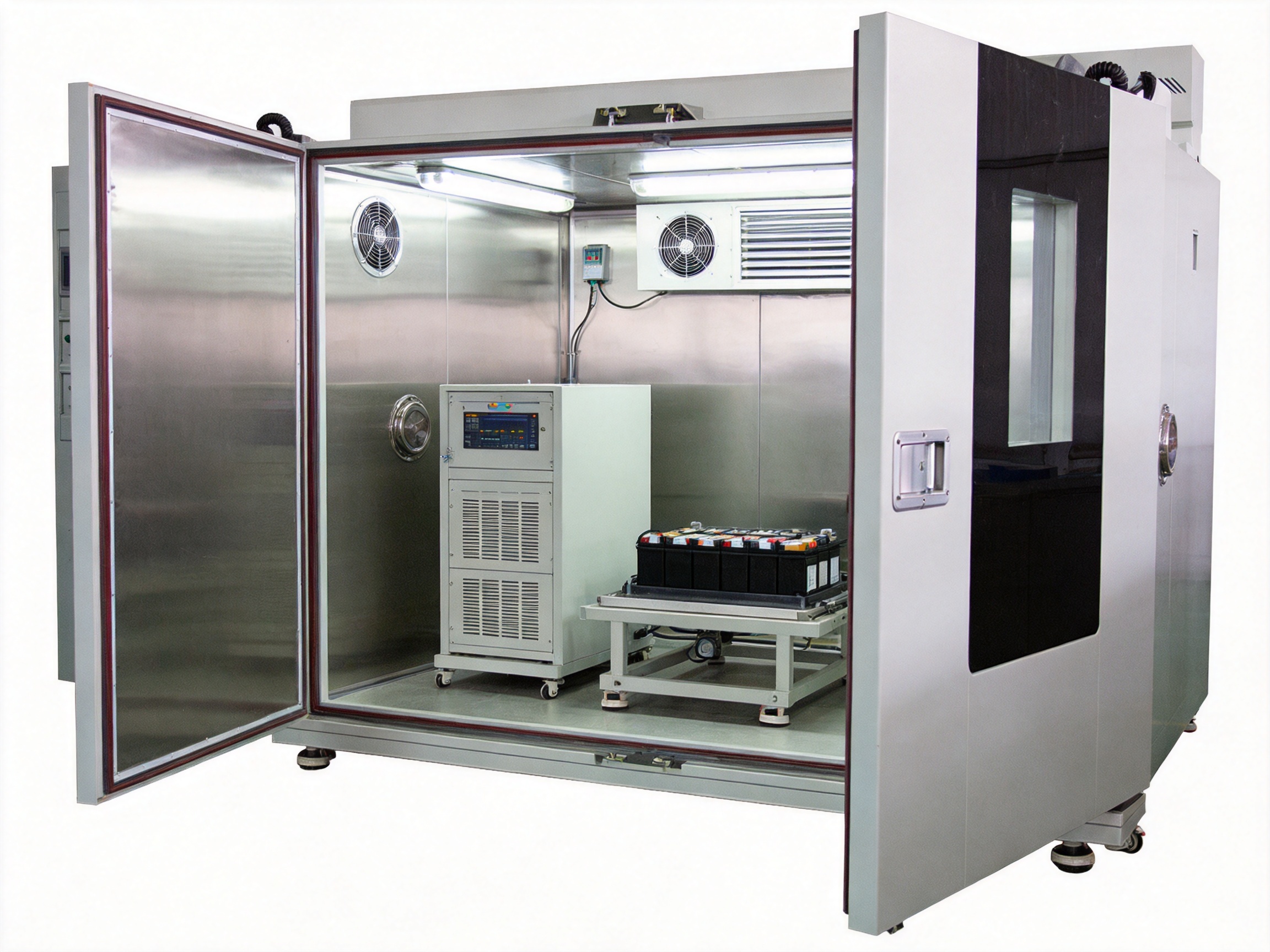
4. Safety Architecture for Hazardous Testing
4.1 Layered protection rather than a single safeguard
Hazardous-product testing requires multiple layers of protection. No single feature can address every possible failure mode. The chamber’s safety concept combines mechanical protection, detection, suppression, pressure management, environmental control, and controlled access.
The mechanical layer includes reinforced viewing panels, door safety chains, chamber construction, and pressure relief devices. The detection layer includes smoke sensing and monitoring of abnormal conditions. The suppression layer includes automatic fine water mist. The environmental-control layer limits the temperature and humidity conditions according to the programmed test. The operational layer includes procedures, alarms, emergency shutdown, inspection, and trained personnel.
This layered approach is valuable because different hazards develop at different speeds. A pressure event may require immediate relief. Smoke detection may identify a developing fire. Environmental sensors may reveal abnormal temperature rise. An operator may observe a visible change through the viewing window. Together, these measures can improve the chance of timely intervention.
4.2 Pressure relief function
Explosion pressure relief devices are intended to reduce structural risk during sudden abnormal pressure fluctuations. If a test specimen undergoes an unexpected reaction or releases gas rapidly, internal pressure may rise beyond normal operating conditions. A pressure relief design provides a controlled path or response mechanism intended to prevent excessive pressure from remaining inside the chamber.
Pressure relief must be designed in relation to the chamber volume, expected event, relief direction, surrounding area, and facility layout. During installation, users should ensure that relief outlets do not discharge toward occupied walkways, control panels, air intakes, or other sensitive equipment. Final engineering should be completed according to the hazard assessment and applicable local requirements.
4.3 Observation and controlled access
Viewing windows allow operators to observe test specimens without opening the chamber. This is important because opening a chamber during an active thermal, humidity, or safety event may expose personnel to heat, cold, smoke, pressure, or chemical release. Reinforced panels provide a more secure observation barrier than ordinary glass.
Door safety chains add another level of control by limiting or stabilizing door movement. The walk-in design should also be supported by clear entry procedures, adequate lighting, emergency release arrangements, warning indicators, and suitable interlocks where required by the installation design.
4.4 Fire response and water mist
The automatic extinguishing system is designed to work with smoke detection and fine water mist spray. When a detection threshold is reached, the system can initiate a rapid response according to its programmed logic. Typical safety sequences may include stopping the environmental test, disconnecting selected power sources, activating visual and audible alarms, and initiating extinguishing action. The exact sequence must be confirmed during commissioning.
Because different test materials behave differently in a fire, users should validate the suppression strategy against the actual product category. Water mist can be highly useful for many fire scenarios, but compatibility, drainage, electrical isolation, and possible chemical reactions must be assessed before testing hazardous materials.
5. Environmental Control and Technical Performance
5.1 Temperature control
Temperature control involves heating, cooling, sensing, airflow, and software coordination. The chamber must remove heat during low-temperature operation, add heat during high-temperature operation, and manage transitions without excessive fluctuation. In a large walk-in space, the challenge is greater because the air volume, specimen mass, and internal surfaces are all larger than those in a small chamber.
The listed temperature ranges provide flexibility for accelerated environmental testing. A high-temperature exposure may be used to evaluate aging or thermal endurance. A low-temperature exposure may simulate cold storage or cold-start conditions. A cycle between high and low set points can reveal mechanical fatigue, seal failure, solder stress, material cracking, and changes in electrical performance.
Actual recovery time and uniformity depend on the test load. A large metal assembly absorbs and releases heat differently from a small plastic component. A densely packed chamber may require more time to stabilize. For reliable results, users should define the allowable load, specimen arrangement, sensor location, ramp rate, dwell time, and stabilization criteria before beginning a formal test.
5.2 Humidity control
Humidity tests are often used to investigate corrosion, insulation degradation, condensation, swelling, mold risk, coating performance, and sealing reliability. The chamber’s water injection and vapor regulation functions are intended to create a controlled moisture environment rather than relying on uncontrolled evaporation from an open water tray.
Fast water injection supports responsive humidity adjustment. Dual evaporators help manage the interaction between cooling and moisture. PID regulation helps reduce deviation from the target condition. Together, these systems are intended to provide a more stable environment during changing test stages.
Humidity accuracy is closely connected to temperature accuracy. Relative humidity changes when temperature changes, even if the actual moisture content remains constant. For this reason, a well-controlled thermal profile is necessary for meaningful humidity testing. Operators should also avoid placing specimens directly against sensors, evaporators, or airflow outlets because this can create local conditions that do not represent the chamber average.
5.3 Uniformity within a large chamber
In a large chamber, uniformity is essential. Products located near an air inlet may experience different conditions from products positioned near a wall or door. The chamber should therefore be loaded in a way that preserves air circulation. Test fixtures should be designed with adequate clearance, and large surfaces should not block the return airflow path.
Uniformity evaluation may involve multiple calibrated sensors placed at representative locations. Such mapping can identify hot spots, cold spots, or humidity gradients. Once the preferred loading arrangement has been established, the same arrangement should be used for comparable production or validation tests whenever possible.
5.4 Frost-free operation
Frost can reduce heat transfer, restrict airflow, change sensor behavior, and increase recovery time. Frost-free technology helps maintain the refrigeration system’s intended performance and reduces the need for disruptive manual defrosting. This is particularly useful for laboratories that need to run repeated cycles or maintain production schedules.
Frost-free operation does not remove the need for routine maintenance. Door seals, drainage paths, refrigeration components, sensors, filters, and water systems must still be inspected. Regular maintenance helps preserve environmental accuracy and reduces the likelihood of unplanned downtime.
6. Manufacturing Strengths and Engineering Approach
The manufacturer behind this product was founded in 2010 and focuses on laboratory equipment and safety testing instruments. Its development path began with a research and development studio specializing in electronic testing. This technical origin is significant because environmental chambers require more than sheet-metal fabrication; they depend on control engineering, thermal design, sensor integration, safety logic, and application knowledge.
The company later transitioned from a technical studio into an enterprise with an independently developed production line. This progression supported the development of high-end laboratory equipment and products with independent intellectual property. The company subsequently adopted a technology-plus-trade strategy, combining engineering development with international market experience.
This combination can provide several advantages to customers. A manufacturer with an internal research and development capability is better positioned to adapt chamber dimensions, temperature ranges, access arrangements, control functions, and safety features to a specific application. Instead of offering only a fixed catalog model, the supplier can evaluate the relationship between the test product, environmental profile, facility, and safety requirements.
6.1 Precision-oriented design
The company’s stated operating philosophy is based on precision in craftsmanship and long-term innovation. For environmental equipment, precision begins with the design stage. The chamber must be sized correctly, insulated appropriately, fitted with suitable sensors, and matched with refrigeration, heating, humidification, and airflow systems.
Precision also applies to assembly. Door alignment, sealing surfaces, sensor installation, piping, wiring, insulation joints, and control-panel integration can all influence performance. In a large walk-in chamber, small construction weaknesses may become more significant because the system operates over a large volume and may experience repeated thermal expansion and contraction.
6.2 Integrated system engineering
The U2T(H)-EXZ3-W demonstrates the importance of integrated system engineering. Explosion-proof protection cannot be considered separately from environmental control. Fire suppression must coordinate with power isolation and chamber control. Pressure relief must be considered in relation to chamber construction and site layout. Humidity regulation must work with refrigeration and airflow.
A manufacturer experienced in customized laboratory equipment can review these relationships during the technical design process. This reduces the risk of selecting components independently and discovering later that they do not work together effectively. Integrated engineering may also simplify service because the control logic, environmental functions, and safety devices are designed as one system.
6.3 Quality management and technical documentation
The company states that it improved its quality management system and that its products passed rigorous technical specification certifications. Customers should request the exact quality documents, inspection records, calibration information, and applicable compliance evidence for the specific chamber configuration being purchased.
Documentation is especially important for hazardous testing. It may include electrical drawings, control logic, component lists, operating instructions, preventive maintenance schedules, pressure relief information, fire suppression details, and factory inspection records. Clear documentation helps the customer integrate the chamber into a laboratory or production facility safely.
6.4 Customization capability
Environmental test requirements vary widely. A battery manufacturer may need cable pass-throughs, specialized fixtures, exhaust connections, gas monitoring, and emergency shutdown integration. An aerospace supplier may require a large door, internal racks, programmable cycling, and precise temperature mapping. A chemical materials laboratory may need specific drainage and compatibility considerations.
The company’s focus on customized solutions is therefore a meaningful strength. Customization should be managed carefully, however. Any modification to the chamber must be evaluated for its effects on thermal performance, humidity stability, safety protection, pressure relief, fire suppression, structural integrity, and serviceability.
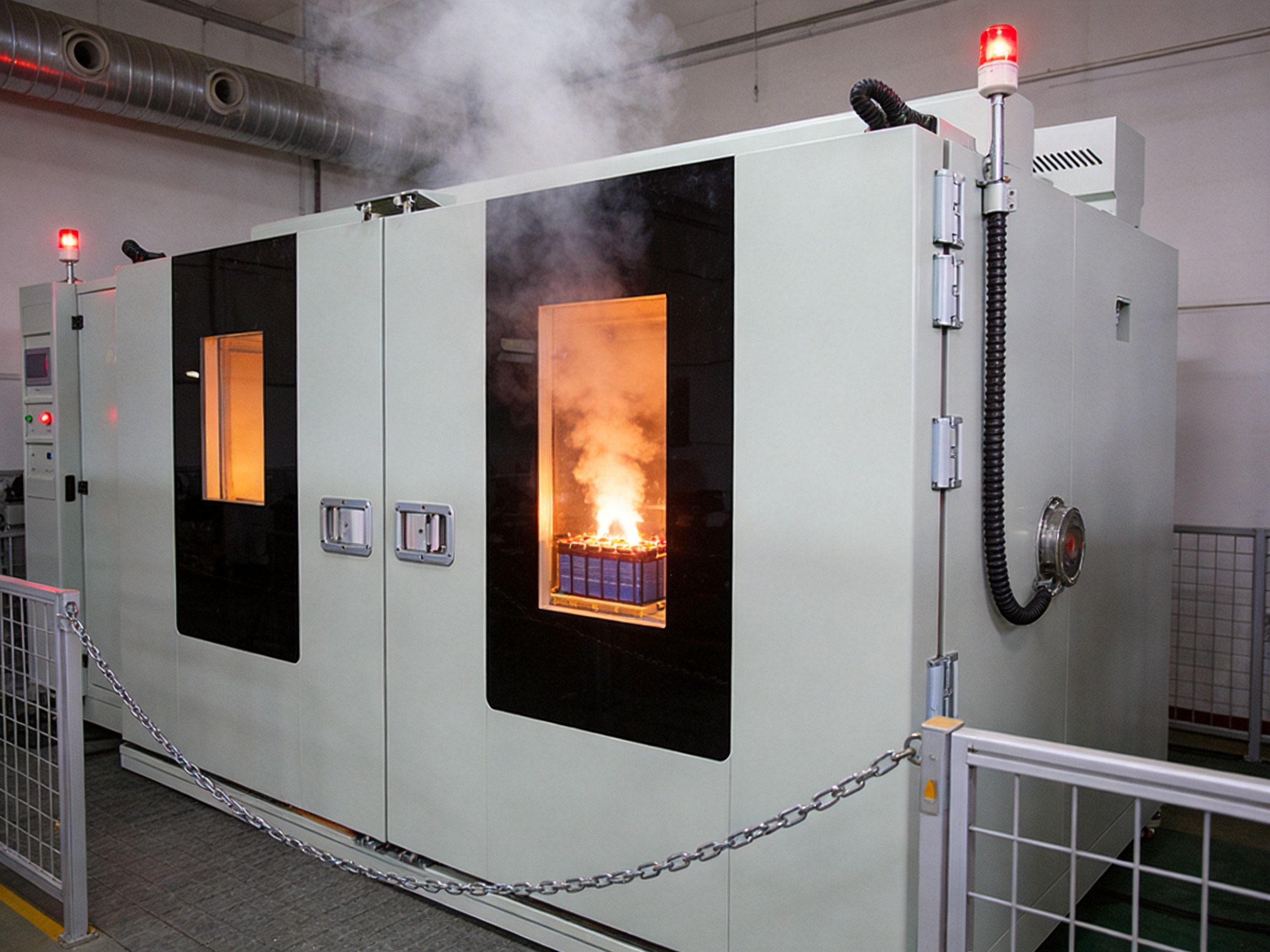
7. Application Areas
7.1 Electronics and semiconductor testing
Electronic products often require combined temperature and humidity testing to evaluate insulation, corrosion, solder joints, connectors, circuit boards, displays, power supplies, and semiconductor packaging. A walk-in chamber can accommodate complete electronic cabinets or larger assemblies rather than only individual boards.
Testing may include high-temperature operation, low-temperature storage, temperature cycling, damp heat exposure, and recovery assessment. Engineers can monitor electrical performance while the product is inside the chamber using suitable feedthroughs and instrumentation. When testing potentially combustible energy storage components or power electronics, the explosion-proof and fire response features provide additional protection.
7.2 Battery modules and energy storage systems
Battery systems are sensitive to temperature, charging conditions, enclosure design, and internal chemical activity. Environmental testing can help evaluate performance at low temperature, thermal behavior at high temperature, moisture resistance, enclosure sealing, and the stability of connected control electronics.
Battery testing can involve elevated risk if a cell enters an abnormal state. For this reason, the test plan should include careful limits, monitoring, emergency procedures, and compatibility review of the suppression system. The chamber’s pressure relief, smoke detection, automatic fire extinguishing, reinforced viewing windows, and safety-focused design are relevant to this application.
The chamber should not be considered a substitute for a dedicated battery abuse-testing facility when a test involves severe mechanical, electrical, or thermal abuse. Instead, it can serve as an important environmental testing platform for controlled thermal and humidity studies within the limits defined by the manufacturer and the customer’s safety assessment.
7.3 Chemical and polymeric materials
Chemical materials, coatings, polymers, adhesives, composites, and sealants may change their mechanical and chemical properties under temperature and humidity stress. Walk-in capacity allows larger panels, assembled structures, and production-scale samples to be tested in a representative arrangement.
Before testing, users should evaluate chemical compatibility between the sample and chamber materials, seals, sensors, water system, and suppression medium. Volatile substances may also require ventilation, monitoring, or specific containment measures. The explosion-proof configuration is valuable where combustible vapors or hazardous materials may be involved, but the precise suitability must be confirmed for each substance.
7.4 Automotive components
Automotive suppliers use environmental testing to assess electronic control units, battery components, lighting systems, sensors, connectors, interior materials, power modules, and mechanical assemblies. A large chamber can support subsystem testing and help reproduce realistic installation conditions.
Temperature and humidity cycling may reveal seal degradation, condensation around connectors, corrosion, plastic deformation, wire insulation problems, and changes in electronic behavior. The chamber’s large interior also supports fixtures that simulate vehicle mounting or provide controlled cable routing.
7.5 Aerospace and industrial equipment
Aerospace components and industrial equipment may be exposed to severe temperature changes during transport, storage, startup, and operation. Large assemblies may not fit in ordinary laboratory chambers, making walk-in equipment particularly useful.
Testing can include thermal storage, humidity exposure, cold start, hot soak, environmental cycling, and combined operation with measurement systems. Since aerospace and industrial products are often high-value and complex, the ability to observe the specimen through reinforced windows and access the chamber efficiently is beneficial.
7.6 Research and development
Research teams often need flexible equipment because test articles change throughout a project. A walk-in chamber can accommodate prototypes, alternative fixtures, and early-stage assemblies. Its broad temperature capability and humidity control support exploratory studies as well as formal validation.
R&D users may also benefit from the ability to develop test profiles before production testing. By identifying environmental weaknesses early, engineers can modify materials, sealing methods, electronics, cooling systems, and safety controls before committing to large-scale manufacturing.
8. Key Specifications
The following table summarizes the principal information provided for the U2T(H)-EXZ3-W. Some entries in the source specification are duplicated or present alternative values. Customers should obtain a final technical data sheet that identifies the exact configuration supplied.
| Item | Provided specification or feature | Engineering consideration |
|---|---|---|
| Product type | Large walk-in explosion-proof thermal and humidity chamber | Intended for large specimens and hazardous-environment testing |
| Model | U2T(H)-EXZ3-W | Confirm the final model code and configuration suffix |
| Nominal capacity | 3000 L | Loading arrangement affects uniformity and recovery performance |
| Temperature range option 1 | -40°C to +150°C | Suitable for a broad range of thermal exposure and cycling tests |
| Temperature range option 2 | -70°C to +180°C | Extended range may require different refrigeration and heating configuration |
| Studio dimensions | 3000 × 1000 × 1000 mm × 2, as listed | Confirm whether the notation refers to two connected sections or a duplicated entry |
| Overall dimensions | Approximately 3460 × 2500 × 2740 mm | Check transportation route, door clearance, foundation, and service space |
| Weight | Approximately 1500–1600 kg | Confirm final shipping and operating weight for structural planning |
| Humidity control | Dynamic PID control and vapor partial pressure regulation | Performance depends on temperature, load, sensor placement, and test profile |
| Water management | Fast water injection device and dual evaporators | Requires suitable water supply, drainage, and maintenance procedures |
| Fire protection | Smoke detection and fine water mist automatic extinguishing system | Confirm compatibility with the tested product and facility fire strategy |
| Explosion protection | Door safety chains, reinforced viewing windows, and pressure relief devices | Must be integrated with site risk assessment and installation controls |
| Seasonal stability | Frost-free technology | Supports stable operation across different ambient conditions |
9. Installation and Site Planning
A chamber of this size should be treated as a major laboratory or production asset. Installation planning should begin before delivery. The facility must accommodate the chamber’s overall dimensions, shipping path, final position, service clearances, electrical requirements, water supply, drainage, ventilation, and emergency response arrangements.
The listed overall dimensions are approximately 3460 × 2500 × 2740 mm. The customer should measure doors, corridors, elevators, loading bays, ramps, and ceiling heights. If the chamber is delivered in sections, the assembly route and on-site installation sequence should be agreed in advance. If it is delivered as a complete unit, lifting equipment and floor loading must be evaluated.
The floor or foundation should be capable of supporting the chamber’s operating weight and any additional specimen, fixture, water, or service loads. Vibration, levelness, drainage slope, and access to service panels may also affect installation quality.
Utilities should be confirmed during technical review. Depending on the final design, the chamber may require electrical power, water supply, drainage, ventilation or exhaust arrangements, network or data connections, and connections to building alarms. The customer should not assume that standard laboratory utilities are sufficient without receiving a formal utility schedule.
Because the chamber is intended for potentially hazardous testing, its location should support controlled access. Warning signs, emergency stop devices, fire response equipment, evacuation routes, and operator visibility should be considered. The installation should comply with applicable local electrical, fire, occupational safety, and building requirements.
10. Operating Practices for Reliable Testing
Good chamber performance depends not only on hardware but also on operating discipline. Before each test, the operator should verify the programmed temperature and humidity profile, specimen arrangement, sensor connections, door sealing, water availability, drainage condition, alarm status, and emergency shutdown readiness.
Test specimens should be positioned to preserve airflow. They should not obstruct evaporators, air outlets, return paths, smoke detectors, or fire suppression nozzles. Heavy products should be supported by fixtures designed for the expected load and temperature range. Cables should be routed through approved openings without damaging seals.
Operators should define stabilization criteria. Reaching a programmed set point does not necessarily mean that the specimen has reached the same condition. A formal test may require the chamber to remain within a specified tolerance for a defined period before the test clock begins. Product temperature may also need to be monitored separately.
During hazardous testing, the operator should remain outside the chamber unless the equipment is fully shut down, isolated, ventilated, and confirmed safe. Walk-in access is a major convenience, but it must not encourage entry during active or uncertain conditions. Entry procedures should include power isolation, temperature verification, atmosphere assessment where necessary, and confirmation that automatic systems cannot restart unexpectedly.
After a test, the chamber should be returned to a safe condition before the door is opened. If smoke, unusual odor, abnormal noise, rapid temperature rise, or unexpected specimen behavior is observed, the operator should follow the approved emergency procedure rather than attempting to continue the test.
11. Maintenance and Long-Term Value
Preventive maintenance protects both test accuracy and safety. Temperature and humidity sensors should be checked and calibrated at defined intervals. Door seals should be inspected for hardening, cracking, compression loss, and contamination. Water systems should be checked for deposits, blockage, leaks, and microbial growth where relevant.
Fine water mist nozzles, smoke detectors, alarms, pressure relief devices, and emergency controls require periodic inspection. The fire suppression system should be tested according to the manufacturer’s procedures and local requirements. Testing should be planned so that maintenance does not compromise the system’s readiness.
Refrigeration components, filters, fans, wiring, heating elements, insulation, and drainage should also be inspected. Frost-free operation reduces the risk of performance loss caused by ice, but it does not prevent all refrigeration-related maintenance issues. Unusual recovery time, increased noise, temperature drift, or humidity instability should be investigated promptly.
Long-term value comes from reliable operation, not only from the initial purchase price. A well-maintained chamber can support repeated product programs, reduce outsourced testing, improve internal knowledge, and provide consistent data over many development cycles. The large capacity may also allow multiple specimens or larger assemblies to be tested in a single program, improving laboratory productivity.
12. Why the Product and Manufacturer Are a Strong Combination
The product’s competitive value comes from the combination of features rather than any single specification. A large chamber alone does not provide hazardous-test protection. An explosion-proof enclosure alone does not ensure accurate humidity control. Fire suppression without reliable detection and environmental control is incomplete. The U2T(H)-EXZ3-W brings these functions together in one walk-in platform.
The manufacturer’s technical history supports this product positioning. Its origins in electronic testing research, subsequent independent production development, continued investment in R&D, and experience in international trade indicate a business model that combines engineering and delivery capability. This is important for customized equipment because customers typically need more than a machine; they need technical clarification, configuration support, documentation, installation coordination, and after-sales communication.
The company’s stated emphasis on precision, innovation, integrity, and win-win cooperation also aligns with the requirements of laboratory equipment procurement. Environmental chambers affect product release decisions, reliability conclusions, and safety assessments. Customers therefore need a supplier that understands the consequences of unstable performance and incomplete documentation.
Compared with a basic environmental chamber, the U2T(H)-EXZ3-W offers a more comprehensive platform for large and potentially hazardous products. Compared with a small cabinet chamber, it offers greater access and specimen capacity. Compared with a chamber assembled from unrelated systems, its integrated environmental and safety functions can simplify coordination and improve application suitability.
13. Procurement Questions to Ask Before Ordering
Customers should confirm the exact temperature range required for their tests. The available information lists two alternatives, and the selected range will affect the refrigeration system, heating system, insulation, energy consumption, recovery time, and price.
The internal dimension notation should also be clarified. The source information lists 3000 × 1000 × 1000 mm × 2, with repeated entries. This may refer to two connected test sections or may be a duplicated table value. A dimension drawing should be reviewed before approval.
Other important questions include the following:
• What humidity range and humidity accuracy are guaranteed at each temperature condition?
• What temperature and humidity uniformity can be achieved under specified loading conditions?
• What is the maximum permitted specimen mass and heat load?
• What water quality, supply pressure, drainage, and maintenance requirements apply?
• How does the fire suppression system respond to smoke, flame, or abnormal temperature?
• What products and fire scenarios are compatible with fine water mist?
• Where are the pressure relief outlets located, and what site clearance is required?
• What electrical, ventilation, alarm, and emergency-stop interfaces are available?
• What calibration and factory acceptance records are supplied?
• What installation, commissioning, training, warranty, and service support are included?
Clear answers to these questions help ensure that the selected chamber matches the customer’s actual test program and facility conditions.
14. Frequently Asked Questions
Q1: What type of product is the U2T(H)-EXZ3-W?
The U2T(H)-EXZ3-W is a large walk-in explosion-proof thermal and humidity test chamber. It is designed to expose products and materials to controlled temperature and humidity conditions while incorporating safety features for potentially hazardous testing environments.
Q2: What is the chamber capacity?
The listed nominal capacity is 3000 liters. The usable capacity depends on the internal arrangement, fixtures, airflow clearances, and the space required for sensors, suppression nozzles, and service access.
Q3: What temperature ranges are available?
The supplied information lists a range of -40°C to +150°C and an alternative extended range of -70°C to +180°C. The final range should be confirmed with the manufacturer because different configurations may use different refrigeration and heating systems.
Q4: Is the chamber suitable for battery testing?
It is intended to support testing of battery systems and other potentially hazardous products. However, suitability depends on the battery type, test severity, electrical energy, possible failure mode, gas release, fire behavior, and facility safety plan. A technical risk assessment should be completed before testing.
Q5: What explosion-proof features are included?
The listed features include explosion-proof door chains, reinforced viewing windows, and explosion pressure relief devices. These features are intended to support controlled observation, mechanical protection, and pressure management during abnormal events.
Q6: Does the chamber include automatic fire suppression?
Yes. The product information describes an automatic fire extinguishing system with smoke detection and fine water mist spray. The exact control sequence, fire detection thresholds, extinguishing capacity, and compatibility with specific test materials should be confirmed during technical review.
Q7: Why is a walk-in chamber better than a standard cabinet chamber?
A walk-in chamber can accommodate larger products, complete assemblies, production samples, and specialized fixtures. It also makes loading and retrieval easier. This can reduce the need to disassemble products and may create more representative test conditions.
Q8: How does the chamber control humidity?
The chamber uses fast water injection, dual evaporators, dynamic PID control, and vapor partial pressure regulation. These functions work together to adjust moisture and stabilize the temperature-humidity environment.
Q9: What does frost-free technology do?
Frost-free technology helps reduce ice accumulation that could interfere with heat transfer, airflow, sensor performance, and refrigeration efficiency. It is intended to support more stable operation across different seasons.
Q10: Can the chamber be customized?
The manufacturer specializes in customized laboratory equipment solutions. Possible customization should be reviewed technically because changes to dimensions, temperature range, fixtures, doors, feedthroughs, ventilation, or safety systems can affect overall performance and compliance.
Q11: What should be checked before installation?
Customers should check the delivery route, overall dimensions, floor loading, power supply, water supply, drainage, ventilation, service clearance, alarm interfaces, pressure relief direction, fire safety arrangements, and operator access. The exact utility schedule should be obtained before delivery.
Q12: How should the chamber be maintained?
Maintenance should include sensor calibration, door seal inspection, water system cleaning, smoke detector and suppression system checks, pressure relief inspection, refrigeration service, electrical inspection, drainage checks, and functional testing of alarms and emergency controls.
Q13: Does the chamber replace a dedicated abuse-testing facility?
No. The chamber is an environmental test platform and should be operated within its specified limits. Severe mechanical, electrical, chemical, or thermal abuse tests may require a dedicated facility with additional containment and specialized safety systems.
Q14: How can customers confirm the specifications?
Customers should request a final technical data sheet, dimension drawing, utility schedule, control description, safety documentation, factory inspection records, and configuration-specific performance information. This is particularly important because the supplied data contains alternative temperature ranges and repeated dimension and weight entries.
15. Conclusion
The U2T(H)-EXZ3-W large walk-in explosion-proof thermal and humidity chamber is designed for demanding environmental testing where product size, climate control, and safety protection must be addressed together. Its 3000-liter capacity, walk-in access, broad temperature options, humidity regulation, dual evaporator arrangement, frost-free technology, pressure relief devices, reinforced viewing windows, door safety chains, smoke detection, and fine water mist suppression provide a comprehensive foundation for advanced testing.
Its applications extend across electronics, battery systems, chemical materials, polymers, automotive components, aerospace assemblies, industrial equipment, research programs, and production quality assurance. The large interior can improve test realism and efficiency by allowing complete assemblies and substantial specimens to be evaluated without unnecessary disassembly.
The manufacturer’s background in electronic testing research, independent production development, R&D investment, quality-system improvement, and customized laboratory equipment supports the product’s technical positioning. Its engineering-oriented approach is valuable for customers who require more than a standard chamber and need assistance with configuration, safety integration, installation, documentation, and long-term support.
Before purchase, users should confirm the final temperature range, internal dimensions, humidity performance, loading limits, fire suppression compatibility, pressure relief arrangement, utilities, and compliance documentation. With the correct configuration and disciplined operating procedures, the U2T(H)-EXZ3-W can serve as a reliable platform for repeatable thermal and humidity testing in laboratories, manufacturing facilities, and safety-conscious industrial environments.
References
1. Product technical information for the U2T(H)-EXZ3-W large walk-in explosion-proof thermal and humidity chamber, supplied by the manufacturer.
2. Manufacturer company profile, development history, product information, and stated engineering capabilities.
3. General principles of environmental testing for electronic equipment, materials, industrial components, and energy storage systems.
4. General engineering practices for temperature and humidity chamber design, sensor calibration, airflow management, and environmental test repeatability.
5. General safety principles for fire detection, fine water mist suppression, pressure relief, hazardous-product testing, and laboratory risk assessment.
6. General laboratory practices for preventive maintenance, equipment commissioning, environmental chamber mapping, and controlled test documentation.
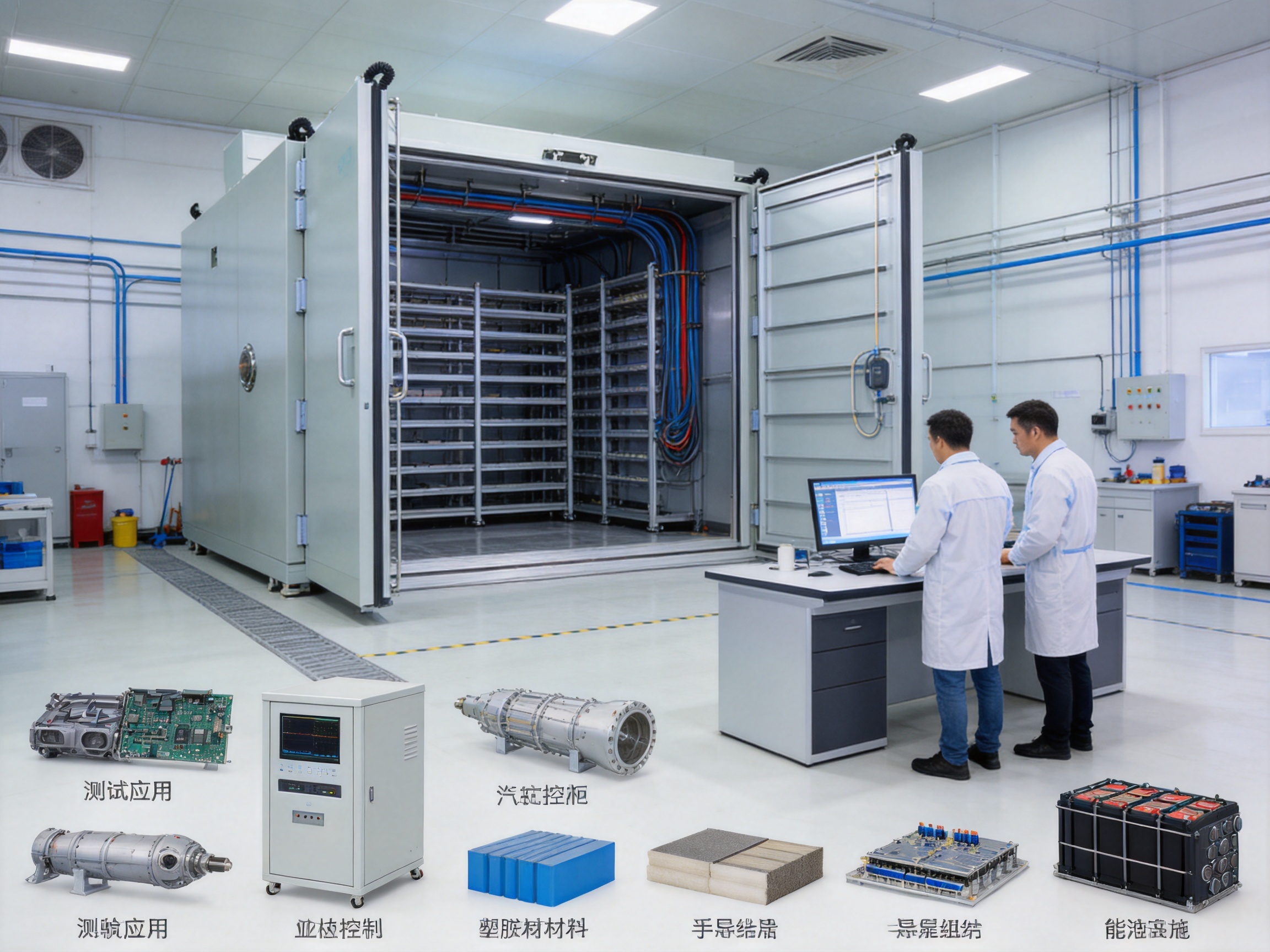
Product: U2T(H)-EXZ3-W Large Walk-In Explosion-Proof Thermal and Humidity Chamber

PREV:Walk-In Dual-Layer Explosion-Proof Temperature and Humidity Chamber for Advanced Laboratory Testing
NEXT:Advanced Liquid Nitrogen Slurry Workbench for Rapid Cryofixation and Controlled Sample Handling
NEXT:Advanced Liquid Nitrogen Slurry Workbench for Rapid Cryofixation and Controlled Sample Handling
Interested in cooperation or have questions?
Featured Products
Related products
Quick Link
Contact Information
- Tel: +86-13861043568
- E-mail: 1840784112@qq.com
- Add: Tianting District, Changzhou City, Jiangsu Province, China, No. 6 Hecircuit
Scan Code
Copyright © JIANGSU BAISHENG INDUSTRIAL CO., LTD.
All Rights Reserved. Privacy Custom Precision Laboratory Testing Equipment Manufacturers
