 English
 Español

NEWS
NEWS
NEWS
NEWS
NEWS
NEWS
NEWS
NEWS
NEWS
NEWS
NEWS
NEWS
NEWS
NEWS
NEWS
NEWS

Deng Xinyi — Product After-Sales Support Specialist
Home / Author / Deng Xinyi — Product After-Sales Support Specialist / Rapid Thermal and Humidity Test Systems for Precision Environmental Reliability Testing
Rapid Thermal and Humidity Test Systems for Precision Environmental Reliability Testing
Content
- 1 Why Rapid Temperature and Humidity Testing Matters
- 2 Overview of the U5QTH-150-A/W System
- 3 High-Precision Temperature and Humidity Control
- 4 Advanced Chamber Construction
- 5 Efficient Air Circulation and Temperature Uniformity
- 6 Refrigeration System and Condensation Management
- 7 Safety-Oriented Engineering
- 8 Durable Electrical and Control Components
- 9 Manufacturing Strengths and Engineering Approach
- 10 Advantages Compared with Conventional Test Chambers
- 11 Applications Across Multiple Industries
- 12 Recommended Testing Workflow
- 12.1 Step One: Define the Environmental Profile
- 12.2 Step Two: Review Sample Compatibility
- 12.3 Step Three: Plan the Fixture and Loading Arrangement
- 12.4 Step Four: Verify Sensors and Measurement Equipment
- 12.5 Step Five: Confirm Chamber Condition
- 12.6 Step Six: Run the Program and Monitor the Sample
- 12.7 Step Seven: Evaluate Results and Maintain Traceability
- 13 Installation and Maintenance Considerations
- 14 Technical Specification Summary
- 15 How the System Supports Better Test Data
- 16 Customization and Project Support
- 17 Conclusion
- 18 Frequently Asked Questions
- 18.1 What is the primary purpose of the U5QTH-150-A/W?
- 18.2 What is the chamber capacity?
- 18.3 What temperature ranges are available?
- 18.4 Which temperature-change rates can be selected?
- 18.5 How does the system regulate humidity?
- 18.6 Why is air circulation important?
- 18.7 What is the purpose of the stainless-steel condensate tray?
- 18.8 Can the chamber be used for battery testing?
- 18.9 What industries can use this system?
- 18.10 What should be confirmed before purchasing?
- 18.11 How should the chamber be maintained?
- 18.12 Does the chamber replace product-specific safety testing?
- 19 References
- 20 Product: U5QTH-150-A/W Rapid Thermal and Humidity Test System
Modern products are expected to operate safely and consistently across rapidly changing temperatures and humidity levels. Electronics, automotive components, batteries, aerospace assemblies, polymers, and other engineered products may encounter condensation, thermal expansion, contraction, moisture absorption, and sudden temperature transitions during transportation, storage, or service. A controlled environmental test chamber allows manufacturers and laboratories to reproduce these stresses in a repeatable and measurable way.
The U5QTH-150-A/W Rapid Thermal and Humidity Test System is designed for this purpose. With a nominal capacity of 150 liters, a working space of approximately 500 millimeters wide by 500 millimeters deep by 600 millimeters high, and selectable temperature-change rates of 5, 10, 15, or 20 degrees Celsius per minute, the system supports accelerated reliability testing in a compact laboratory format. Its temperature and humidity control architecture combines dynamic proportional-integral-derivative regulation with water vapor partial pressure control to produce stable and reproducible test environments.
Beyond its basic environmental control functions, the system incorporates a corrosion-resistant stainless-steel chamber, an adjustable damped door hinge, high-temperature-resistant circulation fans, leakage protection, and a refrigeration arrangement designed to protect key components from condensation-related damage. These features make it suitable for research and development, production quality assurance, failure analysis, accelerated aging, and compliance-oriented testing.
Why Rapid Temperature and Humidity Testing Matters
Environmental stress testing is an essential part of product development. A product may perform correctly under ordinary room conditions but fail when exposed to a sudden transition from a cold environment to a hot, humid environment. Similarly, repeated heating and cooling can create mechanical stress at solder joints, seals, coatings, connectors, battery interfaces, and bonded materials.
Humidity adds another layer of complexity. Moisture can reduce insulation resistance, accelerate corrosion, change the dimensions of hygroscopic materials, promote leakage currents, and degrade protective coatings. In electronic products, moisture may combine with contaminants to create conductive paths or electrochemical migration. In mechanical assemblies, it may affect lubricants, elastomers, adhesives, and surface treatments.
A rapid thermal and humidity test system provides a controlled way to study these effects. Instead of waiting for years of natural service exposure, engineers can subject representative samples to programmed environmental cycles. The resulting data can help identify design weaknesses, compare materials, validate manufacturing processes, and estimate long-term reliability.
The value of a test chamber depends on more than its minimum and maximum temperature specifications. Control stability, air circulation, humidity regulation, recovery time, door design, interior materials, refrigeration durability, operator safety, and maintenance requirements all influence the quality of test results. The U5QTH-150-A/W has been developed around these practical testing requirements.
Overview of the U5QTH-150-A/W System
The U5QTH-150-A/W is a 150-liter rapid temperature-change humidity test chamber intended for demanding laboratory and industrial applications. Its compact working volume is suitable for component-level testing, small assemblies, material samples, battery units, electronic modules, and other products that do not require a large walk-in chamber.
The system is engineered to provide controlled temperature and humidity conditions across repeated test cycles. Depending on the selected configuration, the listed temperature range is either approximately -40 degrees Celsius to +150 degrees Celsius or -70 degrees Celsius to +180 degrees Celsius. These two ranges indicate available configuration options rather than a single operating range that should automatically be assumed for every unit. The final range, cooling performance, and operating conditions should be confirmed with the supplier before ordering.
The listed interior dimensions are approximately 500 millimeters wide, 500 millimeters deep, and 600 millimeters high. The overall machine dimensions are approximately 780 millimeters wide, 1,700 millimeters deep, and 1,810 millimeters high. Depending on configuration, the listed machine weight is approximately 950 or 1,000 kilograms. These values should be considered during laboratory planning, floor-load assessment, transportation, ventilation design, and installation.
The product combines high-rate temperature changes with humidity control, making it different from a conventional constant-temperature oven or a basic humidity cabinet. It is intended for programmed thermal cycling, moisture stress testing, environmental durability evaluation, and accelerated reliability studies where the transition between conditions is as important as the final set point.
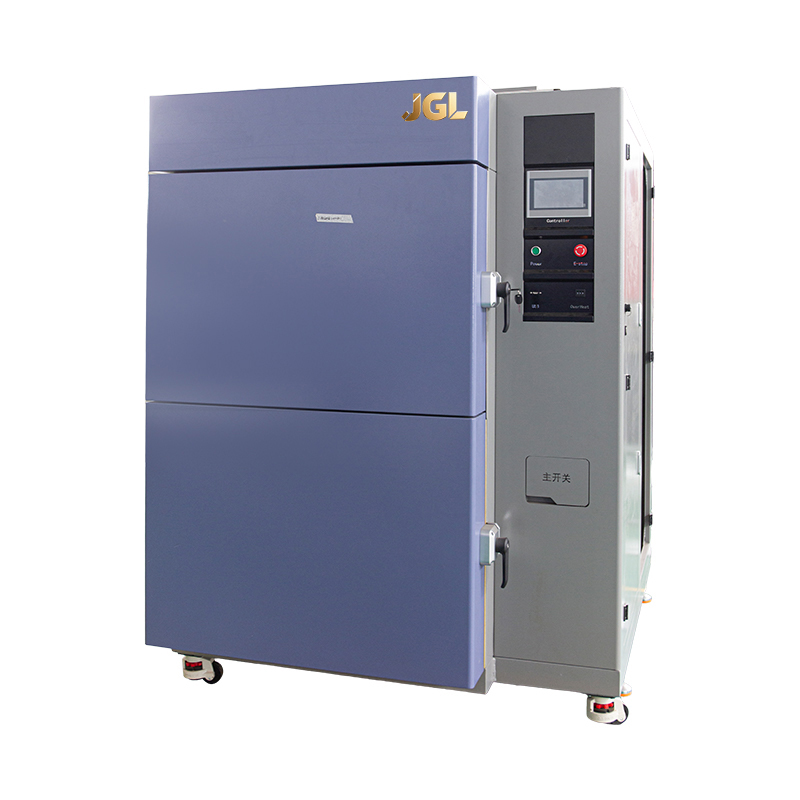
U5QTH-150-A/W Rapid Thermal and Humidity Test System
High-Precision Temperature and Humidity Control
One of the central advantages of the system is its balanced temperature and humidity control architecture. Environmental test results are meaningful only when the chamber can maintain the intended conditions with limited fluctuation and consistent distribution. Excessive overshoot, slow recovery, or uneven airflow can introduce uncertainty into the test and make it difficult to compare results between samples or test batches.
The U5QTH-150-A/W uses dynamic PID control to continuously adjust the heating, cooling, and humidity-related functions according to the difference between the measured chamber condition and the programmed target. Dynamic control is particularly important during rapid transitions because the thermal load changes quickly. A fixed-output control approach may create large overshoot or extended settling times, while a responsive control algorithm can moderate the energy input as the chamber approaches the target.
Temperature control is complemented by water vapor partial pressure regulation. Humidity is not simply a matter of adding water to the chamber. The relationship between temperature, vapor pressure, dew point, air movement, and surface temperature must be managed carefully. A water vapor partial pressure approach helps the system regulate moisture according to the actual thermodynamic state of the chamber rather than relying solely on a simple humidifier duty cycle.
This type of control is useful during combined temperature and humidity testing, especially when the programmed profile includes rapid temperature transitions. As the air temperature changes, the moisture-holding capacity of the air also changes. Without suitable regulation, a change in temperature could create unintended condensation or an inaccurate relative-humidity condition. Coordinated control helps maintain the intended test profile.
For laboratories comparing different materials or product revisions, repeatability is as important as absolute accuracy. A stable chamber reduces environmental variation between test runs, allowing engineers to distinguish genuine product differences from equipment-related fluctuations.
Control Benefits During Rapid Transitions
Rapid thermal testing places greater demands on control hardware and software than ordinary static testing. During a fast ramp, the chamber must deliver or remove heat quickly while maintaining sufficient air circulation. At the same time, the system must prevent local hot or cold zones that could expose different parts of the sample to different conditions.
The selectable rates of 5, 10, 15, and 20 degrees Celsius per minute provide flexibility for different test methods. A slower 5 degrees Celsius per minute rate may be appropriate for materials or assemblies that require a controlled transition. Higher rates can support accelerated stress testing, thermal shock studies, and applications in which the sample must experience a rapid change in environmental conditions.
Actual ramp performance depends on factors such as sample mass, sample heat capacity, fixture design, starting temperature, chamber loading, power supply, and whether the system is operating under dry or humid conditions. Therefore, the published ramp options should be interpreted as selectable design capabilities, while the achievable rate for a particular test should be verified using the intended load.
Advanced Chamber Construction
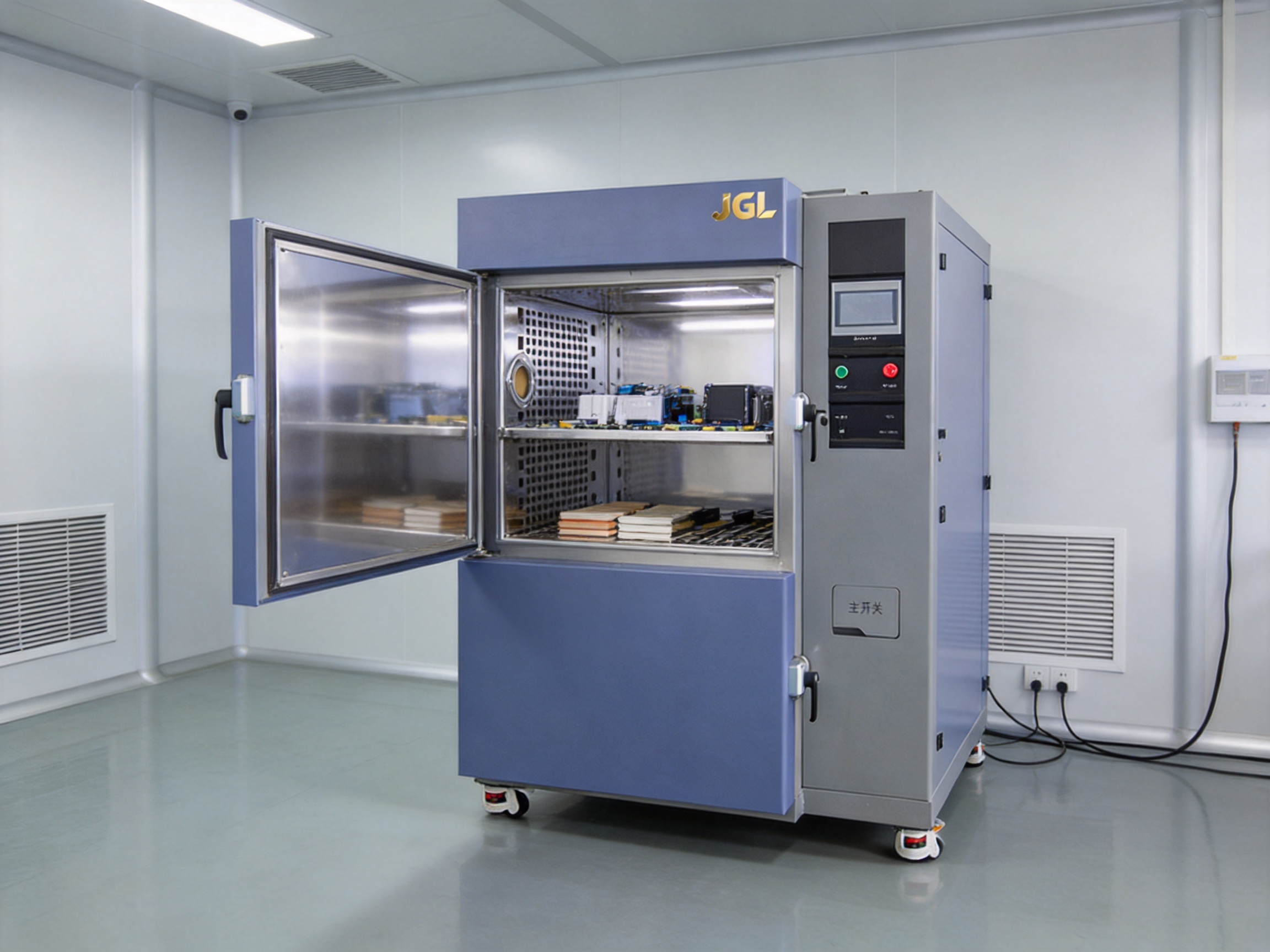
The chamber interior is constructed from mirror-finished stainless steel protected by a film coating. Stainless steel is widely used in environmental test equipment because it resists corrosion, tolerates repeated temperature changes, and can be cleaned more easily than many painted or porous materials.
The mirror-finished surface provides additional practical advantages. A smooth interior reduces locations where residue or moisture can accumulate. It also supports more consistent heat reflection within the working space and contributes to a uniform, professional test environment. The protective film helps preserve the surface during manufacturing, delivery, and installation; it should be managed according to the supplier’s instructions before normal operation.
Interior durability is particularly important in humidity testing. Repeated moisture exposure can accelerate corrosion in unsuitable metals and can degrade poorly protected surfaces. Corrosion products may contaminate samples, block drains, affect sensors, and increase maintenance requirements. A stainless-steel interior provides a stronger basis for long-term operation when combined with proper drainage, cleaning, and water-quality management.
The chamber structure also supports stable airflow. A well-designed interior must allow air to circulate around the sample without creating excessive turbulence or dead zones. Uniform airflow helps the measured chamber condition better represent the environment surrounding the test article.
Adjustable Damped Door Hinge
The system includes a damped hinge mechanism that allows the operator to adjust the door opening angle. This is a practical feature that can improve accessibility during loading, unloading, inspection, and sample positioning.
A door that can remain at a selected opening angle reduces the need for an operator to hold it manually while placing samples or fixtures inside the chamber. The damping action also supports smoother movement and can reduce sudden door motion. This is useful in laboratories where test articles are heavy, delicate, or connected to external measurement cables.
Door design also affects environmental performance. A secure and properly aligned door helps preserve chamber insulation and limits unwanted air exchange. The adjustable hinge does not replace the need for correct gasket inspection and closure, but it contributes to convenient daily operation and improved ergonomics.
Efficient Air Circulation and Temperature Uniformity
Air movement is a fundamental factor in temperature and humidity testing. Even when the controller reports the correct average temperature, insufficient circulation can leave one area of the chamber warmer or cooler than another. A sample positioned in a nonuniform zone may therefore experience a different condition from the one indicated by the control sensor.
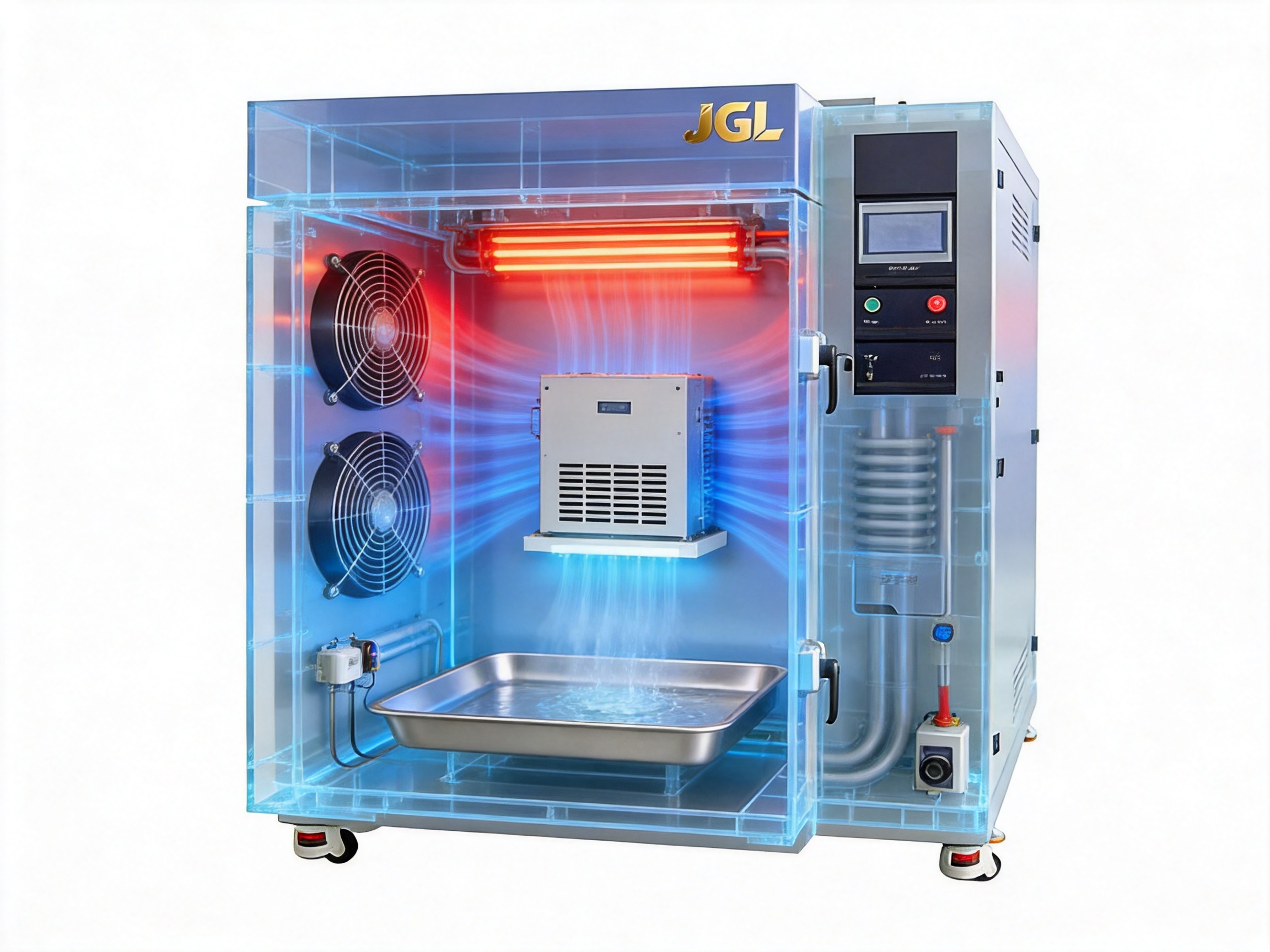
The U5QTH-150-A/W uses Panasonic circulation fans fitted with bearings rated for high-temperature operation up to 200 degrees Celsius. This design supports reliable airflow under demanding thermal conditions and provides a margin above the chamber’s listed upper temperature options.
High-temperature-resistant bearings are important because fan assemblies may operate for extended periods at elevated temperatures. Components that are not designed for such conditions can experience lubricant degradation, increased friction, noise, vibration, or premature failure. Durable fan components support stable airflow and reduce the risk of interruptions during long test programs.
Effective air circulation also improves recovery after the door is closed. When a sample is introduced, the chamber temperature may shift because of the sample’s thermal mass and because warm or cool room air enters during loading. Fast and even circulation helps distribute conditioned air around the sample and supports the return to the programmed set point.
For best results, samples should not block the circulation paths. Operators should follow recommended spacing and loading practices, avoid covering sensor locations, and use fixtures that permit airflow around the test article. Chamber uniformity is influenced by both equipment design and operating technique.
Refrigeration System and Condensation Management
Rapid cooling and low-temperature operation require a refrigeration system capable of handling substantial heat removal. The refrigeration system must also manage moisture that may condense when humid air encounters cold surfaces.
The U5QTH-150-A/W includes a full-size stainless-steel condensate tray. This component collects moisture generated during cooling and humidity operation while helping protect the compressor and surrounding equipment from condensation-related corrosion.
Condensation management is essential for system reliability. Uncontrolled water can enter electrical compartments, accumulate under components, corrode fasteners, damage insulation, or create an unsafe operating condition. A properly designed condensate collection arrangement provides a defined path for moisture and makes inspection and maintenance easier.
The use of stainless steel in the condensate tray is also significant. A tray exposed to repeated water collection, temperature changes, and possible chemical residues must resist corrosion. A durable tray can extend service life and reduce the risk of leakage or structural deterioration.
Operators should still follow recommended cleaning and drainage procedures. Water quality, residue accumulation, drain blockage, and inadequate ventilation can affect performance even when the tray itself is robust. Preventive maintenance should include visual inspection of the tray, drain path, seals, refrigeration connections, and areas exposed to condensation.
Safety-Oriented Engineering
Environmental testing may involve high temperatures, low temperatures, water, electrical power, refrigeration pressure, and products that can themselves become hazardous under stress. Safety must therefore be considered in the equipment design, installation, operating procedure, and test plan.
The system incorporates unique leakage protection intended to enhance operational safety during extended testing cycles. Leakage protection can help identify or limit electrical leakage conditions associated with moisture, damaged insulation, wiring faults, or abnormal operation.
Safety features are most effective when combined with appropriate laboratory procedures. The chamber should be installed on a suitable level floor with adequate clearance for service access and ventilation. Electrical connections should be completed by qualified personnel. Operators should inspect cables, seals, doors, drains, and sample fixtures before starting a program.
Samples must also be evaluated before testing. Batteries, pressurized products, volatile materials, chemically reactive substances, and assemblies with a risk of rupture may require dedicated safety provisions. The chamber should not be used for a material or product unless its compatibility with the temperature, humidity, airflow, and possible failure conditions has been assessed.
For tests involving batteries or energy-storage systems, risk assessment is especially important. A test plan may need additional monitoring, protective barriers, gas detection, fire suppression, venting, or emergency shutdown provisions. The environmental chamber provides controlled conditions, but it does not eliminate the hazards associated with an unstable sample.
Durable Electrical and Control Components
The system incorporates core electrical components from internationally recognized suppliers. The use of established component platforms can support reliability, maintainability, and serviceability over the equipment’s operating life.
Industrial environmental chambers depend on many electrical elements, including controllers, relays, contactors, sensors, protection devices, fan motors, heaters, refrigeration controls, and communication interfaces. The failure of a single component can interrupt a long test and potentially compromise the sample or the validity of the test record.
Component quality should be considered together with the manufacturing process. Reliable parts must be correctly selected, wired, labeled, insulated, tested, and integrated into the complete control system. Good design practice includes appropriate separation of power and signal circuits, secure terminal connections, protective grounding, thermal protection, and systematic inspection.
The manufacturer’s technology-driven background is relevant in this area. JIANGSU BAISHENG INDUSTRIAL CO., LTD. originated from an electronic testing research and development studio and later expanded into independently developed laboratory equipment. This history indicates a foundation in electrical testing and technical design rather than a purely trading-oriented business model.
The company reports that it combines research and development with international trade experience. For buyers, this combination can be valuable because successful laboratory equipment projects require more than a catalog specification. They also involve application analysis, configuration selection, documentation, shipment coordination, installation guidance, and after-sales communication.
Manufacturing Strengths and Engineering Approach
According to the supplied company information, JIANGSU BAISHENG INDUSTRIAL CO., LTD. was founded in 2010 and specializes in laboratory equipment and safety testing instruments. Its development history includes a 2013 research and development studio focused on electronic testing, a transition to an enterprise production structure in 2016, increased research investment from 2019, quality-system improvements in 2022, and continued product innovation through 2025.
This progression suggests a manufacturing approach built around technical development, product refinement, and market application. The company states that its core advantage is a dedicated research and development team focused on precision design and technical specifications. For a rapid thermal and humidity system, this type of engineering capability is important because the chamber requires coordinated design across structure, refrigeration, airflow, humidity control, electrical protection, and software or controller logic.
Advanced manufacturing is not limited to the final assembly stage. It begins with application analysis and component selection. Engineers must determine the required temperature range, ramp rate, humidity range, sample size, load characteristics, control sensors, refrigeration architecture, insulation, and safety provisions. These decisions influence the chamber’s stability and long-term service performance.
Structural fabrication is another critical stage. Stainless-steel panels must be cut, formed, finished, and assembled with attention to dimensional accuracy and sealing. Interior surfaces should be smooth and easy to clean. Door frames and hinges must align correctly to maintain gasket compression. Service panels must provide access while preserving structural rigidity and thermal insulation.
Electrical manufacturing requires disciplined wiring and inspection. Components should be mounted securely, cables routed away from heat and moving parts, terminals tightened according to good practice, and protection devices correctly matched to the circuit. Clear labeling supports future diagnosis and maintenance.
Refrigeration assembly requires additional process control. Connections, brazed joints, insulation, pressure testing, evacuation, and refrigerant charging all influence cooling performance and system reliability. Condensation management, compressor protection, and the relationship between refrigeration capacity and ramp-rate performance must be evaluated as an integrated system.
Control-system commissioning should include sensor verification, temperature and humidity response checks, door-seal inspection, fan operation, safety-interlock testing, refrigeration evaluation, and observation of the chamber under representative cycles. A finished chamber should not be judged only by whether it reaches a single temperature set point. Its ability to transition, stabilize, recover, and repeat the programmed profile is equally important.
Advantages Compared with Conventional Test Chambers
The U5QTH-150-A/W offers several advantages over basic environmental cabinets and conventional constant-condition chambers.
Rapid Transition Capability
A standard temperature chamber may be suitable for holding a product at a fixed temperature, but it may not be optimized for fast transitions. The selectable 5, 10, 15, and 20 degrees Celsius per minute rates provide broader test flexibility and allow engineers to study the effects of more severe thermal changes.
Combined Temperature and Humidity Control
Some systems focus primarily on temperature and offer limited humidity control. This model is designed specifically for combined temperature and humidity testing, with water vapor partial pressure regulation supporting more controlled moisture conditions.
Compact 150-Liter Working Volume
A 150-liter chamber can reduce the space and energy requirements associated with a large chamber while still accommodating many components and assemblies. The size is appropriate for laboratories that require advanced environmental control but do not need a walk-in test room.
Durable Interior and Condensate Components
The mirror-finished stainless-steel interior and stainless-steel condensate tray are practical advantages in repeated humidity testing. They support corrosion resistance, cleanability, and long-term maintainability compared with less durable interior materials.
Operator-Friendly Door Design
The adjustable damped hinge improves access and makes sample handling more convenient. This detail may appear minor, but it can improve daily workflow, particularly when operators load heavy fixtures or connect measurement leads.
High-Temperature Airflow Components
Circulation fans with bearings rated up to 200 degrees Celsius provide a robust airflow solution for high-temperature operation. Stable airflow supports temperature uniformity and helps reduce recovery time after loading or door opening.
Safety and Component Reliability
Leakage protection and internationally sourced core electrical components contribute to a safety-oriented and dependable equipment platform. These features are especially valuable during long-duration test cycles in which the chamber may operate continuously for many hours or days.
Applications Across Multiple Industries
Electronics and Electrical Components
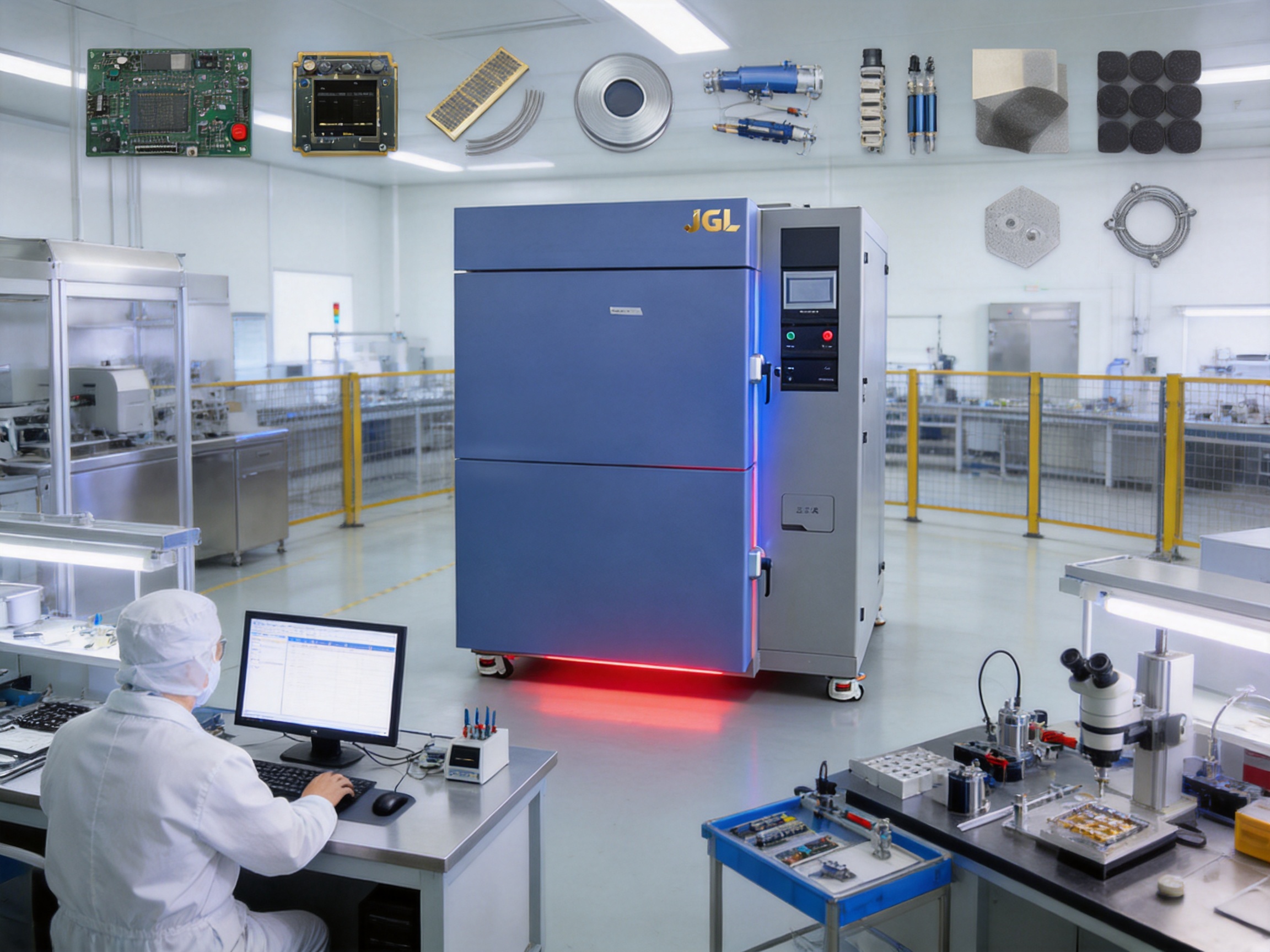
Electronic modules, connectors, sensors, circuit assemblies, displays, control boards, and power devices can be evaluated under rapid temperature and humidity changes. Testing may reveal solder fatigue, insulation weakness, connector instability, coating failure, corrosion, seal degradation, or intermittent electrical behavior.
Engineers can combine environmental exposure with electrical monitoring. A sample may be powered during the cycle, connected to a data-acquisition system, or inspected at predetermined intervals. This allows functional degradation to be correlated with specific temperature and humidity events.
Automotive Components
Automotive products may be exposed to cold starts, engine-compartment heat, vehicle interior humidity, condensation, road-related moisture, and rapid changes between storage and operation. Sensors, electronic control modules, lighting components, connectors, displays, switches, and small actuators can benefit from controlled environmental testing.
Testing can be used during design validation, supplier qualification, production auditing, and failure analysis. The compact chamber is particularly suitable for components and subassemblies that do not require full-vehicle testing.
Batteries and Energy-Storage Products
Temperature has a strong effect on battery performance, charging behavior, internal resistance, capacity, and safety. Humidity may affect external insulation, connectors, housings, protective coatings, and electronic battery-management components.
The chamber can support controlled environmental exposure for small battery units and related components, provided that the sample’s energy level and failure modes are compatible with the chamber and that appropriate safety measures are implemented. Testing should be designed by qualified personnel with suitable emergency procedures.
Materials and Polymer Products
Polymers, elastomers, adhesives, coatings, composite materials, and sealants may change in strength, flexibility, adhesion, dimensions, and appearance after exposure to combined thermal and moisture stress. Rapid cycling can accelerate the effects of expansion, contraction, absorption, desorption, and interface fatigue.
Material samples can be evaluated before and after cycling using dimensional measurements, visual inspection, tensile testing, electrical testing, hardness measurement, adhesion testing, or other appropriate methods.
Aerospace and High-Reliability Components
Aerospace and other high-reliability industries require evidence that components can tolerate demanding environmental conditions. Compact electronic assemblies, sensors, control devices, connectors, materials, and mechanical interfaces may be exposed to carefully defined thermal and humidity profiles before additional vibration, altitude, or functional testing.
Environmental testing should be integrated into the broader qualification strategy. The chamber can provide one part of a multi-factor reliability program, helping engineers identify weaknesses before more complex system-level evaluations.
Research and Development
Research laboratories can use the U5QTH-150-A/W to compare design concepts, investigate material behavior, simulate field conditions, and develop accelerated test methods. The ability to select different temperature-change rates is useful when researchers need to understand how failure behavior changes with the severity of the transition.
Recommended Testing Workflow
A reliable test begins before the sample is placed in the chamber. Engineers should define the purpose of the test, the target environmental profile, the sample configuration, the duration, the measurement method, and the acceptance criteria.
Step One: Define the Environmental Profile
Specify the initial temperature, final temperature, ramp rate, humidity condition, dwell time, number of cycles, and recovery criteria. If the test is based on an external standard, record the applicable edition and any permitted deviations.
Step Two: Review Sample Compatibility
Confirm that the sample can safely withstand the selected temperature and humidity conditions. Consider batteries, capacitors, pressurized parts, volatile materials, chemical compatibility, electrical insulation, and possible failure consequences.
Step Three: Plan the Fixture and Loading Arrangement
Use fixtures that support the sample without restricting airflow. Leave suitable clearance around the sample and avoid placing it directly against chamber walls unless the test method specifically requires that arrangement. If cables are routed through a port, verify that the port is sealed appropriately.
Step Four: Verify Sensors and Measurement Equipment
Check that external measurement sensors are calibrated and suitable for the planned temperature and humidity range. Measurement devices should not interfere with door sealing, airflow, or sample operation.
Step Five: Confirm Chamber Condition
Inspect the interior, door gasket, condensate tray, drain path, fan operation, electrical connections, and visible refrigeration components. Remove residues and confirm that the chamber is clean and dry when required by the test plan.
Step Six: Run the Program and Monitor the Sample
Record chamber data, sample data, alarms, and observations throughout the test. Functional monitoring is often more useful than a final pass-or-fail inspection because it can show when degradation begins and whether it is associated with a particular transition.
Step Seven: Evaluate Results and Maintain Traceability
Compare the results with the acceptance criteria. Retain the test profile, chamber data, sample identification, fixture information, calibration records, and any abnormalities. Traceable records are important for design decisions, customer reports, audits, and future failure analysis.
Installation and Maintenance Considerations
The physical dimensions and weight of the system require careful planning. With overall dimensions of approximately 780 millimeters wide, 1,700 millimeters deep, and 1,810 millimeters high, the chamber should be checked against doorways, elevators, corridors, and final installation clearances before shipment.
The listed weight of approximately 950 or 1,000 kilograms means that floor loading must be evaluated. The installation site should provide a stable and level foundation capable of supporting the equipment and any dynamic loads associated with operation or service.
Clearance around the chamber is necessary for heat dissipation, service access, electrical inspection, and ventilation. The exact clearance requirements depend on the final configuration and should be confirmed with the supplier’s installation documentation.
Routine maintenance should include cleaning the interior, inspecting the door gasket, checking the condensate tray and drain, examining electrical connections, confirming fan operation, and reviewing alarm records. Refrigeration performance should be assessed by qualified technicians according to the recommended service schedule.
Humidity performance may be affected by water quality, mineral deposits, blocked drains, sensor contamination, and residue on internal surfaces. A suitable water-management procedure can help protect the humidification system and reduce maintenance requirements.
Calibration should be performed at appropriate intervals using traceable instruments. The interval depends on use frequency, test criticality, operating severity, internal quality procedures, and applicable standards. Calibration should cover the sensors and measurement channels relevant to the intended test program.
Technical Specification Summary
| Item | Specification |
| Product model | U5QTH-150-A/W |
| Product type | Rapid thermal and humidity test system |
| Nominal capacity | 150 liters |
| Selectable temperature-change rates | 5, 10, 15, and 20 degrees Celsius per minute |
| Available temperature range options | Approximately -40 to +150 degrees Celsius or -70 to +180 degrees Celsius, depending on configuration |
| Working-space dimensions | Approximately 500 millimeters wide by 500 millimeters deep by 600 millimeters high |
| Overall dimensions | Approximately 780 millimeters wide by 1,700 millimeters deep by 1,810 millimeters high |
| Listed machine weight | Approximately 950 or 1,000 kilograms, depending on configuration |
| Interior material | Mirror-finished stainless steel with protective film |
| Control method | Dynamic PID regulation and water vapor partial pressure control |
| Door structure | Adjustable damped hinge mechanism |
| Circulation fan | Panasonic fan with high-temperature-resistant bearings rated up to 200 degrees Celsius |
| Condensate management | Full-size stainless-steel condensate tray |
| Safety feature | Leakage protection |
The duplicated temperature, dimension, and weight entries in the supplied product information indicate that more than one configuration may be available. Buyers should request a final technical datasheet that identifies the exact temperature range, ramp performance, humidity range, power requirements, refrigerant arrangement, control interface, and safety options for the selected model.
How the System Supports Better Test Data
Good environmental equipment improves test data in several ways. First, stable control reduces the difference between the programmed condition and the actual condition surrounding the sample. Second, uniform airflow reduces exposure differences within the working space. Third, repeatable ramp rates allow tests to be compared across design iterations. Fourth, reliable condensation management reduces the risk of unplanned water-related disturbances.
The system’s durable construction also supports data continuity. A chamber that requires frequent unscheduled repairs can interrupt long-duration programs and create gaps in the test record. High-temperature fan bearings, corrosion-resistant interior materials, robust electrical components, and a stainless-steel condensate tray all contribute to dependable operation when properly maintained.
Data quality also depends on how the chamber is used. Overloading, blocked airflow, incorrect sensor placement, poor sample preparation, inadequate calibration, and inconsistent loading can reduce repeatability. The equipment provides a strong technical platform, but laboratory discipline remains essential.
Customization and Project Support
Different industries may require different combinations of temperature range, humidity control, access ports, sample fixtures, electrical feedthroughs, recording functions, and safety interlocks. A supplier with dedicated research and development capability can be better positioned to adapt the equipment to specific applications.
JIANGSU BAISHENG INDUSTRIAL CO., LTD. presents itself as a manufacturer and technology-driven enterprise rather than only a trading intermediary. Its stated focus on precision design, product development, customized solutions, and international cooperation may support projects that require more than a standard catalog chamber.
When discussing a customized project, the buyer should provide detailed information about the sample size, mass, heat generation, operating voltage, number of cables, required humidity range, temperature profile, ramp rate, test duration, safety concerns, laboratory utilities, and data-recording requirements. Clear application information allows the manufacturer to select an appropriate configuration and identify potential limitations before production.
Technical communication should also cover factory acceptance testing, documentation, packaging, transportation, installation, commissioning, calibration, spare parts, warranty conditions, operator training, and after-sales service. These factors influence the total value of laboratory equipment over its complete service life.
Conclusion
The U5QTH-150-A/W Rapid Thermal and Humidity Test System is designed for laboratories and manufacturers that need controlled, repeatable, and relatively rapid environmental transitions in a 150-liter working volume. Its selectable ramp rates, dynamic PID control, water vapor partial pressure regulation, durable stainless-steel chamber, adjustable door hinge, high-temperature circulation fan, leakage protection, and condensate-management design address many of the practical challenges associated with combined temperature and humidity testing.
Compared with a basic constant-temperature cabinet, the system offers greater flexibility for accelerated reliability studies and thermal cycling. Compared with a simple humidity chamber, it provides stronger support for rapid temperature transitions and demanding low- or high-temperature operation. Its advantages are further supported by a manufacturing approach centered on research and development, precision engineering, component quality, structural fabrication, refrigeration integration, and application-oriented customization.
The system can serve electronics, automotive, aerospace, battery, materials, energy-storage, and general product-development applications. To achieve the best performance, users should select the correct configuration, plan the installation carefully, follow loading and maintenance procedures, calibrate the relevant sensors, and develop a test method appropriate to the sample’s risk profile.
Frequently Asked Questions
What is the primary purpose of the U5QTH-150-A/W?
The system is used to expose products, components, materials, and assemblies to controlled temperature and humidity conditions, including programmed rapid temperature changes. It supports reliability testing, accelerated aging, environmental qualification, research and development, and quality assurance.
What is the chamber capacity?
The nominal chamber capacity is 150 liters. The listed working-space dimensions are approximately 500 millimeters wide, 500 millimeters deep, and 600 millimeters high.
What temperature ranges are available?
The supplied information lists two configuration options: approximately -40 to +150 degrees Celsius and approximately -70 to +180 degrees Celsius. The exact range depends on the selected configuration and should be confirmed in the final quotation and technical datasheet.
Which temperature-change rates can be selected?
The listed selectable rates are 5, 10, 15, and 20 degrees Celsius per minute. Actual performance may vary with sample mass, chamber loading, starting condition, humidity, and other test parameters.
How does the system regulate humidity?
The system uses a balanced temperature and humidity control design that combines dynamic PID control with water vapor partial pressure regulation. This approach supports more coordinated control during temperature changes and humidity testing.
Why is air circulation important?
Air circulation helps distribute temperature and moisture evenly throughout the chamber. The system uses Panasonic circulation fans with high-temperature-resistant bearings rated up to 200 degrees Celsius to support airflow during demanding operation.
What is the purpose of the stainless-steel condensate tray?
The tray collects moisture generated during cooling and humidity operation. Its stainless-steel construction helps resist corrosion and protects the compressor and surrounding components from condensation-related damage.
Can the chamber be used for battery testing?
It can be suitable for certain battery and energy-storage component tests, provided that the sample is compatible with the chamber and the appropriate safety measures are implemented. Battery testing should include a documented risk assessment and may require additional monitoring or protective equipment.
What industries can use this system?
Applications include electronics, electrical equipment, automotive components, aerospace parts, batteries, energy-storage products, polymers, composites, coatings, adhesives, and general materials research.
What should be confirmed before purchasing?
Buyers should confirm the exact temperature range, humidity range, ramp-rate conditions, power requirements, overall dimensions, machine weight, sample loading limits, control interface, data-recording options, safety provisions, installation requirements, calibration documentation, warranty, and service support.
How should the chamber be maintained?
Maintenance should include interior cleaning, door-gasket inspection, condensate-tray and drain inspection, fan checks, electrical inspections, calibration, alarm review, and qualified refrigeration service. The supplier’s maintenance schedule should be followed for the final configuration.
Does the chamber replace product-specific safety testing?
No. The chamber provides controlled environmental conditions but does not replace product-specific hazard analysis, certification, electrical safety testing, battery safety testing, or other required evaluations. The test plan must consider the risks associated with the sample.
References
1. JIANGSU BAISHENG INDUSTRIAL CO., LTD., Product Information for the U5QTH-150-A/W Rapid Thermal and Humidity Test System.
2. JIANGSU BAISHENG INDUSTRIAL CO., LTD., Company Profile, Manufacturing History, and Research and Development Information.
3. International Electrotechnical Commission, Environmental Testing Standards and Guidance for Electronic and Electrical Products.
4. International Organization for Standardization, Environmental Test Methods for Materials, Components, and Industrial Products.
5. American Society for Testing and Materials, Standard Practices for Temperature, Humidity, Thermal Cycling, and Accelerated Environmental Exposure.
6. General industrial guidance on environmental chamber operation, calibration, airflow management, condensation control, and laboratory safety.
Product: U5QTH-150-A/W Rapid Thermal and Humidity Test System

PREV:MSC300 Multi-Functional Cryogenic Chamber for Advanced Laboratory Applications
NEXT:Walk-In Dual-Layer Explosion-Proof Temperature and Humidity Chamber for Advanced Laboratory Testing
NEXT:Walk-In Dual-Layer Explosion-Proof Temperature and Humidity Chamber for Advanced Laboratory Testing
Interested in cooperation or have questions?
Featured Products
Related products
Quick Link
Contact Information
- Tel: +86-13861043568
- E-mail: 1840784112@qq.com
- Add: Tianting District, Changzhou City, Jiangsu Province, China, No. 6 Hecircuit
Scan Code
Copyright © JIANGSU BAISHENG INDUSTRIAL CO., LTD.
All Rights Reserved. Privacy Custom Precision Laboratory Testing Equipment Manufacturers
