 English
 Español
NEWS
NEWS
NEWS
NEWS
NEWS
NEWS
NEWS
NEWS
NEWS
NEWS
NEWS
NEWS
NEWS
NEWS
NEWS
NEWS

Deng Xinyi — Product After-Sales Support Specialist
Home / Author / Deng Xinyi — Product After-Sales Support Specialist / High-Precision Vacuum Cryogenic Sample Transfer Chambers for Reliable Laboratory Workflows
High-Precision Vacuum Cryogenic Sample Transfer Chambers for Reliable Laboratory Workflows
Content
- 1 Why Cryogenic Sample Transfer Requires Specialized Equipment
- 2 Overview of the CVC100 Transfer Chamber
- 3 Core Advantage One: Software-Controlled Electric Valves
- 4 Core Advantage Two: Integrated Liquid Nitrogen Cooling Trap
- 5 Core Advantage Three: Broad Instrument Compatibility
- 6 Advantages Compared with Conventional Transfer Approaches
- 7 Manufacturing Strengths and Engineering Approach
- 8 Application Areas
- 9 Workflow Design from Sample Preparation to Analysis
- 10 Technical Feature Summary
- 11 Why Supplier Capability Matters
- 12 Selection Considerations for Laboratory Buyers
- 13 Maintenance, Reliability, and Best Practices
- 14 Value for Research and Industrial Laboratories
- 15 Q&A
- 15.1 What is the primary purpose of the CVC100?
- 15.2 How does the chamber reduce frost contamination?
- 15.3 What instruments can be connected to the chamber?
- 15.4 Are custom interfaces available?
- 15.5 Why are software-controlled valves important?
- 15.6 Is the CVC100 suitable only for biological samples?
- 15.7 Does the chamber replace sample preparation equipment?
- 15.8 What should be confirmed before ordering?
- 15.9 How can the equipment support multiple users?
- 15.10 What is the company’s main strength as a supplier?
- 15.11 Can the system be integrated into a future laboratory expansion?
- 16 Conclusion
- 17 References
- 18 Product: CVC100 High-Precision Vacuum Cryogenic Sample Transfer Chamber for Laboratory Use
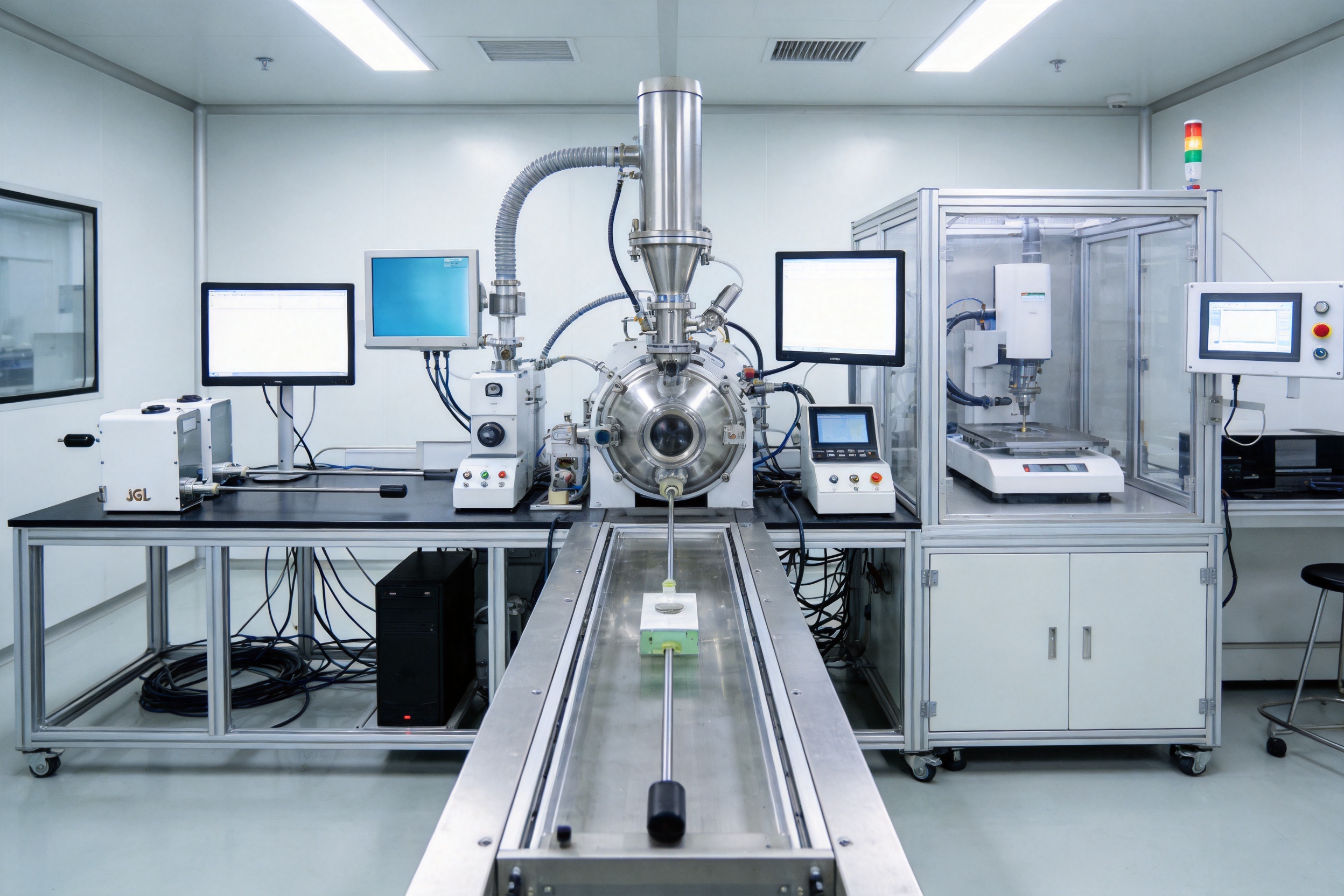
Modern microscopy and sample preparation workflows increasingly depend on the ability to preserve a specimen exactly as it was prepared. This requirement becomes especially demanding when samples contain water, volatile components, delicate surface structures, or temperature-sensitive phases. A transfer step that appears brief can still expose a frozen specimen to frost, contamination, pressure changes, warming, or mechanical disturbance. For laboratories working with electron microscopy, ion-beam preparation, cryogenic research, and advanced materials analysis, sample transfer is therefore not a simple transport task. It is a critical part of the experimental process.
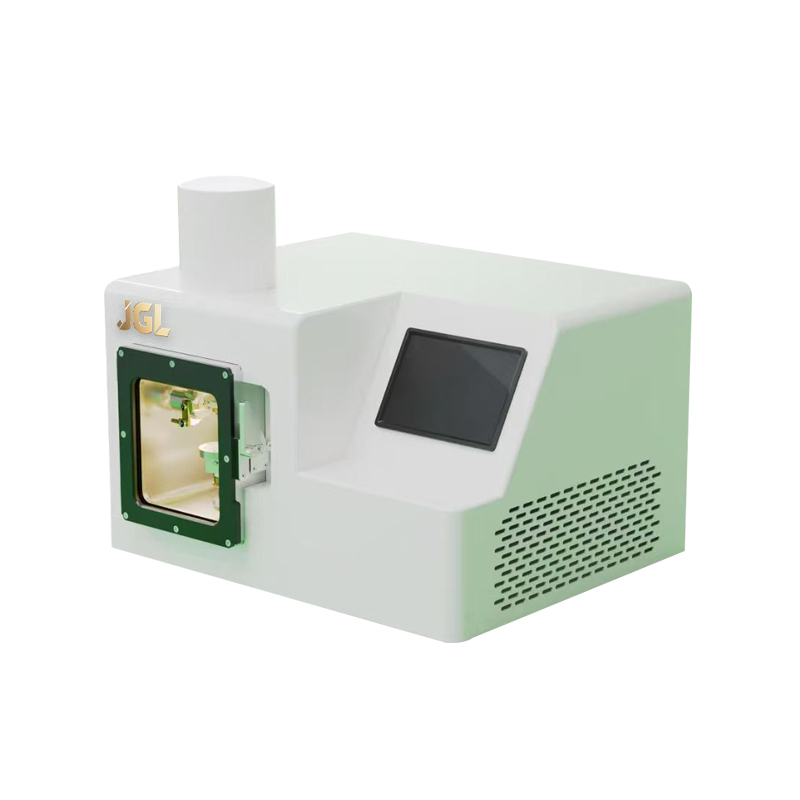
The CVC100 High-Precision Vacuum Cryogenic Sample Transfer Chamber is designed to address these challenges through a combined system of vacuum control, cryogenic cooling, automated operation, and instrument compatibility. Its purpose is to maintain sample integrity between preparation and analysis while reducing the environmental changes that can compromise results. By integrating software-controlled electric valves with a built-in liquid nitrogen cooling trap, the chamber supports a cleaner and more controlled transfer environment than conventional open or manually operated transfer methods.
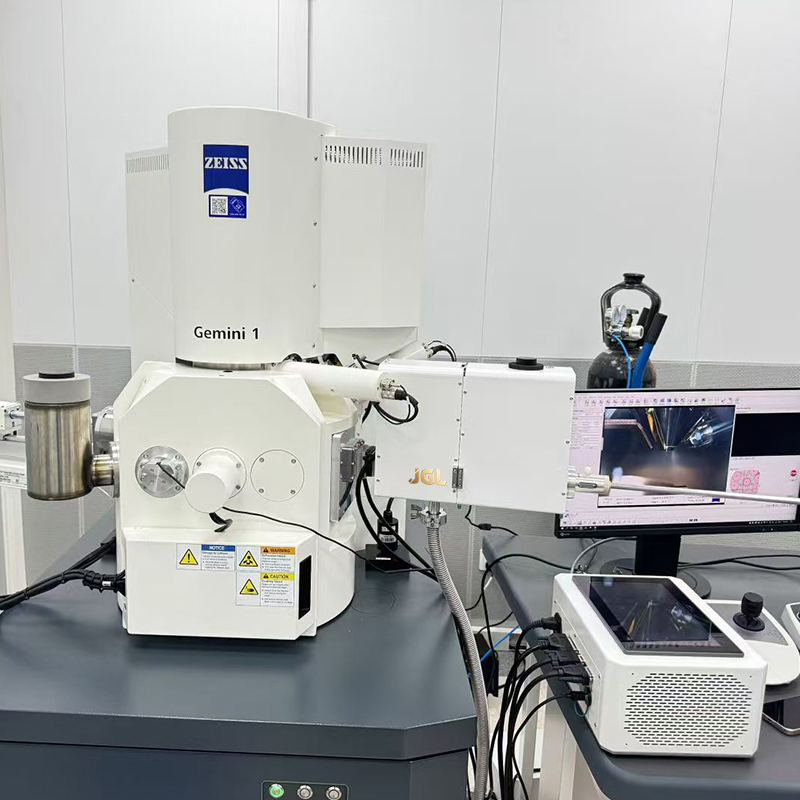
In addition to its core transfer function, the CVC100 is designed as a flexible connection point within a wider laboratory workflow. Standard or customized ports allow it to interface with scanning electron microscopes, focused ion beam scanning electron microscopes, ion polishing systems, ion thinning systems, coating instruments, glove boxes, and other sample preparation equipment. This flexibility makes it suitable for laboratories that need to connect several stages of preparation and analysis without repeatedly exposing the sample to ambient conditions.
Why Cryogenic Sample Transfer Requires Specialized Equipment
Frozen samples are vulnerable because their physical and chemical condition can change rapidly outside a controlled environment. When a water-containing specimen is transferred through ordinary laboratory air, moisture from the atmosphere may condense and freeze on its surface. This frost can obscure structural details, interfere with imaging, alter the surface chemistry, or make subsequent preparation steps less reliable.
Even when visible frost is not immediately apparent, airborne contaminants may settle on the sample holder or specimen. Organic residues, dust particles, and moisture can affect imaging quality and introduce uncertainty into analytical results. For high-resolution electron microscopy, a small amount of contamination can be significant. It may reduce contrast, create unwanted deposits under the electron beam, or complicate the interpretation of surface features.
Temperature stability is another important concern. A cryogenic specimen must remain sufficiently cold during transfer to prevent melting, sublimation, recrystallization, or other unwanted changes. The required temperature conditions depend on the sample and the method, but the general principle is consistent: the shorter and more controlled the exposure, the better the chance of preserving the original state.
Pressure also influences sample behavior. Under high-vacuum conditions, volatile substances can evaporate or sublimate. If the transfer environment is not properly controlled, the specimen may lose material, develop surface changes, or become contaminated by residual vapor. A dedicated vacuum cryogenic transfer chamber helps reduce these risks by enclosing the sample in a controlled environment during movement between systems.
Traditional transfer methods may rely heavily on manual valve operation, improvised containers, or repeated atmospheric exposure. These approaches can be adequate for simple samples, but they become less dependable as the required resolution, sample value, and workflow complexity increase. A specialized chamber provides a repeatable process that is easier to monitor, standardize, and integrate with laboratory procedures.
Overview of the CVC100 Transfer Chamber
The CVC100 is a high-precision vacuum cryogenic sample transfer chamber developed for laboratory applications where the preservation of frozen sample integrity is essential. It combines a vacuum transfer enclosure, software-controlled electric valves, and a large-area liquid nitrogen cooling trap surrounding the frozen sample holder.
The chamber is intended to create a controlled route between sample preparation and analytical equipment. Instead of moving a cryogenic sample through an uncontrolled atmosphere, the operator can use a vacuum-maintained pathway designed to minimize frost formation and exposure to contaminants. The system is especially relevant to workflows involving microscopy and cryogenic preparation, although its broad interface options support many other laboratory configurations.
Operation is managed through touchscreen controls and logical software sequences. This approach helps coordinate valve opening and closing, reduces unnecessary manual intervention, and provides a more consistent procedure from one transfer cycle to the next. The automation is not simply a convenience feature. It supports process discipline by ensuring that critical valve actions follow a defined sequence rather than depending entirely on operator timing.
The CVC100 is also designed with adaptability in mind. Laboratories often use equipment from different manufacturers or add new instruments over time. Through standard or custom-designed ports, the chamber can be incorporated into existing or planned laboratory layouts. This means that the system can function as part of a broader preparation and analysis platform instead of operating as an isolated device.
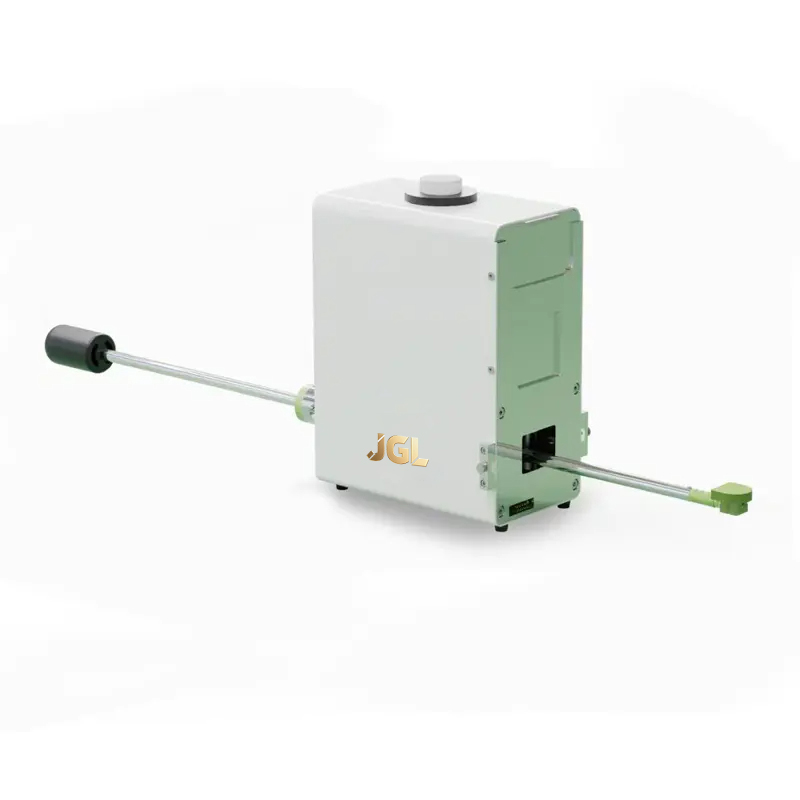
CVC100 High-Precision Vacuum Cryogenic Sample Transfer Chamber for Laboratory Use
Core Advantage One: Software-Controlled Electric Valves
Vacuum management is central to reliable cryogenic transfer. If valves are opened or closed at the wrong time, the chamber may lose vacuum, the sample may be exposed to an undesirable environment, or the transfer sequence may need to be repeated. The CVC100 addresses this issue through software-controlled electric valves operated using touchscreen controls.
The valve system is designed to maintain a high-vacuum environment within the transfer chamber. Rather than requiring the operator to manually coordinate several mechanical actions, the software manages the valve sequence according to programmed logic. This supports a more orderly workflow and helps prevent accidental operation that could compromise the sample.
Logical sequencing is particularly valuable when the chamber is connected to multiple instruments. A transfer path may involve isolation, evacuation, connection, and release steps. Each stage needs to occur in a suitable order. Software control makes it possible to define the operating sequence clearly, allowing laboratory personnel to follow a repeatable process.
The touchscreen interface also improves accessibility. Operators can view and control the chamber from a central interface instead of relying on a collection of separate manual controls. This can simplify training and reduce the likelihood of confusion when several valves or connections are involved. A clear interface is beneficial in laboratories where multiple users share the same equipment or where procedures must be standardized across shifts.
Another advantage is reduced human error. Manual valve operation may lead to incomplete closure, premature opening, or inconsistent timing. These mistakes can be difficult to identify after the fact because the sample may already have been exposed. Automated valve control does not eliminate the need for trained operators, but it helps limit avoidable errors by guiding critical actions through software-defined logic.
Controlled valve operation also contributes to process repeatability. When the same sequence is used for each transfer, the laboratory can establish more consistent handling conditions. Repeatability is important for comparative research, quality control, failure analysis, and any application where differences between samples must be distinguished from differences caused by handling.
Operational Safety and Process Control
Vacuum equipment requires careful operation because pressure differentials, connected instruments, and cryogenic materials create potential hazards. A software-controlled approach helps organize the process and can reduce unnecessary intervention near the chamber and its associated connections. The system supports a more deliberate operating routine, helping personnel focus on sample handling rather than manually managing every valve action.
For laboratories developing standard operating procedures, the CVC100 offers a practical foundation. A procedure can define how the chamber is evacuated, how the sample holder is isolated, how an instrument is connected, and how the transfer is completed. The resulting workflow is easier to communicate to new users and easier to reproduce during future experiments.
Core Advantage Two: Integrated Liquid Nitrogen Cooling Trap
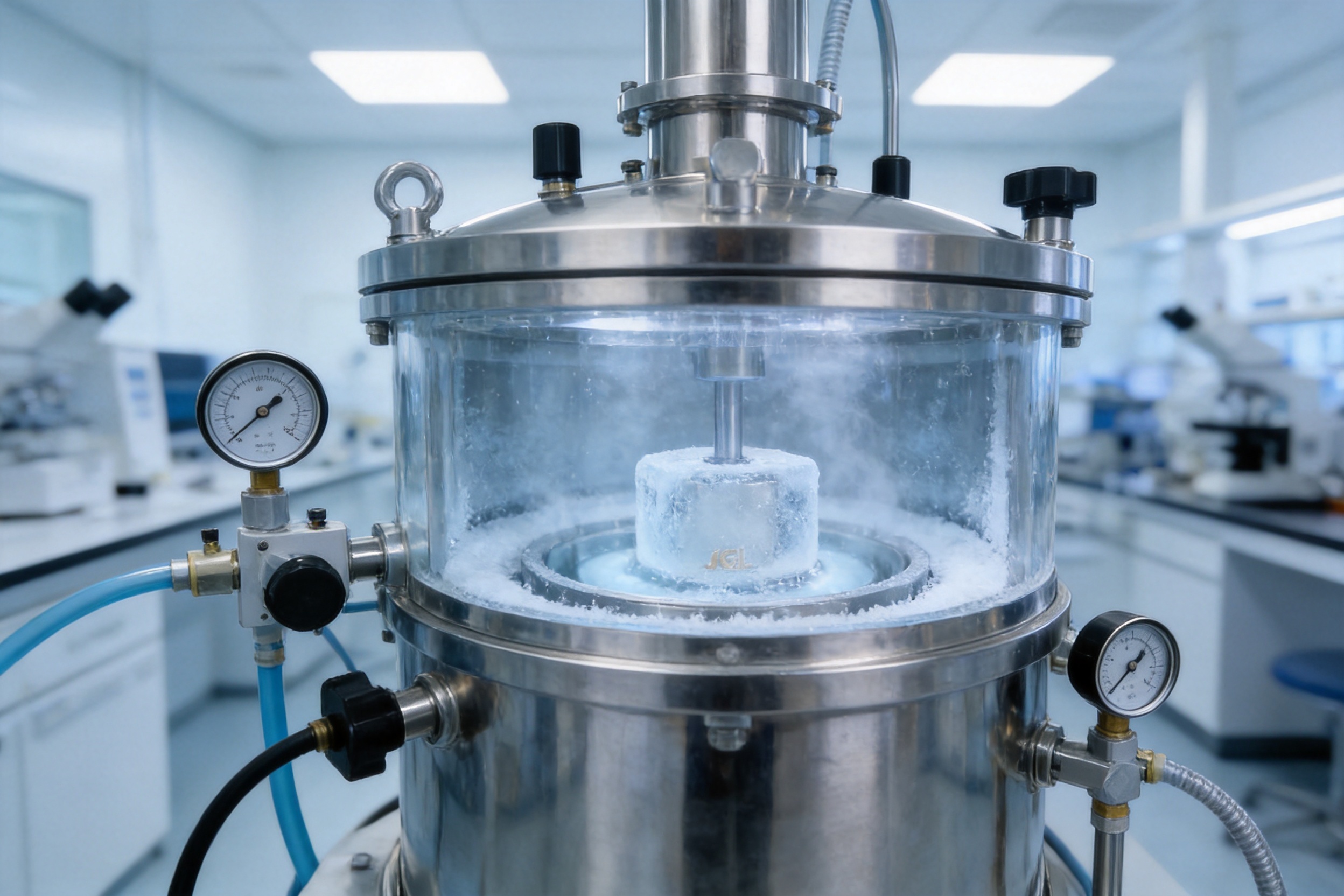
The CVC100 incorporates a large-area liquid nitrogen cooling trap surrounding the frozen sample holder. This feature is designed to reduce frost formation and contamination when handling water-containing frozen samples.
Frost contamination occurs when water vapor reaches a sufficiently cold surface and freezes. In a transfer environment, this can happen on the specimen, sample holder, chamber walls, or nearby components. A cooling trap provides a preferential cold surface that can capture moisture before it reaches the sample. By surrounding the holder with a large cooled area, the design supports a cleaner environment during transfer.
The cooling trap is important because contamination control cannot be separated from sample preservation. A specimen may remain frozen and still become unsuitable for high-quality analysis if frost obscures the surface. The trap therefore supports both temperature management and cleanliness.
For water-containing samples, frost can alter the apparent morphology of the surface. It may cover pores, particles, biological structures, interfaces, or fracture features. In microscopy, the resulting image may represent the frost layer rather than the specimen itself. By reducing this contamination, the CVC100 helps improve the likelihood that the observed structure reflects the original sample condition.
The liquid nitrogen trap also contributes to a more stable transfer environment. Cryogenic systems must be managed carefully because temperature gradients and residual vapor can influence the specimen. The integrated design places the cooling function directly around the sample-holder region rather than treating cooling as a separate external accessory.
Benefits for Water-Containing Frozen Samples
Water-containing samples are among the most sensitive materials to transfer. They may include biological specimens, hydrated materials, suspensions, emulsions, porous structures, and other samples whose properties depend on retained moisture. Atmospheric exposure can produce rapid condensation, while warming can cause structural changes that cannot be reversed.
By combining a vacuum environment with a liquid nitrogen cooling trap, the CVC100 is designed to minimize the two main sources of transfer-related damage: unwanted atmospheric exposure and frost deposition. The chamber does not replace appropriate sample preparation, freezing, or instrument-specific procedures, but it provides a controlled link between those procedures and the final analysis stage.
The cooling trap may also help reduce the need for repeated cleaning caused by frost buildup. Less contamination inside the transfer path can support more efficient operation and reduce interruptions between samples. Actual performance will depend on sample properties, loading practices, vacuum conditions, and the procedures used by the laboratory, but the integrated trap provides a strong technical foundation for contamination control.
Core Advantage Three: Broad Instrument Compatibility
A major strength of the CVC100 is its compatibility with a broad range of microscopy and sample preparation systems. The chamber can connect through standard or custom-designed ports, allowing it to serve laboratories with different equipment configurations.
Scanning electron microscopes are commonly used to examine surface morphology, fracture behavior, particles, coatings, and microstructural features. Cryogenic transfer can be important when the sample contains volatile components, moisture, or temperature-sensitive phases. The CVC100 helps create a controlled route from preparation to SEM analysis.
Focused ion beam scanning electron microscopes, often referred to as dual-beam electron microscopes, combine imaging with localized milling and cross-sectioning. These systems may be used to study internal structures, interfaces, defects, and layered materials. If the specimen must remain frozen or contamination-free before entering the FIB-SEM chamber, a vacuum cryogenic transfer device can help protect the prepared surface.
The CVC100 also supports integration with ion polishing systems and ion thinning systems. These preparation methods can be highly sensitive to surface condition. Frost or atmospheric contamination introduced before polishing may affect milling behavior, surface quality, or subsequent imaging. A controlled transfer step helps maintain continuity between cryogenic preparation and ion-based processing.
Coating instruments represent another important connection point. Many microscopy workflows require conductive or functional coatings before analysis. When a specimen moves from a cryogenic preparation environment to a coating instrument, exposure to ambient air may cause unwanted changes. The chamber can help connect these stages in a way that reduces uncontrolled handling.
Glove boxes and other specialized preparation equipment can also be integrated into the workflow. This is useful for laboratories handling air-sensitive, moisture-sensitive, hazardous, or highly reactive materials. The ability to design ports for different systems gives the chamber greater practical value than a fixed-purpose transfer container.
Standard and Custom Connections
Laboratories often have unique layouts, chamber interfaces, sample holders, and instrument requirements. A product that only supports one fixed connection standard may require expensive modifications or prevent full integration with existing equipment. The CVC100 addresses this challenge by supporting both standard and custom-designed ports.
Standard ports can simplify installation where compatible interfaces are already available. Custom ports provide a route for more specialized applications, including unique microscope configurations, dedicated preparation modules, or research systems developed in-house. This design philosophy allows the equipment to adapt to the laboratory rather than forcing the laboratory to redesign its entire workflow around the equipment.
Compatibility should always be confirmed during the technical planning stage. Port dimensions, vacuum requirements, sample-holder geometry, connection orientation, operating temperatures, and instrument-specific procedures may vary. However, the product’s flexible interface concept provides a practical basis for this technical coordination.
Advantages Compared with Conventional Transfer Approaches
When evaluating a cryogenic transfer solution, laboratories may compare a dedicated vacuum chamber with open-air transfer, manually operated vacuum containers, or systems designed for only one microscope platform. The CVC100 offers several advantages within this comparison.
Reduced Atmospheric Exposure
Open-air handling exposes a frozen sample to humidity, dust, and laboratory contaminants. Even a short transfer can create frost or surface deposits. A vacuum cryogenic chamber provides an enclosed route that reduces direct atmospheric exposure and supports more controlled handling.
More Consistent Operation
Manual systems depend strongly on operator skill and timing. While trained personnel remain essential, automated electric valves and software-controlled sequences make the operating process more consistent. This is particularly helpful when several users perform the same task or when a laboratory needs to document and standardize its workflow.
Improved Contamination Management
A separate cooling accessory may not provide the same level of integration as a built-in liquid nitrogen trap positioned around the sample holder. The CVC100 is designed with a dedicated cooling area that helps collect moisture and reduce frost contamination near the specimen.
Greater Workflow Flexibility
Single-instrument transfer devices may work well for a narrowly defined application but can become limiting when laboratory needs change. The CVC100 supports connection to SEM, FIB-SEM, ion polishing, ion thinning, coating, glove box, and other equipment. This broader compatibility can help laboratories build a more flexible and scalable workflow.
Lower Risk of Handling-Related Variability
When samples are repeatedly removed, repositioned, or exposed during transfer, results may vary because of handling rather than actual sample differences. A dedicated chamber reduces the number of uncontrolled steps. This can support more reliable comparisons, especially in research programs involving many specimens or long-term data collection.
Manufacturing Strengths and Engineering Approach
The performance of a vacuum cryogenic transfer chamber depends not only on its visible features but also on the quality of its engineering and manufacturing process. The equipment must bring together vacuum technology, cryogenic design, electronic control, mechanical fabrication, interface engineering, and application support. A weakness in any one of these areas can affect the overall reliability of the system.
JIANGSU BAISHENG INDUSTRIAL CO., LTD. was founded in 2010 as a technology-driven enterprise focused on high-end laboratory equipment and safety testing instruments. Its development model combines research and development with professional international trade experience. This combination is important for specialized laboratory equipment because successful delivery involves more than manufacturing a physical product. It also requires understanding technical specifications, export requirements, installation conditions, and customer workflows.
The company’s roots extend to a research and development studio established in 2013 by engineers with backgrounds in electronic testing, laboratory equipment, and safety compliance testing. In 2016, the organization developed into an enterprise and completed its first independently developed production line. This progression provided a foundation for moving from technical concepts to repeatable product manufacturing.
In 2019, the company adopted a technology-plus-trade development strategy. This approach increased research and development investment, introduced additional technical talent, and expanded its overseas market activities. For a product such as the CVC100, international experience can be valuable because laboratories in different regions may use different instrument standards, documentation expectations, and installation environments.
By 2022, the company had further improved its quality management system, and its products underwent rigorous technical specification certification processes. Continued development through 2025 focused on product innovation, technological upgrading, intelligence, digitalization, and expanded application scenarios.
Research and Development Capability
The company identifies dedicated research and development as a central advantage over traditional trading-only suppliers. A specialized R&D team can contribute to precision design, product adaptation, and technical problem-solving. This is particularly relevant to vacuum cryogenic equipment, where product performance depends on the interaction between multiple systems rather than on a single component.
For the CVC100, the engineering challenge includes coordinating the chamber structure, valve-control logic, liquid nitrogen trap, sample-holder area, ports, and external instruments. The design must support high-vacuum maintenance while remaining practical for laboratory operation. It must also accommodate the need for safe and efficient sample handling.
An engineering-led manufacturing approach allows the supplier to evaluate customer requirements more carefully. If a laboratory has an unusual microscope interface or a specialized preparation sequence, a technical team can assess the application and determine whether a standard or custom port is appropriate. This creates a stronger path toward a useful solution than simply offering a fixed catalog product without workflow consultation.
Precision-Oriented Product Development
The company’s stated philosophy, “Precision in Craftsmanship, Innovation for the Long-Term,” reflects the demands of high-end laboratory equipment. Precision in this context involves careful attention to mechanical fit, operating sequence, vacuum maintenance, component integration, and user interaction.
Laboratory instruments are often expected to operate repeatedly under demanding conditions. A transfer chamber is not valuable only because it can work once. It must support reliable use over many cycles, different samples, and multiple connected instruments. Product development must therefore consider durability, maintainability, user training, interface clarity, and compatibility with future laboratory needs.
Long-term innovation also means recognizing that laboratory workflows evolve. A chamber initially used for SEM transfer may later need to support a coating system, a glove box, or a different cryogenic preparation module. Flexible port design and software-based control create opportunities for continued use as the laboratory expands.
Quality and Specification Management
Precision equipment requires clear specifications and controlled manufacturing. Quality management helps ensure that the finished product is consistent with its technical design. It also supports communication between engineering, production, inspection, packaging, and customer service teams.
For an international buyer, quality management is especially important because the equipment may be installed remotely. Clear documentation, consistent assembly, inspection procedures, and technical communication reduce uncertainty during delivery and commissioning. The company’s experience in international trade complements its engineering capability by supporting the practical requirements of cross-border equipment supply.
Customers should review the final technical specification for their application, including vacuum requirements, cryogenic operating practices, sample-holder dimensions, port configuration, control functions, installation conditions, and interface requirements. The CVC100’s design provides a flexible platform, while application-specific planning ensures that the delivered configuration matches the intended workflow.
Application Areas
Electron Microscopy
Electron microscopy is one of the most direct applications for a vacuum cryogenic transfer chamber. Frozen or moisture-containing samples may require a controlled route from preparation to the microscope. The CVC100 can be used to support transfer into SEM and related systems while reducing the likelihood of frost and atmospheric contamination.
Maintaining sample condition is particularly important when imaging surface structures, interfaces, particles, porous materials, biological features, or fracture surfaces. A cleaner transfer environment can improve the reliability of the resulting images and reduce the risk that contamination will be mistaken for a specimen feature.
FIB-SEM Workflows
FIB-SEM systems are used for detailed three-dimensional analysis, cross-section preparation, failure analysis, and microstructural investigation. Since focused ion beams can expose subsurface regions, the quality of the initial surface and the preservation of the sample state are important. A cryogenic vacuum transfer step may help protect the specimen before it enters the dual-beam instrument.
The chamber’s compatibility with custom interfaces is useful for laboratories that use specialized FIB-SEM stages or sample holders. Technical coordination is required to confirm the correct port and transfer geometry, but the underlying design supports integration with complex microscopy environments.
Ion Polishing and Ion Thinning
Ion polishing and ion thinning are used to prepare samples for transmission or high-resolution microscopy. These procedures can be sensitive to surface condition, contamination, and material loss. If a specimen has been prepared under cryogenic conditions, a controlled transfer chamber can help maintain continuity between preparation and ion processing.
Reducing frost contamination before ion treatment can also help prevent unnecessary artifacts during preparation. The exact benefit depends on the material, ion conditions, and sample geometry, but contamination control is a valuable part of a well-designed preparation workflow.
Coating and Surface Preparation
Coating instruments are used to apply conductive or functional layers to samples for microscopy and other analyses. The transition between cryogenic preparation and coating may be a sensitive step, particularly for samples whose surface properties can change in ambient air. The CVC100 can support a connected workflow that reduces uncontrolled exposure before coating.
Glove Boxes and Controlled-Atmosphere Equipment
Some samples must be protected from oxygen, humidity, or other atmospheric components. Glove boxes provide a controlled handling environment, but moving a sample between a glove box and another instrument can still introduce risk. Through appropriate ports and system planning, the CVC100 can serve as an intermediate transfer device within a controlled-atmosphere workflow.
Materials and Scientific Research
The CVC100 may be relevant to research involving hydrated materials, soft matter, porous structures, advanced composites, biological specimens, chemical products, and other samples that are vulnerable to warming or contamination. It can support laboratories seeking to preserve a prepared state until microscopy or further processing is available.
Workflow Design from Sample Preparation to Analysis
A successful transfer system should be considered as part of the complete laboratory workflow rather than as a standalone chamber. Before operation, the sample must be prepared and frozen according to the requirements of the selected method. The sample holder should be compatible with the chamber and the destination instrument. Ports and connection hardware should be verified before the experiment begins.
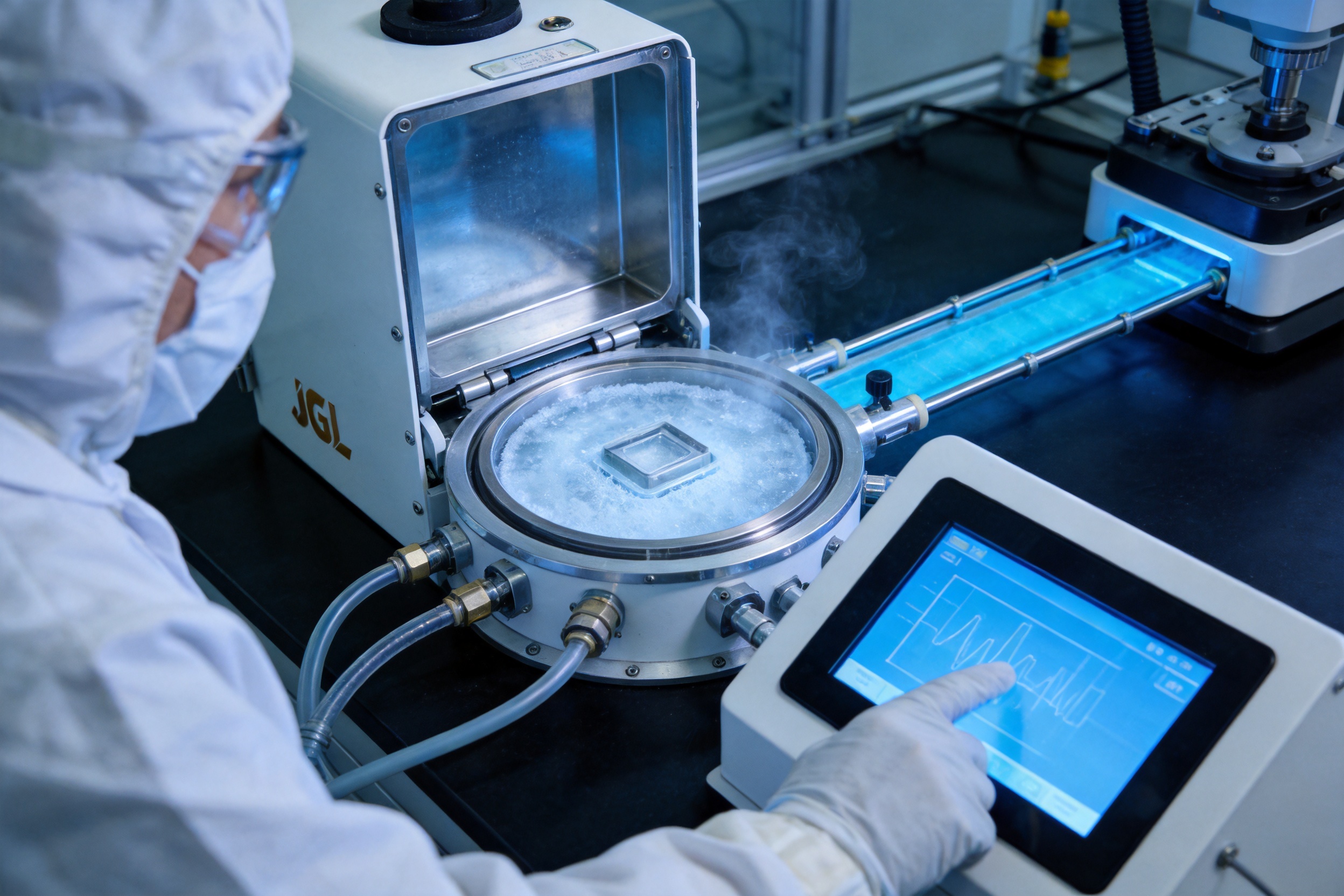
Once the sample is loaded, the operator can use the touchscreen interface to control the chamber’s valve sequence. The software-controlled electric valves help manage isolation and vacuum maintenance. The liquid nitrogen cooling trap is prepared to provide a cold surface around the sample-holder area and to reduce moisture-related contamination.
During transfer, the operator should follow the approved laboratory procedure and observe all cryogenic and vacuum safety requirements. The chamber should be connected to the destination instrument through the appropriate port. If a custom interface is used, mechanical fit, sealing, alignment, and operational compatibility should be confirmed in advance.
After the sample reaches the destination instrument, the receiving system’s procedure determines the next stage. This may include microscopy, ion milling, polishing, coating, or additional preparation. The CVC100’s role is to provide a controlled bridge between stages, minimizing the environmental changes that could occur during an unprotected transfer.
After use, the chamber and related components should be handled according to the laboratory’s maintenance procedure. Cryogenic equipment must be allowed to reach appropriate conditions before inspection or service. Regular attention to cleanliness, seals, valves, interfaces, and cooling-trap practices helps maintain dependable performance over time.
Technical Feature Summary
| Feature | Function | Practical Laboratory Benefit |
|---|---|---|
| Software-controlled electric valves | Manage valve opening and closing through logical software sequences | Supports repeatable operation, reduces manual errors, and simplifies vacuum control |
| Touchscreen control | Provides a centralized user interface for operating the chamber | Improves usability and supports standardized procedures |
| High-vacuum transfer environment | Maintains a controlled enclosure during sample movement | Reduces atmospheric exposure and helps protect sample condition |
| Large-area liquid nitrogen cooling trap | Captures moisture and reduces frost near the frozen sample holder | Helps minimize frost contamination for water-containing samples |
| Standard ports | Connect with compatible laboratory instruments | Facilitates integration with established equipment |
| Custom-designed ports | Adapt the chamber to specialized instruments and sample holders | Provides flexibility for complex or evolving workflows |
| Microscopy compatibility | Supports SEM and FIB-SEM connections | Enables controlled transfer into electron microscopy systems |
| Preparation-system compatibility | Supports ion polishing, ion thinning, coating, glove box, and related equipment | Allows the chamber to function as part of a broader preparation platform |
Why Supplier Capability Matters
Purchasing a specialized laboratory device involves more than comparing individual features. The supplier’s ability to understand the application, configure the equipment, provide technical documentation, and support integration can directly influence the success of the installation.
A supplier with both R&D and manufacturing capabilities can participate earlier in the process. Instead of treating the chamber as a standard item with limited adaptation, the supplier can evaluate the intended sample type, destination instrument, connection requirements, and operating sequence. This is valuable when a laboratory has specialized instruments or needs a custom interface.
International supply experience is another practical strength. Cross-border projects may involve technical clarification, export packaging, customs documents, installation planning, remote support, and communication across different time zones. A company experienced in international trade can help coordinate these non-technical elements alongside the engineering work.
JIANGSU BAISHENG INDUSTRIAL CO., LTD. combines laboratory equipment development with professional international trade expertise. Its product focus includes high-end laboratory equipment and safety testing instruments. The company’s history of technical development, independent production, quality-system improvement, and overseas market expansion supports its ability to serve customers seeking customized laboratory solutions made in China.
The company’s stated core values emphasize precision, innovation, integrity, and win-win cooperation. These values are relevant to custom equipment projects because the final result depends on close collaboration between the laboratory and the manufacturer. Clear communication about samples, instruments, environmental conditions, and intended use helps ensure that the selected configuration is appropriate.
Selection Considerations for Laboratory Buyers
Before ordering a vacuum cryogenic sample transfer chamber, the laboratory should define the sample type and the environmental risks that must be controlled. Important questions include whether the sample contains water, whether it must remain frozen throughout the transfer, whether it is sensitive to oxygen or humidity, and whether the sample surface must remain free from frost.
The destination instrument should also be identified in detail. A general description such as “electron microscope” may not be sufficient for interface planning. The laboratory should confirm the model, chamber connection, sample-holder dimensions, available access points, and any instrument-specific transfer requirements.
Port configuration is another key consideration. Standard ports may be suitable for common connections, while custom ports may be required for specialized systems. The location, orientation, diameter, sealing method, and mechanical support of each port should be evaluated before production.
Operators should consider how the device will fit into the laboratory’s existing safety procedures. Liquid nitrogen handling, vacuum operation, electrical controls, ventilation, personal protective equipment, and emergency procedures all require attention. A suitable installation location should provide adequate working space and allow safe access to the chamber and connected instruments.
Laboratory managers should also consider user training and documentation. Since the CVC100 uses software-controlled valve sequences, users should understand the operating logic, transfer procedure, alarm or interruption response, and shutdown process. A written standard operating procedure can help maintain consistency among operators.
Finally, the laboratory should assess future needs. If new microscopy or preparation systems may be added, a flexible transfer chamber with custom-port capability may offer greater long-term value than a narrowly configured device. The ability to support several stages of a workflow can help protect the original investment as research programs develop.
Maintenance, Reliability, and Best Practices
Reliable performance begins with proper sample preparation and loading. The sample holder should be clean, compatible, and positioned correctly. Operators should avoid unnecessary delays between preparation and loading, because the quality of the final analysis depends on the entire handling sequence.
The liquid nitrogen cooling trap should be used according to the laboratory’s approved procedure. Operators should understand how to fill, monitor, and safely manage the cryogenic coolant. The cooling area should be kept free from avoidable residues, and any maintenance should be performed only after the system reaches a safe condition.
Valve operation should follow the software-defined sequence. Operators should not bypass the normal control procedure unless authorized by the technical documentation or service personnel. If an unexpected pressure condition, connection issue, or software interruption occurs, the transfer should be paused and handled according to the laboratory’s emergency or troubleshooting procedure.
Connections and seals should be inspected regularly. A small leak or poorly fitted port can affect vacuum maintenance and reduce the quality of the transfer environment. Custom interfaces deserve particular attention because they may be used less frequently or may have been designed for a unique instrument configuration.
Cleanliness is essential. The chamber, sample-holder area, and ports should be protected from dust, oil, moisture, and other contaminants. Cleaning methods must be compatible with the materials and vacuum requirements of the equipment. The laboratory should maintain records of inspection, cleaning, service, and any unusual operating events.
Preventive maintenance can help identify issues before they affect valuable samples. A maintenance plan may include checking valve response, reviewing control functions, inspecting port seals, assessing the condition of the cooling-trap area, and confirming that the connected instruments remain compatible with the transfer procedure.
Value for Research and Industrial Laboratories
For research laboratories, the CVC100 can help improve confidence in experiments where sample condition is central to the result. Better transfer control may reduce failed preparations, repeat experiments, and uncertainty caused by contamination. It can also make complex workflows easier to organize when several instruments are involved.
For industrial laboratories, repeatability and process control are often equally important. Materials development, failure analysis, quality inspection, and process verification may require consistent handling across multiple samples. Software-controlled valves and a defined transfer environment support a more standardized approach than informal manual transfer.
For institutions operating shared facilities, the chamber’s broad compatibility can make it useful across different research groups. One group may use the system for SEM transfer, another for FIB-SEM preparation, and another for connection to coating or ion-processing equipment. A flexible configuration can increase equipment utilization while reducing the need for separate transfer devices for every instrument.
For equipment integrators and laboratory planners, the support for standard and custom ports creates opportunities to incorporate the chamber into new systems. It may be specified as part of a larger sample-preparation line, a controlled-atmosphere platform, or a microscopy preparation suite.
Q&A
What is the primary purpose of the CVC100?
The primary purpose is to transfer frozen or cryogenically prepared samples in a controlled vacuum environment while reducing frost formation, atmospheric exposure, and contamination. It is designed to help preserve sample integrity between preparation and microscopy or further processing.
How does the chamber reduce frost contamination?
The chamber uses a large-area liquid nitrogen cooling trap positioned around the frozen sample holder. The cold trap helps collect moisture and reduce the amount of water vapor that reaches the sample area, thereby minimizing frost formation and contamination.
What instruments can be connected to the chamber?
The CVC100 is designed to connect with scanning electron microscopes, focused ion beam scanning electron microscopes, ion polishing systems, ion thinning systems, coating instruments, glove boxes, and other sample preparation equipment. Standard or custom-designed ports can be considered according to the application.
Are custom interfaces available?
The chamber supports custom-designed ports for laboratories with specialized instruments, unusual sample holders, or nonstandard workflow requirements. Technical details should be reviewed before production to confirm dimensions, sealing, alignment, and operating compatibility.
Why are software-controlled valves important?
Software-controlled valves help coordinate the opening and closing sequence required for vacuum maintenance and sample transfer. They reduce dependence on manual timing, support repeatable operation, and help minimize errors during complex transfer procedures.
Is the CVC100 suitable only for biological samples?
No. Although it is particularly useful for water-containing frozen samples, the chamber can also support materials research, porous structures, hydrated materials, advanced composites, chemical specimens, and other samples that are sensitive to warming, moisture, or atmospheric contamination.
Does the chamber replace sample preparation equipment?
No. The CVC100 is a transfer device and workflow integration component. It does not replace freezing, coating, ion polishing, microscopy, or other preparation processes. Its role is to provide a controlled connection between those stages.
What should be confirmed before ordering?
The laboratory should confirm the sample type, cryogenic requirements, destination instrument, sample-holder dimensions, port configuration, vacuum requirements, installation conditions, control preferences, safety procedures, and any custom interface needs.
How can the equipment support multiple users?
The touchscreen interface and logical software-controlled sequences can help standardize operation. A laboratory can establish a written procedure so that trained users follow the same transfer steps, reducing variation between operators.
What is the company’s main strength as a supplier?
JIANGSU BAISHENG INDUSTRIAL CO., LTD. combines dedicated research and development with manufacturing and international trade experience. This combination supports product customization, technical communication, quality management, and delivery of laboratory equipment for different application environments.
Can the system be integrated into a future laboratory expansion?
Its broad instrument compatibility and support for custom-designed ports make it suitable for laboratories planning to expand or modify their workflows. Future integration should still be evaluated technically to ensure that new equipment is compatible with the chamber’s interfaces and operating requirements.
Conclusion
The CVC100 High-Precision Vacuum Cryogenic Sample Transfer Chamber addresses a critical challenge in advanced laboratory work: moving sensitive frozen samples without sacrificing their original condition. Its combination of software-controlled electric valves, touchscreen operation, high-vacuum maintenance, and an integrated liquid nitrogen cooling trap provides a structured approach to sample preservation.
Its compatibility with SEM, FIB-SEM, ion polishing, ion thinning, coating, glove box, and other preparation systems gives it value beyond a single instrument connection. Standard and custom ports allow the chamber to adapt to different laboratory layouts and evolving research requirements. Compared with open-air or heavily manual transfer methods, the system is designed to reduce atmospheric exposure, frost contamination, operator variability, and workflow limitations.
The product is supported by a company with a technology-focused history, an established research and development foundation, manufacturing experience, quality-system development, and international trade capability. This combination is important for laboratories seeking not only a chamber but also a practical and configurable equipment solution.
For laboratories working with cryogenic, hydrated, air-sensitive, or contamination-sensitive samples, controlled transfer should be treated as an essential part of the analytical process. By creating a cleaner, more repeatable connection between preparation and analysis, the CVC100 can help protect sample integrity and support more dependable laboratory results.
References
1. Laboratory Vacuum Technology: Principles of Vacuum Generation, Measurement, and Maintenance.
2. Cryogenic Sample Preparation Practices for Electron Microscopy.
3. Fundamentals of Liquid Nitrogen Trapping and Moisture Control in Vacuum Systems.
4. Scanning Electron Microscopy: Sample Preparation, Contamination Control, and Imaging Reliability.
5. Focused Ion Beam and Dual-Beam Microscopy: Preparation and Transfer Considerations.
6. Laboratory Equipment Quality Management and Technical Specification Practices.
7. General Guidance for Safe Handling of Liquid Nitrogen and Cryogenic Laboratory Equipment.
8. Standard Operating Procedure Development for Shared Research Facilities.
Product: CVC100 High-Precision Vacuum Cryogenic Sample Transfer Chamber for Laboratory Use
PREV:Precision Ground Bond Testing for Modern Electrical Safety and Automated Quality Control
NEXT:Rapid Thermal and Humidity Test Systems for Precision Environmental Reliability Testing
NEXT:Rapid Thermal and Humidity Test Systems for Precision Environmental Reliability Testing
Interested in cooperation or have questions?
Featured Products
Related products
Quick Link
Contact Information
- Tel: +86-13861043568
- E-mail: 1840784112@qq.com
- Add: Tianting District, Changzhou City, Jiangsu Province, China, No. 6 Hecircuit
Scan Code
Copyright © JIANGSU BAISHENG INDUSTRIAL CO., LTD.
All Rights Reserved. Privacy Custom Precision Laboratory Testing Equipment Manufacturers
