 English
 Español

NEWS
NEWS
NEWS
NEWS
NEWS
NEWS
NEWS
NEWS
NEWS
NEWS
NEWS
NEWS
NEWS
NEWS
NEWS
NEWS

Shen Yiru — International Sales Manager
Home / Author / Shen Yiru — International Sales Manager / U2T(H)-EXZ3-W Large Walk-In Explosion-Proof Thermal and Humidity Chamber: Precision Environmental Testing for High-Risk Applications
U2T(H)-EXZ3-W Large Walk-In Explosion-Proof Thermal and Humidity Chamber: Precision Environmental Testing for High-Risk Applications
Content
- 1 1. The Role of Large-Scale Environmental Testing
- 2 2. Product Overview and Main Specifications
- 3 3. Explosion-Proof Design for High-Risk Testing
- 4 4. Integrated Fire Detection and Suppression
- 5 5. Precision Temperature and Humidity Control
- 6 6. Rapid Water Injection and Emergency Adjustment
- 7 7. Frost-Free Technology for Year-Round Operation
- 8 8. Walk-In Accessibility and Practical Workflow
- 9 9. Applications Across Multiple Industries
- 10 10. Advantages Over Conventional Competitors
- 11 11. Advanced Manufacturing and Engineering Strengths
- 12 12. Recommended Manufacturing and Inspection Workflow
- 13 13. Installation, Commissioning, and Maintenance
- 14 14. How to Obtain the Best Test Results
- 15 15. Sustainability and Lifecycle Value
- 16 16. Selecting the Appropriate Configuration
- 17 17. Questions and Answers
- 17.1 Q1: What is the main purpose of the U2T(H)-EXZ3-W?
- 17.2 Q2: Why is a walk-in chamber preferable to a compact chamber?
- 17.3 Q3: What temperature ranges are available?
- 17.4 Q4: How does the chamber support fire safety?
- 17.5 Q5: What is the purpose of the explosion pressure relief device?
- 17.6 Q6: How does dynamic PID control improve testing?
- 17.7 Q7: What is the benefit of dual evaporators?
- 17.8 Q8: Can the chamber be used for battery testing?
- 17.9 Q9: Does the chamber require regular calibration?
- 17.10 Q10: Can the equipment be customized?
- 17.11 Q11: What should be considered before installation?
- 17.12 Q12: What makes this chamber different from a standard environmental chamber?
- 18 18. Conclusion
- 19 References
- 20 Product: U2T(H)-EXZ3-W Large Walk-In Explosion-Proof Thermal and Humidity Chamber
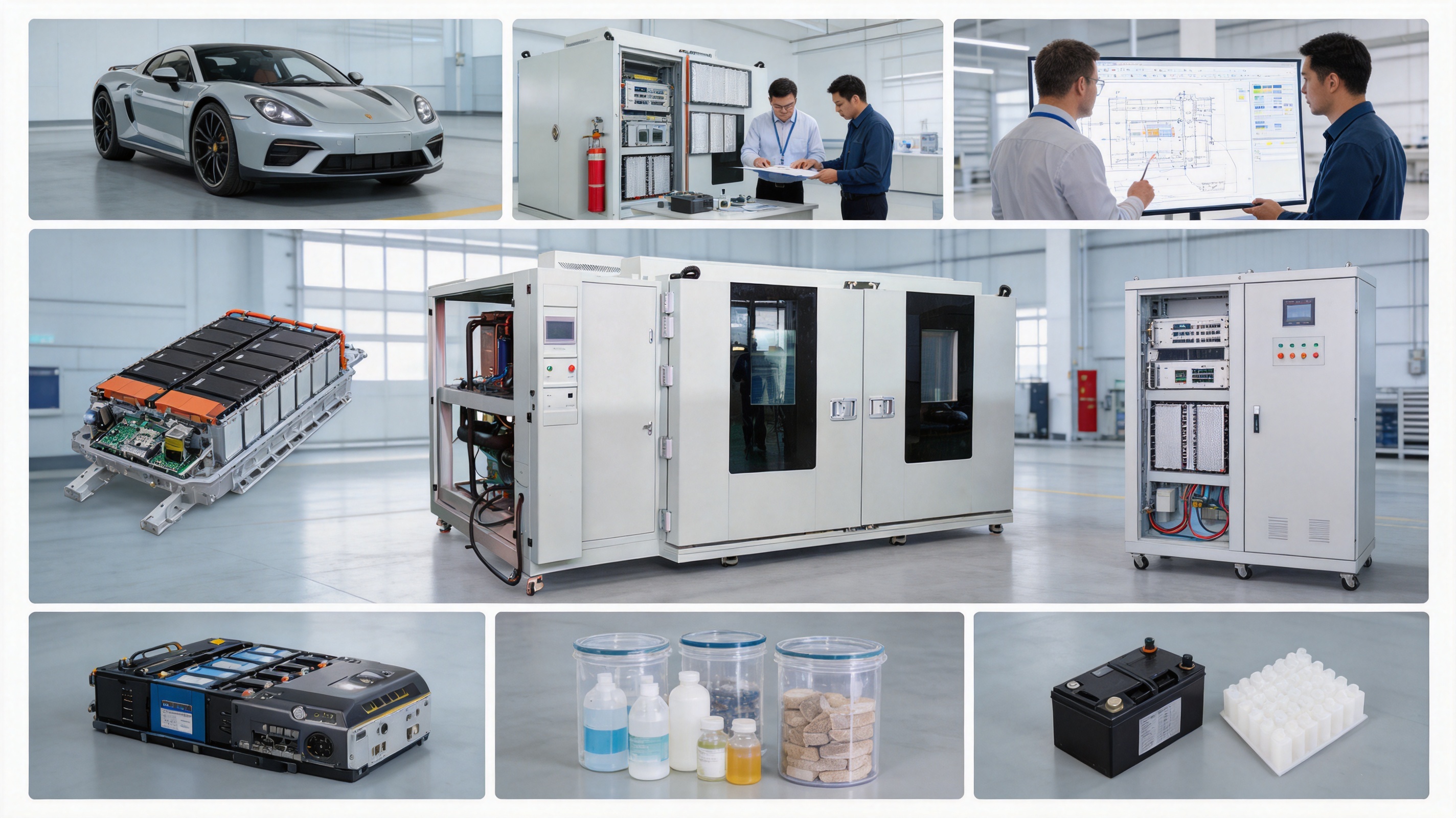
Modern products are increasingly required to operate safely and reliably under severe environmental conditions. Electronics may be exposed to rapid temperature changes, batteries may generate heat during abuse testing, chemical materials may react to humidity, and aerospace or automotive components may need to maintain performance after repeated thermal cycling. For these applications, a standard environmental chamber may not provide sufficient working volume, protection, or process control. A large walk-in explosion-proof thermal and humidity chamber is designed to address these demanding requirements by combining environmental simulation with enhanced safety engineering.
The U2T(H)-EXZ3-W is a large walk-in explosion-proof thermal and humidity chamber developed for controlled testing in potentially hazardous environments. It provides a spacious test area, broad temperature capability, humidity-control functions, explosion-protection features, automatic fire suppression, and safety mechanisms designed to manage abnormal pressure or fire-related events. Its configuration is suitable for industrial laboratories, production quality departments, research institutions, battery manufacturers, electronics companies, chemical-material developers, and other organizations that require repeatable environmental testing at a larger scale.
Unlike compact laboratory chambers that are primarily intended for small specimens, the U2T(H)-EXZ3-W is designed for products, assemblies, modules, and test systems that cannot be accommodated in a conventional cabinet-style chamber. Its walk-in structure supports easier loading, unloading, inspection, and arrangement of test items. At the same time, its explosion-proof construction and integrated emergency systems provide an additional layer of protection for tests involving flammable materials, high-energy batteries, chemical samples, or products that may release heat, smoke, vapor, or pressure during testing.
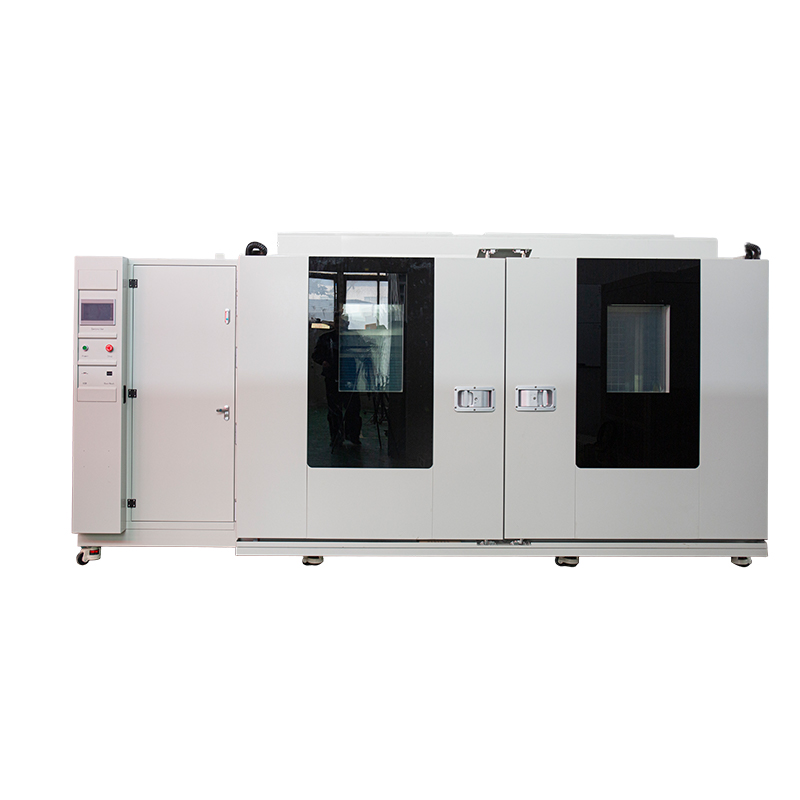
U2T(H)-EXZ3-W Large Walk-In Explosion-Proof Thermal and Humidity Chamber
1. The Role of Large-Scale Environmental Testing
Environmental testing is a critical part of product development and quality assurance. It helps manufacturers identify weaknesses before products are released into the market. By exposing products to controlled temperature and humidity conditions, engineers can study material expansion, contraction, corrosion, electrical insulation, condensation, sealing performance, battery behavior, mechanical fatigue, and long-term reliability.
For small components, a benchtop chamber may be adequate. However, many modern test programs involve complete battery packs, electrical cabinets, vehicle subsystems, aerospace assemblies, industrial control systems, or large batches of components. These products require more internal space and often generate greater heat or energy during testing. A large walk-in chamber provides the necessary capacity while allowing personnel to place specimens on racks, pallets, fixtures, or dedicated test frames.
Testing in a large chamber also improves production relevance. A small sample may perform well in a laboratory while a complete assembly behaves differently because of airflow restrictions, internal heat accumulation, complex wiring, or uneven moisture distribution. Testing the complete product or a realistic production configuration gives engineers more meaningful information. The 3000-liter capacity of the U2T(H)-EXZ3-W offers a practical working volume for larger specimens while maintaining a controlled test environment.
Safety becomes especially important when the test article can release flammable gas, experience thermal runaway, ignite, or generate an abnormal pressure rise. A conventional chamber may not be designed to manage those events. The U2T(H)-EXZ3-W addresses this risk through a combination of reinforced access features, explosion pressure relief devices, smoke detection, automatic fire extinguishing, fine water mist, and controlled environmental adjustment.
2. Product Overview and Main Specifications
The U2T(H)-EXZ3-W is categorized as a walk-in explosion-proof high- and low-temperature humidity test chamber. It is intended to simulate demanding temperature and humidity environments while maintaining a controlled and protected test space. Depending on the selected configuration, the temperature range is specified as either -40°C to +150°C or -70°C to +180°C. This allows the chamber to be matched to different testing programs, from general industrial qualification to more severe low-temperature and high-temperature evaluation.
The internal studio dimensions are listed as 3000 × 1000 × 1000 mm with a two-section configuration. The overall equipment dimensions are approximately 3460 × 2500 × 2740 mm. The stated capacity is 3000 liters. Product configurations may differ in refrigeration performance, insulation, heating capability, safety accessories, and total weight. The listed machine weight is approximately 1500 to 1600 kilograms, depending on the selected temperature range and configuration.
| Item | Specification or Configuration |
|---|---|
| Product model | U2T(H)-EXZ3-W |
| Equipment type | Large walk-in explosion-proof thermal and humidity chamber |
| Capacity | 3000 L |
| Temperature configuration | -40°C to +150°C |
| Alternative temperature configuration | -70°C to +180°C |
| Studio dimensions | 3000 × 1000 × 1000 mm, two-section configuration |
| Overall dimensions | 3460 × 2500 × 2740 mm |
| Approximate machine weight | 1500–1600 kg, depending on configuration |
| Primary control functions | Temperature and humidity regulation with dynamic PID control |
| Safety systems | Explosion-proof access features, smoke detection, fine water mist, fire suppression, and pressure relief |
Because environmental test requirements differ between industries, the chamber should be specified according to the intended specimen, test standard, loading method, ramp rate, humidity range, and safety risk. The stated specifications provide a foundation for customization and engineering review rather than replacing a project-specific technical confirmation.
3. Explosion-Proof Design for High-Risk Testing
The primary distinction between the U2T(H)-EXZ3-W and an ordinary thermal and humidity chamber is its focus on hazardous test conditions. Explosion-proof design is not limited to one component. It is a coordinated approach involving the chamber structure, doors, viewing areas, pressure management, detection systems, fire-control equipment, electrical arrangements, and operating procedures.
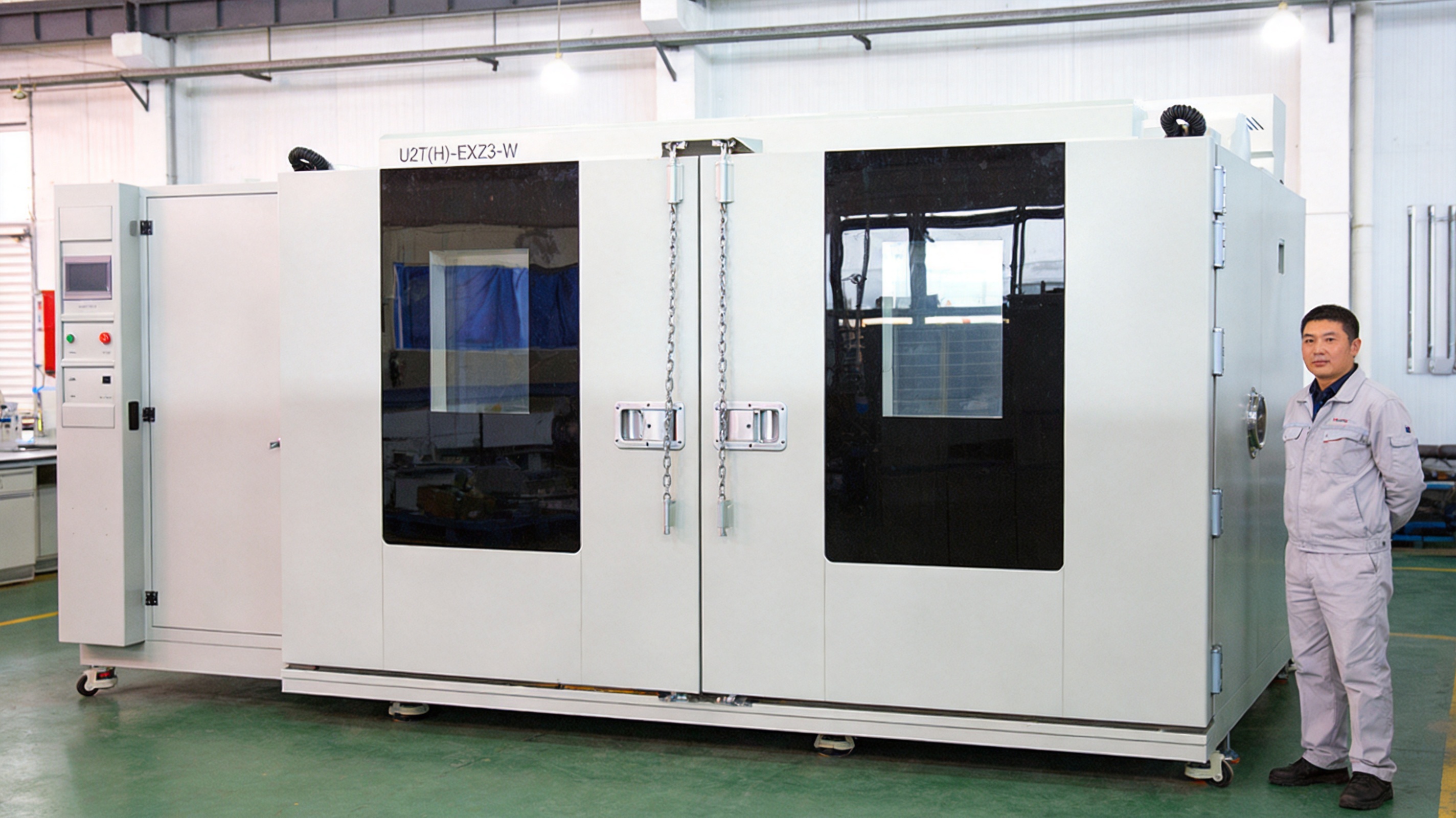
The chamber includes explosion-proof door chains and reinforced viewing panels. Door chains help control access and limit uncontrolled door movement during abnormal conditions. Reinforced viewing windows allow operators to observe the test area while reducing the need to open the chamber during operation. This is particularly valuable when a product is undergoing a high-temperature, high-humidity, or potentially unstable test.
Maintaining a closed test environment supports both safety and test accuracy. Frequent opening of a chamber can create temperature and humidity disturbances, introduce outside moisture, and expose operators to hazardous vapors or smoke. A secure door structure and protected viewing system allow personnel to monitor test progress with less disruption to the controlled environment.
Explosion pressure relief devices provide another important safeguard. If an unexpected event causes a rapid pressure increase, pressure relief components can help direct or release excess pressure in a controlled manner. This reduces stress on the chamber enclosure and supports structural protection. Pressure relief does not eliminate the need for safe test planning, but it provides an engineered response to abnormal pressure fluctuations.
Compared with basic environmental chambers, the U2T(H)-EXZ3-W therefore offers a more complete risk-management concept. Its safety functions are integrated into the chamber design rather than treated as optional external equipment. This makes it more suitable for organizations that need to combine environmental simulation with fire and explosion risk control.
4. Integrated Fire Detection and Suppression
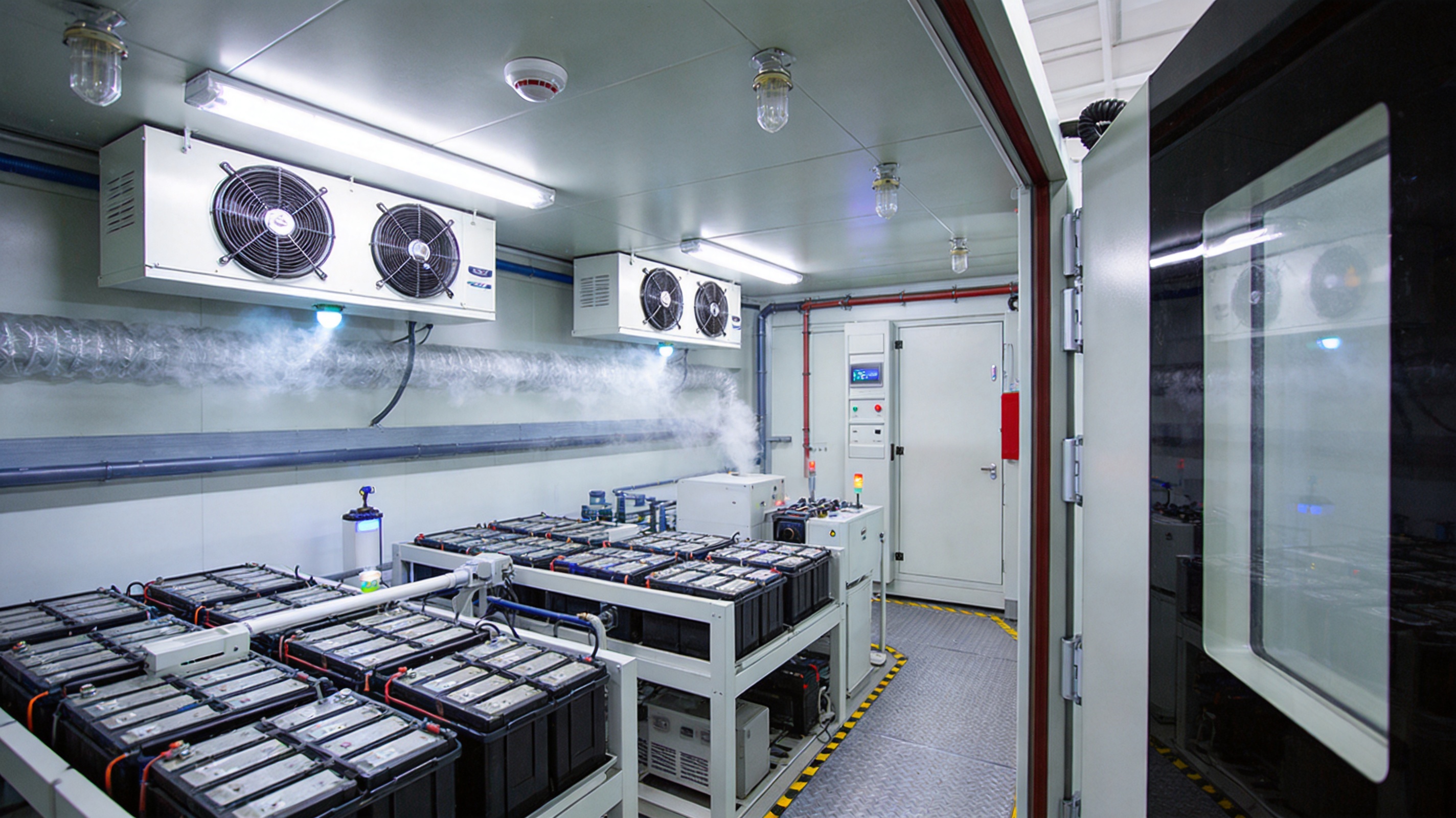
Products tested under extreme conditions may develop faults that produce smoke, flames, hot gases, or rapid temperature increases. Battery modules, power electronics, chemical samples, and polymer materials are examples of test articles that may present elevated fire risks. The U2T(H)-EXZ3-W incorporates smoke detection and an automatic fire extinguishing system to help respond rapidly when abnormal conditions occur.
The system uses fine water mist spray. Fine water mist can help absorb heat and suppress combustion while reducing the amount of water introduced into the test area compared with a conventional large-volume water discharge. This may reduce secondary damage to equipment and specimens, although the compatibility of water mist with the test article must always be evaluated before testing.
Automatic response is important because a fire can develop faster than an operator can recognize the problem, stop the test, and open or access the chamber. Smoke detection provides an early warning mechanism, while automatic suppression can begin the emergency response without depending entirely on manual intervention. The system can be incorporated into the chamber’s safety logic so that environmental operation, alarms, and suppression actions are coordinated.
Fire protection also supports facility-level safety planning. When the chamber is installed in a laboratory or production area, it can be integrated into broader emergency procedures, including power isolation, ventilation management, alarm notification, restricted access, and post-event inspection. The chamber’s built-in systems do not replace site fire protection, but they provide a dedicated first response within the test enclosure.
The fine water mist arrangement is especially useful for tests where rapid heat removal is important. It can cool surfaces and reduce the intensity of a developing fire. At the same time, users should define drainage, water treatment, electrical isolation, and specimen recovery procedures before commissioning the chamber. A complete safety assessment should consider the material under test, possible combustion products, water-reactive substances, and the requirements of local regulations.
5. Precision Temperature and Humidity Control
Reliable environmental testing requires more than reaching a target temperature. The chamber must achieve the setpoint, maintain it for the required duration, recover after door opening, and distribute temperature and humidity consistently throughout the working area. The U2T(H)-EXZ3-W uses dynamic PID control and vapor partial pressure regulation to support precise environmental management.
PID control continuously compares the measured condition with the programmed setpoint. The system then adjusts heating, cooling, humidification, or related functions to reduce the difference. Dynamic control helps manage changing loads, including the heat released by specimens, the cooling effect of evaporation, and the disturbances caused by loading or access.
Vapor partial pressure regulation provides a method for managing humidity more precisely than simple water injection alone. Humidity is affected by temperature, air movement, specimen materials, condensation, and chamber loading. Controlling the vapor condition in relation to temperature helps produce a more stable and repeatable environment across different test stages.
The chamber is equipped with dual evaporators. This configuration supports faster stabilization and more balanced environmental adjustment. Dual evaporators can assist with cooling performance, humidity control, and recovery when the chamber experiences a significant thermal load. They may also help distribute the environmental effect more effectively throughout a larger space than a single evaporator arrangement.
Uniformity is particularly important in a walk-in chamber. A large space creates more opportunity for temperature gradients, especially when test items obstruct airflow or generate heat. Proper air circulation, sensor placement, insulation, and control tuning are essential to obtaining consistent conditions. The U2T(H)-EXZ3-W is designed around these requirements, with its environmental control system intended to support stable testing across a spacious work area.
Temperature Cycling Capability
Temperature cycling is used to reveal mechanical, electrical, and material weaknesses. A component may expand at high temperature and contract at low temperature, causing stress at solder joints, seals, adhesives, connectors, and interfaces. Repeated cycling can expose weaknesses that are not visible during a constant-temperature test.
The U2T(H)-EXZ3-W can be configured for a broad operating range beginning at -40°C, with an alternative configuration extending to -70°C. The upper range is specified as +150°C or +180°C depending on the selected model configuration. This range supports a variety of industrial applications, including cold-start simulation, high-temperature storage, accelerated aging, thermal shock preparation, and combined temperature-humidity cycling.
Humidity and Condensation Testing
Humidity testing is used to evaluate corrosion, insulation resistance, moisture absorption, sealing, coating durability, and material stability. When temperature changes occur, moisture may condense on surfaces or penetrate vulnerable interfaces. These conditions can accelerate electrical leakage, oxidation, swelling, delamination, and degradation of protective materials.
By controlling temperature and humidity together, the chamber can simulate realistic service environments more effectively than a temperature-only oven. The control system is intended to support stable humidity adjustment, while the rapid water injection device helps the chamber respond quickly when humidity must be increased or emergency cooling is required.
6. Rapid Water Injection and Emergency Adjustment
Fast water injection is one of the chamber’s practical features. In normal operation, humidity changes must be controlled carefully to avoid overshoot and uneven distribution. In emergency or rapid-response situations, however, the chamber may need to increase moisture or remove heat more quickly. The water injection mechanism provides an engineered method for supporting these changes.
Rapid water injection can be valuable during humidity ramping, recovery after door opening, and certain programmed environmental cycles. It can also support emergency cooling in combination with the fire suppression system where appropriate. The exact operating logic depends on the selected control program and the characteristics of the tested product.
The presence of rapid adjustment capability can improve productivity. Long stabilization times reduce laboratory throughput and may make it difficult to complete complex test profiles. Faster transitions allow more test phases to be completed within a defined production or research schedule. However, ramp speed must be selected according to the test standard and specimen limitations. An excessively rapid change may create artificial stress that does not represent the intended field condition.
7. Frost-Free Technology for Year-Round Operation
Seasonal changes can affect environmental chambers, especially when equipment operates in cold weather or in facilities with variable ambient humidity. Frost accumulation may reduce heat-transfer efficiency, obstruct airflow, affect sensors, and increase recovery time. The U2T(H)-EXZ3-W uses frost-free technology to support stable operation across different seasons.
Frost-free performance is valuable for laboratories that operate continuously or conduct long-duration testing. It helps reduce interruptions caused by manual defrosting and supports more consistent test scheduling. By limiting ice accumulation on critical cooling surfaces, the chamber can maintain more predictable performance during low-temperature operation.
Stable year-round operation also improves repeatability. If one test is performed during a cold season and another during a warm season, differences in equipment response can influence results. A chamber designed to compensate for seasonal operating conditions helps reduce such variation, although facility temperature, ventilation, power quality, and maintenance practices remain important factors.
For production laboratories, frost-free operation can also reduce operating costs associated with downtime. Fewer unplanned interruptions mean better equipment utilization and easier coordination between engineering, quality, and manufacturing departments.
8. Walk-In Accessibility and Practical Workflow
A walk-in chamber must be easy to use as well as technically capable. The U2T(H)-EXZ3-W provides a large interior that allows test articles to be placed and retrieved without the handling limitations of a small cabinet chamber. Operators can use suitable carts, racks, lifting aids, and fixtures to arrange specimens more efficiently.
Walk-in access is especially useful for testing assemblies that are heavy, wide, or difficult to dismantle. Complete battery systems, industrial cabinets, aerospace structures, vehicle components, and production batches can be positioned in a more realistic configuration. This reduces the need to use multiple smaller chambers or to test only a limited subassembly.
The spacious interior also helps engineering teams inspect specimens between test stages. When the procedure allows, personnel can conduct visual checks, make measurements, or adjust fixtures without completely redesigning the test setup. The viewing panels further support observation while the chamber remains closed.
Workflow efficiency is one of the product’s advantages over compact competitors. A small chamber may have a lower purchase price, but it can require more preparation, disassembly, repeated loading, and multiple test runs. The U2T(H)-EXZ3-W is designed for organizations that value test capacity, product realism, and operational efficiency over the smallest possible footprint.
9. Applications Across Multiple Industries
Electronics and Semiconductor Testing
Electronic products may experience performance changes when exposed to high humidity, low temperature, or rapid thermal transitions. Circuit boards, connectors, semiconductor assemblies, power modules, sensors, and control units can be tested for insulation behavior, corrosion resistance, solder-joint durability, and functional stability.
The explosion-proof design is particularly useful for electronic systems that include high-energy capacitors, batteries, combustible encapsulants, or power-conversion circuits. The chamber allows manufacturers to conduct environmental tests while preparing for the possibility of electrical faults or abnormal heat generation.
Battery and Energy Storage Systems
Battery modules and energy storage products require rigorous safety and reliability evaluation. Temperature and humidity can influence internal resistance, charging behavior, aging, sealing, electrolyte performance, and thermal stability. Environmental testing may be combined with electrical cycling, overcharge evaluation, discharge testing, or abuse-related programs.
Because batteries can release heat, smoke, flammable gas, or pressure during failure, an explosion-proof chamber with smoke detection, automatic suppression, and pressure relief offers advantages over a standard climate chamber. The appropriate configuration should be selected after reviewing battery chemistry, capacity, voltage, charging equipment, ventilation requirements, and applicable safety procedures.
Chemical and Polymer Materials
Chemical materials, coatings, adhesives, polymers, composites, and insulation products can be evaluated under controlled humidity and temperature conditions. Testing may examine swelling, softening, hardening, discoloration, vapor release, corrosion, adhesion loss, or dimensional change.
For materials that may emit flammable or reactive vapors, the chamber’s protective features are particularly relevant. Before testing, the user should confirm compatibility among the specimen, chamber construction, water mist, seals, sensors, and ventilation system.
Automotive and Aerospace Components
Automotive and aerospace products often face wide temperature variations during service. The U2T(H)-EXZ3-W can support testing of electrical harnesses, control systems, battery modules, sensors, structural materials, interior components, and other assemblies. Its walk-in space makes it possible to test larger or more integrated systems rather than isolated small parts.
Environmental testing can be combined with mechanical operation, monitoring equipment, and data acquisition. This helps engineers understand how the product behaves when temperature and humidity change while the product is powered, loaded, or communicating with external systems.
Industrial Quality Assurance
Manufacturers can use the chamber for incoming-material inspection, process validation, production sampling, design verification, and failure analysis. Large capacity makes it suitable for testing multiple specimens at once, provided that the loading arrangement satisfies the required uniformity and airflow conditions.
In quality assurance, repeatability is essential. The same product should experience comparable environmental conditions in every test cycle. Precise control, frost-free operation, stable humidity adjustment, and programmable test profiles support this objective.
10. Advantages Over Conventional Competitors
The U2T(H)-EXZ3-W competes with several categories of environmental equipment, including standard cabinet chambers, large non-explosion-proof walk-in chambers, and manually protected test rooms. Its advantages result from combining the functions of a high-performance environmental chamber with safety systems intended for hazardous applications.
Compared with Standard Cabinet Chambers
Standard cabinet chambers are suitable for small components and routine environmental qualification. However, they have limited internal volume and may require specimens to be disassembled. The U2T(H)-EXZ3-W provides a much larger test space and supports complete assemblies, larger battery systems, and production-scale fixtures.
Its walk-in access also improves loading efficiency. Instead of lifting a heavy specimen through a small door, operators can use appropriate handling equipment and arrange the test article inside the chamber. This reduces handling difficulty and helps preserve the intended product configuration.
Compared with Ordinary Walk-In Chambers
An ordinary walk-in chamber may offer a large volume but lack specialized explosion-proof construction, pressure relief, smoke detection, and integrated fire suppression. For hazardous testing, these omissions can create additional engineering and facility requirements. The U2T(H)-EXZ3-W provides a more comprehensive safety package as part of the equipment concept.
The combination of reinforced viewing panels, door safety chains, pressure relief devices, smoke detection, and fine water mist provides a layered approach to risk control. This does not make unsafe testing acceptable, but it gives qualified users more appropriate equipment for tests where abnormal events are credible.
Compared with Separate Environmental and Safety Systems
Some laboratories attempt to combine a conventional chamber with external fire equipment or a separately constructed test enclosure. Such arrangements may require complex interfaces, additional floor space, and extensive coordination between systems. An integrated chamber can simplify engineering responsibilities and reduce the risk that one system fails to respond correctly to another.
Integration also supports easier operator training. Personnel can learn one coordinated control and alarm philosophy rather than managing several independent devices. Maintenance teams can develop a defined inspection schedule for environmental, electrical, pressure, detection, and suppression functions.
11. Advanced Manufacturing and Engineering Strengths
The performance of a large explosion-proof chamber depends heavily on engineering quality. A product with powerful refrigeration but weak airflow distribution will not provide reliable test results. Likewise, a strong enclosure without accurate sensors and control logic cannot deliver precise environmental conditions. Manufacturing must therefore combine mechanical design, refrigeration, electrical control, safety engineering, software logic, and system integration.
The manufacturer behind the U2T(H)-EXZ3-W was established in 2010 and focuses on laboratory equipment and safety testing instruments. Its development history began with a research and development studio specializing in electronic testing. This technical origin is significant because it reflects an engineering-led approach rather than a purely trading-based business model.
The company later developed independent production capabilities and launched laboratory equipment with independent intellectual property rights. Its “technology plus trade” strategy combines product development with international market experience. This combination can help the manufacturer understand both technical requirements and the documentation, communication, customization, and service expectations of overseas customers.
A dedicated R&D team supports precision design and technical refinement. For a complex product such as an explosion-proof walk-in chamber, this type of internal capability is important. The design must account for heat transfer, humidity generation, refrigeration balance, structural strength, pressure behavior, electrical protection, alarm logic, water management, and user access. These elements must function together as one controlled system.
Engineering Integration
Manufacturing an advanced chamber involves more than assembling purchased components. The chamber enclosure must be built to maintain insulation and structural stability. Doors must seal effectively while allowing safe access. Viewing windows must provide visibility and mechanical protection. Airflow components must support uniform conditions. Refrigeration and heating systems must respond to control commands. Sensors must be positioned and calibrated appropriately.
The fire-control system adds another layer of integration. Smoke detection, alarm output, suppression activation, environmental shutdown, pressure response, and operator notification must be considered in the control sequence. Testing and commissioning should verify that each function responds as intended under simulated fault conditions.
Customization Capability
Different customers may require different temperature ranges, interior layouts, access arrangements, electrical interfaces, monitoring systems, data-recording functions, specimen fixtures, and safety interlocks. A manufacturer with an established R&D team can evaluate these requirements and develop a configuration that is better matched to the application.
Customization may include rack systems, cable ports, test terminals, observation arrangements, additional sensors, control-system communication, environmental monitoring, or specialized fire-protection logic. Any customization should be reviewed against chamber uniformity, structural strength, safety classification, and maintenance requirements.
Quality Management and Technical Documentation
Large industrial equipment requires clear documentation. Technical drawings, electrical diagrams, operating instructions, maintenance schedules, calibration records, safety procedures, and spare-parts information help users operate the chamber correctly. The company has continued to improve its quality management system and technical specifications, supporting more consistent production and project delivery.
For international customers, documentation quality is particularly important. Equipment may be installed by local technicians, reviewed by safety departments, and operated by multiple shifts. Clear documents reduce misunderstandings and help users establish appropriate training and inspection procedures.
12. Recommended Manufacturing and Inspection Workflow
A high-quality chamber is normally produced through a controlled sequence of engineering and inspection activities. The exact manufacturing process may vary by project, but the following stages illustrate the key principles that support reliable equipment.
Design Review and Risk Assessment
The process begins with a review of the customer’s test requirements. Engineers should confirm temperature range, humidity range, specimen size, specimen mass, heat load, ramp requirements, operating cycles, access needs, electrical interfaces, and potential hazards. A risk assessment then identifies possible fire, explosion, pressure, chemical, electrical, and mechanical risks.
Structural Fabrication
The chamber body, doors, viewing panels, pressure-relief components, internal surfaces, and support structures are fabricated according to approved drawings. Dimensional accuracy is important because poor alignment can affect door sealing, airflow, insulation, and safety interlock performance.
Insulation and Sealing
Insulation materials are installed to reduce heat transfer between the test area and the surrounding facility. Sealing elements are fitted around doors, service penetrations, and access points. Proper insulation and sealing improve energy efficiency, reduce condensation, and support stable temperature and humidity control.
Refrigeration, Heating, and Humidity Assembly
Cooling circuits, dual evaporators, heaters, humidification components, water injection devices, fans, sensors, and control elements are installed and connected. Piping and electrical connections require careful inspection because leakage, poor wiring, or incorrect sensor placement can reduce performance or create safety risks.
Control-System Integration
The control system is configured to manage temperature, humidity, alarms, test programs, emergency shutdown, fire suppression, pressure-related events, and operator access. Interlocks should be checked to ensure that unsafe combinations of conditions cannot proceed without an appropriate warning or shutdown response.
Performance Verification
Before delivery, the chamber should undergo functional testing, temperature verification, humidity verification, alarm testing, door and interlock inspection, pressure-relief review, smoke-detection testing, suppression-system checks, and operational trial runs. Calibration instruments should be traceable to suitable standards, and test records should be retained.
13. Installation, Commissioning, and Maintenance
Installation planning is essential because the chamber is a large and heavy system. The site must provide adequate floor loading, access clearance, electrical power, water supply, drainage, ventilation, maintenance space, and emergency access. The surrounding facility should also be reviewed for fire protection, exhaust management, and safe personnel movement.
Commissioning should begin with a detailed inspection of the delivered equipment. Users should confirm that the chamber has not been damaged during transport and that all doors, viewing panels, sensors, water connections, electrical connections, and safety devices are intact. The equipment should not be placed into production service until its environmental and safety functions have been verified.
Routine maintenance should include inspection of door seals, hinges, safety chains, viewing panels, sensors, evaporators, fans, filters, water lines, spray nozzles, smoke detectors, pressure-relief devices, electrical terminals, and alarm functions. The frequency of inspection should reflect operating hours, test severity, specimen type, and local requirements.
Fire suppression systems require special attention. Nozzles should remain unobstructed, water quality should be controlled, and detection devices should be tested according to the maintenance plan. After any suppression event, the chamber should be isolated and inspected by qualified personnel before returning to service.
Calibration is also important. Temperature and humidity sensors should be checked at defined intervals using suitable reference instruments. If the chamber is used for regulated testing, calibration records and environmental uniformity studies may be required for audit purposes.
14. How to Obtain the Best Test Results
Users should avoid overloading the chamber. Excessive loading can obstruct airflow and create temperature or humidity gradients. Specimens should be arranged with adequate spacing and should not block sensors, air outlets, returns, fire-detection devices, or pressure-relief paths.
Test fixtures should be selected for the temperature and humidity range. Materials that soften, emit vapors, absorb moisture, or react chemically may affect the test environment. Electrical feedthroughs and external monitoring cables should be installed according to the chamber’s approved interface design.
Test programs should specify ramp rates, dwell times, humidity levels, load conditions, monitoring points, alarm limits, and emergency actions. A written procedure helps different operators perform the test consistently. For hazardous specimens, the procedure should also define charging limits, gas monitoring, evacuation conditions, emergency shutdown, fire-response responsibilities, and post-test handling.
Data should be recorded throughout the test. Environmental data, specimen temperature, electrical behavior, alarm events, smoke detection, and suppression activity can help engineers interpret the results and identify early warning signs. A well-designed data record also supports traceability and technical reporting.
15. Sustainability and Lifecycle Value
Environmental chambers consume energy because they must heat, cool, dehumidify, or humidify a large volume. A well-insulated enclosure, efficient refrigeration arrangement, stable control system, and frost-free design can help reduce unnecessary operating losses. Faster stabilization may also shorten total test time and improve equipment utilization.
Lifecycle value should be assessed rather than purchase price alone. A low-cost chamber may become expensive if it requires frequent manual defrosting, has limited capacity, produces inconsistent results, or cannot safely accommodate future products. The U2T(H)-EXZ3-W offers value through its combination of large capacity, safety integration, environmental precision, and application flexibility.
Durable construction and maintainable systems can extend service life. Access to technical support, replacement components, documentation, and engineering customization further contributes to long-term ownership value. For laboratories conducting frequent tests, improved throughput and reduced risk can have a greater financial impact than the initial equipment cost.
16. Selecting the Appropriate Configuration
Customers should select the temperature configuration according to the actual test profile. The -40°C to +150°C version may be appropriate for many industrial qualification and reliability programs. Applications involving more severe low-temperature or high-temperature conditions may require the -70°C to +180°C configuration.
The decision should also consider specimen heat generation. A battery system or powered electronic assembly may produce substantial heat during operation. Engineers should evaluate the chamber’s cooling capacity, recovery requirements, electrical load, cable routing, and safety response before finalizing the specification.
Humidity requirements should be defined in terms of the desired range, stability, ramp rate, condensation behavior, and test standard. The size and placement of test articles should be reviewed to determine whether additional fixtures, shelves, racks, sensors, or monitoring points are necessary.
Safety configuration should be based on the credible hazards of the specimen. Users should provide information about chemical composition, battery chemistry, stored energy, flammability, possible gas release, pressure generation, and water compatibility. This information allows the manufacturer and customer to establish a more appropriate technical solution.
17. Questions and Answers
Q1: What is the main purpose of the U2T(H)-EXZ3-W?
The chamber is designed to test products and materials under controlled high- and low-temperature and humidity conditions while providing enhanced protection for potentially hazardous applications. It is suitable for large specimens, battery systems, electronics, chemical materials, industrial components, and research or quality-assurance programs.
Q2: Why is a walk-in chamber preferable to a compact chamber?
A walk-in chamber can accommodate larger products, complete assemblies, production batches, and heavy fixtures. It simplifies loading and retrieval and reduces the need to dismantle products into smaller parts. It also supports more realistic testing of complete systems.
Q3: What temperature ranges are available?
The listed configurations provide either -40°C to +150°C or -70°C to +180°C. The correct range depends on the intended application, test standard, specimen heat load, and required environmental profile.
Q4: How does the chamber support fire safety?
It includes smoke detection, an automatic fire extinguishing system, and fine water mist spray. These functions are complemented by explosion-proof access features and pressure-relief devices. The site should still provide appropriate facility-level fire protection and emergency procedures.
Q5: What is the purpose of the explosion pressure relief device?
The pressure-relief device is intended to help manage a sudden pressure increase caused by an abnormal event. It helps reduce stress on the enclosure and supports structural protection. It does not replace risk assessment, correct operating procedures, or facility safety controls.
Q6: How does dynamic PID control improve testing?
Dynamic PID control continuously adjusts the environmental system to reduce the difference between measured conditions and programmed setpoints. This supports more stable temperature and humidity control, better recovery, and improved repeatability under changing test loads.
Q7: What is the benefit of dual evaporators?
Dual evaporators support faster environmental stabilization and can improve cooling and humidity response in a large chamber. They are particularly useful when the chamber must recover from loading, door opening, or a significant specimen heat load.
Q8: Can the chamber be used for battery testing?
It is suitable for battery-related environmental testing when the chamber configuration, electrical interfaces, safety systems, and operating procedures are matched to the battery chemistry, capacity, voltage, charging method, and potential failure behavior. A project-specific safety review is essential.
Q9: Does the chamber require regular calibration?
Yes. Temperature and humidity sensors should be checked and calibrated at defined intervals. Calibration frequency depends on usage, regulatory requirements, internal quality procedures, and the criticality of the test results.
Q10: Can the equipment be customized?
Large industrial chambers can often be customized according to temperature range, internal layout, access requirements, monitoring systems, fixtures, electrical interfaces, and safety functions. The proposed configuration should be reviewed to ensure that customization does not compromise airflow, uniformity, structural integrity, or safety.
Q11: What should be considered before installation?
Users should review floor loading, equipment dimensions, transport access, electrical supply, water supply, drainage, ventilation, maintenance clearance, fire protection, emergency access, and environmental conditions around the installation site.
Q12: What makes this chamber different from a standard environmental chamber?
Its main distinction is the combination of large walk-in capacity, broad thermal capability, humidity control, explosion-proof access features, automatic fire suppression, smoke detection, fine water mist, pressure relief, rapid water injection, and frost-free operation.
18. Conclusion
The U2T(H)-EXZ3-W large walk-in explosion-proof thermal and humidity chamber is designed for organizations that need more than basic environmental conditioning. It combines a 3000-liter working capacity with broad temperature options, humidity regulation, dual evaporators, rapid water injection, frost-free operation, and a layered safety architecture.
Its explosion-proof door chains, reinforced viewing panels, pressure-relief devices, smoke detection, automatic fire suppression, and fine water mist system make it a strong choice for testing products that may present elevated thermal, electrical, chemical, or fire risks. Its walk-in format improves loading efficiency and enables testing of larger and more realistic assemblies.
The product’s value is also connected to the manufacturer’s engineering background. A history rooted in electronic testing research, independent product development, R&D investment, technical customization, and quality-system improvement supports the development of complex laboratory equipment. By integrating mechanical construction, refrigeration, humidity control, electrical systems, fire protection, and technical service, the manufacturer can provide a more complete solution than a basic equipment reseller.
For electronics, battery systems, chemical materials, aerospace components, automotive products, and industrial quality programs, controlled environmental testing is an important tool for improving reliability and safety. When correctly specified, installed, operated, and maintained, the U2T(H)-EXZ3-W can help laboratories perform repeatable tests, identify design weaknesses, accelerate validation, and strengthen confidence in products intended for demanding service conditions.
References
1. Product technical information for the U2T(H)-EXZ3-W large walk-in explosion-proof thermal and humidity chamber.
2. General principles of environmental testing for electronic equipment, components, materials, and industrial assemblies.
3. General guidance on temperature, humidity, condensation, thermal cycling, and environmental reliability evaluation.
4. General engineering practices for explosion-protected test equipment and pressure-relief design.
5. General fire-detection, automatic suppression, and fine water mist system engineering principles.
6. General laboratory equipment calibration, maintenance, commissioning, and quality-management practices.
7. General battery safety and environmental qualification considerations for rechargeable energy-storage systems.
8. Manufacturer-provided company history, product development information, technical capabilities, and equipment specifications.
Product: U2T(H)-EXZ3-W Large Walk-In Explosion-Proof Thermal and Humidity Chamber

PREV:Double-Layer Explosion-Proof Temperature Test Chamber for Safer High- and Low-Temperature Testing
NEXT:Double-Layer Explosion-Proof Temperature Test Chamber for Advanced Safety and Reliable Thermal Testing
NEXT:Double-Layer Explosion-Proof Temperature Test Chamber for Advanced Safety and Reliable Thermal Testing
Interested in cooperation or have questions?
Featured Products
Related products
Quick Link
Contact Information
- Tel: +86-13861043568
- E-mail: 1840784112@qq.com
- Add: Tianting District, Changzhou City, Jiangsu Province, China, No. 6 Hecircuit
Scan Code
Copyright © JIANGSU BAISHENG INDUSTRIAL CO., LTD.
All Rights Reserved. Privacy Custom Precision Laboratory Testing Equipment Manufacturers
