 English
 Español

NEWS
NEWS
NEWS
NEWS
NEWS
NEWS
NEWS
NEWS
NEWS
NEWS
NEWS
NEWS
NEWS
NEWS
NEWS
NEWS

Shen Yiru — International Sales Manager
Home / Author / Shen Yiru — International Sales Manager / Large Walk-In Explosion-Proof Thermal and Humidity Chamber for Advanced Environmental Testing
Large Walk-In Explosion-Proof Thermal and Humidity Chamber for Advanced Environmental Testing
Content
- 1 Purpose and Value of Walk-In Environmental Testing
- 2 Core Design of the U2T(H)-EXZ3-W
- 3 Explosion-Proof Safety Concept
- 4 Integrated Fire Prevention and Suppression
- 5 Thermal and Humidity Performance
- 6 Advantages Compared with Conventional Chambers
- 7 Applications Across Industrial Sectors
- 8 Manufacturing and Engineering Strengths
- 9 Manufacturing Quality Considerations
- 10 Installation and Operating Planning
- 11 Maintenance and Long-Term Reliability
- 12 How to Select the Correct Configuration
- 13 Recommended Test Workflow
- 14 Business and Procurement Benefits
- 15 Frequently Asked Questions
- 15.1 What is the primary purpose of the U2T(H)-EXZ3-W chamber?
- 15.2 What is the chamber capacity?
- 15.3 What temperature ranges are available?
- 15.4 Can the chamber test battery systems?
- 15.5 How does the chamber address fire risk?
- 15.6 Why is a walk-in design useful?
- 15.7 What is the function of dual evaporators?
- 15.8 What does frost-free technology contribute?
- 15.9 Does the chamber require a special installation area?
- 15.10 Can the chamber be customized?
- 15.11 What documentation should be requested?
- 15.12 How should the chamber be maintained?
- 16 Conclusion
- 17 References
- 18 Product: U2T(H)-EXZ3-W Large Walk-In Explosion-Proof Thermal and Humidity Chamber
Reliable environmental testing is essential when products must operate safely and consistently in severe temperature, humidity, and potentially hazardous conditions. Components used in electronics, energy storage, chemical processing, aerospace, automotive systems, and industrial automation may experience rapid temperature changes, high moisture levels, condensation, thermal stress, and abnormal operating events throughout their service life. A laboratory or production test facility therefore requires more than a conventional temperature chamber. It needs a controlled, accessible, and safety-oriented testing environment capable of managing large specimens while maintaining stable and repeatable conditions.
The U2T(H)-EXZ3-W large walk-in explosion-proof thermal and humidity chamber has been developed for this purpose. With a nominal capacity of 3000 liters, a spacious walk-in configuration, broad temperature capability, integrated humidity control, explosion-protection provisions, and fire-response equipment, the chamber is intended for demanding environmental simulation applications. It enables test engineers to evaluate products under controlled thermal and humidity cycles while supporting safer operation in settings where flammable materials, combustible vapors, battery systems, or other hazardous test articles may be present.
Unlike a standard temperature and humidity chamber designed primarily for general laboratory use, this model combines environmental control with multiple layers of risk reduction. Explosion-proof door chains, reinforced viewing panels, pressure-relief devices, smoke detection, automatic fire extinguishing, and fine water mist spraying are incorporated into the overall safety concept. These features are especially valuable when the test specimen may release heat, smoke, gas, or combustible materials during an abnormal condition.
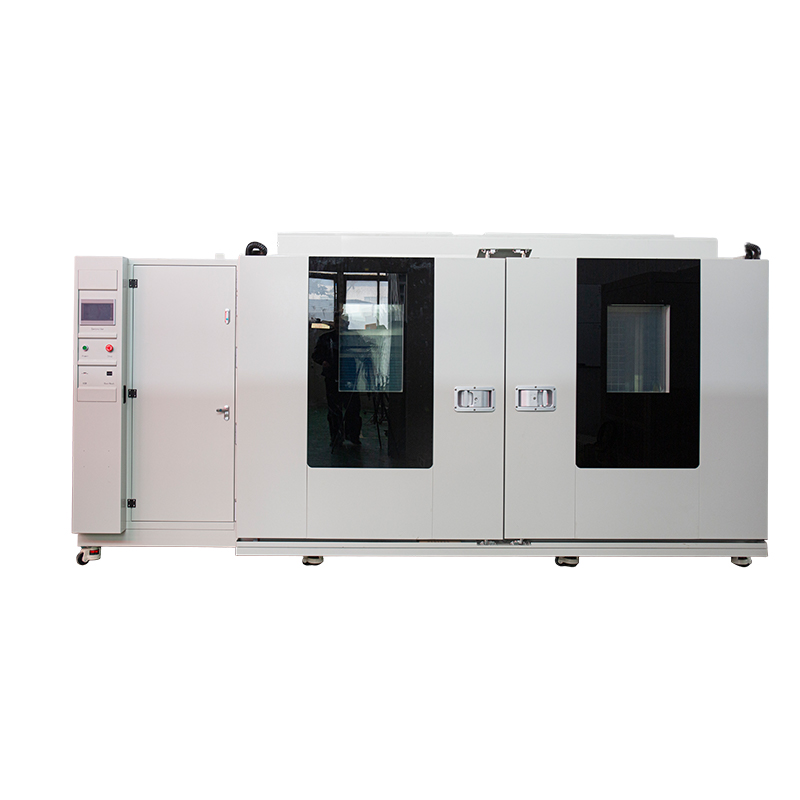
U2T(H)-EXZ3-W Large Walk-In Explosion-Proof Thermal and Humidity Chamber
Purpose and Value of Walk-In Environmental Testing
Environmental testing is used to reproduce the conditions that products may encounter during transportation, storage, installation, operation, or failure. A test chamber can expose a specimen to low temperatures, elevated temperatures, humidity changes, and repeated environmental cycles. The resulting data helps manufacturers identify weaknesses before products reach customers or enter critical operating environments.
Small benchtop chambers are suitable for circuit boards, sensors, small assemblies, and laboratory samples. However, larger products often cannot be reduced to a convenient test size without changing their thermal behavior or mechanical configuration. Battery modules, complete control cabinets, aerospace subassemblies, vehicle components, chemical containers, and industrial equipment may require their original dimensions to be preserved during testing. A walk-in chamber solves this problem by allowing operators to place full-size specimens inside the test space.
The U2T(H)-EXZ3-W is designed around this requirement. Its stated capacity is 3000 liters, and its studio configuration is listed as 3000 × 1000 × 1000 × 2 millimeters. This configuration indicates a large internal test arrangement intended for substantial or extended specimens. The walk-in format also simplifies loading, positioning, inspection, and retrieval. Operators do not need to force large products through a small access opening or disassemble equipment that would normally be tested as a complete unit.
Walk-in access also improves testing flexibility. Several smaller samples can be evaluated in one test cycle, provided that the total load and spacing meet the applicable test plan. This can improve laboratory productivity by reducing the number of individual chamber runs. It can also support comparative studies in which different materials, designs, or production batches are exposed to identical environmental histories.
Core Design of the U2T(H)-EXZ3-W
The U2T(H)-EXZ3-W is a large walk-in explosion-proof thermal and humidity chamber intended for controlled testing under severe environmental conditions. Its design combines four main functions: temperature generation and removal, humidity generation and regulation, access for large specimens, and protection against abnormal or hazardous events.
The listed temperature capability includes a range of -40°C to +150°C and an extended range of -70°C to +180°C. These figures should be confirmed against the final configuration, operating mode, test load, and customer specification before purchase. The availability of more than one range suggests that the chamber may be configured for different performance requirements. A standard range can address many industrial environmental tests, while the lower and upper extended range can support more demanding qualification programs.
Temperature control is supported by dynamic PID regulation and vapor partial-pressure control. PID control continuously compares the measured condition with the programmed setpoint and adjusts the heating, cooling, or moisture-control systems accordingly. Vapor partial-pressure regulation provides a more technically precise method of controlling humidity than relying only on a simple water percentage calculation. This is important because relative humidity depends on temperature, while vapor pressure provides a more stable basis for humidity control across changing thermal conditions.
The chamber is also equipped with dual evaporators. This arrangement is intended to support rapid stabilization and more uniform temperature and humidity conditions. In large chambers, air volume and specimen mass can create longer response times than in small laboratory units. Dual evaporator technology can help the system respond more effectively to changes in demand, particularly when the chamber is recovering from door opening, a large product load, or a major temperature transition.
Explosion-Proof Safety Concept
Environmental testing becomes more complex when the specimen may contain flammable electrolytes, combustible coatings, pressurized components, reactive chemicals, or energy-storage cells. Under high or low temperature and humidity conditions, a test item can behave differently from its normal room-temperature condition. Batteries may experience thermal runaway, chemical materials may release vapors, and electronic assemblies may fail in ways that generate heat or sparks.
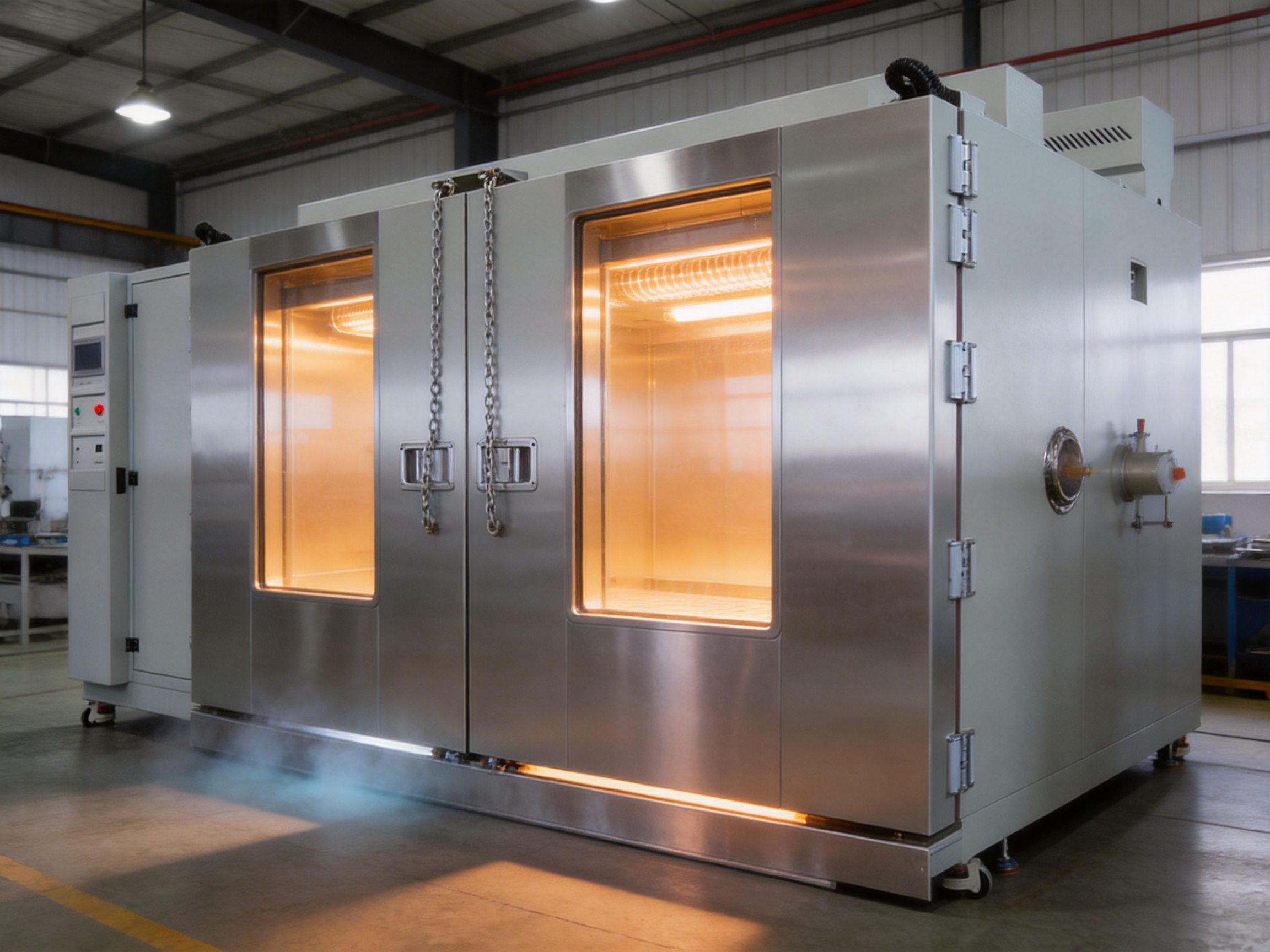
The explosion-proof design of the U2T(H)-EXZ3-W addresses these hazards through a combination of physical protection and emergency-response features. Explosion-proof door chains help control door movement and reduce the likelihood of uncontrolled opening under abnormal internal conditions. Reinforced viewing windows allow operators to observe the test specimen without unnecessarily entering or opening the chamber. Pressure-relief devices provide a path for managing sudden pressure changes and help reduce mechanical stress on the chamber structure.
These provisions are not a substitute for a complete laboratory safety assessment. The suitability of the chamber depends on the tested material, maximum energy content, gas composition, ventilation arrangement, local regulations, and customer-defined risk controls. Nevertheless, an integrated explosion-protection approach is a significant advantage over conventional environmental chambers that may not be designed for hazardous test articles.
A key benefit is that safety is considered as part of the environmental system rather than added as an unrelated accessory. Temperature, humidity, pressure, smoke, fire, and access control are connected during a potentially abnormal event. This integrated approach can help engineering teams establish clearer operating procedures and reduce the risk of relying on improvised protective measures.
Explosion-Proof Door and Viewing Window
The chamber door is one of the most important safety interfaces. It must provide a reliable seal during environmental operation while allowing controlled access when the test is complete or when an emergency response is required. The U2T(H)-EXZ3-W uses safety chains and reinforced viewing panels in the door area. The chains help manage door position, while the reinforced window supports visual observation of the specimen.
Visual access is particularly useful during battery, chemical, and electronics testing. Operators may need to identify swelling, smoke, condensation, discoloration, arcing, or other early indicators of failure. Observing the specimen through the viewing window can support a faster decision without immediately opening the chamber and exposing personnel to the internal atmosphere.
Explosion Pressure Relief
Explosion pressure relief devices are intended to mitigate the effects of sudden pressure or thermal fluctuations. If a test specimen produces a rapid increase in internal pressure, a relief mechanism can help prevent the chamber from becoming a closed pressure vessel. The exact relief performance, activation pressure, discharge direction, and installation requirements must be confirmed during technical design and site planning.
This feature distinguishes the chamber from ordinary walk-in temperature and humidity equipment. It demonstrates that the system is intended for test programs in which abnormal events must be considered from the beginning. The chamber can therefore be incorporated into a broader safety plan that includes room ventilation, remote monitoring, emergency isolation, fire response, and operator training.
Integrated Fire Prevention and Suppression
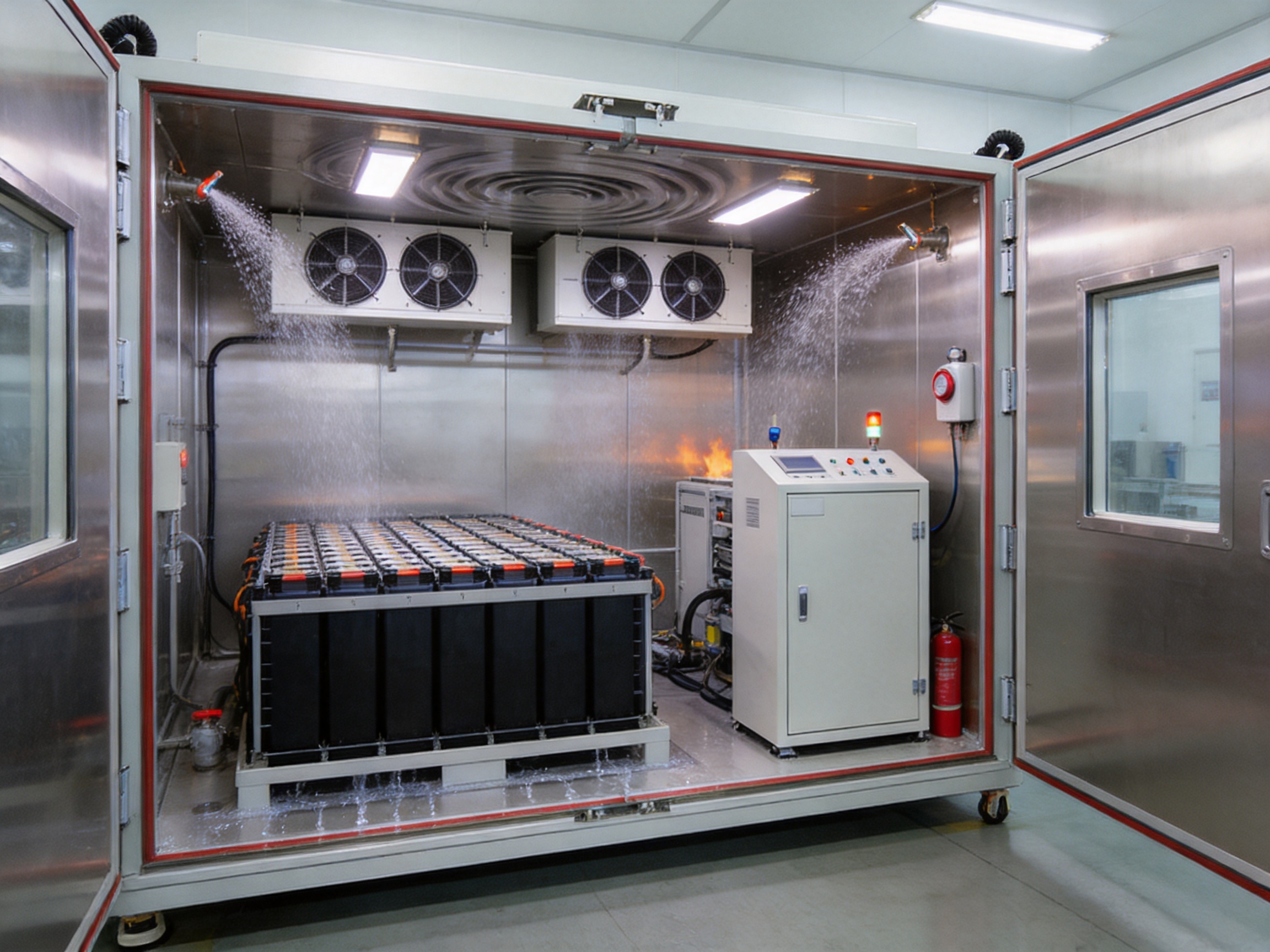
The U2T(H)-EXZ3-W includes an automatic fire extinguishing system with smoke detection and fine water mist spray. This combination is designed to identify signs of combustion and respond rapidly if a fire develops inside the chamber. Smoke detection provides an early indication, while the extinguishing system is intended to deliver a controlled water mist response.
Fine water mist can provide several practical advantages in a test chamber. Small droplets create a large surface area for heat absorption and can help reduce the temperature of hot surfaces. The mist may also limit the amount of water applied compared with a conventional flood-type approach, potentially reducing secondary damage to test equipment. However, the suitability of water mist depends on the test specimen and the nature of the fire. Certain chemicals, energized electrical equipment, reactive metals, or materials that react adversely with water may require additional precautions or a different extinguishing medium.
The presence of automatic fire suppression helps reduce reliance on human reaction time. In a hazardous test, personnel may not be able to approach the chamber immediately after smoke or flames appear. An automated system can begin its response while operators activate wider emergency procedures, isolate power, notify safety personnel, or evacuate the area.
For responsible operation, the fire system should be integrated with site-level controls. These may include alarm outputs, emergency stop circuits, ventilation interlocks, remote notifications, power isolation, and post-event inspection procedures. The chamber’s fire suppression features should also be maintained through scheduled detector checks, nozzle inspection, water-system verification, and documented functional testing.
Thermal and Humidity Performance
Precise thermal and humidity control is the foundation of meaningful environmental testing. A test result is only useful when the chamber condition is known, stable, and repeatable. If temperature fluctuates excessively or humidity distribution is poor, the measured product response may reflect chamber instability rather than the true behavior of the specimen.
The U2T(H)-EXZ3-W uses dynamic PID control to regulate environmental conditions. The control system continuously responds to deviations between the target setpoint and measured values. During a heating phase, the controller manages the heating system to approach the programmed temperature without excessive overshoot. During cooling, it coordinates cooling capacity and airflow to achieve the target efficiently. During combined temperature and humidity operation, the controller must balance moisture addition, condensation avoidance, air temperature, and refrigeration behavior.
Humidity regulation is especially challenging at low temperatures. As air cools, its moisture-holding capacity decreases, and water may condense on surfaces. Frost can also form on heat-exchange components, reducing efficiency and affecting stability. The chamber incorporates frost-free technology to support consistent operation across different seasons and test conditions. This is valuable for facilities that operate continuously throughout the year rather than only under controlled seasonal conditions.
The listed fast water injection device supports rapid humidity adjustment and emergency cooling or moisture response. Water injection must be carefully managed because excessive water can create nonuniform conditions, condensation, or contamination. When correctly controlled, fast water injection can shorten stabilization time and help the chamber follow demanding test profiles.
Dual evaporators contribute to the chamber’s ability to stabilize large air volumes and product loads. A large specimen absorbs or releases heat differently from the surrounding air. Multiple evaporating elements can help distribute cooling demand and improve recovery after a load change. The final degree of uniformity depends on airflow design, product placement, loading density, insulation, sensor position, and operating conditions.
Temperature Cycling and Humidity Stress
Many products fail not because of one extreme temperature, but because of repeated transitions. A thermal cycle can cause expansion and contraction in solder joints, seals, connectors, coatings, plastics, and composite structures. When humidity is added, moisture can penetrate materials, accelerate corrosion, alter insulation resistance, and promote chemical or electrochemical reactions.
The chamber can support programmed profiles that move between low and high temperatures, hold at selected plateaus, introduce humidity, and repeat the cycle. Such profiles can be used for design verification, production quality control, accelerated aging, reliability studies, and failure analysis. Engineers can compare pre-test and post-test electrical performance, mechanical integrity, appearance, dimensional stability, insulation resistance, leakage, and functional behavior.
For meaningful results, the test plan should define ramp rates, dwell times, humidity limits, specimen spacing, measurement points, and acceptance criteria. The chamber provides the controlled environment, while the test engineer remains responsible for selecting conditions appropriate to the product and applicable standard.
Advantages Compared with Conventional Chambers
The most important advantage of the U2T(H)-EXZ3-W is the combination of large capacity and hazardous-environment safety. Many standard chambers offer temperature and humidity control but are intended for nonhazardous specimens. Other systems may provide explosion-resistant construction but lack the humidity precision or walk-in space needed for complex qualification programs. This chamber is positioned between these requirements, providing an integrated platform for environmental and safety-oriented testing.
A second advantage is access. A walk-in enclosure can accommodate full-size products and assemblies that cannot be tested effectively in a small chamber. This improves test realism because the product can remain in its intended configuration. It also reduces labor associated with disassembly and reassembly.
A third advantage is the combination of smoke detection, automatic extinguishing, and fine water mist spraying. A conventional chamber may depend primarily on an operator to detect a fire and respond manually. Integrated automation can provide a faster first response and support safer remote operation.
A fourth advantage is environmental response. Fast water injection, dual evaporators, PID control, vapor partial-pressure regulation, and frost-free operation are intended to improve stabilization, consistency, and year-round reliability. These functions are particularly relevant when a large internal volume and heavy product load create substantial thermal inertia.
A fifth advantage is adaptability. Electronics, battery modules, aerospace parts, chemical materials, polymer samples, and industrial assemblies can require different combinations of temperature, humidity, observation, and safety control. A configurable walk-in platform is better suited to a diverse research and production environment than equipment designed for only one product category.
| Evaluation Area | U2T(H)-EXZ3-W Design Value | Typical Limitation of a Basic Chamber |
|---|---|---|
| Test capacity | Approximately 3000 liters with walk-in access | Restricted internal volume and small specimen openings |
| Safety approach | Explosion-proof door provisions, reinforced viewing windows, and pressure relief | May not be intended for hazardous or energy-rich specimens |
| Fire response | Smoke detection, automatic extinguishing, and fine water mist spray | May rely on external or manual response procedures |
| Temperature capability | Listed ranges include -40°C to +150°C and an extended -70°C to +180°C configuration | Often limited to a narrower operating range |
| Humidity control | Dynamic PID and vapor partial-pressure regulation | May provide less precise control during changing temperatures |
| Stabilization support | Fast water injection and dual evaporators | Longer recovery time after door opening or heavy loading |
| Seasonal operation | Frost-free technology for stable year-round operation | Performance may vary more significantly under cold or humid conditions |
| Specimen handling | Walk-in loading, observation, and retrieval | Requires reducing, disassembling, or adapting larger products |
Applications Across Industrial Sectors
Electronics and Semiconductor Testing
Electronic products may be exposed to temperature and humidity changes during shipping, installation, and field operation. Moisture can reduce insulation resistance, promote corrosion, and contribute to leakage or dielectric breakdown. Temperature cycling can reveal weaknesses in solder connections, bonding materials, connectors, housings, and thermal interfaces.
The chamber can be used for circuit boards, semiconductor assemblies, power electronics, control cabinets, sensors, communication equipment, and battery-management systems. The walk-in configuration allows testing of complete assemblies rather than isolated subcomponents. Observation through the viewing window can also help engineers identify visible changes during the test.
Battery and Energy Storage Systems
Battery systems require carefully managed environmental testing because temperature directly affects electrochemical behavior, internal resistance, charging performance, and failure risk. Modules and packs may also release smoke, gas, or heat when damaged, overcharged, internally shorted, or exposed to abnormal conditions.
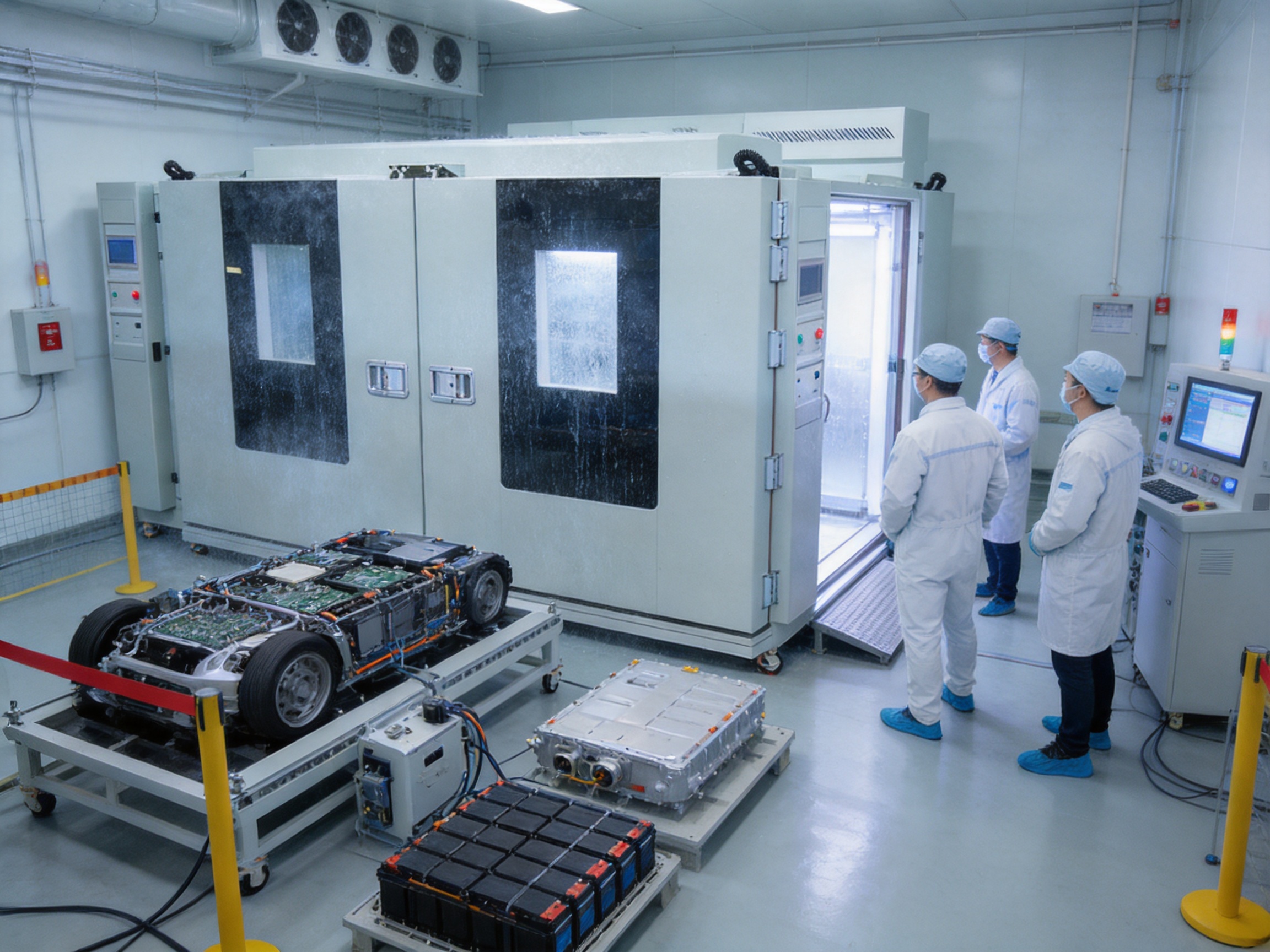
The explosion-proof and fire-response features make this type of chamber relevant to battery research and quality assurance. It can support environmental exposure before performance testing, thermal cycling, humidity stress, and selected abuse-related investigations when the test plan and facility safety assessment permit. The chamber should not be treated as a universal battery-abuse solution without confirming energy limits, venting arrangements, extinguishing compatibility, and emergency procedures.
Chemical and Materials Research
Polymers, coatings, adhesives, composites, elastomers, packaging materials, and chemical products may change their dimensions, strength, adhesion, hardness, or chemical stability under environmental stress. High humidity can accelerate water absorption and degradation, while temperature extremes can produce softening, embrittlement, expansion, shrinkage, or phase changes.
A controlled walk-in environment enables researchers to test larger samples, assembled material systems, or containers in realistic configurations. It may also be useful for comparative studies in which different formulations are subjected to the same thermal and humidity profile.
Automotive and Aerospace Components
Automotive and aerospace products may experience broad temperature ranges, changing humidity, vibration-related interfaces, pressure variation, and long service intervals. Although environmental exposure is only one part of a complete qualification program, thermal and humidity testing can reveal design weaknesses before integrated field testing.
Large housings, wiring assemblies, electronic control units, interior materials, sensors, lighting systems, and specialized components can benefit from a walk-in test environment. The ability to load larger assemblies without extensive modification can improve the relationship between laboratory results and real-world application.
Industrial Quality Assurance and Production Support
In production environments, the chamber can be used for batch sampling, incoming-material verification, process validation, accelerated aging, and failure investigation. A stable test method helps manufacturers identify whether a problem originates from raw materials, assembly variation, sealing performance, firmware behavior, or environmental sensitivity.
Because the chamber can support large or multiple specimens, it may help quality teams reduce the number of separate tests required. When combined with documented procedures and calibrated sensors, it can become part of a repeatable production-release process.
Manufacturing and Engineering Strengths
The company behind the product is JIANGSU BAISHENG INDUSTRIAL CO., LTD., a China-based technology-driven enterprise established in 2010. Its stated focus includes high-end laboratory equipment, safety testing instruments, research and development, and international supply. The company’s background is relevant to this chamber because the product requires both environmental engineering and safety-oriented design rather than simple enclosure fabrication.
According to the provided company history, the organization began with a research and development studio specializing in electronic testing in 2013. This origin gave its founding team experience in laboratory equipment and safety compliance testing. In 2016, the business developed an independent production line and introduced laboratory equipment with independent intellectual property rights. This progression from technical development to manufacturing provides a foundation for producing equipment that must be designed around measurable performance requirements.
The company later adopted a “technology plus trade” development strategy, increasing research and development investment and expanding its overseas markets. For international customers, this combination can be useful because equipment procurement involves more than product fabrication. It also requires technical communication, configuration confirmation, documentation, shipment coordination, installation planning, and after-sales support.
The company reports that it improved its quality management system in 2022 and that its products underwent rigorous technical specification certification. Specific certification details should be requested for the exact chamber configuration, especially when the equipment is intended for a hazardous testing environment. Nevertheless, a formal quality-management focus is an important manufacturing strength because the chamber contains multiple systems that must work together: insulation, refrigeration, heating, humidification, sensors, controls, alarms, pressure relief, door hardware, and fire suppression.
Research and Development Orientation
A strong research and development capability is valuable when a chamber must be customized. Walk-in equipment often requires changes to internal dimensions, temperature range, humidity range, door orientation, observation windows, electrical interfaces, load capacity, alarm outputs, fire-system configuration, or facility connections. A supplier with engineering experience can evaluate how these changes affect airflow, refrigeration capacity, structural strength, safety, and control behavior.
The company’s stated core values, “Precision in Craftsmanship, Innovation for the Long-Term,” reflect the requirements of this product category. Precision is necessary for sensor placement, control tuning, sealing, airflow, temperature uniformity, and humidity stability. Long-term innovation is important because environmental testing increasingly involves connected equipment, battery systems, automated data collection, and more demanding safety expectations.
Integrated Product Engineering
The U2T(H)-EXZ3-W illustrates the value of integrated product engineering. A chamber of this type cannot be evaluated only by its maximum temperature or nominal volume. The complete system must be considered, including how the door seals, how the air circulates, how moisture enters the chamber, how frost is managed, how the refrigeration system responds, how emergency systems activate, and how operators interact with the equipment.
The product information identifies several technologies that work together: dual evaporators, rapid water injection, dynamic PID control, vapor partial-pressure regulation, frost-free operation, pressure relief, smoke detection, automatic extinguishing, and fine water mist. Integrating these functions requires coordination between mechanical design, electrical controls, software logic, safety systems, and manufacturing quality control.
Customization Capability
Laboratory and industrial customers rarely have identical requirements. A battery manufacturer may prioritize fire response, gas management, and remote operation. An aerospace supplier may require large specimen access and broad temperature cycling. A materials laboratory may need precise humidity regulation and long-duration stability. A production facility may prioritize throughput, data recording, and maintenance access.
The company’s stated emphasis on customized solutions is therefore a practical advantage. Customization should begin with a technical specification that defines the specimen, operating envelope, maximum energy, environmental profile, utilities, room layout, access path, control interfaces, and applicable safety requirements. A well-developed specification reduces the risk of selecting a nominally suitable chamber that is not appropriate for the actual test program.
Manufacturing Quality Considerations
For a large environmental chamber, manufacturing quality affects both performance and safety. The enclosure must maintain structural integrity over repeated thermal cycles. Insulation must limit heat transfer and prevent excessive energy loss. Interior surfaces should withstand the intended humidity and specimen environment. Door seals must remain effective after repeated opening and closing. Viewing windows must be correctly installed and protected against thermal stress.
The refrigeration and heating assemblies require careful assembly and testing. Improper sensor positioning, insufficient insulation, or incorrect control tuning can produce temperature gradients or extended stabilization times. Humidity systems require clean water management, suitable piping, reliable injection control, and protection against unwanted condensation. Electrical systems must be organized to support maintenance and reduce the possibility of faults.
Safety equipment requires its own verification process. Smoke detectors should be positioned to provide effective detection in the chamber airflow pattern. Spray nozzles should be installed according to the extinguishing design. Pressure-relief components should be correctly rated and directed. Door chains and viewing panels should be inspected for mechanical integrity. Alarm and interlock logic should be checked under simulated fault conditions.
Customers should request factory acceptance documentation appropriate to their project. Useful records may include temperature uniformity data, humidity stability data, calibration certificates, alarm tests, door-seal inspection, pressure-relief documentation, fire-system testing, and electrical safety checks. The exact documentation package should be agreed before production because test requirements vary by sector and jurisdiction.
Installation and Operating Planning
The listed overall dimensions are approximately 3460 × 2500 × 2740 millimeters, with a stated machine weight of approximately 1500 or 1600 kilograms depending on configuration. These values must be confirmed against the final quotation and technical drawing. The installation route should be evaluated before shipment, including door widths, ceiling height, floor loading, turning radius, lifting equipment, and service clearance.
Utility planning is equally important. The chamber may require electrical power, water supply, drainage, ventilation, alarm connections, and communication interfaces. The fire suppression system may have specific water-quality, pressure, or storage requirements. The pressure-relief outlet must be assessed in relation to the test room and any occupied areas. The customer should confirm whether hazardous gases or vapors require separate extraction or treatment.
Operators should receive training in normal operation, emergency stop procedures, fire-system behavior, specimen loading, door operation, alarm response, and post-event inspection. A written procedure should define when the chamber may be opened, who is authorized to reset an alarm, how damaged specimens are handled, and how the system is returned to service after an abnormal event.
Product placement affects performance. Specimens should not block air circulation, cover sensors, obstruct spray nozzles, or contact chamber walls unless the test method specifically requires it. Large objects should be positioned with adequate clearance to support uniform exposure. The test load should be documented because changes in mass, material, surface area, or packaging can alter stabilization time and environmental distribution.
Maintenance and Long-Term Reliability
Preventive maintenance is essential for a chamber that combines refrigeration, heating, humidification, explosion protection, and fire suppression. Maintenance intervals should be established according to operating hours, test severity, water quality, specimen type, and manufacturer recommendations.
Temperature and humidity sensors should be calibrated at planned intervals. Control accuracy depends on reliable measurement, and sensor drift can lead to incorrect test conditions. The water-injection system should be inspected for deposits, blockage, leakage, and contamination. Drainage paths should remain clear, particularly after high-humidity testing or fire-system activation.
Refrigeration components, evaporators, fans, filters, electrical connections, and door seals should be inspected regularly. Frost-free performance depends on proper airflow, defrost behavior, drainage, and refrigeration operation. If the chamber is used at low temperatures for extended periods, frost accumulation should be investigated rather than ignored.
Safety components require documented checks. Smoke detectors, spray nozzles, pressure-relief devices, door chains, viewing panels, alarms, emergency stops, and interlocks should be included in the maintenance plan. After any fire, pressure event, severe specimen failure, or unplanned shutdown, the chamber should be inspected by qualified personnel before normal use resumes.
How to Select the Correct Configuration
Customers should first define the most demanding expected test condition. This includes minimum and maximum temperature, humidity range, ramp rate, dwell duration, number of cycles, specimen mass, heat generation, and operating status of the product during testing. A chamber rated for a temperature range may not achieve every setpoint at every load, so performance should be confirmed using the intended specimen conditions.
The hazard profile should be described in detail. Relevant information includes battery chemistry, maximum stored energy, chemical composition, expected gas release, ignition risk, pressure potential, voltage, current, and whether the specimen can remain energized. This information helps determine the appropriate fire suppression approach, pressure-relief arrangement, ventilation, monitoring, and emergency controls.
Customers should also clarify whether the chamber will be used for research, design verification, production testing, regulatory evaluation, or failure investigation. Research applications may value flexibility and data access. Production applications may require high availability, rapid recovery, simple loading, and clear pass-fail procedures. Regulatory testing may require specific calibration, uniformity, traceability, and documentation.
The listed specifications provide a useful starting point, but the final technical agreement should confirm the exact temperature range, internal dimensions, overall dimensions, weight, humidity operating limits, uniformity, stability, ramp performance, control resolution, water requirements, fire-system details, and electrical configuration.
Recommended Test Workflow
A disciplined workflow improves both safety and data quality. Before loading, the operator should inspect the chamber, verify that the previous test has been cleared, check alarms, confirm sensor status, and ensure that the required utilities are available. The specimen should be examined for damage, leakage, loose parts, or conditions that could create an unplanned hazard.
During loading, the specimen should be positioned according to the test plan. Adequate air circulation should be maintained, and monitoring cables or external instruments should be routed through approved access points. The operator should verify that the door, safety chain, viewing window, and seals are correctly secured.
Before beginning the programmed profile, the test team should confirm the setpoints, ramp rates, dwell times, humidity limits, alarm thresholds, and emergency response procedure. If the product is energized, electrical protection and remote isolation should be checked. Data acquisition should begin before the first environmental transition so that the initial condition is recorded.
During the test, the control system manages the programmed environment while personnel monitor chamber data and specimen behavior. Smoke, abnormal noise, rapid temperature rise, pressure indications, or unexpected alarms should be treated seriously. Operators should follow the approved emergency procedure rather than opening the chamber impulsively.
After the test, the chamber should return to a safe condition before the door is opened. The specimen should be inspected and the results documented. If condensation or moisture is present, it should be handled according to the test method. The chamber interior should be checked for residue, damage, unusual odor, or evidence of fire or pressure release.
Business and Procurement Benefits
Investing in an appropriately configured walk-in chamber can provide benefits beyond individual test results. It can reduce dependence on external laboratories, shorten product-development cycles, improve failure-analysis speed, and create a standardized internal test capability. For manufacturers with multiple product lines, a large chamber can support several types of test programs using one controlled platform.
The chamber may also improve communication between engineering, quality, production, and safety teams. A common test environment provides a shared reference for discussing product performance. It allows design engineers to compare prototypes, quality teams to evaluate production batches, and safety personnel to review abnormal-event behavior under controlled conditions.
Supplier capability is an important part of the procurement decision. The company’s reported R&D background, experience in electronic testing, technology-and-trade model, and emphasis on customized laboratory solutions can support projects that require technical coordination. Customers should evaluate the supplier not only on initial price, but also on configuration accuracy, documentation, installation support, spare parts, calibration, response time, and long-term service.
Frequently Asked Questions
What is the primary purpose of the U2T(H)-EXZ3-W chamber?
It is designed to provide a controlled walk-in environment for testing products under extreme temperature and humidity conditions, with additional explosion-protection and fire-response features for potentially hazardous specimens.
What is the chamber capacity?
The listed capacity is 3000 liters. The supplied studio dimensions are stated as 3000 × 1000 × 1000 × 2 millimeters. Because the notation may represent a specific internal arrangement or configuration, the final internal dimensions should be confirmed on the approved technical drawing.
What temperature ranges are available?
The product information lists -40°C to +150°C and an extended -70°C to +180°C range. The applicable range depends on the selected configuration, specimen load, humidity requirements, and performance conditions. Buyers should confirm which range is included in the quotation.
Can the chamber test battery systems?
It is intended to support testing of battery systems and modules, subject to a detailed hazard assessment. Battery energy, chemistry, voltage, gas release, thermal-runaway behavior, fire characteristics, pressure relief, ventilation, and extinguishing compatibility must be reviewed before operation.
How does the chamber address fire risk?
The chamber incorporates smoke detection, an automatic fire extinguishing system, and fine water mist spray. These features are intended to provide rapid response to an internal fire event, but they must be coordinated with site-level emergency procedures and verified for compatibility with the test specimen.
Why is a walk-in design useful?
A walk-in design accommodates large products, complete assemblies, and multiple specimens that may not fit through the opening of a conventional chamber. It also simplifies loading, retrieval, inspection, and realistic testing without extensive product disassembly.
What is the function of dual evaporators?
Dual evaporators are intended to support faster stabilization and more uniform temperature and humidity control, especially in a large chamber with a substantial specimen load. Actual performance depends on loading, airflow, setpoint, and operating conditions.
What does frost-free technology contribute?
Frost-free technology helps maintain stable operation when the chamber is used under low-temperature or high-humidity conditions. It is intended to reduce the impact of frost accumulation on heat exchange, airflow, and environmental stability.
Does the chamber require a special installation area?
Yes. Customers should plan for sufficient floor loading, service clearance, transport access, electrical power, water, drainage, ventilation, pressure-relief routing, and emergency-response connections. The installation must comply with applicable local safety requirements.
Can the chamber be customized?
The manufacturer states that it provides customized laboratory equipment solutions. Potential customization areas should be discussed during technical specification, including dimensions, temperature range, control interfaces, monitoring, door arrangement, fire-system configuration, and facility utilities.
What documentation should be requested?
Customers may request technical drawings, operating manuals, electrical documentation, calibration records, temperature and humidity performance data, alarm test records, fire-system information, pressure-relief details, maintenance recommendations, and factory acceptance documentation applicable to the selected configuration.
How should the chamber be maintained?
Maintenance should include sensor calibration, door-seal inspection, refrigeration and evaporator checks, water-system cleaning, drain inspection, alarm verification, smoke-detector testing, spray-nozzle inspection, pressure-relief review, and examination of electrical and control components.
Conclusion
The U2T(H)-EXZ3-W large walk-in explosion-proof thermal and humidity chamber is designed for organizations that need more than conventional environmental conditioning. Its principal value lies in the combination of large specimen access, broad thermal capability, humidity regulation, rapid environmental response, frost-free operation, and integrated safety mechanisms.
Explosion-proof door chains, reinforced viewing windows, pressure-relief devices, smoke detection, automatic fire extinguishing, and fine water mist spraying provide a multi-layered approach to potentially hazardous testing. Dynamic PID control, vapor partial-pressure regulation, dual evaporators, and rapid water injection support precise and responsive environmental management. Together, these features make the chamber relevant to electronics, battery systems, chemicals, advanced materials, automotive components, aerospace assemblies, industrial products, and quality-assurance programs.
The manufacturer’s reported history in electronic testing, independent product development, research and development, quality-system improvement, and customized laboratory solutions further supports its ability to address complex equipment requirements. As with any hazardous environmental test system, final suitability must be verified through a detailed technical specification, risk assessment, site review, and confirmation of applicable standards.
When correctly configured, installed, operated, and maintained, the U2T(H)-EXZ3-W can become an important part of a modern reliability laboratory or industrial quality system. It can help organizations reproduce demanding environments, detect product weaknesses earlier, improve test repeatability, and strengthen confidence in products intended for severe or safety-critical applications.
References
1. Product specification and technical information for the U2T(H)-EXZ3-W large walk-in explosion-proof thermal and humidity chamber.
2. Manufacturer-provided company profile, product development history, manufacturing background, and core values.
3. General principles of environmental testing for electronic, electrical, mechanical, chemical, and material products.
4. General engineering guidance for temperature and humidity chamber operation, calibration, maintenance, and uniformity evaluation.
5. General laboratory safety principles for testing products that may generate heat, smoke, vapor, pressure, or combustion hazards.
6. General fire detection, automatic suppression, emergency response, and preventive maintenance practices for industrial test environments.
Product: U2T(H)-EXZ3-W Large Walk-In Explosion-Proof Thermal and Humidity Chamber

PREV:Double-Layer Explosion-Proof Temperature Test Chamber for Advanced Safety and Reliable Thermal Testing
NEXT:Advanced Ion Beam Etching and Thin Film Deposition for Precision Material Processing
NEXT:Advanced Ion Beam Etching and Thin Film Deposition for Precision Material Processing
Interested in cooperation or have questions?
Featured Products
Related products
Quick Link
Contact Information
- Tel: +86-13861043568
- E-mail: 1840784112@qq.com
- Add: Tianting District, Changzhou City, Jiangsu Province, China, No. 6 Hecircuit
Scan Code
Copyright © JIANGSU BAISHENG INDUSTRIAL CO., LTD.
All Rights Reserved. Privacy Custom Precision Laboratory Testing Equipment Manufacturers
