 English
 Español

NEWS
NEWS
NEWS
NEWS
NEWS
NEWS
NEWS
NEWS
NEWS
NEWS
NEWS
NEWS
NEWS
NEWS
NEWS
NEWS

Peng Shulan — Regional Sales Consultant
Home / Author / Peng Shulan — Regional Sales Consultant / Double-Layer Explosion-Proof Temperature Test Chamber for Safer High- and Low-Temperature Testing
Double-Layer Explosion-Proof Temperature Test Chamber for Safer High- and Low-Temperature Testing
Content
- 1 Why Explosion-Proof Temperature Testing Requires a Dedicated Design
- 2 Product Overview
- 3 Double-Layer Structure and Laboratory Productivity
- 4 Explosion-Proof Door and Viewing Window
- 5 Integrated Fire Prevention and Emergency Response
- 6 Temperature Performance and Dual Evaporator Technology
- 7 Advantages Over Conventional Temperature Chambers
- 8 Manufacturing and Engineering Strengths
- 9 Applications in Battery Testing
- 10 Applications in Electronics and Components
- 11 Applications in Materials and Industrial Quality Assurance
- 12 Installation Planning and Operating Discipline
- 13 Maintenance and Long-Term Reliability
- 14 How to Select the Appropriate Configuration
- 15 Company Capabilities and Customer Support
- 16 Q&A
- 16.1 What is the U2T(H)-EX80-A designed for?
- 16.2 Why does the chamber have two layers?
- 16.3 What temperature ranges are available?
- 16.4 What safety systems are included?
- 16.5 Is the chamber suitable for lithium-ion battery testing?
- 16.6 What is the purpose of the viewing window?
- 16.7 How does the automatic fire extinguishing system help?
- 16.8 What is the purpose of the rapid water injection device?
- 16.9 What does the dual evaporator design do?
- 16.10 Does frost-free operation eliminate maintenance?
- 16.11 What should be confirmed before ordering?
- 16.12 Can the chamber be customized?
- 16.13 What is the approximate size and weight?
- 16.14 Why is manufacturer experience important for this product?
- 17 Conclusion
- 18 References
- 19 Product: U2T(H)-EX80-A Double-Layer Explosion-Proof Temperature Test Chamber
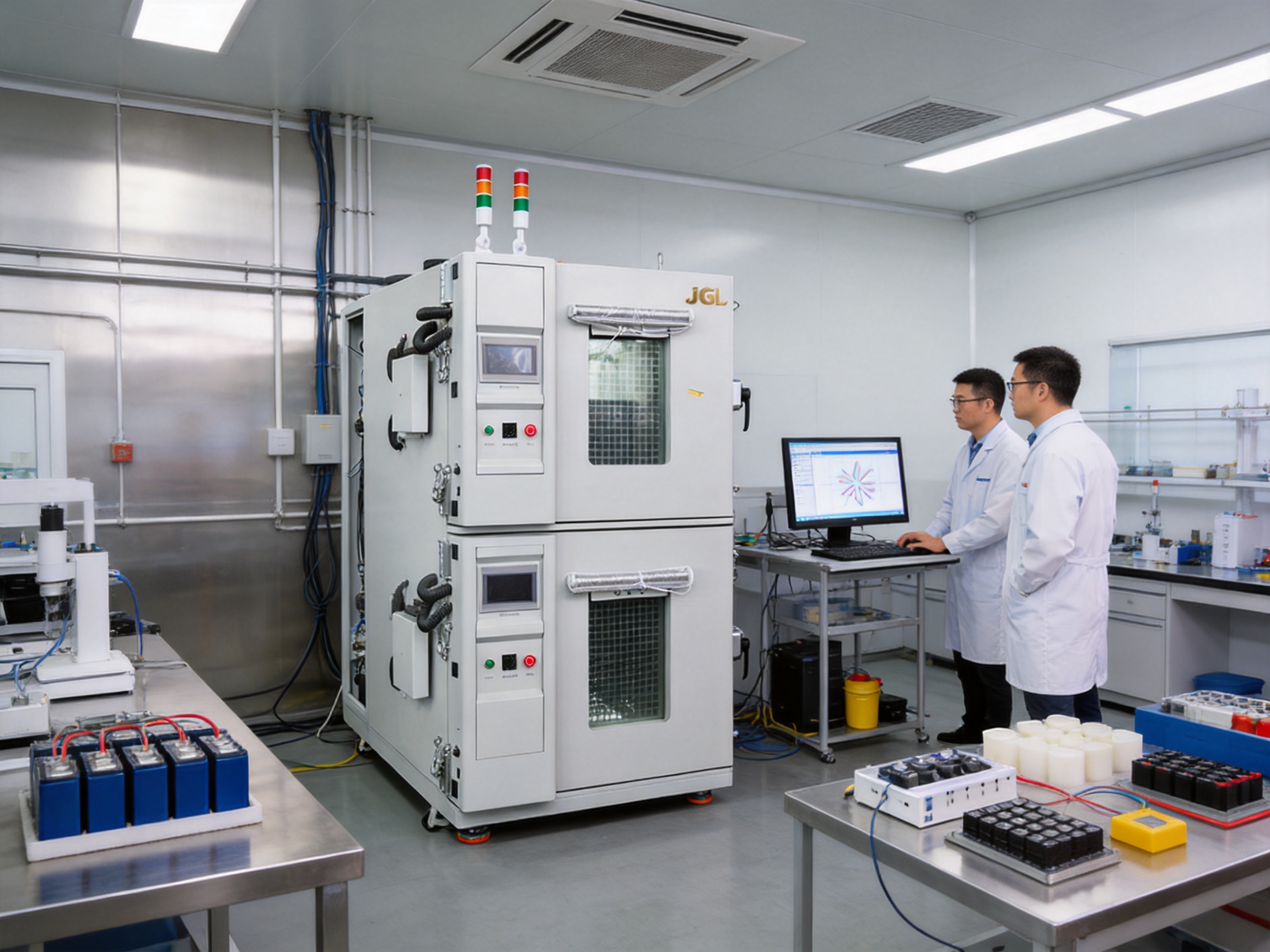
Modern product development depends on the ability to reproduce demanding environmental conditions accurately, safely, and repeatedly. Batteries, electronic assemblies, chemical materials, automotive components, aerospace parts, polymers, and other industrial products may experience severe temperature changes during storage, transportation, charging, operation, or service. A temperature test chamber allows engineers to recreate those conditions under controlled laboratory circumstances. However, when a test involves flammable materials, energetic batteries, volatile chemicals, or components that may fail violently, ordinary temperature control alone is not sufficient. The chamber must also address fire, smoke, pressure, emergency response, and operator protection.
The U2T(H)-EX80-A Double-Layer Explosion-Proof Temperature Test Chamber is designed for this demanding class of application. It combines high- and low-temperature testing with an integrated safety architecture that includes explosion-proof door components, an explosion-proof viewing window, automatic fire extinguishing, smoke detection, fine water mist sprinkling, rapid water injection, and pressure relief. Its double-layer structure provides two independent test compartments, supporting more efficient laboratory utilization while maintaining a compact overall equipment footprint.
Manufactured by Jiangsu Baisheng Industrial Co., Ltd., the chamber is intended for organizations that require more than a basic thermal enclosure. It is a specialized laboratory testing system for applications in which temperature performance, fire prevention, emergency response, and test repeatability must work together. The design also incorporates dual evaporator technology and a frost-free operating concept to support stable operation throughout the year.
This article examines the chamber’s construction, operating advantages, safety systems, manufacturing strengths, applications, technical specifications, maintenance requirements, and selection considerations. It also explains how the product can provide practical advantages over conventional single-compartment or minimally protected temperature chambers.
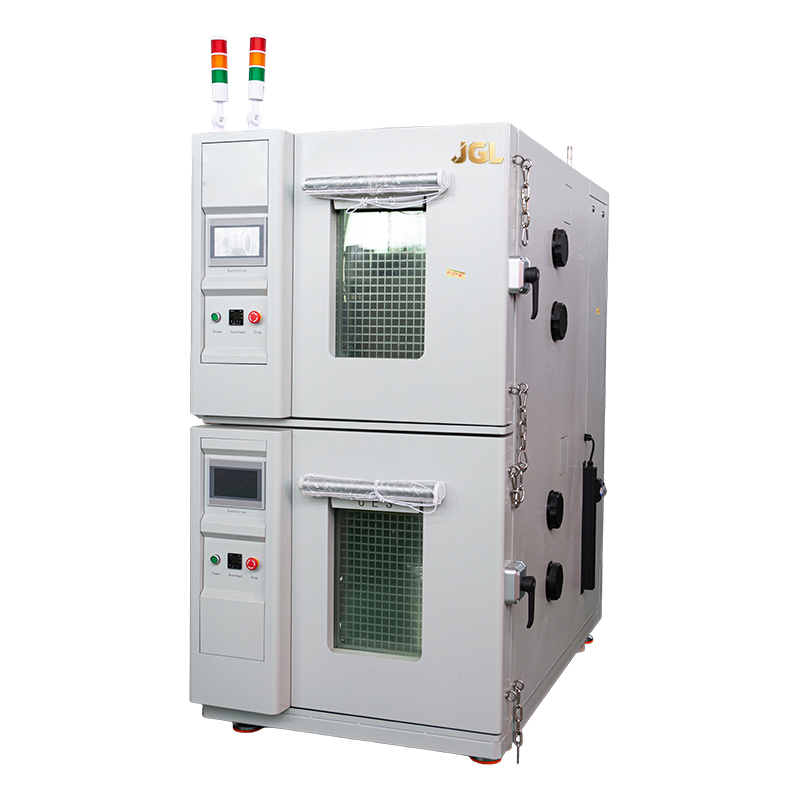
U2T(H)-EX80-A Double-Layer Explosion-Proof Temperature Test Chamber
Why Explosion-Proof Temperature Testing Requires a Dedicated Design
Temperature testing is often associated with simple heating and cooling. In practice, a chamber used for advanced reliability testing must manage several interacting variables. Temperature must be controlled within the required range, distributed evenly throughout the working space, changed at the required rate, and maintained for the required duration. At the same time, the chamber must protect the operator and facility if the test specimen releases heat, smoke, flame, vapor, or pressure.
Battery testing demonstrates the challenge clearly. A lithium-ion cell or battery pack may remain stable throughout a normal test, but a defect, internal short circuit, overcharge condition, mechanical damage, or thermal abuse event can lead to rapid heat generation. The resulting event may produce smoke, combustible gas, flame, or pressure. A conventional temperature chamber may be able to reach the required temperature, but it may not include the physical barriers and emergency systems necessary for this type of testing.
Similar risks can exist when evaluating chemical materials, coatings, polymers, adhesives, electronic power devices, fuel-related components, or industrial products containing combustible substances. A reliable test system must therefore consider the complete hazard chain: ignition prevention, containment, detection, suppression, pressure management, and safe recovery after an incident.
The U2T(H)-EX80-A addresses these requirements through a coordinated set of design features rather than relying on a single protective element. The explosion-proof door chain and viewing window help reinforce the test boundary. Smoke detection provides early warning. The automatic fire extinguishing and fine water mist sprinkler system provide an emergency response mechanism. The rapid water injection device supports fast intervention, while the pressure relief device is intended to manage abnormal pressure changes.
This layered approach is important because no individual safety feature can address every possible failure mode. A viewing window alone cannot suppress a fire. A sprinkler system alone cannot manage pressure. A pressure relief device alone cannot prevent smoke accumulation. Combining these systems creates a more comprehensive safety strategy for high-risk thermal testing.
Product Overview
The U2T(H)-EX80-A is a double-layer explosion-proof high- and low-temperature test chamber. The product is identified as an 80-liter-class system, with two vertically arranged test compartments. The supplied dimensional information lists a working chamber size of approximately 500 × 400 × 400 millimeters for each compartment, expressed as 500 × 400 × 400 × 2. This configuration allows laboratories to conduct two tests at the same time or to reserve one chamber for a separate test condition.
Depending on the selected configuration, the chamber is specified for a temperature range of either -40°C to +150°C or -70°C to +180°C. These alternatives indicate that the final temperature capability should be confirmed during quotation and technical configuration. The two ranges can support different testing strategies, from general environmental qualification to more severe cold and high-temperature stress testing.
The listed overall dimensions are approximately 1,100 × 1,600 × 1,380 millimeters, while the listed equipment weight is approximately 450 or 560 kilograms depending on configuration. These values are important for laboratory planning because the chamber requires a suitable floor, access path, ventilation arrangement, electrical supply, water connection, and service clearance.
At the center of the product concept is the double-layer architecture. Instead of using two completely separate chambers, the system integrates two test spaces into one coordinated unit. This approach can save floor space and reduce the need for duplicate support equipment. It may also allow laboratories to run different temperature programs simultaneously, provided that the test conditions and safety requirements are compatible with the selected configuration.
| Product item | Specification or feature |
| Product model | U2T(H)-EX80-A |
| Product type | Double-layer explosion-proof high- and low-temperature test chamber |
| Nominal capacity | 80 L class |
| Temperature range option 1 | -40°C to +150°C |
| Temperature range option 2 | -70°C to +180°C |
| Working chamber dimensions | Approximately 500 × 400 × 400 mm for each layer |
| Overall dimensions | Approximately 1,100 × 1,600 × 1,380 mm |
| Approximate equipment weight | 450 kg or 560 kg, depending on configuration |
| Safety systems | Explosion-proof chain, explosion-proof viewing window, smoke detection, automatic fire extinguishing, fine water mist sprinkler system, rapid water injection, and pressure relief |
| Temperature control architecture | Dual evaporator design and frost-free operating technology |
| Primary applications | Battery testing, electronic component testing, materials research, and industrial quality assurance |
The specifications should be reviewed together with the customer’s test method, specimen size, heat load, electrical feedthrough requirements, cooling performance, safety classification, and local installation regulations. A technical confirmation before purchase is especially important when the chamber will be used for energetic battery testing or materials that may release flammable substances.
Double-Layer Structure and Laboratory Productivity
The double-layer structure is one of the chamber’s most practical advantages. In a conventional laboratory, two separate test chambers require two equipment footprints, two sets of doors and controls, and potentially duplicated utilities. The integrated upper-and-lower configuration can reduce the space required for temperature testing while increasing the number of experiments that can be managed within the same laboratory area.
Two compartments can be useful in several ways. Engineers may run a high-temperature test in one compartment and a low-temperature test in the other. A development team may compare two materials under identical thermal conditions. A quality department may use one layer for production samples and the other for reference samples. Alternatively, one compartment may be used for a short screening test while the second performs a longer endurance program.
Separate compartments can also improve scheduling flexibility. If a single large chamber is occupied by a long-duration test, other projects must wait. A two-layer chamber can reduce this bottleneck by enabling multiple smaller tests to proceed independently. This may be especially valuable in battery development, where multiple cell formats, formulations, protection circuits, or charging profiles often need to be compared.
The double-layer concept does not eliminate the need for careful test planning. The operator should confirm whether simultaneous operation of the two layers is permitted for the intended specimen types, whether the heat load of one test affects the other, and how the emergency systems respond when one compartment experiences an abnormal event. These questions should be resolved in the equipment specification and operating procedures.
Compared with a single-compartment chamber of similar external size, the U2T(H)-EX80-A can offer better utilization of vertical space. Compared with two independent basic chambers, it can provide a more organized installation and potentially lower infrastructure duplication. The resulting advantage is not simply additional capacity; it is the ability to perform more controlled work within a compact and safety-oriented laboratory system.
Explosion-Proof Door and Viewing Window
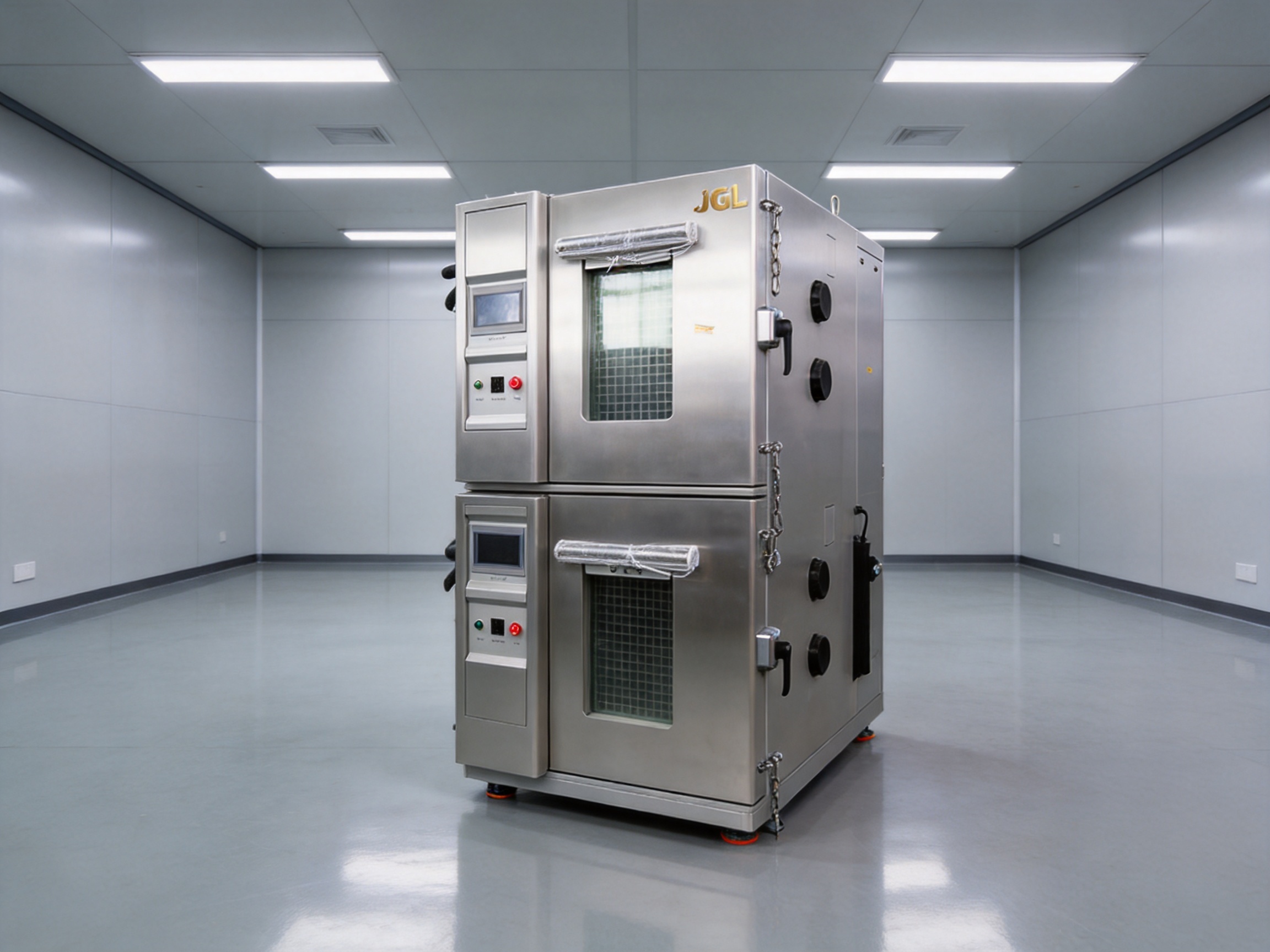
The door is a critical part of any environmental test chamber because it forms the primary access boundary between the specimen and the laboratory. During an abnormal event, the door must remain secure, resist sudden release forces, and allow the operator to avoid unnecessary exposure. The U2T(H)-EX80-A incorporates an explosion-proof chain at the door and an explosion-proof viewing window.
The explosion-proof chain provides an additional restraint mechanism. It is intended to help control door movement and reinforce the door structure during an internal pressure event. This is particularly valuable in tests involving batteries or combustible specimens, where pressure may rise rapidly. The chain also contributes to controlled access during operation by helping prevent unintended or abrupt door movement.
The explosion-proof viewing window allows operators to observe the specimen without opening the chamber. Visual monitoring can help identify smoke, flame, swelling, leakage, discoloration, or other changes that may indicate a developing failure. The window must be used together with appropriate observation procedures; it should not encourage personnel to stand unnecessarily close to the equipment during a hazardous test.
Compared with an ordinary glass observation panel, a reinforced explosion-proof viewing window is better suited to applications in which internal pressure and thermal events are possible. The window’s value is both protective and operational: it helps maintain the chamber boundary while supporting visual inspection and faster recognition of unusual conditions.
The door, window, seals, hinges, chain, and locking components should be inspected regularly. Any sign of deformation, cracking, loss of sealing, corrosion, or abnormal movement should be reported before the chamber is returned to service. Explosion-proof protection depends on the continued condition of the complete enclosure, not on the label of one individual component.
Integrated Fire Prevention and Emergency Response
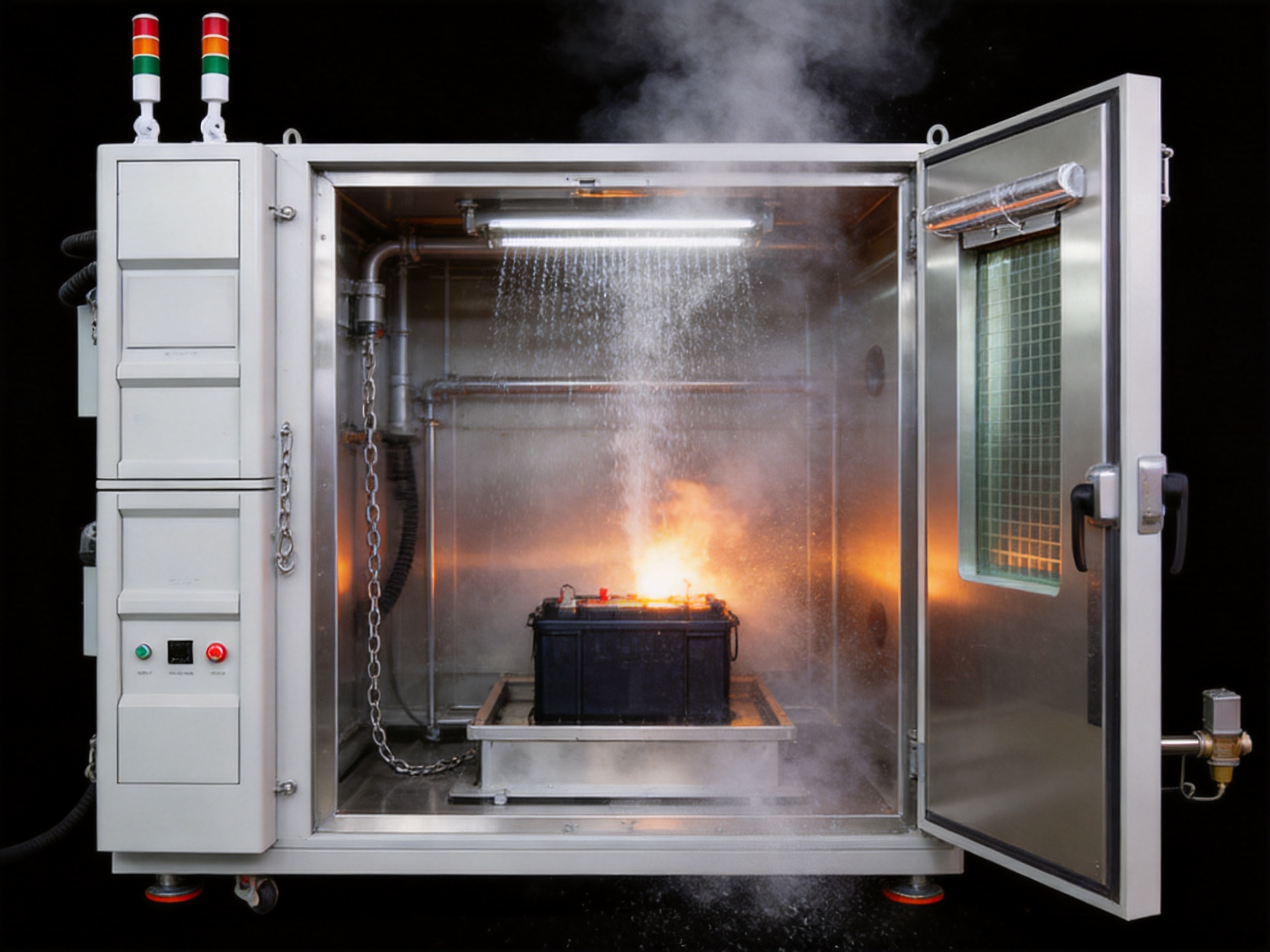
The chamber’s automatic fire extinguishing system is designed to respond without requiring the operator to open the door or manually enter the test area. This is a major safety advantage when the specimen may be hot, electrically energized, chemically reactive, or under pressure. Automated response can reduce reaction time and limit the development of an incident before personnel arrive at the equipment.
Smoke detection is another central feature. Smoke may appear before a visible flame, especially during battery venting, insulation failure, polymer decomposition, or overheating of electronic components. Early detection allows the control system to initiate an alarm or a programmed safety response. It can also provide the operator with critical information during a test that is intended to observe thermal failure behavior.
The fine water mist sprinkler system is intended to distribute extinguishing water in small droplets. Fine mist can help cool hot surfaces, reduce flame intensity, and limit the spread of a fire within the test space. It may also reduce water consumption compared with a conventional large-volume discharge system, although the actual extinguishing performance depends on the specimen, fire type, chamber arrangement, water supply, and validated system design.
The rapid water injection device provides an additional emergency response path. When a test specimen requires fast cooling or fire suppression, the availability of a quick water injection function can be valuable. In battery testing, rapid cooling may help control thermal propagation or reduce the energy available for continued reaction. The operator must follow the manufacturer’s procedures because water is not appropriate for every chemical or electrical hazard.
The pressure relief device addresses another failure mode. If a thermal event produces gas or pressure faster than the chamber can safely contain it, pressure relief can help direct or release the force through a designated mechanism. A pressure relief system must never be blocked, modified, or covered by unauthorized accessories. Its discharge direction and clearance requirements should be included in the installation plan.
Together, these systems create a layered emergency response structure:
First, the reinforced enclosure, door chain, and viewing window help maintain the physical test boundary.
Second, smoke detection helps identify a developing incident at an early stage.
Third, the automatic extinguishing and fine water mist systems provide a rapid response without requiring immediate manual intervention.
Fourth, the rapid water injection device supports urgent cooling or suppression when required by the test procedure.
Fifth, the pressure relief device provides a controlled path for abnormal pressure management.
This layered design distinguishes the chamber from standard thermal equipment that focuses mainly on heating and cooling. It does not eliminate risk, and it should not be considered a substitute for risk assessment, suitable specimen preparation, electrical protection, ventilation, operator training, or emergency planning. Rather, it gives the laboratory more engineered tools for managing foreseeable hazards.
Temperature Performance and Dual Evaporator Technology
Temperature uniformity and stability are essential to meaningful test results. If one area of a chamber is significantly warmer or colder than another, the specimen may not experience the intended condition. Uneven temperature can create inconsistent data, premature failure, or misleading comparisons between samples.
The U2T(H)-EX80-A uses a dual evaporator design to support temperature control and distribution. Dual evaporators can help divide cooling demand, improve airflow and heat exchange, and provide more balanced thermal conditions across the two test compartments. The exact refrigeration circuit and control strategy should be confirmed in the final technical documentation, but the design is intended to support reliable operation for high- and low-temperature testing.
The listed temperature options extend from -40°C to +150°C or from -70°C to +180°C. The first range is appropriate for many general environmental qualification programs, including electronics, materials, and industrial components. The wider -70°C to +180°C option is intended for more severe thermal stress, although actual performance depends on the specimen’s heat load, test duration, empty-chamber conditions, ramp rate, and selected configuration.
High-temperature operation places demands on insulation, heaters, control sensors, wiring, seals, and safety interlocks. Low-temperature operation places demands on refrigeration capacity, insulation integrity, door sealing, drainage, and condensation management. A chamber that performs well at one end of the range must also transition reliably across the full program without excessive recovery time or unstable control.
The supplier describes the product as using technology for stable operation throughout the year without frost. Frost can reduce heat transfer, obstruct airflow, damage seals, and increase recovery time. Frost-free operation is therefore valuable for laboratories that conduct frequent low-temperature testing or operate in environments with changing humidity.
Frost prevention should be supported by proper installation and use. Door openings should be minimized during cold testing, wet specimens should be handled according to procedure, and drainage paths should remain clear. The chamber should not be overloaded beyond its specified heat or mass capacity, because excessive loading can affect air circulation and temperature recovery.
Digital controls allow the operator to program and monitor temperature conditions. A well-designed control interface can support multi-step profiles, dwell periods, ramp transitions, alarms, and status observation. For quality assurance, test records should be retained together with specimen identification, program number, operator, date, and any alarm or intervention history.
Advantages Over Conventional Temperature Chambers
The most important competitive advantage of the U2T(H)-EX80-A is the integration of thermal testing and hazard control in one product concept. Many conventional chambers are designed primarily for temperature exposure and may require separate safety cabinets, external suppression equipment, or extensive laboratory modifications when used with high-risk specimens. The U2T(H)-EX80-A incorporates multiple protective functions directly into the chamber architecture.
A second advantage is the double-layer design. A conventional single-layer chamber may provide a larger uninterrupted test space, but it can also occupy valuable floor area while handling only one test condition at a time. The U2T(H)-EX80-A is better suited to laboratories that prioritize parallel testing, space efficiency, and flexible scheduling.
A third advantage is the combination of smoke detection, fine water mist, rapid water injection, and pressure relief. Competitor products may offer one or two of these functions, but the value of this chamber lies in the coordinated safety package. The exact performance of each system must be verified for the intended hazard, but the architecture provides a stronger starting point for risk control than a basic temperature chamber.
A fourth advantage is the dual evaporator approach. In a two-compartment system, thermal balance is especially important. Dedicated or coordinated evaporator arrangements can help support the cooling demand of the separate layers and reduce the risk that one compartment will receive inadequate thermal performance when the other is operating.
A fifth advantage is year-round frost-free stability. Laboratories often lose productivity when a chamber requires frequent defrosting, manual water removal, or extended recovery after low-temperature operation. A design focused on reducing frost accumulation can support more consistent utilization, provided that the chamber is correctly installed and maintained.
A sixth advantage is suitability for customization. Jiangsu Baisheng Industrial Co., Ltd. describes itself as a technology-driven manufacturer with research and development capabilities rather than a conventional trading-only business. This orientation can be important when customers need modifications for specimen fixtures, electrical feedthroughs, test software, safety interlocks, water systems, or special test methods.
These advantages should be evaluated against the customer’s actual requirements. A chamber with extensive safety systems may require more installation planning, operator training, and maintenance than a simple environmental cabinet. The benefit is a more appropriate solution for hazardous or safety-sensitive testing, not merely a larger list of features.
Manufacturing and Engineering Strengths
The product is supplied by Jiangsu Baisheng Industrial Co., Ltd., a company founded in 2010 and focused on laboratory equipment and safety testing instruments. According to the provided company information, its development began with an electronic testing research and development studio in 2013. The founding team included engineers with technical experience in laboratory equipment and safety compliance testing.
In 2016, the business developed its first independently developed production line and introduced laboratory equipment with independent intellectual property rights. This history is relevant to the U2T(H)-EX80-A because explosion-proof temperature chambers require integration across several disciplines. Mechanical design, refrigeration, thermal control, electrical safety, fire response, pressure management, and manufacturing quality must work together. A company with an engineering-oriented background is better positioned to coordinate these elements than a supplier that only resells standard cabinets.
In 2019, the company adopted a “technology plus trade” development strategy, increasing research and development investment, recruiting technical personnel, and expanding international markets. This combination can provide customers with both technical communication and export experience. International buyers often require more than a product catalog; they need specification clarification, packaging coordination, installation support, documentation, and communication across different regulatory environments.
The company further improved its quality management system in 2022, and its products passed rigorous technical specification certifications according to the supplied company profile. Customers should request the relevant certificates, test reports, component documentation, and applicable compliance evidence for the exact chamber configuration being purchased. Certification status can vary by model, option, destination market, and electrical specification.
Manufacturing strength for this type of chamber begins with material and structural design. The enclosure must maintain mechanical integrity under thermal cycling and possible pressure events. Interior surfaces should be compatible with the intended temperature range and test materials. Insulation must provide thermal performance without creating unacceptable fire or contamination risks. Door alignment, seal compression, window installation, and pressure relief routing must be controlled during assembly.
Refrigeration assembly is equally important. The cooling circuit must be assembled cleanly, evacuated correctly, leak-tested, and matched to the selected temperature range. Dual evaporator systems require attention to flow balance, control logic, sensor placement, and defrost or frost-prevention behavior. Each of these factors can influence the chamber’s recovery performance and long-term reliability.
Control-panel manufacturing should include organized wiring, clear labeling, secure terminals, protected sensors, and appropriate separation between power and low-voltage signal circuits. Emergency devices must be connected and tested as part of the complete system rather than treated as optional accessories. The control logic should prevent unsafe operation when a door, sensor, smoke detector, sprinkler system, or pressure protection device indicates an abnormal condition.
Factory testing is another important manufacturing stage. A responsible process may include visual inspection, dimensional checks, electrical safety checks, temperature operation tests, alarm verification, door and seal inspection, refrigeration leak checks, and functional tests of the emergency systems. The final inspection record should identify the tested configuration and any customer-specific options.
Customization is a further manufacturing strength. Different customers may need different chamber ranges, control functions, specimen fixtures, feedthroughs, monitoring systems, or safety interfaces. Customization must be managed carefully so that modifications do not weaken the explosion-proof boundary, obstruct pressure relief, interfere with water discharge, or compromise temperature uniformity. Engineering review should precede any nonstandard change.
Applications in Battery Testing
Battery testing is one of the most important applications for an explosion-proof temperature test chamber. Lithium-ion cells and modules may be subjected to temperature cycling, high-temperature storage, low-temperature storage, charging and discharging at temperature extremes, abuse testing, thermal propagation studies, and safety validation. Nickel-metal hydride and other battery chemistries may also require controlled thermal exposure.
The double-layer structure supports comparative work. Engineers can test two cell designs, two state-of-charge conditions, or two thermal profiles in parallel. One layer may be used for a reference sample while the other evaluates a modified design. This can shorten development cycles and improve the consistency of comparative data.
The chamber’s safety features are particularly relevant when a battery may vent, swell, ignite, or generate pressure. Smoke detection can identify an early-stage failure, while the reinforced door and viewing window help protect the laboratory boundary. Automatic fire suppression, fine water mist, rapid water injection, and pressure relief provide multiple response mechanisms for abnormal events.
Battery testing should always be based on a documented hazard assessment. The operator must consider the battery chemistry, capacity, state of charge, voltage, charging current, number of cells, enclosure design, expected failure energy, and possible reaction with water. The chamber’s suppression strategy should be reviewed with the test method and the battery supplier’s safety guidance.
Electrical feedthroughs and charging equipment also require careful integration. Cables must be rated for the temperature range and protected against abrasion, condensation, and movement. External power supplies, measurement systems, and data acquisition equipment should be arranged so that the chamber’s safety functions remain effective. Unauthorized drilling or modification of the chamber wall can compromise its protective design.
Applications in Electronics and Components
Electronic components are commonly tested at extreme temperatures to evaluate operating reliability, insulation performance, solder-joint integrity, sensor behavior, display performance, and protection-circuit response. Power semiconductors, connectors, printed circuit assemblies, control modules, motors, and communication devices may all benefit from controlled thermal exposure.
Some electronic products generate significant heat during operation. The chamber must therefore be selected according to both the environmental temperature and the specimen’s internal heat load. A nominal temperature range does not automatically indicate that the chamber can maintain that temperature while a high-power specimen is operating. Customers should confirm the permissible heat load and recovery performance for the intended test.
The viewing window can support visual observation of displays, indicators, fans, connectors, and other components. Smoke detection and automatic suppression are useful when power electronics or energy-storage components are being energized during testing. For lower-risk electronic products, these systems may provide an additional level of protection against unexpected wiring faults or component failure.
Applications in Materials and Industrial Quality Assurance
Materials researchers can use the chamber to study the effects of temperature on polymers, composites, coatings, adhesives, seals, packaging materials, insulation, and chemical formulations. High- and low-temperature exposure can reveal brittleness, softening, cracking, shrinkage, expansion, discoloration, loss of adhesion, or changes in mechanical performance.
Chemical materials require special attention. Some formulations may release vapors, undergo exothermic reactions, or become unstable at elevated temperature. Before testing, the laboratory should confirm that the material is compatible with the chamber’s interior, seals, sensors, extinguishing medium, and ventilation arrangement. The test quantity should be limited to the approved amount, and the safety system should be validated for the specific hazard.
Industrial quality assurance teams can use the chamber for incoming inspection, process verification, product qualification, failure analysis, and production sampling. The double-layer configuration can help separate routine screening from engineering investigations. This may reduce the time needed to release products while preserving the ability to perform more detailed testing.
Automotive and aerospace suppliers may also use the chamber for component validation. Temperature exposure can be combined with electrical operation, vibration preparation, dimensional checks, or post-test inspection. The chamber does not replace a complete environmental test program, but it can provide a controlled thermal stage within a broader qualification process.
Installation Planning and Operating Discipline
Because the U2T(H)-EX80-A contains refrigeration, heating, water, electrical, fire suppression, and pressure-management systems, installation should be planned before delivery. The laboratory should verify floor loading, doorway dimensions, lifting arrangements, ventilation, ambient temperature, humidity, drainage, electrical capacity, water quality, and service access.
The approximate equipment weight of 450 or 560 kilograms requires appropriate handling equipment and a stable supporting floor. The installation route should be checked for turning radius, door height, elevator capacity, and overhead clearance. The chamber should not be placed where its pressure relief path is blocked or directed toward an occupied work area.
Electrical installation should be carried out by qualified personnel according to the approved wiring diagram and local requirements. Protective grounding, circuit protection, emergency isolation, and cable routing must be verified. The water supply and drainage arrangement should be compatible with the automatic suppression and rapid injection systems.
Operators should receive training before using the chamber. Training should cover normal programming, specimen loading, temperature limits, door operation, smoke alarms, sprinkler activation, pressure relief, emergency shutdown, water-system reset, post-event inspection, and reporting procedures. Only authorized personnel should alter control parameters or safety settings.
Specimens should be positioned so that airflow is not blocked. The operator should maintain required clearance from chamber walls, sensors, outlets, and sprinkler components. Combustible packaging, loose materials, or unauthorized fixtures should not be placed inside the chamber. The total specimen mass, electrical power, and chemical quantity should remain within the approved test plan.
After an abnormal event, the chamber should not be reopened immediately. The operator should follow the emergency procedure, isolate power if required, allow the equipment to reach a safe condition, and notify responsible safety personnel. The door, window, seals, sensors, suppression system, pressure relief device, and refrigeration system should be inspected before the next test.
Maintenance and Long-Term Reliability
Preventive maintenance helps preserve both test accuracy and safety performance. Daily or pre-test checks may include door closure, window condition, alarm status, chamber cleanliness, drainage, visible wiring, water-system readiness, and unobstructed pressure relief. Any unusual sound, odor, vibration, temperature deviation, or alarm should be investigated.
Periodic maintenance should include calibration or verification of temperature sensors, inspection of heater elements, examination of refrigeration components, leak checks, cleaning of air passages, inspection of door seals, and testing of control interlocks. Smoke detectors and sprinkler components should be checked according to their service requirements.
Frost-free technology reduces the likelihood of ice accumulation, but it does not remove the need for cleaning and inspection. Condensation, contamination, or repeated door openings can still affect performance. The chamber interior should be cleaned using methods compatible with its materials and the tested substances.
Maintenance records should identify the date, technician, measured results, replaced parts, alarm tests, calibration status, and any corrective action. Traceable records are especially important for quality systems and regulated industries. A chamber used for safety-critical testing should be included in the laboratory’s equipment management program.
How to Select the Appropriate Configuration
Customers should begin by defining the required temperature range. If the test program only requires -40°C to +150°C, the corresponding configuration may be sufficient. If the application requires -70°C to +180°C, the wider-range version should be specified. The selected range should reflect not only the target temperature but also ramp rate, specimen heat load, dwell time, and recovery requirements.
The next consideration is specimen hazard. Battery capacity, chemistry, maximum voltage, state of charge, chemical composition, and expected failure behavior should be documented. The supplier should understand whether the test involves smoke, flame, pressure, corrosive vapor, water-reactive material, or energized equipment.
Customers should also define the required working dimensions. The listed compartment dimensions are approximately 500 × 400 × 400 millimeters per layer. The specimen, fixture, wiring, airflow clearance, and safety spacing must all fit within the usable space. A specimen that fits physically may still be unsuitable if it blocks airflow or emergency discharge.
Control and data requirements should be specified in advance. Some laboratories need basic digital programming, while others require multi-step profiles, data export, remote monitoring, alarm recording, or integration with a laboratory information system. These requirements may affect the control hardware and software configuration.
Finally, the customer should request documentation covering the exact supplied model. Important documents may include an operating manual, electrical schematic, dimensional drawing, foundation or installation requirements, safety-system description, maintenance schedule, factory inspection record, and applicable certification information.
Company Capabilities and Customer Support
Jiangsu Baisheng Industrial Co., Ltd. presents itself as a supplier of high-end laboratory equipment and safety testing instruments, with a focus on research, development, technical manufacturing, and international trade. Its stated core values are “Precision in Craftsmanship, Innovation for the Long-Term.” These values align with the requirements of specialized test equipment, where product quality depends on disciplined engineering and continuous improvement rather than appearance alone.
The company’s history shows a progression from electronic testing research and development to independent equipment production, international market expansion, and broader laboratory-equipment development. This progression supports its ability to communicate with both technical and purchasing teams. For customers, the value of a manufacturer is not limited to the initial shipment. Technical clarification, customization, spare parts, troubleshooting, and service communication can influence the total cost of ownership.
The company’s research and development orientation may be particularly useful for customers whose applications do not fit a standard catalog model. A custom solution may be required when the specimen has unusual dimensions, when the test needs integrated electrical monitoring, when the suppression system must be adapted to a specific hazard, or when the chamber must communicate with external laboratory equipment.
Any customization should be documented and approved by engineering personnel. The supplier and customer should jointly confirm the effect of changes on temperature performance, structural strength, electrical safety, pressure relief, fire response, and warranty conditions. Clear technical documentation reduces misunderstandings and improves long-term serviceability.
Q&A
What is the U2T(H)-EX80-A designed for?
It is designed for high- and low-temperature testing of batteries, electronic components, chemical materials, polymers, composites, automotive parts, aerospace components, and other products that require enhanced explosion and fire protection.
Why does the chamber have two layers?
The double-layer structure provides two independent test compartments in one equipment system. It can support parallel testing, comparison of different samples, or separate temperature programs while using laboratory floor space efficiently.
What temperature ranges are available?
The supplied specifications list a -40°C to +150°C option and a -70°C to +180°C option. The applicable range depends on the final configuration and should be confirmed before purchase.
What safety systems are included?
The listed safety systems include an explosion-proof door chain, an explosion-proof viewing window, an automatic fire extinguishing system, smoke detection, a fine water mist sprinkler system, a rapid water injection device, and an explosion-proof pressure relief device.
Is the chamber suitable for lithium-ion battery testing?
It is intended for battery testing, including lithium-ion and nickel-metal hydride applications. However, suitability depends on battery capacity, state of charge, chemistry, test method, and expected failure behavior. The specific battery hazard assessment should be reviewed with the manufacturer before testing.
What is the purpose of the viewing window?
The viewing window allows the operator to observe the test specimen without opening the chamber. Its explosion-proof construction is intended to provide a stronger observation boundary for tests in which smoke, flame, or pressure may occur.
How does the automatic fire extinguishing system help?
It provides an automated response to a detected fire or hazardous event, reducing the need for immediate manual access to the chamber. The actual response sequence and extinguishing medium should be confirmed in the operating documentation.
What is the purpose of the rapid water injection device?
The device is intended to support fast cooling or fire suppression when required by the test procedure. Its use must be based on the tested material and approved safety instructions because water is not suitable for every chemical or electrical hazard.
What does the dual evaporator design do?
The dual evaporator design supports the refrigeration and thermal-management requirements of the two-compartment structure. It is intended to improve cooling balance and temperature control across the test layers.
Does frost-free operation eliminate maintenance?
No. Frost-free technology is intended to reduce frost accumulation and improve stable operation, but the chamber still requires inspection, cleaning, sensor verification, refrigeration maintenance, drainage checks, and safety-system testing.
What should be confirmed before ordering?
Customers should confirm the temperature range, compartment dimensions, heat load, specimen hazard, electrical requirements, water and drainage requirements, pressure relief arrangement, control functions, data recording needs, certification documents, installation conditions, and service support.
Can the chamber be customized?
The supplier describes itself as capable of providing customized laboratory equipment solutions. Potential customization should be discussed with engineering personnel and evaluated for its effect on temperature performance, structural safety, fire protection, pressure relief, and compliance.
What is the approximate size and weight?
The listed overall dimensions are approximately 1,100 × 1,600 × 1,380 millimeters. The listed weight is approximately 450 or 560 kilograms, depending on the selected configuration.
Why is manufacturer experience important for this product?
An explosion-proof temperature chamber combines mechanical construction, refrigeration, heating, controls, fire response, water systems, and pressure protection. A manufacturer with research and development and production experience can better coordinate these systems and provide technical support for specialized applications.
Conclusion
The U2T(H)-EX80-A Double-Layer Explosion-Proof Temperature Test Chamber is designed for laboratories that require controlled high- and low-temperature testing together with a more comprehensive safety strategy. Its double-layer structure improves testing flexibility, while the explosion-proof door chain and viewing window reinforce the chamber boundary. Smoke detection, automatic fire extinguishing, fine water mist sprinkling, rapid water injection, and pressure relief address several possible failure modes during demanding tests.
The dual evaporator design and frost-free operating concept support stable temperature management and year-round use. The available temperature configurations extend from general environmental testing to more severe thermal stress applications. With a compact integrated structure, the chamber can help laboratories increase test capacity without installing two separate basic systems.
Its strongest applications include battery safety testing, electronic component qualification, materials research, industrial quality assurance, and specialized research involving potentially hazardous specimens. The product is most valuable when selected as part of a complete safety program that includes risk assessment, approved test procedures, qualified installation, operator training, preventive maintenance, and documented emergency response.
Jiangsu Baisheng Industrial Co., Ltd.’s stated research and development background, manufacturing experience, technical orientation, and customization capability provide a foundation for supplying this type of specialized laboratory equipment. Customers should confirm the final specifications, certificates, safety performance, and installation requirements for their exact application. When properly configured and operated, the U2T(H)-EX80-A can provide a practical combination of thermal testing capability, laboratory productivity, and enhanced protection for high-risk environmental testing.
References
1. Manufacturer-provided product information for the U2T(H)-EX80-A Double-Layer Explosion-Proof Temperature Test Chamber.
2. Manufacturer-provided technical specifications, safety feature descriptions, application information, and dimensional data.
3. Manufacturer-provided company profile, development history, research and development information, and stated quality-management background.
4. General principles of environmental testing for electronic equipment, batteries, industrial components, and materials.
5. General laboratory practices for temperature chamber installation, preventive maintenance, specimen loading, emergency response, and equipment documentation.
6. General engineering principles for fire detection, pressure relief, thermal management, and risk control in enclosed test equipment.
7. General quality-assurance practices for calibration, traceability, test records, and laboratory equipment management.
Product: U2T(H)-EX80-A Double-Layer Explosion-Proof Temperature Test Chamber

PREV:Engineering Precision in Cyclic High and Low Temperature Humidity Testing
NEXT:UT-100-A High and Low Temperature Environmental Test Chamber: Precision, Reliability, and Flexible Laboratory Performance
NEXT:UT-100-A High and Low Temperature Environmental Test Chamber: Precision, Reliability, and Flexible Laboratory Performance
Interested in cooperation or have questions?
Featured Products
Related products
Quick Link
Contact Information
- Tel: +86-13861043568
- E-mail: 1840784112@qq.com
- Add: Tianting District, Changzhou City, Jiangsu Province, China, No. 6 Hecircuit
Scan Code
Copyright © JIANGSU BAISHENG INDUSTRIAL CO., LTD.
All Rights Reserved. Privacy Custom Precision Laboratory Testing Equipment Manufacturers
