 English
 Español

NEWS
NEWS
NEWS
NEWS
NEWS
NEWS
NEWS
NEWS
NEWS
NEWS
NEWS
NEWS
NEWS
NEWS
NEWS
NEWS

Luo Qinyue — Senior After-Sales Service Engineer
Home / Author / Luo Qinyue — Senior After-Sales Service Engineer / High-Performance Fast Temperature and Humidity Cycling Chamber for Precision Environmental Testing
High-Performance Fast Temperature and Humidity Cycling Chamber for Precision Environmental Testing
Content
- 1 Why Rapid Temperature and Humidity Cycling Matters
- 2 Product Overview
- 3 Engineering Design for Stable Environmental Control
- 4 Structural Design and Operator Convenience
- 5 Safety-Oriented Electrical and Mechanical Design
- 6 Advantages Over Conventional Environmental Chambers
- 7 Manufacturing Strengths of Jiangsu Baisheng Industrial Co., Ltd.
- 8 Advanced Manufacturing Process Considerations
- 9 Applications Across Multiple Industries
- 10 Recommended Operating Practices
- 11 How to Select the Correct Configuration
- 12 Quality, Customization, and Long-Term Value
- 13 Q&A
- 13.1 What is the U5QTH-100-A/W Fast Temperature & Humidity Cycling Chamber?
- 13.2 What temperature ranges are available?
- 13.3 What temperature-change rates can the chamber provide?
- 13.4 How does the chamber control humidity?
- 13.5 What is the chamber’s usable working space?
- 13.6 Why is the Panasonic fan motor important?
- 13.7 What is the purpose of the stainless steel water tray?
- 13.8 Is the chamber suitable for energized electronic products?
- 13.9 How does this chamber differ from a standard temperature chamber?
- 13.10 Can the chamber be customized?
- 13.11 What should be confirmed before ordering?
- 14 Conclusion
- 15 References
- 16 Product: U5QTH-100-A/W Fast Temperature & Humidity Cycling Chamber
Modern laboratories and manufacturing organizations increasingly require environmental test equipment that can reproduce severe temperature and humidity conditions quickly, accurately, and repeatedly. Electronic assemblies, automotive components, aerospace parts, batteries, communication equipment, sensors, polymers, coatings, and many other products may perform correctly under normal conditions but fail when exposed to rapid thermal transitions, condensation, high humidity, or prolonged temperature extremes. A dependable environmental chamber is therefore more than an insulated cabinet. It is a precision test system that must coordinate refrigeration, heating, humidification, dehumidification, air circulation, sensing, control, safety, and mechanical durability.
The U5QTH-100-A/W Fast Temperature & Humidity Cycling Chamber is designed for this demanding class of laboratory work. With a nominal capacity of 100 liters, a working space of 500 × 400 × 500 mm, and selectable rapid temperature-change performance of 5°C/min, 10°C/min, 15°C/min, or 20°C/min, it provides a flexible platform for accelerated environmental testing. Depending on the selected configuration, the chamber can operate from -40°C to +150°C or from -70°C to +180°C. This range enables users to evaluate products under cold-start, heat-soak, high-humidity, condensation, thermal-shock-like cycling, and repeated temperature-transition conditions.
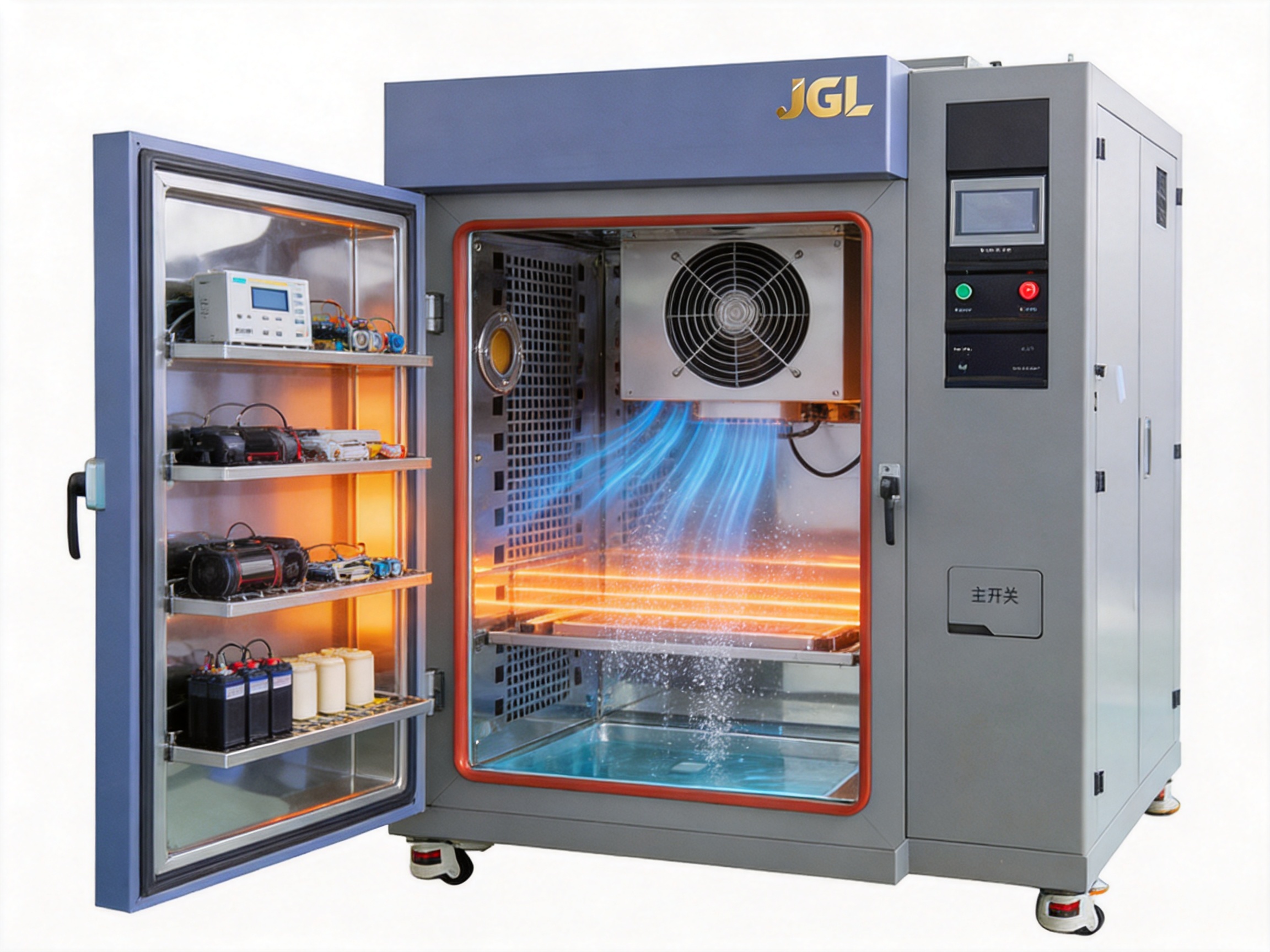
The chamber combines a compact working volume with a robust industrial structure. Its balanced temperature and humidity control system uses dynamic proportional-integral-derivative control and water vapor partial-pressure regulation to support precise environmental management. Its interior is manufactured from film-coated mirror stainless steel, while its circulating fan uses a Panasonic motor with high-temperature-resistant bearings rated for operation up to 200°C. The refrigeration system includes a full-size stainless steel water tray, and the electrical system incorporates a dedicated leakage-protection design to improve operational safety.
For laboratories seeking a customizable precision testing solution, the product also reflects the manufacturing strengths of Jiangsu Baisheng Industrial Co., Ltd. The company combines engineering development, production experience, international trade capability, and application-oriented customization. Its history in electronic testing and laboratory equipment development provides a practical foundation for designing equipment around actual testing requirements rather than offering only standardized cabinets.
Why Rapid Temperature and Humidity Cycling Matters
Environmental stress is often cumulative. A product may be exposed to low temperature during storage, high temperature during operation, moisture during transportation, and abrupt changes when it moves between indoor and outdoor environments. Each transition can create mechanical, electrical, chemical, or material stress. Differences in expansion coefficients can loosen solder joints, crack encapsulants, distort seals, or separate bonded layers. Moisture can lower insulation resistance, accelerate corrosion, and promote leakage paths on printed circuit boards.
Traditional temperature chambers can often achieve the required high and low temperatures, but they may take a long time to transition between them. When a test plan depends on rapid cycling, slow transitions can reduce productivity and fail to reproduce the intended field condition. A rapid temperature and humidity cycling chamber is designed to reduce the time between setpoints while maintaining stable control throughout the transition. This allows engineers to perform more cycles within a shorter schedule and obtain failure data earlier in the development process.
Rapid cycling is particularly valuable for design verification and reliability growth. If a component survives one transition but fails after repeated cycles, the failure may reveal a marginal interconnection, weak material interface, inadequate sealing method, or moisture-sensitive component. By compressing the test schedule, the U5QTH-100-A/W can help laboratories identify weaknesses before products reach pilot production or the market.
Humidity control adds another dimension to thermal testing. Moisture affects materials and electrical systems differently at different temperatures. A controlled increase in humidity at moderate temperatures may expose corrosion risks, while cooling a humid environment can produce condensation on test specimens. The chamber’s temperature and humidity control architecture is intended to regulate these interacting variables rather than treating humidity as an independent afterthought.
Product Overview
| Item | Specification or Feature |
|---|---|
| Product model | U5QTH-100-A/W |
| Product type | Fast temperature and humidity cycling chamber |
| Nominal capacity | 100 L |
| Working-space dimensions | 500 × 400 × 500 mm |
| Temperature range, configuration one | -40°C to +150°C |
| Temperature range, configuration two | -70°C to +180°C |
| Selectable average or linear temperature rates | 5°C/min, 10°C/min, 15°C/min, and 20°C/min |
| Interior construction | Film-coated mirror stainless steel plates |
| Circulating fan motor | Panasonic motor with high-temperature-resistant bearings rated up to 200°C |
| Safety feature | Leakage-protection design |
| Water-management feature | Full-size stainless steel water tray |
| Approximate external dimensions | 780 × 1600 × 1710 mm |
| Approximate machine weight | 650 kg or 820 kg, depending on configuration |
The duplicated temperature ranges and machine weights in the supplied specification indicate that the chamber is available in more than one configuration. The -40°C to +150°C version and the -70°C to +180°C version may require different refrigeration arrangements, insulation levels, and supporting components. Similarly, the weight variation is consistent with configuration differences. Buyers should confirm the selected temperature range, rate, power supply, and final dimensions with the manufacturer before ordering.
Engineering Design for Stable Environmental Control
Balanced Temperature and Humidity Regulation
The central challenge in a combined temperature and humidity chamber is the interaction between thermal control and moisture control. Heating air can lower relative humidity even when the absolute moisture content remains unchanged. Cooling air can raise relative humidity until condensation occurs. A control system that reacts only to temperature may therefore produce unstable humidity behavior, especially during rapid transitions.
The U5QTH-100-A/W uses a balanced temperature and humidity control system supported by dynamic PID regulation and water vapor partial-pressure control. PID control continuously compares measured conditions with programmed setpoints and adjusts the relevant actuators. In practical operation, this can help reduce overshoot, limit oscillation, and maintain a more consistent test environment during demanding ramps.
Water vapor partial-pressure control is useful because it provides a more direct way to manage the moisture content of the chamber atmosphere. Relative humidity changes with temperature, while vapor partial pressure represents the water vapor component more fundamentally. Coordinating these variables allows the control system to respond more intelligently during heating, cooling, humidification, and dehumidification.
Stable control is important for repeatability. If two identical specimens are tested under noticeably different humidity conditions, their results may not be directly comparable. A well-regulated chamber helps ensure that differences in failure behavior arise from the products themselves rather than uncontrolled environmental variation.
Rapid Temperature-Change Capability
The chamber offers average or linear temperature-rate options of 5°C/min, 10°C/min, 15°C/min, and 20°C/min. This selection allows the test engineer to match the chamber profile to the relevant standard, product specification, or internal reliability program. A lower rate may be appropriate when a gradual transition is required, while a higher rate can accelerate stress screening or reproduce severe transportation and operating conditions.
Rate selection should always be considered together with specimen mass, specimen heat capacity, loading arrangement, starting temperature, ending temperature, and humidity requirements. A lightly loaded chamber may reach a programmed rate more easily than a heavily loaded chamber containing large metal parts. For that reason, test plans should define not only the nominal ramp rate but also the loading conditions and measurement location used to verify performance.
The availability of multiple rates is a competitive advantage over chambers designed around only one fixed transition speed. It gives laboratories more flexibility when they work with different industries or multiple test standards. It also allows one chamber to support product development, production sampling, qualification, and failure analysis instead of requiring separate equipment for every test profile.
Air Circulation and Temperature Uniformity
Air movement is essential to fast and uniform environmental changes. Without effective circulation, the chamber may contain hot and cold zones, and the specimens may experience conditions different from those measured by the primary sensor. The circulating fan distributes conditioned air throughout the work area, supports heat transfer, and helps the chamber respond consistently to programmed transitions.
The U5QTH-100-A/W uses a Panasonic motor with built-in high-temperature-resistant bearings rated up to 200°C. This specification provides a significant operating margin above the chamber’s listed upper temperature configurations. High-temperature-resistant bearings are particularly important because ordinary bearings may experience lubricant degradation, increased friction, shortened service life, or mechanical noise under repeated high-temperature exposure.
A durable fan assembly contributes to long-term reliability. The fan is not merely an accessory; it is a continuously operating mechanical component that affects temperature distribution, transition speed, and test repeatability. Selecting a recognized motor supplier and a bearing system suited to elevated temperatures demonstrates attention to the chamber’s complete operating cycle rather than only its headline temperature range.
Interior Materials and Cleanability
The inner chamber is made from film-coated mirror stainless steel plates. Stainless steel is widely used in environmental test chambers because it resists corrosion, tolerates repeated temperature changes, and can be cleaned more easily than many porous or uncoated materials. The mirror finish also helps provide a smooth internal surface with fewer locations for residue or moisture to accumulate.
The film coating adds another protective layer for the chamber interior. In humidity testing, condensation and water exposure can occur repeatedly. A properly selected internal finish helps preserve the appearance and serviceability of the workspace while reducing the risk of corrosion caused by water, dissolved contaminants, or test-material residues.
Interior material selection should also account for the products being tested. Laboratories may test plastics, electronic assemblies, coated metals, rubber components, or chemical products. A smooth stainless-steel interior provides a versatile environment for these applications and can simplify cleaning between test programs.
Water Management and Refrigeration Protection
Moisture management is one of the most important aspects of a humidity chamber. Condensate can form during cooling, dehumidification, or specimen transitions. If water is allowed to collect near refrigeration components or the compressor housing, it may contribute to frost formation, corrosion, insulation degradation, and maintenance problems.
The refrigeration unit is equipped with a full-size stainless steel water tray. Its purpose is to help prevent compressor frost and condensate-water corrosion of the casing. The full-size design provides more complete coverage and supports controlled collection of water produced during operation. Stainless steel is appropriate for this location because the tray may be exposed to repeated wetting, temperature variation, and prolonged contact with condensate.
Compared with a minimal drainage arrangement, a properly designed water tray can improve equipment protection and reduce the chance that condensate will reach vulnerable components. It also makes inspection and maintenance more straightforward. Operators should still follow the recommended drainage, cleaning, and inspection schedule, because good water management depends on both equipment design and regular care.
Structural Design and Operator Convenience
Adjustable-Damping Door Hinges
The chamber uses damping hinges that allow free adjustment of the door-opening angle. This feature supports safer and more convenient operation in laboratories where the chamber may be loaded with fixtures, cable assemblies, sensors, or bulky specimens. The operator can position the door at a practical angle instead of relying on a limited number of fixed positions.
Damping also helps control the movement of the door. A large insulated door can be heavy, particularly on a chamber with a robust sealing system. Controlled movement reduces sudden closing or opening and can help protect the hinge structure, gasket, operator, and nearby equipment. During repetitive laboratory work, these small ergonomic improvements can significantly affect usability.
Compact Capacity for Flexible Laboratory Deployment
With a nominal capacity of 100 liters, the U5QTH-100-A/W occupies a useful position between small benchtop chambers and large walk-in or floor-standing systems. Its working space of 500 × 400 × 500 mm is suitable for electronic assemblies, sensor modules, compact mechanical parts, sample groups, and development prototypes.
A 100-liter working volume can help laboratories control test cost and energy consumption when they do not need to condition a large enclosure. Smaller chambers typically allow users to run fewer specimens with more targeted control, reducing the time and energy associated with every test. At the same time, the internal dimensions provide more usable space than many small component-level chambers.
The listed external dimensions of approximately 780 × 1600 × 1710 mm should be considered during facility planning. Buyers should allow additional clearance for door operation, ventilation, electrical access, maintenance, drainage, and safe movement around the unit. The approximate weight ranges from 650 kg to 820 kg depending on configuration, so floor loading, delivery access, and installation arrangements should be evaluated in advance.
Safety-Oriented Electrical and Mechanical Design
Environmental test chambers combine high voltage, heating elements, refrigeration equipment, moving fans, water, and extreme temperatures. This combination requires a carefully coordinated safety design. The U5QTH-100-A/W incorporates a unique leakage-protection design intended to improve operating safety.
Leakage protection is particularly relevant in a humidity chamber because water and condensation are inherent parts of operation. Proper protection can help reduce the risk associated with electrical leakage caused by moisture, damaged insulation, wiring faults, or component aging. It should be understood as one element of a complete safety system rather than a replacement for correct grounding, installation, inspection, and operator training.
The use of core electrical components from top-tier imported brands is another stated product feature. High-quality components can support stable switching, sensing, protection, and control over long operating periods. Component quality also affects serviceability because recognized parts are generally easier for qualified technicians to identify and replace.
For safe operation, users should establish procedures covering maximum specimen power dissipation, flammable or corrosive materials, cable routing, door sealing, water drainage, emergency shutdown, and chamber cleaning. Any specimen that can release gas, ignite, melt, or react under test conditions should be evaluated before placement in the chamber. The manufacturer’s application guidance should be followed for special materials and energized products.
Advantages Over Conventional Environmental Chambers
More Than a Single-Rate Temperature Chamber
Many conventional chambers are optimized for steady-state exposure or moderate transition speeds. They may perform well for long-duration temperature storage tests but offer limited flexibility for fast cycling. The U5QTH-100-A/W addresses this limitation by providing four selectable temperature-rate options. This makes it better suited to laboratories that perform multiple test methodologies and need to change the severity of their environmental profiles.
Integrated Humidity Performance
Some temperature chambers require separate humidity equipment or cannot control moisture precisely during rapid transitions. The U5QTH-100-A/W is designed as an integrated temperature and humidity system. Its dynamic PID control and water vapor partial-pressure regulation support coordinated environmental management, helping users investigate the combined effects of heat, cold, moisture, and condensation.
Durable Components for Repeated Cycling
Rapid cycling can be more demanding than steady-state operation because the refrigeration, heating, fan, seals, and control components repeatedly move between different operating conditions. The high-temperature-rated fan bearings, stainless-steel water tray, stainless interior, and imported electrical components demonstrate a component-selection approach focused on repeated service rather than occasional testing.
Configuration Flexibility
The availability of both a -40°C to +150°C range and a -70°C to +180°C range gives customers a choice based on actual test needs. Not every laboratory requires the most extreme range, and selecting a suitable configuration can help optimize purchase cost, energy use, and installation requirements. Laboratories performing aerospace, automotive, battery, or specialized electronic testing may benefit from the higher-performance configuration, while general product testing may be adequately served by the standard range.
Better Use of Laboratory Space
The 100-liter capacity offers a practical compromise between test volume and equipment footprint. It can support development and quality laboratories that need representative specimens without the space, infrastructure, and operating cost of a large chamber. The result is a useful platform for organizations that need high-performance cycling but have limited floor area.
Manufacturing Strengths of Jiangsu Baisheng Industrial Co., Ltd.
The product is supplied by Jiangsu Baisheng Industrial Co., Ltd., a technology-driven enterprise founded in 2010 and focused on laboratory equipment and safety testing instruments. The company’s stated capabilities include research and development, engineering design, manufacturing, and international trade. This combination is important for environmental chambers because successful delivery involves more than fabricating an enclosure. It requires understanding technical specifications, adapting the system to the customer’s application, and supporting overseas communication and supply.
Development Rooted in Electronic Testing
The company’s predecessor was established in 2013 as a research and development studio specializing in electronic testing. This background is relevant to the U5QTH-100-A/W because electronic assemblies are among the most sensitive products in environmental testing. Engineers familiar with electronic testing understand the importance of insulation resistance, electrical leakage, connector reliability, solder-joint fatigue, thermal expansion, and moisture-related failure.
In 2016, the organization transitioned from a technical studio into an enterprise and completed its first independently developed production line. This progression suggests a manufacturing model in which product design and production capability developed together. That approach can help reduce the gap between an engineering prototype and a repeatable commercial product.
Technology Plus Trade
In 2019, the company adopted a “technology plus trade” development strategy. For international customers, this combination can provide practical advantages. A technically capable supplier can discuss chamber performance, specimen loading, test profiles, and configuration details more effectively than a company focused solely on sales. International trade experience, meanwhile, supports quotation, documentation, packaging, shipment coordination, and communication across markets.
Environmental chambers are often customized according to voltage, temperature range, ramp rate, humidity requirements, access ports, data acquisition, shelves, specimen fixtures, and safety interlocks. A supplier with both technical and commercial experience is better positioned to coordinate these requirements from initial inquiry through production and delivery.
Research and Development as a Core Capability
The company identifies its dedicated R&D team as a central advantage. Precision laboratory equipment requires continuous improvement because users expect better stability, faster transitions, easier maintenance, improved energy efficiency, and more convenient operation. An active engineering team can evaluate these requirements and incorporate them into future product revisions.
R&D also supports customization. For example, a customer may require a special cable port for energized electronics, a particular shelf arrangement, a modified temperature profile, a different control interface, or an adapted drainage arrangement. Customization must preserve the chamber’s thermal, humidity, mechanical, and safety performance. This is more effectively managed when the supplier has internal technical expertise rather than simply forwarding requests to an unrelated factory.
Quality-System Development
According to the supplied company history, the organization further improved its quality management system in 2022, and its products passed rigorous technical specification certifications. Specific certification names should be confirmed for the individual model and market before procurement. Nevertheless, the company’s stated emphasis on quality-system development indicates an effort to formalize design, production, inspection, and delivery processes.
A strong quality process for a fast cycling chamber should include verification of chamber dimensions, insulation and sealing condition, fan operation, temperature sensing, humidity sensing, ramp performance, steady-state stability, electrical protection, refrigeration operation, condensate management, and door function. It should also include traceable documentation for key components and final inspection records.
Advanced Manufacturing Process Considerations
Precision Fabrication of the Chamber Body
The chamber body must maintain dimensional accuracy and structural rigidity while tolerating repeated expansion and contraction. Manufacturing begins with accurate cutting and forming of the outer shell, internal liner, insulation supports, door structure, and equipment compartments. Inconsistent geometry can create gaps, stress concentrations, or uneven sealing pressure.
The stainless-steel interior should be assembled with attention to smooth joints, clean surfaces, and resistance to moisture accumulation. The film-coated mirror finish must be protected during fabrication and assembly to avoid scratches or contamination that could affect cleanability and appearance. Proper alignment of internal panels also supports predictable airflow and usable chamber volume.
Thermal Insulation and Sealing
Fast temperature transitions require effective insulation. Poor insulation increases heat loss, places additional demand on the refrigeration and heating systems, and can create external condensation or hot surfaces. Manufacturing quality is therefore closely linked to insulation continuity, panel fit, door construction, and gasket compression.
The door seal must remain effective across the specified temperature range. It must tolerate repeated movement, low-temperature exposure, high-temperature exposure, humidity, and mechanical compression. The adjustable damping hinges must be aligned with the door and latch so that the seal is compressed consistently without excessive force.
Integration of Refrigeration and Heating Systems
The refrigeration system must be selected and assembled according to the target low temperature, transition speed, chamber volume, specimen load, and ambient conditions. A lower-temperature configuration, especially one reaching -70°C, may require more powerful or multi-stage refrigeration architecture than a -40°C configuration. The compressor, heat exchangers, valves, piping, insulation, and controls must work as an integrated system.
Heating capacity must also be balanced with cooling performance. If the heating system is too weak, the chamber may struggle to achieve high-temperature setpoints or recover quickly after a cold exposure. If control coordination is poor, heating and cooling may oppose each other, wasting energy and causing instability. Proper commissioning should verify both individual functions and combined transitions.
Control-System Assembly and Testing
The control cabinet should be assembled with clear wiring, secure terminals, adequate separation of power and signal circuits, and appropriate protection devices. Imported core electrical components can support reliability, but correct installation remains essential. Each sensor, relay, contactor, protection device, fan, heater, valve, and compressor control should be checked during production testing.
Dynamic PID parameters should be tuned for the chamber’s thermal mass and operating range. A setting that performs well near room temperature may not be optimal at -70°C or +180°C. Commissioning should therefore evaluate multiple operating points and representative ramp profiles. Humidity control should likewise be tested during heating, cooling, humidification, dehumidification, and recovery conditions.
Final Performance Verification
Before shipment, a chamber should undergo functional inspection and performance verification. Typical checks include empty-chamber temperature mapping, humidity stability, ramp-rate verification, door-seal inspection, fan operation, water-tray condition, drainage performance, emergency protection, leakage protection, and visual inspection of the interior and exterior.
For a customer requiring a specific test standard, the acceptance protocol should define the sensor location, loading condition, stabilization time, ramp-rate calculation method, allowable deviation, and data-recording interval. Clear acceptance criteria prevent misunderstandings and provide a useful baseline for future maintenance and calibration.
Applications Across Multiple Industries
Electronic and Electrical Products
Printed circuit boards, power supplies, connectors, displays, sensors, switches, control modules, and communication devices can be tested for thermal cycling, moisture resistance, insulation performance, and condensation-related failure. The leakage-protection design is particularly relevant when products are energized during testing, although the specimen’s electrical safety must be assessed separately.
Automotive Components
Automotive electronics and components experience rapid changes in ambient conditions, engine-compartment heat, cold starts, humidity, and vibration. The chamber can support testing of instrument modules, lighting components, sensors, control units, connectors, seals, and selected interior or under-hood materials. Engineers can use different ramp rates to compare accelerated screening profiles with expected vehicle service conditions.
Battery and Energy-Storage Components
Battery-related components may require temperature-dependent performance testing, storage testing, cycling, and evaluation of protection systems. Because batteries can generate heat, gas, or other hazards, the test plan must include appropriate specimen limits, monitoring, and safety procedures. The chamber’s capacity is well suited to cell-level, module-level, or small assembly development work when the application is compatible with the manufacturer’s safety guidance.
Aerospace and Defense Electronics
Aerospace and defense products often require severe environmental qualification and reliability screening. Compact avionics modules, sensors, connectors, electronic control units, and material samples can be exposed to programmed combinations of high temperature, low temperature, humidity, and rapid transitions. The selectable temperature rates allow engineers to tailor the chamber profile to project requirements.
Materials, Plastics, Rubber, and Coatings
Materials may change dimensions, hardness, flexibility, adhesion, color, or surface condition when exposed to temperature and moisture. Seals and elastomers can be evaluated for embrittlement at low temperature and degradation at high temperature. Coatings and bonded assemblies can be examined for cracking, delamination, blistering, and loss of adhesion after repeated environmental cycles.
Research, Universities, and Contract Laboratories
Research institutions and contract testing organizations often support multiple customers with different requirements. A configurable 100-liter chamber can help these users conduct development studies, comparative experiments, accelerated aging, and failure analysis without dedicating a large room to a single environmental system. Its range of ramp rates increases the number of test methods that can be accommodated.
Recommended Operating Practices
Before beginning a test, operators should verify that the programmed temperature and humidity profile is appropriate for the specimen. The total specimen volume should not obstruct air circulation. Shelves or fixtures should be arranged to leave adequate space around the product, and sensors should be positioned according to the relevant test method.
Operators should avoid placing wet, corrosive, flammable, or chemically reactive materials in the chamber unless the equipment and test plan are specifically approved for that application. Specimens that dissipate significant electrical power should be evaluated for heat generation because they can alter the chamber profile and create local hot spots.
The door should remain closed for the shortest practical time during loading and inspection. Frequent door opening introduces ambient air and moisture, extends recovery time, and may affect cycle repeatability. After a test, the chamber interior, water tray, drain path, and door gasket should be inspected and cleaned when necessary.
Preventive maintenance should include inspection of electrical connections, fan noise and vibration, gasket condition, drainage, refrigeration performance, sensor calibration, safety devices, and visible corrosion. Calibration intervals should be based on usage, internal quality procedures, and applicable customer or regulatory requirements.
How to Select the Correct Configuration
The first selection factor is the required temperature range. Users should determine whether -40°C to +150°C is sufficient or whether the application requires the more extreme -70°C to +180°C configuration. The second factor is the required transition rate. A laboratory may need 5°C/min for general cycling, 10°C/min or 15°C/min for accelerated reliability testing, or 20°C/min for demanding rapid-transition programs.
The specimen dimensions and quantity should then be compared with the 500 × 400 × 500 mm working space. The nominal 100-liter volume should not be treated as a target loading volume; air circulation and sensor placement require free space around the specimens. Users should also identify whether products will be powered during testing, whether cable ports are needed, and whether internal fixtures must be customized.
Facility conditions are equally important. Confirm the available electrical supply, floor capacity, room ventilation, ambient temperature, drainage arrangements, access route, and service clearance. The listed external dimensions and configuration-dependent weight should be used for preliminary planning, followed by confirmation of final drawings from the supplier.
Quality, Customization, and Long-Term Value
The value of an environmental chamber is determined not only by its purchase price but also by its usable test capacity, uptime, serviceability, repeatability, and ability to support future projects. A chamber with multiple temperature rates and two available temperature-range configurations can remain useful as testing requirements evolve.
Customization can further improve long-term value. Jiangsu Baisheng Industrial Co., Ltd. positions itself as a supplier of customized precision laboratory equipment. Potential customization areas may include chamber configuration, temperature range, ramp rate, fixtures, access ports, control functions, data interfaces, electrical requirements, and safety arrangements. Each modification should be reviewed for its effect on thermal performance, humidity control, structural integrity, and compliance with the intended test method.
The company’s stated core values, “Precision in Craftsmanship, Innovation for the Long-Term,” are consistent with the needs of this product category. Environmental chambers are capital equipment, and customers generally require dependable operation over many years. Attention to component selection, manufacturing quality, engineering support, and continuous improvement can help reduce the total cost of ownership.
Q&A
What is the U5QTH-100-A/W Fast Temperature & Humidity Cycling Chamber?
It is a 100-liter environmental test chamber designed for rapid temperature and humidity cycling. It combines temperature control, humidity regulation, air circulation, refrigeration, heating, safety protection, and programmable environmental testing in one system.
What temperature ranges are available?
The supplied specifications list two configurations: -40°C to +150°C and -70°C to +180°C. The required range should be selected before purchase because the refrigeration, heating, insulation, control, and overall machine configuration may differ.
What temperature-change rates can the chamber provide?
The available average or linear rates are 5°C/min, 10°C/min, 15°C/min, and 20°C/min. Actual performance depends on the selected configuration, specimen load, starting and ending temperatures, humidity conditions, and test method.
How does the chamber control humidity?
The chamber uses a balanced temperature and humidity control system with dynamic PID regulation and water vapor partial-pressure control. This approach is intended to coordinate moisture and temperature behavior during steady-state exposure and rapid transitions.
What is the chamber’s usable working space?
The listed studio dimensions are 500 × 400 × 500 mm, with a nominal capacity of 100 liters. Users should preserve sufficient clearance around specimens so that air circulation and sensor response are not obstructed.
Why is the Panasonic fan motor important?
The circulating fan uses a Panasonic motor with built-in high-temperature-resistant bearings rated up to 200°C. The fan supports air distribution and temperature uniformity, while high-temperature-resistant bearings are intended to improve durability during repeated elevated-temperature operation.
What is the purpose of the stainless steel water tray?
The full-size stainless steel water tray helps collect condensate and is designed to reduce compressor frost and condensate-water corrosion of the casing. Regular inspection and cleaning are still required for dependable water management.
Is the chamber suitable for energized electronic products?
It can be used for suitable electronic testing applications, and it includes a leakage-protection design. However, each energized specimen must be reviewed for power dissipation, insulation, short-circuit risk, heat generation, and possible failure hazards. The test plan should follow the manufacturer’s safety guidance.
How does this chamber differ from a standard temperature chamber?
It is designed specifically for combined temperature and humidity testing and provides multiple rapid temperature-change rates. Its dynamic humidity control, water vapor partial-pressure regulation, condensate-management design, and high-temperature-rated circulation system make it more suitable for demanding environmental cycling than a basic temperature-only cabinet.
Can the chamber be customized?
Jiangsu Baisheng Industrial Co., Ltd. specializes in customized precision laboratory equipment solutions. Customers should discuss temperature range, ramp rate, fixtures, access ports, electrical supply, control functions, data requirements, and safety needs during the quotation and technical-confirmation stages.
What should be confirmed before ordering?
Confirm the temperature range, temperature rate, humidity range and accuracy, electrical supply, chamber dimensions, overall dimensions, machine weight, loading conditions, specimen power, drainage, delivery access, installation clearance, calibration requirements, and acceptance criteria. The configuration-dependent specifications should be finalized in the technical documentation.
Conclusion
The U5QTH-100-A/W Fast Temperature & Humidity Cycling Chamber is engineered for laboratories that need more than simple temperature exposure. Its 100-liter capacity, selectable rates up to 20°C/min, dual temperature-range options, balanced humidity regulation, dynamic PID control, water vapor partial-pressure management, high-temperature-resistant circulation motor, stainless-steel interior, full-size water tray, and leakage-protection design create a comprehensive platform for demanding environmental testing.
Its advantages are especially relevant to organizations testing electronic assemblies, automotive components, aerospace parts, batteries, materials, sensors, and other products that must withstand changing temperature and moisture conditions. The chamber provides configuration flexibility, compact laboratory deployment, and design details aimed at repeatability, maintenance, safety, and long service life.
The product also benefits from the engineering and manufacturing orientation of Jiangsu Baisheng Industrial Co., Ltd. The company’s R&D history in electronic testing, transition to independent production, technology-plus-trade strategy, quality-system development, and commitment to customized laboratory solutions support a practical approach to environmental test equipment. For customers comparing competing chambers, the most important evaluation should include not only headline temperature range but also transition performance, humidity stability, component quality, water management, structural design, safety provisions, customization capability, and long-term technical support.
When correctly configured and operated, the U5QTH-100-A/W can help laboratories accelerate reliability studies, identify environmental weaknesses earlier, improve product validation, and establish more repeatable test conditions. It is a strong choice for users seeking a precision environmental testing system capable of combining speed, humidity control, durability, and application flexibility.
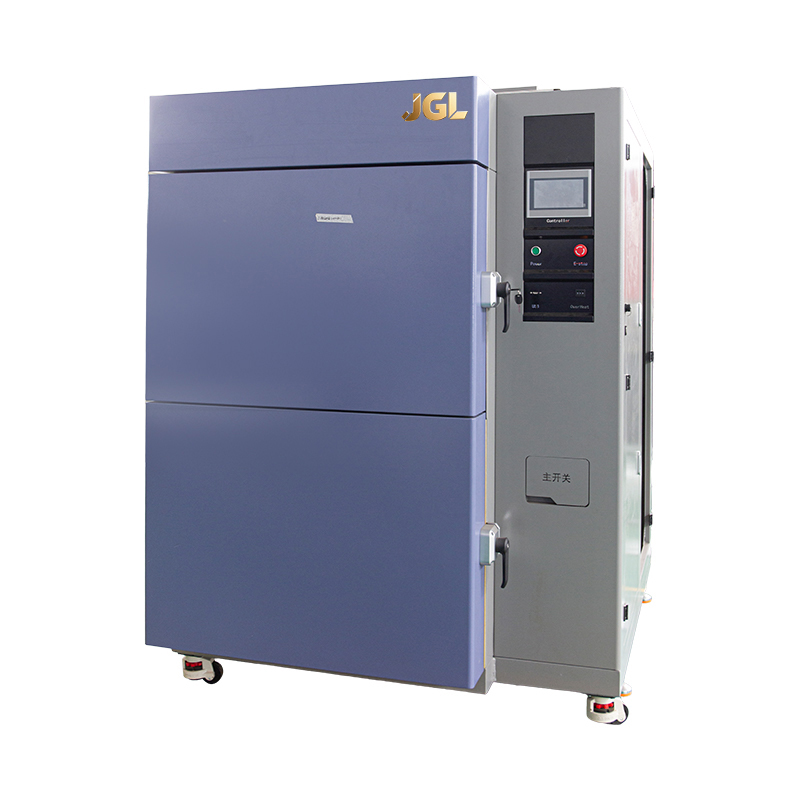
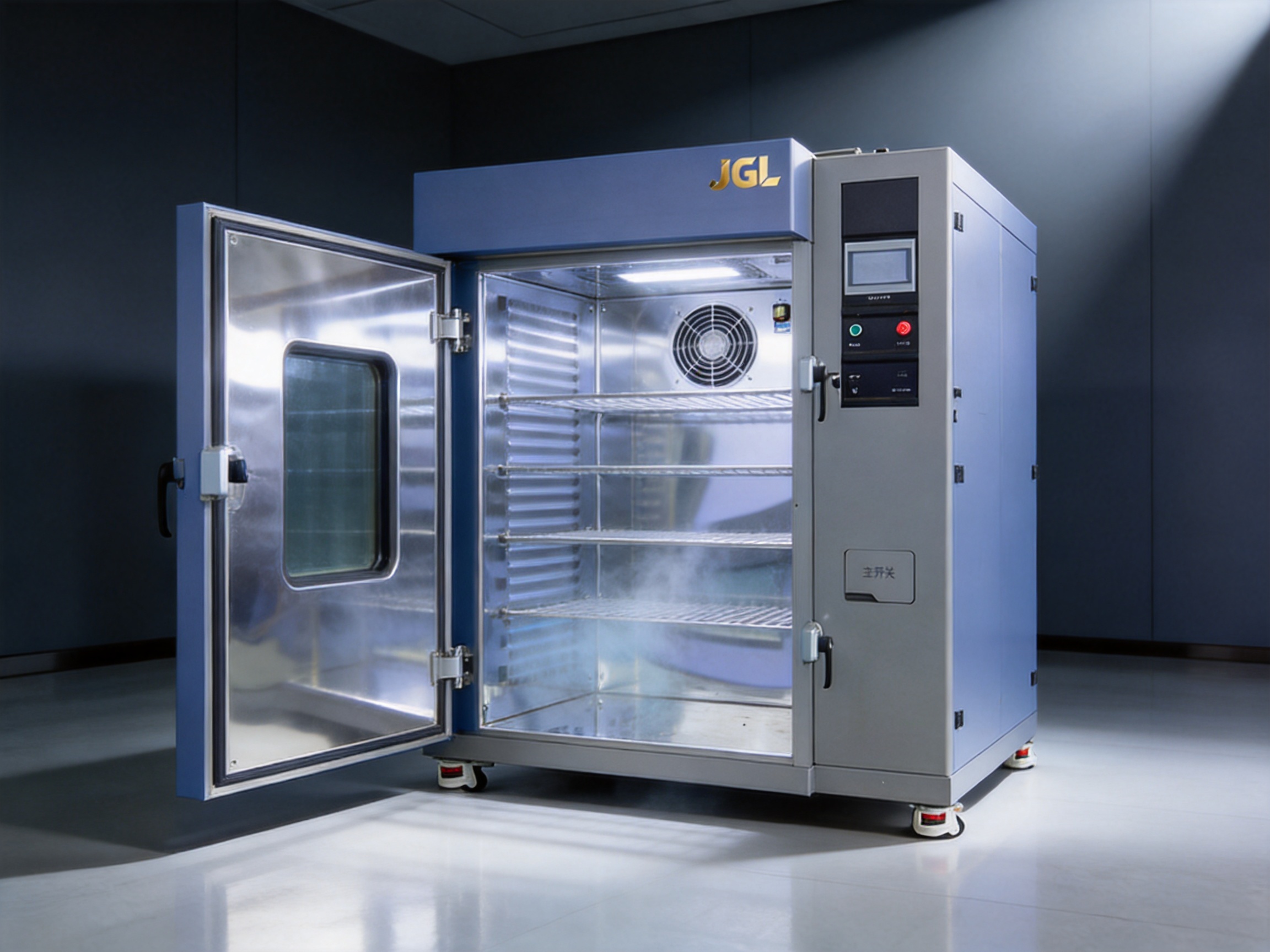
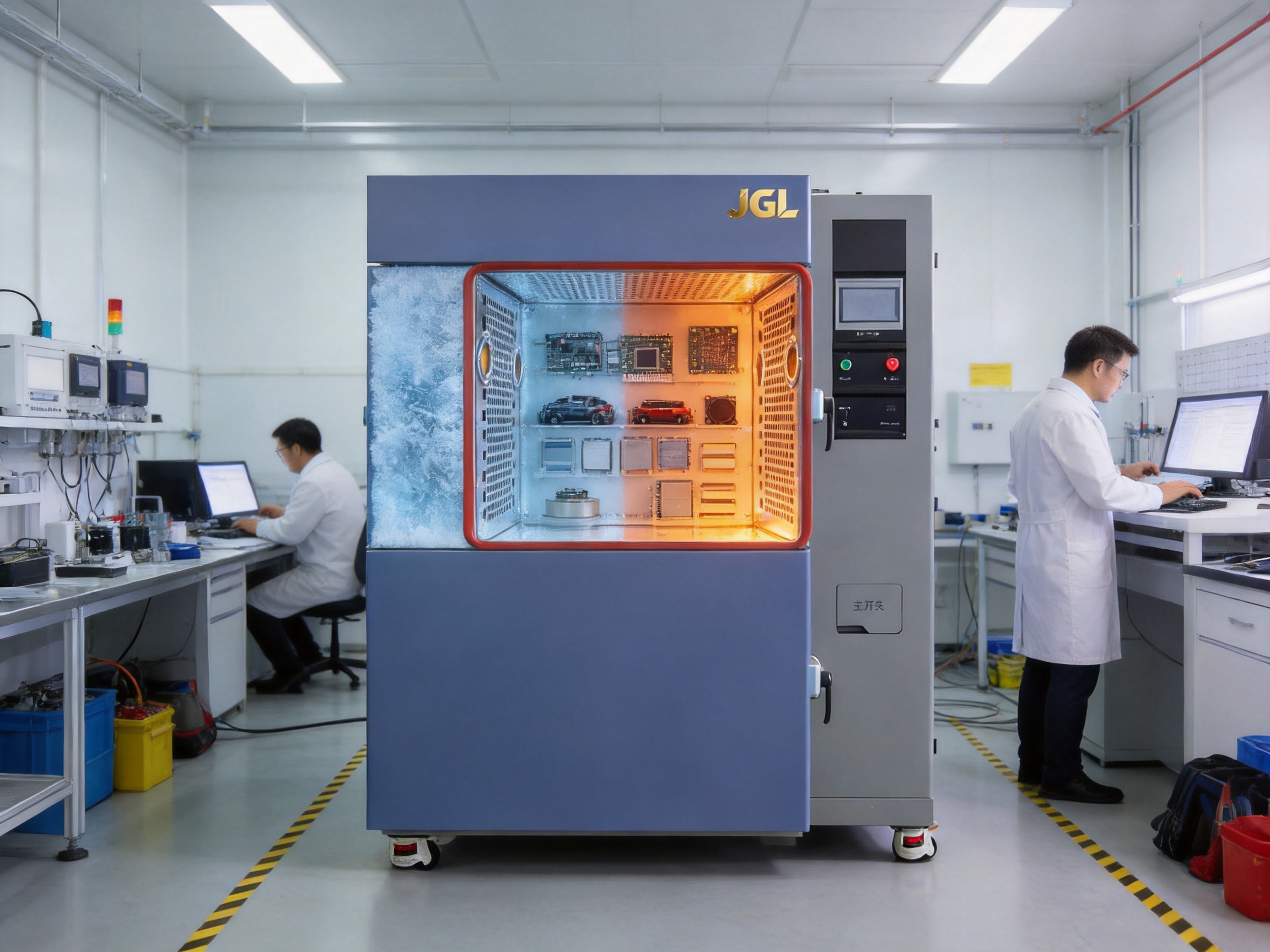
U5QTH-100-A/W Fast Temperature & Humidity Cycling Chamber
References
1. IEC 60068-2-1, Environmental Testing—Part 2-1: Tests—Test A: Cold.
2. IEC 60068-2-2, Environmental Testing—Part 2-2: Tests—Test B: Dry Heat.
3. IEC 60068-2-30, Environmental Testing—Part 2-30: Tests—Test Db: Damp Heat, Cyclic.
4. IEC 60068-2-38, Environmental Testing—Part 2-38: Tests—Test Z/AD: Composite Temperature/Humidity Cyclic Test.
5. IEC 60068-3-5, Environmental Testing—Part 3-5: Supporting Documentation and Guidance—Confirmation of the Performance of Temperature Chambers.
6. IEC 60068-3-6, Environmental Testing—Part 3-6: Supporting Documentation and Guidance—Confirmation of the Performance of Temperature/Humidity Chambers.
7. ISO/IEC 17025, General Requirements for the Competence of Testing and Calibration Laboratories.
8. Manufacturer-supplied technical specifications for the U5QTH-100-A/W Fast Temperature & Humidity Cycling Chamber.
9. Manufacturer-provided company history, product information, and engineering capability statement for Jiangsu Baisheng Industrial Co., Ltd.
Product: U5QTH-100-A/W Fast Temperature & Humidity Cycling Chamber

PREV:No previous article
NEXT:High-Precision Vacuum Cryogenic Sample Transfer Chambers for Reliable Laboratory Workflows
NEXT:High-Precision Vacuum Cryogenic Sample Transfer Chambers for Reliable Laboratory Workflows
Interested in cooperation or have questions?
Featured Products
Related products
Quick Link
Contact Information
- Tel: +86-13861043568
- E-mail: 1840784112@qq.com
- Add: Tianting District, Changzhou City, Jiangsu Province, China, No. 6 Hecircuit
Scan Code
Copyright © JIANGSU BAISHENG INDUSTRIAL CO., LTD.
All Rights Reserved. Privacy Custom Precision Laboratory Testing Equipment Manufacturers
