 English
 Español

NEWS
NEWS
NEWS
NEWS
NEWS
NEWS
NEWS
NEWS
NEWS
NEWS
NEWS
NEWS
NEWS
NEWS
NEWS
NEWS

Deng Xinyi — Product After-Sales Support Specialist
Home / Author / Deng Xinyi — Product After-Sales Support Specialist / High-Vacuum Ion Beam Etching and Deposition Systems for Precision Surface Engineering
High-Vacuum Ion Beam Etching and Deposition Systems for Precision Surface Engineering
Content
- 1 1. The Role of High-Vacuum Surface Engineering
- 2 2. HSC120 Ion Beam Etching and Deposition Technology
- 3 3. Dense and Uniform Thin-Film Performance
- 4 4. Multi-Target Configuration and Vacuum-Preserved Switching
- 5 5. Adjustable Sample Motion for Improved Coverage
- 6 6. Advantages for Laboratory Efficiency
- 7 7. Manufacturing and Engineering Strengths
- 8 8. Application Areas
- 9 9. Selecting Target Materials
- 10 10. Process Development and Repeatability
- 11 11. Integration into a Laboratory Workflow
- 12 12. Maintenance and Long-Term Value
- 13 13. Why Choose a Specialized Supplier?
- 14 14. Competitive Advantages of the HSC120
- 15 15. Recommended Evaluation Criteria for Buyers
- 16 16. Frequently Asked Questions
- 16.1 Q1: What is the primary function of the HSC120?
- 16.2 Q2: How many targets can be installed at the same time?
- 16.3 Q3: Can targets be changed without opening the chamber?
- 16.4 Q4: Which target materials are supported?
- 16.5 Q5: Is the system suitable for electron microscopy?
- 16.6 Q6: What is the advantage of adjustable sample tilt?
- 16.7 Q7: Why is programmable rotation useful?
- 16.8 Q8: How does ion beam deposition compare with magnetron sputtering?
- 16.9 Q9: Can the HSC120 be used for both metal and carbon coating?
- 16.10 Q10: Is the machine suitable for customized laboratory requirements?
- 16.11 Q11: What should users do to achieve repeatable coating results?
- 16.12 Q12: Who manufactures the HSC120?
- 17 17. Conclusion
- 18 References
- 19 Product: HSC120 High-Vacuum Ion Beam Etching and Deposition Machine
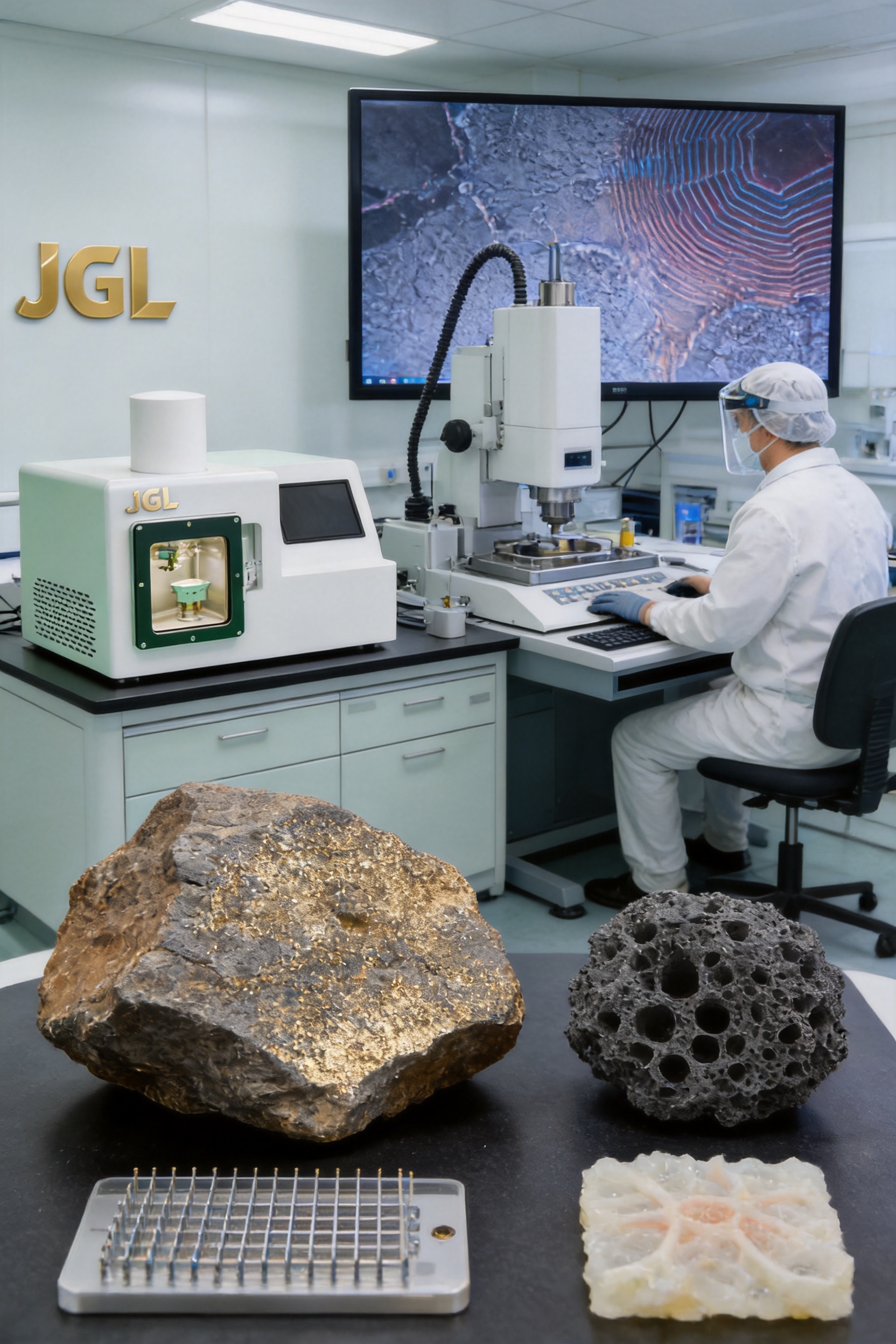
Modern research and industrial laboratories increasingly require surface-engineering equipment that can produce uniform, reliable, and application-specific thin films. In electron microscopy, analytical instrumentation, semiconductor research, materials science, optics, and other advanced fields, the quality of a coating can directly influence image resolution, electrical continuity, measurement stability, and the repeatability of experimental results. A coating system must therefore do more than deposit material onto a surface. It must control the vacuum environment, manage the deposition source, support different target materials, accommodate complex sample geometries, and provide a dependable process that can be repeated across multiple projects.
The HSC120 High-Vacuum Ion Beam Etching and Deposition Machine is designed for these demanding requirements. Classified as an ion beam etching, deposition, and polishing system, it combines ion beam processing with a high-vacuum coating environment. Its principal value lies in its ability to create dense, uniform, fine-grained films with strong substrate adhesion while maintaining the process flexibility needed for research and specialized production. The system is particularly suitable for applications requiring conductive coatings, high-resolution imaging, controlled surface modification, or the deposition of multiple coating materials without repeatedly opening the chamber.
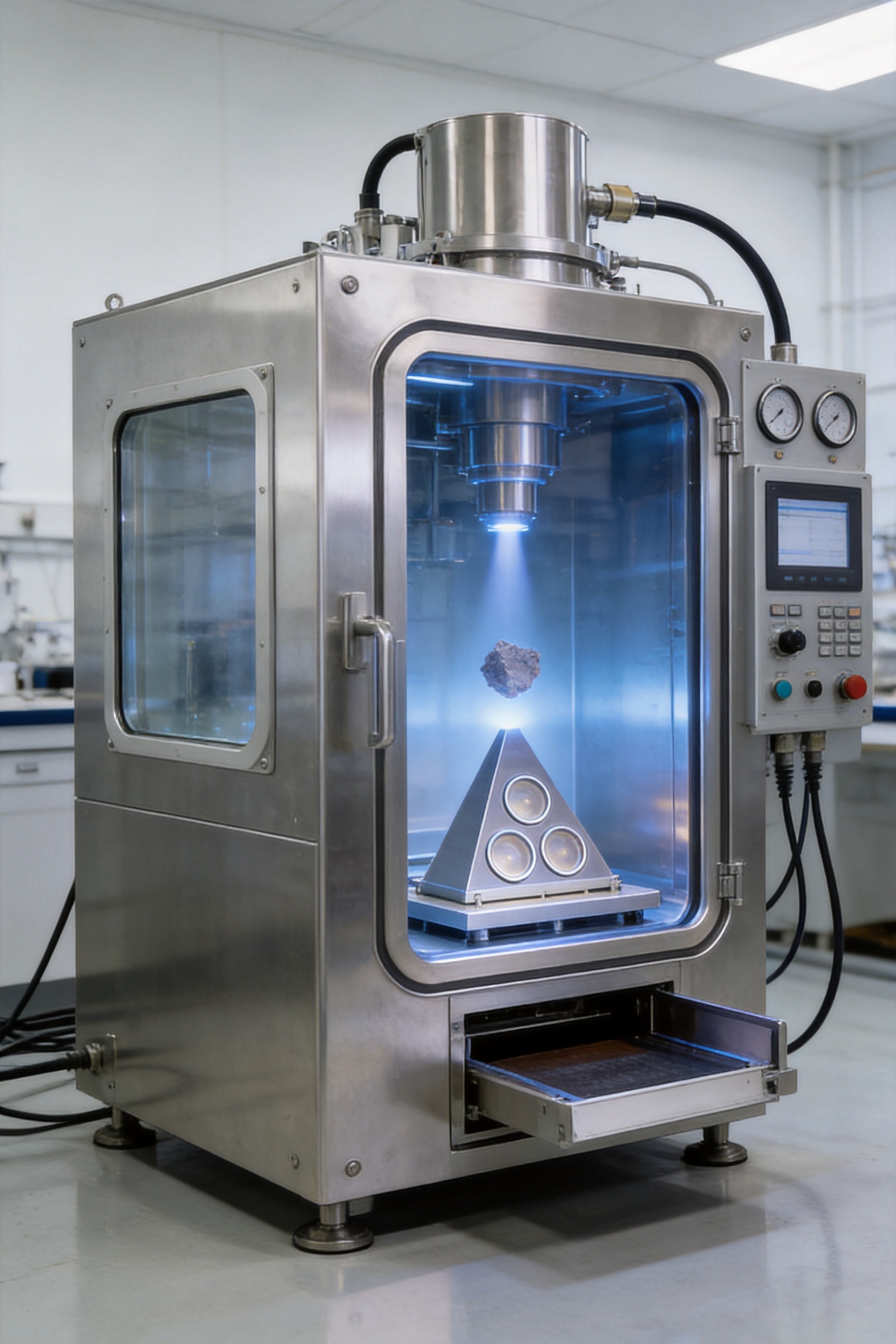
Compared with conventional coating approaches, the HSC120 emphasizes process cleanliness, film quality, multi-material flexibility, and controlled sample movement. Its inverted pyramid target holder can accommodate up to three targets inside the coating chamber, allowing users to change materials without breaking vacuum. This arrangement reduces unnecessary interruptions and helps protect the working environment from contamination. In addition, the adjustable sample tilt and programmable rotation functions support more even coverage on flat, recessed, irregular, and three-dimensional samples.
The system is supplied by JIANGSU BAISHENG INDUSTRIAL CO., LTD., a technology-driven enterprise established in 2010 and focused on high-end laboratory equipment and safety testing instruments. The company combines research and development capabilities with international trade experience, enabling it to provide equipment for specialized laboratory environments and customized technical requirements. Its development history reflects a progression from electronic testing research and development to independent equipment production, expanded product engineering, quality-system improvement, and international market service.
This article examines the HSC120 from the perspectives of coating performance, equipment architecture, process control, manufacturing capability, application value, and total operational benefits. It also explains why ion beam deposition can be advantageous when compared with more general coating methods, how multi-target operation improves workflow efficiency, and what users should consider when integrating the system into a laboratory or specialized production line.

HSC120 High-Vacuum Ion Beam Etching and Deposition Machine
1. The Role of High-Vacuum Surface Engineering
Surface coating is often used to improve the functional behavior of a specimen rather than simply to change its appearance. A thin metallic or carbon film may be required to increase electrical conductivity, reduce charging under an electron beam, improve signal quality, protect a sensitive substrate, or create a specific optical or mechanical response. In many analytical applications, the coating must be thin enough to preserve surface detail while remaining continuous and stable during observation.
These requirements create a difficult balance. A coating that is too thick may obscure fine surface features or alter the dimensions of a specimen. A coating that is too thin or discontinuous may fail to provide a stable conductive path. Poor adhesion can lead to flaking, local defects, or unstable measurement conditions. Nonuniform deposition can also create misleading contrast, especially when a specimen contains steps, pores, sidewalls, cavities, or other complex structures.
A high-vacuum ion beam system addresses these challenges through controlled material removal and deposition in a carefully maintained chamber environment. Ionized particles are accelerated toward a target or surface, allowing the operator to initiate etching, polishing, or material transfer under controlled conditions. Because the process is carried out in vacuum, the interaction between the working beam, target, substrate, and deposited film can be managed with greater precision than in uncontrolled atmospheric environments.
The quality of the vacuum environment is particularly important for thin-film work. Residual gases, moisture, and airborne particles can affect nucleation, adhesion, film density, and surface cleanliness. The ability to change targets without venting the coating chamber helps preserve the established process environment. It also reduces exposure to ambient contamination between coating steps or between different material selections.
For laboratories handling valuable, fragile, or irreplaceable samples, process repeatability is equally important. A system that supports defined sample movement, controlled target selection, and consistent chamber conditions can help reduce variation from one run to the next. The HSC120 is designed around these principles, providing a platform intended for both routine coating work and more specialized surface-engineering studies.
2. HSC120 Ion Beam Etching and Deposition Technology
The HSC120 uses ion beam etching and coating technology to produce dense, uniform, and fine-grained thin films. This combination gives the system a broader function than a coating-only instrument. In addition to depositing a selected film, the ion beam process can support surface preparation and controlled material removal. The result is a system that can be used to prepare, modify, and coat samples within a high-vacuum workflow.
Film density is a significant factor in coating performance. A dense film generally contains fewer voids and weak points than a loosely formed layer. This can improve the continuity of a conductive coating and help the deposited material remain stable during subsequent handling or analysis. Fine-grained structures can also contribute to a smoother surface finish, which is valuable when the coated sample will be examined at high magnification.
The system’s ion beam deposition process is intended to provide strong adhesion between the deposited film and the substrate. Adhesion depends on many factors, including substrate cleanliness, surface condition, material compatibility, beam parameters, and deposition conditions. The HSC120’s ability to combine surface preparation and deposition within a vacuum-based platform gives the operator a practical foundation for managing these factors.
For electron microscopy and related analytical applications, the coating must provide a stable conductive path without compromising the specimen’s morphology. Nonconductive specimens can accumulate charge under an electron beam, producing image drift, brightness fluctuations, distortion, or loss of detail. A continuous metallic or carbon film can help dissipate charge and improve the stability of the observation process.
The fine-grained nature of an ion beam–deposited coating can also be advantageous compared with a coating that produces larger visible grains at the same nominal thickness. Smaller grains may reduce surface artifacts and help preserve a smoother appearance. This is particularly relevant for high-resolution imaging, where surface roughness or oversized particles can be interpreted as specimen features or interfere with fine structural analysis.
2.1 Comparison with Magnetron Sputtering
Magnetron sputtering is a widely used deposition method and remains valuable for many industrial and research applications. However, different coating technologies produce different film structures and process characteristics. According to the supplied product information, ion beam–deposited coatings produced by the HSC120 can exhibit smaller grain sizes than magnetron-sputtered coatings at the same film thickness.
This difference can produce several practical benefits. A smaller-grained film may present a smoother surface, reduced visible artifacts, and improved suitability for high-resolution imaging. When a coating is applied to a specimen with fine topographical details, limiting unnecessary surface roughness helps preserve the relationship between the original structure and the observed image.
The comparison should not be understood as meaning that one process is universally superior for every material or application. Magnetron sputtering may offer advantages in high-throughput production, large-area deposition, or particular industrial coating programs. The HSC120 is differentiated by its emphasis on controlled ion beam processing, high-quality thin films, multi-target flexibility, and the needs of precision laboratory work.
For users whose priority is the reliable coating of analytical specimens, irregular samples, or research materials, the HSC120 offers a process architecture focused on film quality and adaptability. Its advantages are especially relevant when surface artifacts, charging, poor adhesion, or nonuniform coverage have previously limited the quality of experimental results.
3. Dense and Uniform Thin-Film Performance
A coating’s usefulness depends on more than the nominal material selected. The film must be sufficiently continuous, adhere properly, and cover the areas that matter for the application. The HSC120 is designed to support dense and uniform deposition so that the final layer can perform consistently across the sample surface.
Uniformity is important for both visual and functional reasons. From an imaging perspective, an uneven coating may cause local differences in conductivity and electron interaction. From a functional perspective, discontinuities can create weak electrical paths or leave portions of a sample insufficiently protected. Uniform deposition helps produce a more predictable response during observation and measurement.
The system supports the deposition of metallic targets such as platinum, gold, chromium, and tungsten, along with high-purity carbon. These materials provide different combinations of conductivity, surface appearance, density, and analytical suitability. The availability of several target types within one platform allows laboratories to select a coating according to sample properties and analytical goals rather than relying on one material for every project.
Platinum may be selected when a fine, conductive coating is required for high-resolution imaging. Gold is commonly associated with conductive surface treatment and may be appropriate for a range of microscopy specimens. Chromium and tungsten can provide alternatives when the research objective requires a different material response. High-purity carbon is useful when a carbon film is preferred for analytical reasons or when the specimen and imaging method call for a nonmetallic conductive layer.
Material selection should always be determined by the sample, the analysis method, the desired film thickness, and the laboratory’s established procedure. The HSC120 does not eliminate the need for process development, but it provides the material and mechanical flexibility required for that development. Researchers can evaluate different targets while maintaining a common chamber, stage, and control concept.
3.1 Film Quality for Electron Microscopy
Electron microscopy places demanding requirements on a coating system. The coating must be electrically continuous, sufficiently thin, stable under the beam, and smooth enough not to obscure the morphology being examined. A poorly selected or poorly applied film can introduce charging, reduce resolution, create artificial particles, or alter the apparent texture of the specimen.
The HSC120 is suited to laboratories that need to prepare a variety of specimens for scanning electron microscopy and related analytical techniques. Its ion beam coating process supports dense and fine-grained films, while the adjustable sample motion helps expose different surfaces to the deposition flux. This combination is useful when specimens contain edges, slopes, recesses, or other features that cannot be coated effectively by a single fixed orientation.
For research teams comparing multiple materials or analyzing specimens with different geometries, the multi-target design can simplify method development. The operator can select a suitable target without dedicating a separate coating system to each material. This can reduce equipment duplication and make it easier to establish a consistent preparation workflow.
4. Multi-Target Configuration and Vacuum-Preserved Switching
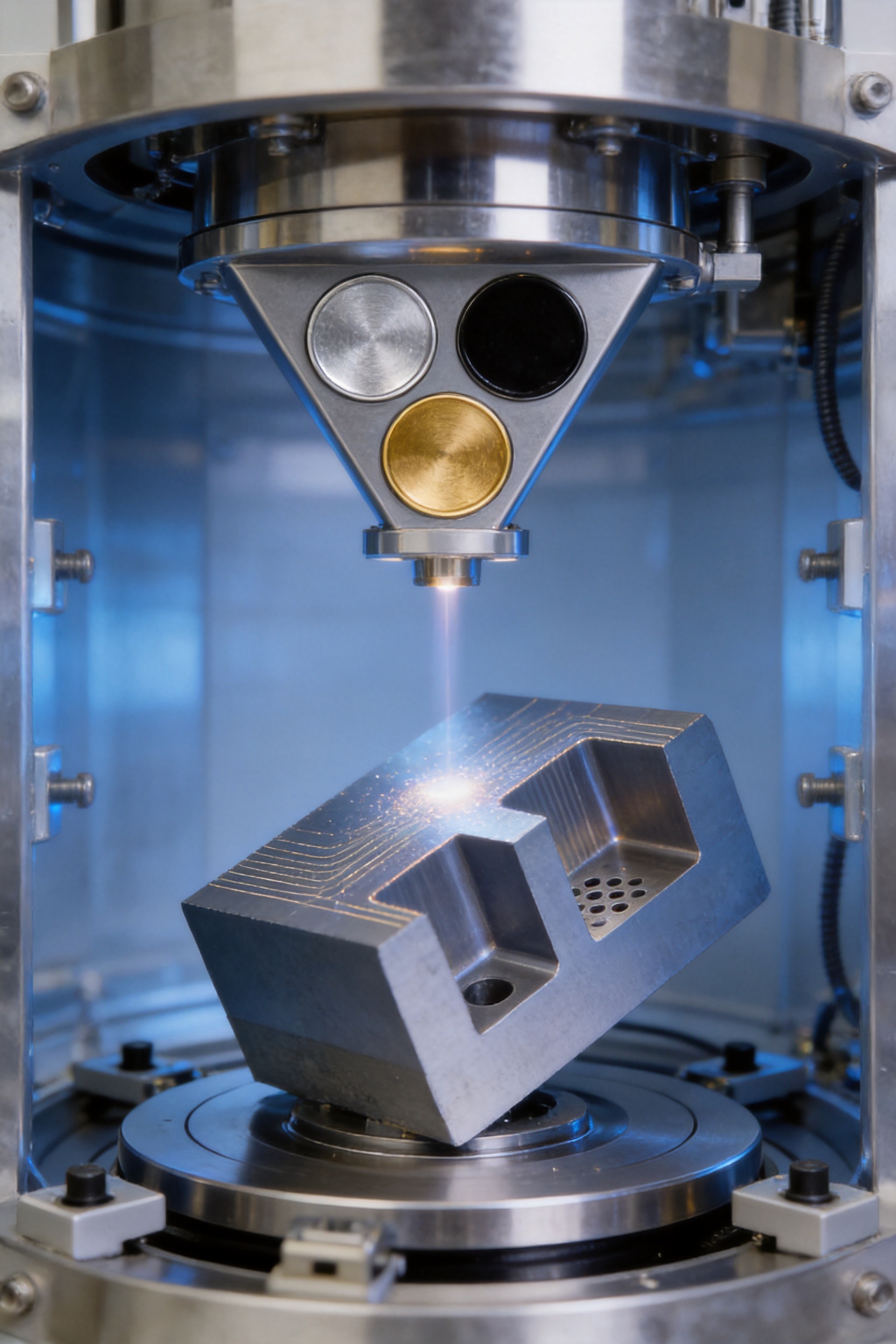
One of the HSC120’s central design features is its inverted pyramid target holder. The holder can accommodate up to three targets simultaneously inside the coating chamber. This configuration creates a compact and practical way to support multiple coating materials without requiring a complete chamber changeover each time the target is changed.
Target switching can be performed without breaking vacuum. This is a meaningful advantage in precision coating work because venting and reopening a chamber can interrupt the established process environment. Each interruption may require additional preparation, cleaning, pumping time, and stabilization before the next deposition can begin. By preserving the vacuum during target changes, the HSC120 helps reduce these avoidable steps.
Maintaining vacuum also supports a cleaner deposition environment. When a chamber is opened, the internal surfaces and components are exposed to ambient air, moisture, and potential particles. Even when appropriate cleaning procedures are followed, the chamber must return to a suitable condition before sensitive thin-film work resumes. Vacuum-preserved target switching reduces the frequency of this exposure.
The three-target configuration also improves workflow flexibility. A laboratory may install three commonly used materials and select among them according to the specimen. This is useful for facilities that serve multiple research groups or process different types of samples during the same working day. It can also support comparative experiments in which the effect of different coating materials must be evaluated under similar equipment conditions.
| HSC120 Feature | Operational Function | Practical Benefit |
|---|---|---|
| Inverted pyramid target holder | Holds up to three targets inside the chamber | Supports multiple coating materials on one platform |
| Vacuum-preserved target switching | Changes targets without breaking chamber vacuum | Reduces contamination risk, downtime, and restart procedures |
| Ion beam deposition | Deposits dense, fine-grained thin films | Supports smooth surfaces, strong adhesion, and stable conductivity |
| Adjustable sample tilt | Changes the sample orientation during process setup | Improves coverage of angled and complex surfaces |
| Programmable sample rotation | Controls the rotational movement of the sample stage | Promotes more consistent deposition across the specimen |
| Metal and carbon target compatibility | Supports Pt, Au, Cr, W, and high-purity carbon targets | Allows material selection for different analytical requirements |
The multi-target arrangement can also reduce the physical handling of targets. Frequent manual replacement increases the possibility of accidental damage, contamination, or incorrect installation. Keeping several targets mounted inside the chamber provides a more organized approach to material management, especially when procedures require frequent switching between metal and carbon coating.
5. Adjustable Sample Motion for Improved Coverage
Sample geometry is one of the most common causes of coating nonuniformity. A flat sample facing a stationary target is comparatively easy to coat. However, a specimen with sidewalls, recesses, corners, pores, particles, or uneven topography may present surfaces at different angles to the incoming material. Without appropriate movement, some areas may receive a thicker film while others remain partially exposed.
The HSC120 addresses this issue through an adjustable sample stage with tilt-angle control and programmable rotation speeds. These functions allow operators to develop a motion profile suited to the sample geometry. By changing the sample orientation and rotating it during deposition, the system can improve the distribution of coating material over the specimen surface.
Adjustable tilt is useful when the sample contains vertical or sloped features. A suitable angle can help expose surfaces that would otherwise remain in shadow relative to the target. Programmable rotation adds another level of control by presenting different sides of the specimen to the deposition direction during the process.
The product information emphasizes that these parameters can be optimized in advance. This means the laboratory can establish repeatable recipes for common sample types. Once a suitable tilt and rotation program has been identified, subsequent samples with similar geometry can be processed using a more consistent method. Such repeatability is valuable for comparative studies and routine analytical preparation.
Improved coverage is not limited to visual uniformity. A continuous conductive path may be necessary across the entire specimen, including recessed areas and sidewalls. If these regions remain uncoated, charge may accumulate locally or electrical continuity may be interrupted. Better coverage therefore contributes to coating reliability as well as image quality.
5.1 Complex and Irregular Samples
Many advanced laboratories work with samples that are not flat or regular. These may include fractured materials, powders mounted on substrates, porous structures, biological or geological specimens, microfabricated components, and parts with three-dimensional features. A coating system intended for such work must offer more than a fixed sample position.
The HSC120’s adjustable stage helps address the practical challenges presented by these specimens. By selecting an appropriate tilt angle and rotation speed, users can improve the exposure of surfaces that would be difficult to reach with a stationary arrangement. The ability to refine the motion profile is especially helpful when the sample contains deep recesses or narrow sidewalls.
It is important to recognize that motion control does not remove every limitation associated with line-of-sight deposition. Sample size, feature depth, material behavior, and process parameters still influence the final result. Nevertheless, the HSC120 provides the mechanical flexibility needed to achieve better coverage than a fixed-stage system in many practical situations.
6. Advantages for Laboratory Efficiency
Equipment value is determined not only by technical performance but also by how efficiently it fits into daily laboratory operations. A system that produces high-quality films but requires extensive manual preparation for every sample may be less effective than a system that combines strong results with a repeatable workflow.
The HSC120 contributes to efficiency in several ways. First, its multi-target holder reduces the need to remove and install targets for each material change. Second, target switching without breaking vacuum limits the time associated with venting and repumping. Third, adjustable sample motion can help laboratories establish reusable process recipes. Fourth, the ability to carry out ion beam etching and deposition within one platform can reduce the need to transfer samples between separate pieces of equipment.
Fewer transfers can be particularly beneficial for sensitive specimens. Each transfer creates an opportunity for contamination, mechanical damage, or misidentification. A more integrated workflow allows the operator to perform preparation and coating under controlled conditions, improving process organization and reducing unnecessary handling.
Efficiency also has a financial dimension. By supporting several target materials in one machine, the HSC120 may reduce the need for multiple specialized coating instruments. The actual benefit will depend on laboratory volume, material usage, process frequency, and existing equipment. However, a flexible multi-purpose system can be a practical choice for institutions that need to serve diverse coating requirements without investing in separate platforms for every application.
For contract laboratories and shared research centers, flexibility can be especially important. Different users may request different coating materials or sample orientations. A platform capable of handling metallic and carbon targets while accommodating complex geometries can support a wider service portfolio. This can increase equipment utilization and simplify scheduling compared with a collection of single-purpose instruments.
7. Manufacturing and Engineering Strengths
The performance of an ion beam coating system depends on the quality of its engineering, assembly, process integration, and quality control. Vacuum equipment requires careful attention to mechanical interfaces, chamber cleanliness, target positioning, sample-stage movement, and system stability. Even when the user interface is straightforward, the underlying equipment must be designed and assembled with precision.
JIANGSU BAISHENG INDUSTRIAL CO., LTD. describes itself as a technology-driven enterprise specializing in high-end laboratory equipment and safety testing instruments. Its stated strength is the combination of a dedicated research and development team with international trade experience. This combination is important for specialized equipment because successful delivery involves more than manufacturing a physical machine. It also requires understanding technical specifications, application requirements, documentation, communication, and after-sales coordination.
The company’s development history began with a research and development studio specializing in electronic testing in 2013. This origin provided the founding team with experience in laboratory equipment and safety compliance testing. In 2016, the organization transitioned into an enterprise, completed its first independently developed production line, and introduced laboratory equipment with independent intellectual property rights.
In 2019, the company adopted a “technology plus trade” development strategy. According to the supplied company information, this involved increasing research and development investment, introducing high-end technical talent, and expanding overseas markets. For customers purchasing specialized equipment internationally, this combination can be valuable because it links product development with practical experience in cross-border supply and communication.
In 2022, the company further improved its quality management system, and its products passed rigorous technical specification certifications according to the provided information. By 2025, the company continued to promote product innovation and technological upgrading while adapting to trends in intelligence and digitalization. These developments indicate a long-term focus on improving product lines rather than treating equipment as a one-time trading product.
7.1 Research and Development Orientation
The company’s research and development orientation is relevant to the HSC120 because ion beam systems often require application-specific adjustments. Laboratories may differ in sample dimensions, target preferences, coating objectives, process throughput, and integration requirements. A supplier with engineering resources is better positioned to discuss these differences and develop a suitable configuration.
Customization may involve application consultation, target selection, sample-stage arrangements, control functions, documentation, installation planning, or workflow recommendations. The exact scope should be confirmed with the supplier before purchase. Nevertheless, the company’s stated emphasis on precision design and customized solutions provides a foundation for serving customers whose requirements extend beyond a standard catalog specification.
Engineering capability is also reflected in the product’s integrated design. The HSC120 does not focus on a single isolated function. It combines high-vacuum operation, ion beam processing, multi-target handling, vacuum-preserved switching, adjustable sample tilt, and programmable rotation. Bringing these functions together requires coordination among mechanical design, vacuum engineering, process development, and user workflow considerations.
7.2 Quality and Process Discipline
High-quality laboratory equipment requires consistent manufacturing discipline. Relevant practices may include controlled assembly, component inspection, cleanliness management, functional testing, documentation review, and final performance verification. While specific internal production procedures are not provided, the company’s stated focus on quality management and rigorous technical specifications indicates that process discipline is an important part of its development strategy.
For a vacuum coating machine, quality considerations extend across the complete equipment lifecycle. The chamber and associated components must support stable vacuum operation. The target holder must position materials reliably. The sample stage must provide repeatable motion. The control system must allow operators to reproduce established settings. Packaging and international shipping must protect the equipment before installation.
A supplier with experience in laboratory and safety testing equipment is also familiar with the importance of technical documentation and application communication. These elements help users understand installation requirements, operating procedures, maintenance responsibilities, and process limitations. Clear communication is especially important when a machine is customized for a specific laboratory or shipped to an overseas location.
8. Application Areas
The HSC120 can support a range of applications in which controlled surface preparation or thin-film deposition is required. The most direct application is conductive coating for electron microscopy. By applying a suitable metallic or carbon film, laboratories can improve the electrical behavior of nonconductive specimens and reduce charging during examination.
Materials science laboratories may use the system to investigate how different coatings influence surface properties, adhesion, morphology, or analytical response. The ability to work with platinum, gold, chromium, tungsten, and carbon provides a basis for comparative experiments. Researchers can examine how target selection and sample motion affect the final film.
In semiconductor and microfabrication research, controlled ion beam processing can be relevant to surface modification, pattern-related studies, and thin-film development. The exact suitability depends on sample dimensions, required process control, and the specific research objective. The HSC120’s high-vacuum environment and adjustable sample movement make it a useful platform for exploratory and laboratory-scale work.
Analytical instrument preparation is another potential area. Samples prepared for surface analysis may require a stable, clean, and uniform film to improve measurement reliability. The coating material and thickness must be selected carefully so that the film supports the measurement rather than introducing unwanted interference.
Research organizations, universities, government laboratories, and shared testing centers may also benefit from the system’s multi-user flexibility. A single machine can support different coating materials and sample types, allowing it to serve several departments or projects. The system may be particularly appropriate where users need research flexibility rather than the highest possible throughput for one standardized production coating.
9. Selecting Target Materials
The HSC120 supports metallic targets including platinum, gold, chromium, and tungsten, as well as high-purity carbon. Each material should be selected according to the sample, analytical method, desired conductivity, acceptable film characteristics, and any requirements related to elemental analysis.
Platinum is often considered when a fine and stable conductive film is needed for high-resolution imaging. Gold may be useful for general conductive coating and is familiar in many microscopy laboratories. Chromium and tungsten offer alternative material characteristics that may be preferred for particular analytical or research needs. Carbon can be selected when a carbon-based coating is more appropriate for the specimen or the analysis.
Material choice should not be based solely on electrical conductivity. The coating may affect signal generation, surface contrast, chemical analysis, edge definition, and the interpretation of fine features. Researchers should therefore establish a coating-selection procedure based on the complete analytical workflow.
The multi-target holder makes this selection process more practical. Several materials can remain installed, allowing operators to change between them without opening the chamber. This supports efficient comparison and reduces the delay associated with physical target replacement. It also makes the machine more adaptable as laboratory research priorities change.
10. Process Development and Repeatability
Even a well-designed coating system requires appropriate process development. Sample composition, surface cleanliness, geometry, target material, film thickness, beam conditions, sample angle, and rotation speed all influence the final coating. Users should begin with controlled trials and document the conditions associated with successful results.
The HSC120’s adjustable tilt and programmable rotation functions provide useful variables for this development work. For a flat specimen, a simple motion program may be sufficient. For an irregular specimen, the operator may test different angles and speeds to determine which combination provides the most uniform coverage. Once a suitable procedure is found, it can be recorded as a laboratory method for similar samples.
Repeatability is strengthened when operators control variables systematically. Samples should be cleaned and mounted consistently. Target condition should be monitored. The chamber should be maintained according to the supplier’s recommendations. Process settings should be documented rather than adjusted informally from one run to the next.
The system’s vacuum-preserved switching feature also contributes to repeatability by reducing the number of times the chamber environment is disturbed. Fewer venting cycles can make it easier to maintain a consistent starting condition, provided that routine maintenance and cleanliness practices are followed.
For research laboratories, repeatability does not mean that every coating must be identical. Different specimens may require different recipes. Instead, repeatability means that a defined recipe produces a predictable result when applied to comparable samples. The HSC120 provides the hardware flexibility required to create and refine such recipes.
11. Integration into a Laboratory Workflow
Before installation, users should consider the intended location, access requirements, environmental conditions, utilities, sample preparation area, and operator training. Vacuum equipment should be positioned where it can be safely operated and serviced. The laboratory should also plan for target storage, sample mounting, cleaning materials, and process documentation.
A clear workflow may include sample inspection, cleaning, mounting, chamber loading, target selection, vacuum preparation, ion beam treatment, deposition, controlled venting, sample unloading, and result evaluation. If a sample requires etching before coating, these steps can be organized within the same equipment platform where appropriate.
Operator training should cover target identification, sample positioning, stage movement, process selection, vacuum operation, basic troubleshooting, and maintenance responsibilities. Because the HSC120 can support multiple targets, laboratories should establish a clear method for recording which material was used on each sample.
Shared facilities may benefit from a booking and recipe-management system. Each user should record sample type, target material, stage angle, rotation settings, deposition conditions, and observations about the final result. Over time, this information can become a valuable internal database for improving coating consistency and reducing repeated trial-and-error work.
12. Maintenance and Long-Term Value
Vacuum coating equipment performs best when maintenance is treated as part of the process rather than as an occasional response to problems. Chamber cleanliness, target condition, sample-stage inspection, seals, connections, and control functions should be reviewed according to the supplier’s maintenance guidance.
Regular care helps protect the quality of the vacuum environment and the repeatability of deposition. Residue accumulation, damaged components, or inconsistent mounting can affect film quality and create unnecessary variation. Maintenance records can also help identify patterns and support timely service decisions.
The HSC120’s multi-target arrangement may simplify some aspects of long-term operation because users do not need to remove and reinstall targets for every material change. Nevertheless, targets are consumable process components and should be inspected and replaced when required. The laboratory should maintain an inventory of approved target materials and document their installation and use.
Long-term value also comes from the system’s adaptability. A machine that supports several materials and different sample geometries can remain useful as research programs evolve. Instead of being limited to one coating type or one sample format, the HSC120 can be used for a broader range of analytical and experimental tasks.
13. Why Choose a Specialized Supplier?
Purchasing a high-vacuum ion beam system involves more than comparing a few headline specifications. Customers must evaluate application suitability, engineering support, customization capability, documentation, communication, and the supplier’s understanding of laboratory operations. A specialized manufacturer can contribute value during specification, installation, training, and future product development.
JIANGSU BAISHENG INDUSTRIAL CO., LTD. positions itself as more than a traditional trading company. Its stated core advantage is a dedicated research and development team focused on precision design and technical excellence. This orientation is relevant to customers who need a system adapted to particular sample types or operating requirements.
The company’s international trade experience may also support overseas customers who need assistance with product communication, export coordination, technical documentation, and delivery planning. International purchases require clear agreement on configuration, packaging, installation conditions, payment terms, service expectations, and responsibilities after delivery.
Its stated core values, summarized as “Precision in Craftsmanship, Innovation for the Long-Term,” reflect an emphasis on engineering quality, continuous improvement, integrity, and win-win cooperation. These principles are consistent with the expectations of laboratories purchasing equipment intended for many years of use.
14. Competitive Advantages of the HSC120
The HSC120 is competitive because it combines several advantages within one system rather than focusing on only one performance characteristic. Its ion beam process supports dense, fine-grained films. Its high-vacuum environment supports clean deposition. Its target holder supports three materials in the chamber. Its target-switching method preserves vacuum. Its sample stage supports adjustable tilt and programmable rotation.
Compared with a basic fixed-stage coating device, the HSC120 offers greater control over complex sample coverage. Compared with a single-target system, it offers greater material flexibility. Compared with a workflow that requires opening the chamber for every target change, it can reduce interruption and exposure to ambient contamination. Compared with a general coating platform that does not emphasize fine-grained films, it is better aligned with high-resolution imaging and analytical preparation.
These advantages are complementary. Fine-grained deposition is more useful when the sample surface is evenly covered. Uniform coverage is easier to obtain when the stage can tilt and rotate. Multi-target flexibility is more valuable when switching does not require breaking vacuum. The system’s overall benefit therefore comes from the interaction of its design features.
The HSC120 should be evaluated according to the user’s actual priorities. It is particularly attractive for laboratories seeking high-quality conductive coatings, multiple material options, complex-sample coverage, and an integrated ion beam preparation platform. Users focused only on very high-volume production may need to compare throughput and automation requirements separately. For precision laboratory work, however, the HSC120 offers a strong combination of versatility and process control.
15. Recommended Evaluation Criteria for Buyers
When evaluating the HSC120 or a similar system, buyers should begin by defining the samples and coating results they require. Important questions include whether samples are conductive or insulating, whether they are flat or three-dimensional, whether metal and carbon coating are both needed, and whether the process involves only deposition or also ion beam etching and surface preparation.
The laboratory should then consider target capacity and switching requirements. If users frequently alternate between several coating materials, vacuum-preserved switching may produce substantial workflow benefits. If one material is used almost exclusively, the multi-target feature may be less central, although it still provides future flexibility.
Sample-stage capability should be evaluated using representative specimens rather than only flat test pieces. Buyers should consider the available tilt range, rotation control, sample dimensions, and mounting method. The supplier should be asked to clarify how the system is configured for the customer’s specific sample formats.
Process documentation and training should also be discussed. Users need clear information about installation, operating procedures, target handling, maintenance, safety, and troubleshooting. For international customers, it is advisable to confirm documentation language, packaging arrangements, commissioning responsibilities, and technical support channels before placing an order.
Finally, buyers should consider the supplier’s ability to provide customized solutions. A laboratory may require modifications or application guidance as its research program develops. A supplier with in-house engineering and research capability may be better positioned to support these changes than a company that only resells standardized equipment.
16. Frequently Asked Questions
Q1: What is the primary function of the HSC120?
The HSC120 is a high-vacuum ion beam etching and deposition machine designed to prepare and coat samples. It produces dense, uniform, fine-grained thin films and supports surface-processing applications associated with electron microscopy, materials research, and other analytical work.
Q2: How many targets can be installed at the same time?
The system’s inverted pyramid target holder can accommodate up to three targets inside the coating chamber. This allows users to keep several materials available for selection during operation.
Q3: Can targets be changed without opening the chamber?
Yes. The HSC120 is designed for target switching without breaking vacuum. This helps preserve the deposition environment, reduce exposure to ambient contamination, and shorten the interruptions associated with conventional target replacement.
Q4: Which target materials are supported?
The supplied information identifies platinum, gold, chromium, tungsten, and high-purity carbon as supported coating materials. The most suitable target depends on the sample, analytical method, desired conductivity, film characteristics, and laboratory procedure.
Q5: Is the system suitable for electron microscopy?
Yes. The system is especially relevant to electron microscopy and related analytical applications that require conductive, smooth, and stable coatings. Its fine-grained films can help reduce surface artifacts, while its adjustable sample motion supports coverage of complex specimen geometries.
Q6: What is the advantage of adjustable sample tilt?
Adjustable tilt changes the orientation of the sample relative to the deposition direction. This can improve access to angled surfaces, recessed regions, and sidewalls that may not be coated evenly when the sample remains in one fixed position.
Q7: Why is programmable rotation useful?
Programmable rotation presents different areas of the sample to the deposition flux during processing. It can improve coating distribution and help produce more consistent coverage across irregular or three-dimensional samples.
Q8: How does ion beam deposition compare with magnetron sputtering?
The supplied product information states that ion beam–deposited coatings can have smaller grain sizes than magnetron-sputtered coatings at the same thickness. This may result in smoother surfaces and fewer artifacts. The best method still depends on the material, scale, throughput, and objectives of the application.
Q9: Can the HSC120 be used for both metal and carbon coating?
Yes. The system supports metallic targets and high-purity carbon, allowing one platform to serve laboratories that require both metal and carbon coating processes.
Q10: Is the machine suitable for customized laboratory requirements?
The supplier describes its business as focused on customized precision laboratory equipment and technical solutions. Customers should discuss sample dimensions, target preferences, stage requirements, operating conditions, documentation, and other application details with the supplier before ordering.
Q11: What should users do to achieve repeatable coating results?
Users should control sample cleaning, mounting, target selection, stage angle, rotation speed, and other process variables. Successful settings should be recorded as laboratory recipes. Routine maintenance and consistent chamber-care procedures are also important for repeatability.
Q12: Who manufactures the HSC120?
The HSC120 is supplied by JIANGSU BAISHENG INDUSTRIAL CO., LTD., a Jiangsu-based Chinese enterprise specializing in laboratory equipment, safety testing instruments, research and development, and customized technical solutions.
17. Conclusion
The HSC120 High-Vacuum Ion Beam Etching and Deposition Machine is designed for laboratories that require more than basic thin-film coating. Its central strengths are dense and fine-grained film formation, strong adhesion, high-vacuum processing, multi-target flexibility, vacuum-preserved switching, and adjustable sample movement. Together, these features support high-quality conductive coatings and controlled surface preparation for electron microscopy, materials research, and related analytical applications.
The system’s comparison advantage lies in the way its functions work together. Ion beam deposition can produce smooth, fine-grained coatings. The inverted pyramid holder supports up to three targets. Vacuum-preserved switching reduces interruptions and contamination exposure. Adjustable tilt and programmable rotation improve coverage on irregular samples. The result is a flexible platform that can serve different materials, geometries, and laboratory methods.
The manufacturer’s background further supports the product’s positioning. JIANGSU BAISHENG INDUSTRIAL CO., LTD. combines research and development experience, independent equipment development, international trade capability, quality-system improvement, and a stated commitment to customized solutions. Its evolution from an electronic-testing development studio to a technology-driven laboratory equipment enterprise demonstrates a long-term focus on engineering and product improvement.
For laboratories seeking reliable surface preparation, stable conductive coatings, and greater flexibility in material selection, the HSC120 represents a practical high-vacuum solution. Its value is particularly clear where sample quality, image resolution, coating uniformity, and workflow efficiency are more important than using a single-purpose, fixed-process instrument.
References
1. Product information supplied for the HSC120 High-Vacuum Ion Beam Etching and Deposition Machine, including ion beam coating performance, target configuration, sample-stage movement, and supported coating materials.
2. JIANGSU BAISHENG INDUSTRIAL CO., LTD. company information, including organizational history, research and development capabilities, quality-management development, and customized laboratory equipment services.
3. General principles of vacuum thin-film deposition, ion beam etching, substrate preparation, and thin-film adhesion in laboratory surface-engineering applications.
4. General laboratory practices for conductive coating of nonconductive specimens prepared for electron microscopy and related analytical techniques.
5. General technical considerations for target selection, sample rotation, coating uniformity, chamber cleanliness, and process repeatability in high-vacuum coating systems.
Product: HSC120 High-Vacuum Ion Beam Etching and Deposition Machine

PREV:Advanced Liquid Nitrogen Slurry Workbench for Rapid Cryofixation and Controlled Sample Handling
NEXT:Advanced Rapid Thermal and Humidity Testing for Precision Product Reliability
NEXT:Advanced Rapid Thermal and Humidity Testing for Precision Product Reliability
Interested in cooperation or have questions?
Featured Products
Related products



Quick Link
Contact Information
- Tel: +86-13861043568
- E-mail: 1840784112@qq.com
- Add: Tianting District, Changzhou City, Jiangsu Province, China, No. 6 Hecircuit
Scan Code
Copyright © JIANGSU BAISHENG INDUSTRIAL CO., LTD.
All Rights Reserved. Privacy Custom Precision Laboratory Testing Equipment Manufacturers
