 English
 Español
NEWS
NEWS
NEWS
NEWS
NEWS
NEWS
NEWS
NEWS
NEWS
NEWS
NEWS
NEWS
NEWS
NEWS
NEWS
NEWS

Deng Xinyi — Product After-Sales Support Specialist
Home / Author / Deng Xinyi — Product After-Sales Support Specialist / High-Low Temperature Humidity Cycling Chambers for Precision Environmental Testing
High-Low Temperature Humidity Cycling Chambers for Precision Environmental Testing
Content
- 1 Introduction
- 2 Why High-Low Temperature Humidity Cycling Matters
- 3 Product Overview
- 4 Core Technical Advantages
- 5 Advantages Compared with Basic Environmental Chambers
- 6 Manufacturing and Engineering Strengths
- 7 Chamber Structure and Operator Experience
- 8 Application Areas
- 9 Using the Chamber for Reliable Test Programs
- 10 Maintenance and Service Considerations
- 11 Customization and Technical Support
- 12 Why Manufacturer Capability Matters
- 13 Purchasing Considerations
- 14 Q&A
- 14.1 What is a high-low temperature humidity cycling chamber?
- 14.2 What products can be tested in the UTH-150-A?
- 14.3 How does dynamic PID control improve testing?
- 14.4 Why is water vapor partial pressure regulation important?
- 14.5 What is the purpose of the circulation fan?
- 14.6 Why is the stainless steel interior beneficial?
- 14.7 How does the damped door hinge help operators?
- 14.8 Does the chamber support energy-efficient testing?
- 14.9 What safety feature is highlighted for this chamber?
- 14.10 Can the chamber be customized?
- 14.11 How should the chamber be maintained?
- 14.12 Why should buyers evaluate the manufacturer as well as the equipment?
- 15 Conclusion
- 16 References
- 17 Product: UTH-150-A High-Low Temperature Humidity Cycling Chamber
Introduction
Reliable environmental testing is essential wherever products must operate safely and consistently under changing temperature and humidity conditions. Electronics, batteries, automotive components, aerospace parts, materials, and industrial assemblies may perform well in a controlled room but behave very differently when exposed to cold, heat, moisture, condensation, or repeated environmental transitions. A high-low temperature humidity cycling chamber provides a controlled way to reproduce these conditions and evaluate product durability, reliability, aging behavior, and functional stability.
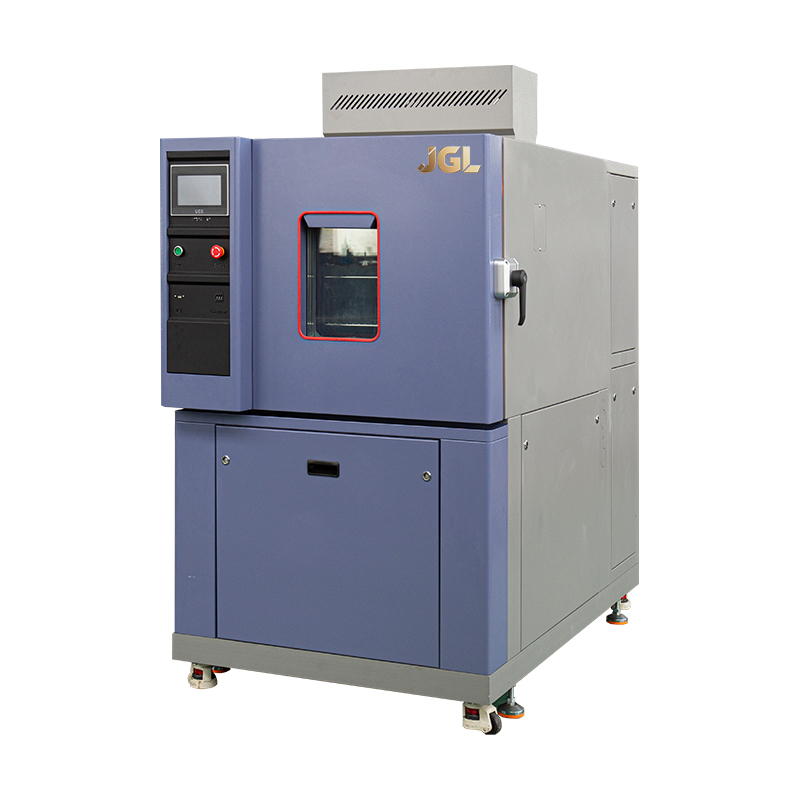
The UTH-150-A high-low temperature humidity cycling chamber is designed for laboratories, quality inspection departments, research and development centers, and production testing environments that require stable and repeatable environmental simulation. Its design combines a corrosion-resistant stainless steel interior, an adjustable door supported by damped hinges, dynamic proportional-integral-derivative control, water vapor partial pressure regulation, dependable refrigeration, and carefully engineered air circulation.
Rather than treating temperature and humidity as isolated variables, the chamber is designed to control them as an interconnected environmental system. This approach is important because changes in temperature directly affect relative humidity, condensation behavior, water vapor distribution, and the response of test specimens. By combining temperature control with vapor regulation and continuous circulation, the chamber helps laboratories conduct meaningful high-low temperature humidity cycling tests with greater confidence.
The equipment is manufactured by JIANGSU BAISHENG INDUSTRIAL CO., LTD., a technology-driven laboratory equipment and safety testing instrument enterprise founded in 2010. The company combines product research and development, precision engineering, manufacturing coordination, and international trade experience. Its development history reflects a progression from electronic testing research and development into independent laboratory equipment production and customized technical solutions.
This article examines the chamber’s operating principles, design advantages, manufacturing strengths, application value, maintenance considerations, and purchasing factors. It also explains why a well-integrated temperature and humidity control system can offer practical advantages over less sophisticated environmental test chambers.
UTH-150-A High-Low Temperature Humidity Cycling Chamber
Why High-Low Temperature Humidity Cycling Matters
Many products are exposed to environmental changes during transportation, storage, installation, and operation. A device may move from a cold warehouse to a warm production floor, from a dry indoor environment to a humid outdoor location, or from an air-conditioned cabin to a hot external atmosphere. These transitions can produce thermal stress, condensation, electrical leakage, material expansion, seal degradation, corrosion, and changes in mechanical performance.
A constant-temperature test can identify certain weaknesses, but it may not reveal problems caused by repeated transitions. Similarly, a humidity test at one stable condition may not reproduce the effects of heating, cooling, condensation, and drying. High-low temperature humidity cycling is more demanding because it evaluates how a product responds to changing conditions rather than a single environmental point.
Typical test objectives include examining the following performance factors:
• Electrical insulation and leakage behavior under moisture exposure.
• Battery stability during temperature transitions.
• Solder joint, connector, and circuit board reliability.
• Adhesive, coating, seal, and encapsulation durability.
• Dimensional changes in plastics, composites, and elastomers.
• Corrosion resistance of metals and plated surfaces.
• Aging behavior of materials and finished products.
• Performance stability of automotive and aerospace components.
• Mechanical fatigue caused by expansion and contraction.
• Product start-up, shutdown, and recovery behavior after environmental exposure.
A cycling chamber must therefore do more than reach a target temperature and humidity. It must transition between conditions in a controlled manner, maintain uniformity throughout the working space, recover effectively after door opening, and protect both the specimens and the equipment from abnormal operating conditions.
Product Overview
The UTH-150-A is a cyclic high and low temperature humidity test chamber intended for controlled environmental simulation. Its product design emphasizes precision control, stable operation, energy-conscious construction, durable materials, and operator safety.
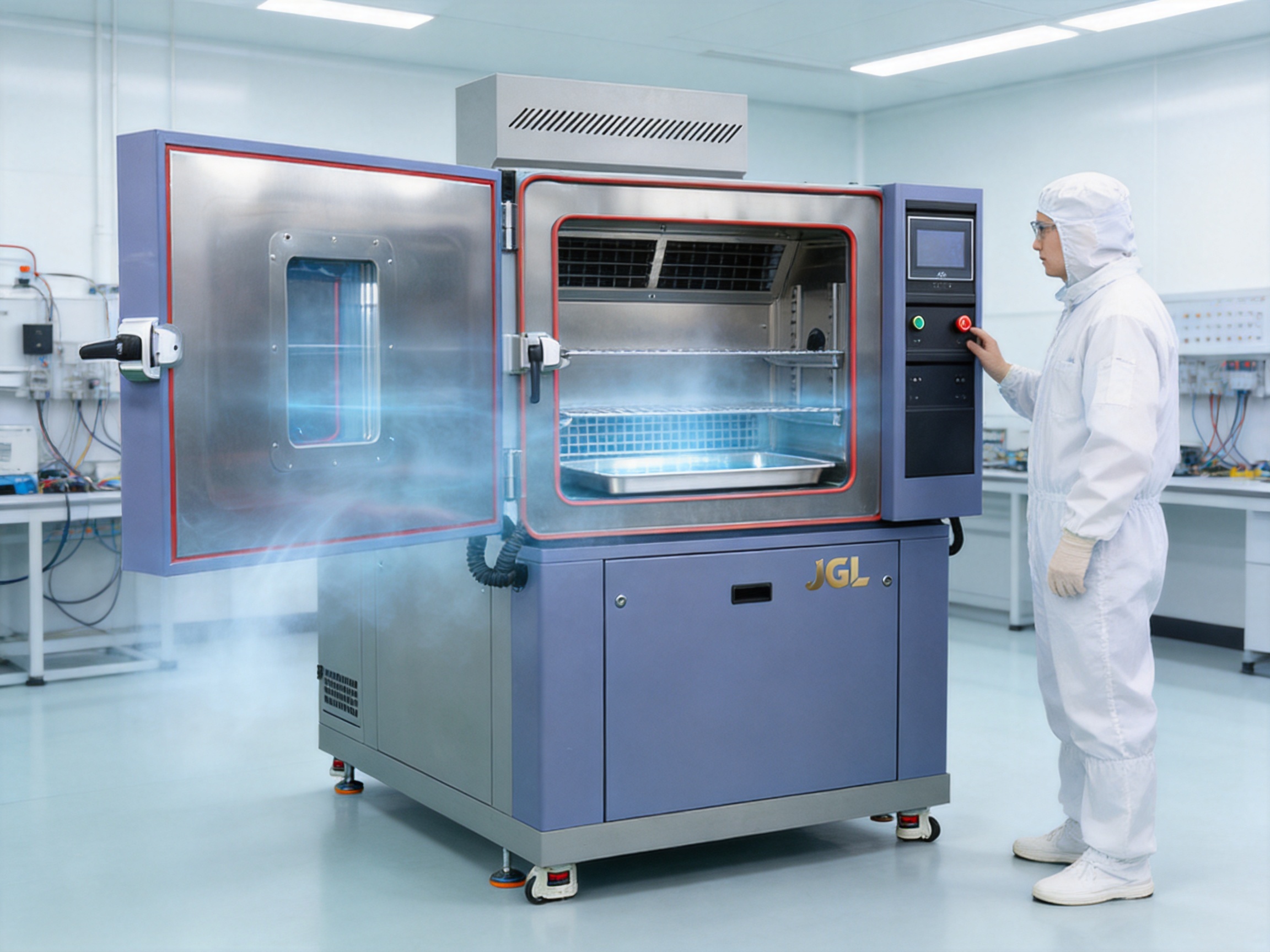
The chamber interior uses film-coated mirror-finished stainless steel. This surface is resistant to corrosion, easy to clean, and suitable for repeated exposure to moisture. The reflective finish also supports a professional laboratory appearance while reducing the risk that residue or condensation will remain difficult to remove. A clean working chamber is particularly important when different materials or products are tested over long periods.
The door uses damped hinges that allow the opening angle to be adjusted. This design improves access to the workspace and helps prevent abrupt door movement. A controlled door mechanism can be valuable when operators load heavy or delicate specimens, position sensors, connect measurement cables, or remove test articles after a long test cycle.
The environmental control system combines dynamic PID control with water vapor partial pressure regulation. Dynamic PID control continuously adjusts system output based on the difference between the measured condition and the target condition. Water vapor partial pressure regulation provides an additional method of managing moisture conditions in relation to temperature. Together, these functions support more stable temperature and humidity cycling than a basic on-off control approach.
The refrigeration system includes a full-size stainless steel water tray. Defrost condensation can be corrosive when it contacts unsuitable materials or remains in poorly designed drainage areas. A stainless steel tray helps resist corrosion and supports easier cleaning, contributing to longer service life and better hygiene inside the lower section of the equipment.
Air circulation is provided by a Panasonic circulation fan equipped with high-temperature bearings rated for operation up to 200°C. This component is selected to support reliable airflow and uniform environmental distribution. Stable circulation helps reduce temperature and humidity differences between locations within the chamber, which is essential when several specimens are tested simultaneously.
Core Technical Advantages
Dynamic PID Temperature and Humidity Control
One of the chamber’s main advantages is its use of dynamic PID control. A simple control system may switch heating, cooling, humidification, or dehumidification components on and off when the measured value crosses a fixed threshold. Although this method can be functional for basic applications, it may create unnecessary oscillation, overshoot, or delayed response.
Dynamic PID control is more responsive because it evaluates the current deviation from the target, the direction of change, and the rate at which the condition is moving. The controller can then moderate the output of the relevant system. This supports smoother transitions and helps maintain the programmed environment with reduced fluctuation.
In practical testing, stable control matters for several reasons. First, excessive overshoot can expose specimens to conditions beyond the intended test profile. Second, unnecessary oscillation can make test results difficult to interpret. Third, poor control may cause the chamber to consume more energy because heating and cooling systems repeatedly counteract one another.
The addition of water vapor partial pressure regulation further improves the relationship between temperature and humidity control. Relative humidity is temperature-dependent, so a change in temperature can produce a major change in relative humidity even when the quantity of water vapor remains constant. A control system that considers vapor behavior can respond more intelligently to this relationship and maintain a more meaningful humidity condition throughout the cycle.
Uniform Airflow and Environmental Stability
Environmental uniformity is as important as controller accuracy. A sensor may report that the chamber has reached the target condition, but test results can still be inconsistent if one area is warmer, colder, wetter, or drier than another. Air circulation helps distribute conditioned air around the working space and minimizes local differences.
The Panasonic circulation fan used in the UTH-150-A is equipped with high-temperature bearings up to 200°C. The high-temperature bearing design supports dependable fan operation in demanding thermal conditions. Continuous circulation also helps prevent stagnant zones, improves recovery after door opening, and supports more consistent exposure of specimens.
Uniform airflow is especially valuable when testing multiple products at once. If test articles in different locations experience substantially different conditions, the laboratory may draw conclusions from environmental variation rather than product performance. A well-designed circulation system improves test repeatability and helps make comparisons between samples more meaningful.
Corrosion-Resistant Interior Construction
Humidity testing creates a challenging environment for internal materials. Condensation, water droplets, cleaning agents, and long-term moisture exposure can accelerate corrosion. The chamber’s film-coated mirror stainless steel interior is designed to address these challenges.
The stainless steel surface offers resistance to moisture-related deterioration, while the smooth finish makes it easier to remove residue and clean the working area. This is useful for laboratories that test materials with different chemical compositions or products that may release particles, oils, or other contaminants during aging.
Durable interior construction also supports lifecycle value. A chamber that is difficult to clean or vulnerable to internal corrosion may require more frequent repair and may become unsuitable for certain tests. By contrast, a corrosion-resistant interior helps preserve the chamber’s working condition and appearance over repeated test cycles.
Safety-Oriented Leakage Protection
Electrical safety is a critical consideration in a chamber that combines power, heating, refrigeration, fans, water, and high humidity. The UTH-150-A incorporates a leakage protection design intended to improve operator safety during extended operation.
Leakage protection is particularly relevant for long-duration tests, where the equipment may operate continuously with limited supervision. It provides an additional safety layer in the event of an electrical abnormality. Operators should still follow laboratory electrical safety procedures, maintain correct grounding, inspect cables and connectors, and avoid operating the equipment outside its intended conditions.
Safety design is not limited to a single protective device. It also includes appropriate component selection, insulation, mechanical construction, water management, ventilation, maintenance access, and clear operating procedures. The chamber’s use of first-tier international electrical components contributes to dependable control and protection system performance.
Energy-Efficient Operation
Environmental chambers can consume significant energy because they may heat, cool, humidify, and dehumidify repeatedly during long test programs. The UTH-150-A is designed with energy efficiency in mind through optimized insulation, environmentally friendly components, stable refrigeration, and coordinated control.
Precise control can reduce unnecessary energy use by limiting overshoot and avoiding excessive switching between opposing functions. Effective insulation helps retain conditioned air and reduces the thermal load placed on the refrigeration and heating systems. Stable water management also supports consistent humidity operation and reduces avoidable interruptions.
Lower energy consumption can benefit laboratories in several ways. It may reduce operating costs, improve equipment utilization, support sustainability goals, and make long-duration testing more practical. Energy efficiency is especially important for organizations running several chambers or maintaining continuous product qualification programs.
Advantages Compared with Basic Environmental Chambers
Environmental test chambers vary widely in control sophistication, construction quality, component selection, and application suitability. A basic chamber may be adequate for simple constant-temperature tests, but high-low temperature humidity cycling places greater demands on the equipment.
The UTH-150-A offers several practical advantages over less advanced alternatives.
| Evaluation Area | Basic Chamber Limitation | UTH-150-A Design Advantage |
|---|---|---|
| Control method | Simple on-off operation may cause wider fluctuation and overshoot. | Dynamic PID control supports smoother and more responsive adjustment. |
| Humidity management | Humidity may be controlled without adequately considering temperature-related vapor changes. | Water vapor partial pressure regulation supports more coordinated humidity simulation. |
| Air circulation | Uneven airflow may create local temperature or humidity differences. | High-temperature circulation fan supports stable and uniform air movement. |
| Interior durability | Low-grade surfaces may corrode or become difficult to clean after repeated moisture exposure. | Film-coated mirror stainless steel provides corrosion resistance and easier cleaning. |
| Condensation management | Unsuitable trays or drainage areas may deteriorate under repeated condensation. | Full-size stainless steel water tray improves corrosion resistance and water management. |
| Door operation | Rigid or uncontrolled doors may be inconvenient during specimen loading. | Damped hinges allow adjustable opening angles and controlled access. |
| Electrical reliability | Inconsistent component quality may increase maintenance risk. | Core electrical components are sourced from leading international brands. |
| Long-duration testing | Energy loss and unstable control may increase operating cost. | Optimized insulation and coordinated control support energy-efficient operation. |
| Safety | Limited protective design may increase risk during continuous humid operation. | Leakage protection adds an important layer of electrical safety. |
These differences are not merely cosmetic. They affect the reliability of test data, the ease of laboratory operation, equipment service life, and the total cost of ownership. A chamber that maintains stable conditions with fewer interruptions can help laboratories complete test programs more efficiently and reduce the risk of repeating tests because of environmental uncertainty.
Competitor equipment may provide similar basic temperature and humidity functions, but the quality of integration determines how effectively the equipment performs in real laboratory conditions. The UTH-150-A combines control logic, air movement, water management, interior materials, refrigeration, electrical protection, and mechanical access into one coordinated system.
Manufacturing and Engineering Strengths
Research and Development Foundation
JIANGSU BAISHENG INDUSTRIAL CO., LTD. was founded in 2010 with a focus on high-end laboratory equipment and safety testing instruments. Its technical background developed from a research and development studio specializing in electronic testing. This origin is relevant because laboratory equipment requires an understanding of both mechanical construction and test methodology.
In 2013, the company’s predecessor operated as a research and development studio led by engineers with experience in laboratory equipment and safety compliance testing. In 2016, the organization became an enterprise, completed its first independently developed production line, and introduced laboratory equipment with independent intellectual property rights. This transition from engineering development to organized production provided a foundation for improving product consistency and manufacturing capability.
The company later adopted a “technology plus trade” development strategy. This approach combines technical design with international market knowledge, enabling the company to communicate with customers about application requirements, customization, documentation, and delivery expectations. For laboratory equipment buyers, technical communication is often as important as the equipment itself.
Component Selection and System Integration
Reliable environmental equipment depends on the combined performance of many components. Controllers, sensors, refrigeration elements, heating units, fans, valves, electrical protection devices, water systems, insulation, door seals, and structural parts must work together. A strong component in one area cannot compensate for poor design in another.
The company emphasizes the use of core electrical components from first-tier international brands. This supports dependable operation, component availability, and serviceability. It also reflects a manufacturing philosophy in which critical parts are selected according to performance and reliability rather than only initial purchase price.
The UTH-150-A demonstrates the value of system integration through its combination of dynamic PID control, vapor partial pressure regulation, refrigeration, water management, circulation, and safety protection. These functions must be coordinated to prevent one subsystem from undermining another. For example, a powerful refrigeration unit is not enough if airflow is uneven, while an accurate humidity sensor cannot deliver meaningful results if the chamber has poor water management.
Precision-Oriented Design
The company’s core values emphasize precision in craftsmanship and innovation for the long term. These principles are reflected in the chamber’s focus on accurate control, smooth mechanical access, corrosion-resistant surfaces, and stable long-duration operation.
Precision engineering in a test chamber involves more than achieving a nominal target. It includes designing the chamber to respond predictably to changes, maintaining consistent airflow, reducing heat leakage, managing condensation, and supporting repeatable operation. It also involves making the chamber practical for laboratory staff who must load specimens, connect instrumentation, clean internal surfaces, and perform routine inspections.
The adjustable damped door is one example of a detail that improves daily usability. The mirror-finished interior is another. These features do not replace the control system, but they contribute to a complete product experience in which accuracy, durability, and operator convenience are considered together.
Quality Management and Continuous Improvement
By 2022, the company had further improved its quality management system, and its products passed rigorous technical specification certifications. Quality management provides a framework for controlling design changes, purchasing, assembly, inspection, testing, and customer feedback.
Continuous improvement is particularly valuable for environmental chambers because performance depends on repeated use. Feedback from laboratories can identify opportunities to improve software operation, access, cleaning, water handling, insulation, component layout, and maintenance procedures. The company’s history of product-line development and technical upgrading supports this type of long-term improvement.
The company also continues to adapt its products to trends in intelligence and digitalization. While the information provided for the UTH-150-A focuses on its current control and construction features, a technology-oriented manufacturer is better positioned to develop future improvements in monitoring, data recording, remote communication, and test management.
Chamber Structure and Operator Experience
A laboratory chamber must be practical as well as technically capable. Operators may use the equipment every day, often while handling delicate or expensive specimens. The internal layout, door motion, surface finish, airflow, and cleaning access all influence productivity.
The damped hinge system allows the door angle to be adjusted according to the operator’s needs. A controlled door can remain in a practical position during loading and unloading, reducing the chance of accidental impact. It may also help protect the door seal and hinges from abrupt movement.
The film-coated mirror stainless steel interior provides a smooth working surface. This supports cleaning after tests involving batteries, coatings, polymers, adhesives, or other materials. Routine cleaning is important because deposits can affect sensors, airflow, water management, and specimen placement.
The full-size stainless steel water tray supports condensation collection and reduces the risk of corrosion in a location that may repeatedly contact water. The tray should still be inspected and cleaned as part of regular maintenance. Good water management protects the chamber and helps prevent unpleasant odors, residue, or microbial growth in humid environments.
The circulation fan is designed to sustain airflow under demanding temperature conditions. Stable circulation helps distribute heat and moisture, but specimens should still be positioned according to the operating instructions. Overloading the chamber or blocking air outlets can reduce uniformity and slow recovery, regardless of the quality of the fan.
Application Areas
Electronics and Electrical Products
Electronic products are highly sensitive to moisture, temperature variation, condensation, and electrical leakage. Printed circuit boards, connectors, sensors, displays, power supplies, and control modules may develop intermittent faults that are difficult to reproduce in normal indoor conditions.
High-low temperature humidity cycling can help identify insulation weaknesses, corrosion mechanisms, seal failures, solder fatigue, and changes in electrical performance. The UTH-150-A’s coordinated humidity and temperature control is suitable for laboratories that need to evaluate electronic assemblies under controlled environmental stress.
Batteries and Energy Storage Components
Batteries and energy storage products may be used in vehicles, portable electronics, industrial systems, and backup power equipment. Environmental exposure can influence internal resistance, charging behavior, discharge capacity, sealing performance, and safety-related characteristics.
Environmental testing does not replace specialized battery safety testing, but it can support a broader reliability program. Temperature and humidity cycling may help evaluate external materials, connectors, control electronics, insulation, housings, and environmental protection measures. Test engineers should select appropriate procedures for the battery chemistry, size, energy level, and applicable safety requirements.
Automotive Parts
Automotive components can experience rapid changes between outdoor heat, cold starts, engine compartment temperatures, air-conditioning environments, road moisture, and storage conditions. Components such as sensors, lighting systems, electronic control units, seals, connectors, interior materials, and small mechanical assemblies may require environmental cycling before production approval.
The chamber can support research and development, supplier quality evaluation, failure analysis, and production validation. Stable airflow and humidity regulation are useful when comparing multiple design revisions or material suppliers.
Aerospace Components
Aerospace products are often expected to operate reliably under demanding conditions, and component-level environmental evaluation is an important part of qualification. Small electronic modules, structural materials, connectors, seals, displays, and control components may be exposed to temperature and moisture conditions during manufacturing, transportation, or service.
Because aerospace testing is governed by detailed customer and industry requirements, the chamber should be configured and operated according to the applicable test plan. Its role is to provide a controlled environment that supports repeatable testing and documented results.
Materials and Aging Research
Material aging tests can evaluate the effects of moisture, thermal changes, and repeated environmental exposure on plastics, rubber, coatings, adhesives, composites, textiles, and protective finishes. The smooth stainless steel interior and stable circulation are useful for laboratories conducting long-term comparative studies.
Testing teams can compare formulations, surface treatments, suppliers, and manufacturing processes by placing samples under the same programmed cycle. Results may include visual changes, mass variation, adhesion loss, cracking, discoloration, deformation, corrosion, or changes in mechanical properties.
Using the Chamber for Reliable Test Programs
Define the Test Objective
Before starting a test, the laboratory should define what it intends to measure. A test designed to investigate condensation may require a different cycle from one intended to study long-term material aging. The target temperature range, humidity level, transition rate, dwell time, number of cycles, specimen quantity, and measurement points should be documented in advance.
A clear objective helps prevent unnecessary testing and allows the chamber to be programmed appropriately. It also makes it easier to compare results between batches, suppliers, design revisions, and laboratories.
Prepare the Specimens
Specimens should be inspected, labeled, photographed when appropriate, and measured before exposure. Electrical products should be configured according to the test plan. If the specimens require live operation, the laboratory should verify that cables, feedthroughs, power supplies, and monitoring devices are suitable for the programmed environment.
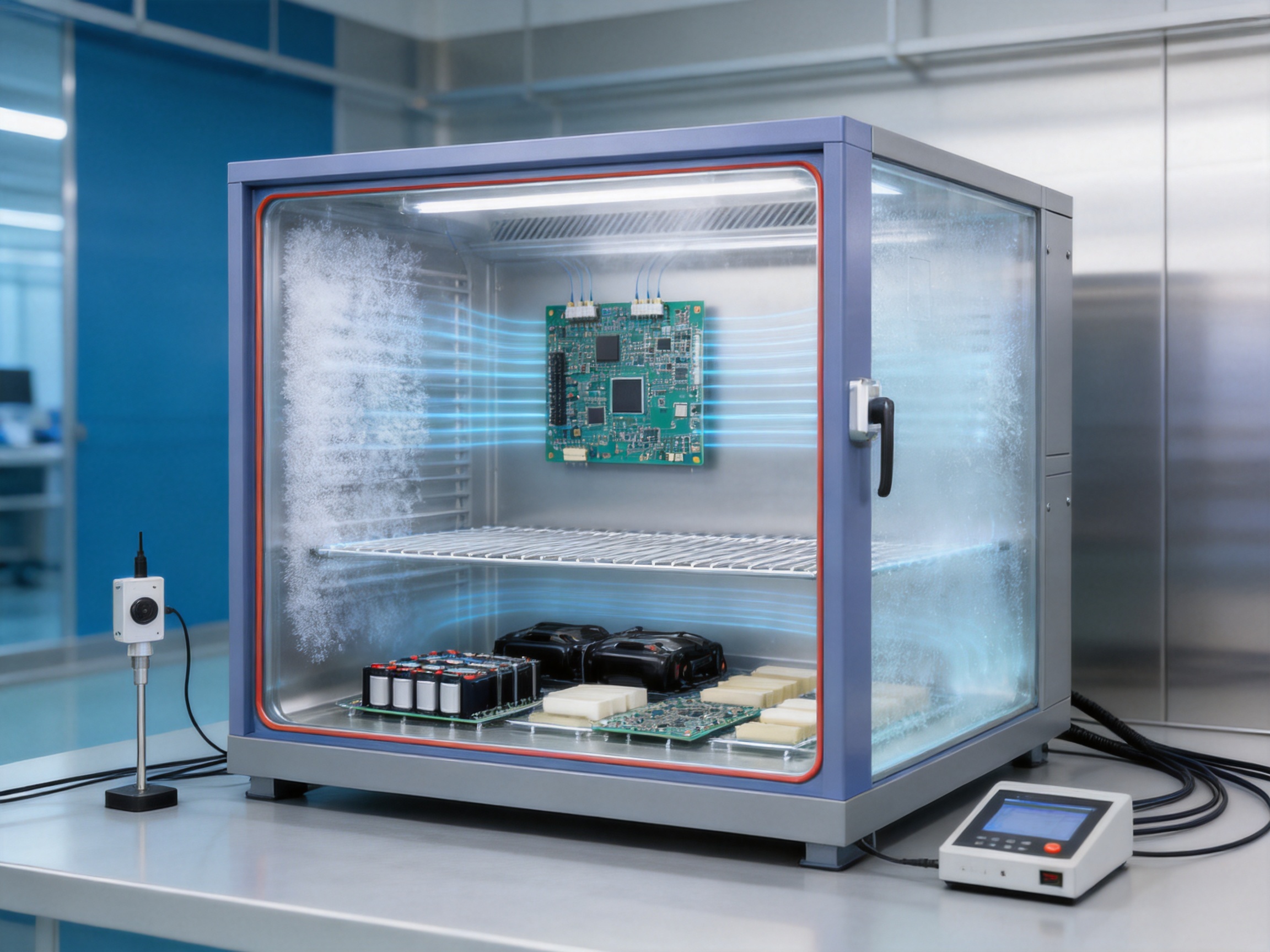
Specimens should not be packed so closely that airflow is obstructed. Adequate spacing allows conditioned air to reach the relevant surfaces and reduces the risk of local environmental differences. Heavy items should be placed securely and should not exceed the chamber’s intended loading capability.
Program and Verify the Cycle
The programmed cycle should be checked before the test begins. Operators should confirm the sequence of high-temperature, low-temperature, humidity, transition, and dwell stages. Where required, an independent calibrated data logger can be used to verify chamber performance or monitor a critical specimen location.
Verification is especially important when a test is part of product qualification, customer approval, regulatory documentation, or a failure investigation. The chamber display provides operating information, while independent measurement can provide additional confidence in the actual test environment.
Record Results and Abnormal Events
Test records should include specimen identification, chamber identification, program name, start and end times, operator, environmental conditions, observations, alarms, interruptions, and post-test results. Any door opening, power interruption, water shortage, abnormal noise, or unexpected specimen reaction should be documented.
Detailed records help distinguish product failure from test equipment issues. They also support root-cause analysis and make it possible to repeat a test under comparable conditions.
Maintenance and Service Considerations
Regular maintenance is essential for preserving the chamber’s accuracy, safety, and service life. The maintenance schedule should be adapted to operating frequency, test severity, water quality, ambient conditions, and manufacturer recommendations.
Important maintenance activities may include:
• Cleaning the stainless steel interior and water tray.
• Inspecting the door seal for damage, contamination, or loss of elasticity.
• Checking the door hinges and confirming smooth, controlled movement.
• Inspecting the circulation fan for unusual vibration or noise.
• Confirming that air outlets and returns are not blocked.
• Checking drainage areas for residue or obstruction.
• Inspecting electrical cables, grounding, and protective devices.
• Reviewing sensor calibration according to the laboratory’s quality system.
• Checking refrigeration performance and signs of abnormal condensation.
• Recording alarms and investigating repeated warnings promptly.
Water quality can influence chamber maintenance. If the humidification system requires specific water characteristics, operators should follow the equipment instructions. Unsuitable water may cause scale, contamination, or reduced performance. The water system should never be neglected simply because the chamber continues to operate.
The chamber should also be installed in a suitable location with adequate clearance, ventilation, stable flooring, and appropriate electrical service. Extreme ambient conditions may affect refrigeration performance and energy consumption. Installation planning should consider the chamber’s access requirements and the movement of specimens into and out of the laboratory.
Customization and Technical Support
Different industries often require different testing arrangements. A research laboratory may prioritize flexible programming and sensor access, while a production department may prioritize throughput, repeatability, and ease of operation. A quality department may require detailed records and defined inspection procedures.
JIANGSU BAISHENG INDUSTRIAL CO., LTD. provides custom precision laboratory equipment and laboratory testing equipment solutions. Its research and development background supports communication about special test objectives, product dimensions, operating methods, and application environments.
Customization should be considered carefully. Possible areas may include chamber configuration, specimen fixtures, monitoring arrangements, cable access, control functions, data management, and integration with other laboratory systems. Any modification should be reviewed for its effect on airflow, uniformity, safety, maintenance, and calibration.
A reliable supplier should be able to discuss more than the purchase price. Technical support should cover equipment selection, installation conditions, operating procedures, maintenance, spare parts, troubleshooting, and documentation. This broader service capability can reduce the risk of selecting equipment that appears suitable on paper but does not fit the laboratory’s actual workflow.
Why Manufacturer Capability Matters
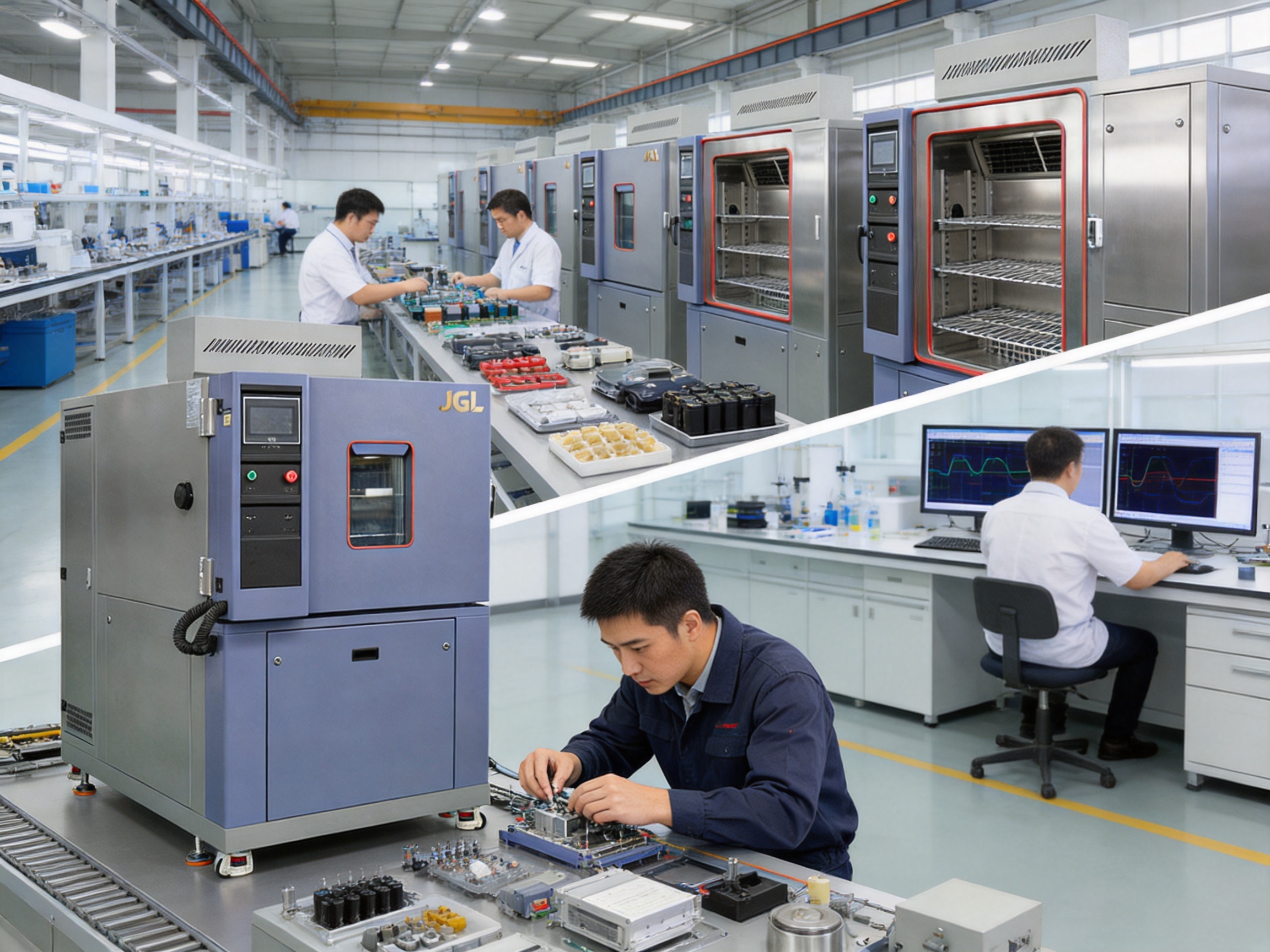
The manufacturer’s capabilities influence the long-term value of an environmental test chamber. A supplier that focuses only on assembly may have limited ability to adapt the product, analyze field problems, or improve the design. A company with an active research and development team can approach customer requirements from both engineering and application perspectives.
JIANGSU BAISHENG INDUSTRIAL CO., LTD. positions itself as a technology-driven enterprise rather than a conventional trading company. Its dedicated research and development team focuses on precision design and technical performance. The company’s development from electronic testing research into independent laboratory equipment production indicates experience with the practical relationship between testing requirements and equipment design.
The company’s international trade experience is also relevant to overseas customers. Export-oriented equipment supply requires clear technical communication, organized documentation, coordinated logistics, and an understanding of different customer expectations. When combined with engineering capability, international market experience can support more effective project delivery.
The company’s core values, described as “Precision in Craftsmanship, Innovation for the Long-Term,” reflect a product strategy centered on continuous improvement. This is appropriate for environmental testing equipment because laboratory expectations continue to evolve. Customers increasingly seek improved energy efficiency, better data management, more flexible test programming, dependable components, and customized solutions.
Purchasing Considerations
When evaluating a high-low temperature humidity cycling chamber, buyers should consider the complete application rather than focusing on one headline specification. The following questions can help guide procurement:
• What temperature and humidity conditions are required by the test methods?
• How frequently will the chamber operate?
• Will tests run continuously for many hours or days?
• How many specimens must be tested at one time?
• Are the specimens electrically powered during exposure?
• Is independent data logging required?
• What level of environmental uniformity is necessary?
• How will condensation and drainage be managed?
• What cleaning and maintenance resources are available?
• Is customization needed for fixtures, access, or monitoring?
• What are the installation space, ventilation, and electrical requirements?
• What technical support and spare parts services are available?
A chamber that matches the test program can provide better value than a unit selected only for its lowest initial price. Total cost of ownership includes energy use, maintenance, downtime, calibration, repairs, operator time, and the consequences of unreliable test results.
The UTH-150-A is suited to users who value precise environmental control, robust internal construction, stable circulation, operator safety, energy-conscious operation, and dependable components. Its design is particularly relevant to laboratories that perform repeated cycling tests rather than occasional basic temperature checks.
Q&A
What is a high-low temperature humidity cycling chamber?
It is a controlled environmental test system that exposes products or materials to programmed changes in temperature and humidity. Unlike a constant-condition chamber, it is designed to reproduce repeated transitions between high and low thermal and moisture conditions.
What products can be tested in the UTH-150-A?
The chamber is suitable for electronics, batteries, automotive parts, aerospace components, materials, and other products requiring environmental reliability evaluation. It can be used in research and development, quality inspection, production testing, and aging studies.
How does dynamic PID control improve testing?
Dynamic PID control evaluates the difference between the measured condition and the target while considering the direction and rate of change. This allows the chamber to adjust its output more smoothly, helping reduce fluctuation and overshoot compared with simple on-off control.
Why is water vapor partial pressure regulation important?
Temperature changes affect relative humidity. Water vapor partial pressure regulation helps manage the actual moisture condition in relation to temperature, supporting more coordinated and meaningful humidity simulation during cycling.
What is the purpose of the circulation fan?
The circulation fan distributes conditioned air around the working space. The UTH-150-A uses a Panasonic circulation fan with high-temperature bearings up to 200°C to support stable airflow and environmental uniformity under demanding conditions.
Why is the stainless steel interior beneficial?
The film-coated mirror stainless steel interior is resistant to corrosion, easier to clean, and suitable for repeated exposure to humidity and condensation. It helps maintain a durable and hygienic working space.
How does the damped door hinge help operators?
The damped hinge allows the door angle to be adjusted and helps control door movement. This makes specimen loading, sensor placement, inspection, and unloading more convenient and reduces the risk of abrupt door movement.
Does the chamber support energy-efficient testing?
Yes. The design incorporates optimized insulation, environmentally friendly components, stable refrigeration, and coordinated temperature and humidity control. These features are intended to reduce unnecessary energy consumption while maintaining consistent performance.
What safety feature is highlighted for this chamber?
The chamber incorporates a leakage protection design to improve electrical safety during operation, including long-duration testing. Operators should also follow proper grounding, inspection, installation, and maintenance procedures.
Can the chamber be customized?
JIANGSU BAISHENG INDUSTRIAL CO., LTD. specializes in custom precision laboratory equipment solutions. Customization should be discussed according to specimen size, test method, monitoring requirements, fixtures, access needs, and applicable safety considerations.
How should the chamber be maintained?
Maintenance should include cleaning the interior and water tray, checking the door seal, inspecting the fan and airflow path, reviewing electrical protection, monitoring drainage, checking refrigeration performance, and arranging calibration according to the laboratory quality system.
Why should buyers evaluate the manufacturer as well as the equipment?
Environmental chambers are long-term laboratory assets. Manufacturer research and development capability, component selection, quality management, technical support, spare parts availability, and customization experience can all influence equipment reliability and ownership cost.
Conclusion
The UTH-150-A high-low temperature humidity cycling chamber is designed for laboratories that require controlled, repeatable, and durable environmental simulation. Its main strengths include dynamic PID control, water vapor partial pressure regulation, stable air circulation, a corrosion-resistant mirror stainless steel interior, a full-size stainless steel water tray, adjustable damped door hinges, leakage protection, energy-conscious construction, and dependable international-brand electrical components.
These features provide practical advantages over basic chambers that rely on less precise control, weaker airflow, less durable internal surfaces, or limited safety protection. More importantly, they work together as an integrated system. Accurate control is supported by circulation, circulation is supported by a suitable fan, humidity performance is supported by water management, and long-term operation is supported by durable materials and quality components.
The equipment is applicable to electronics, batteries, automotive parts, aerospace components, and material aging research. It can support product development, quality inspection, production testing, supplier evaluation, and failure analysis. Its value is greatest when the test program demands repeated environmental transitions and when reliable data is more important than simple exposure to a nominal temperature.
Backed by a research and development-oriented manufacturer, the UTH-150-A represents a precision-focused approach to laboratory equipment. JIANGSU BAISHENG INDUSTRIAL CO., LTD. combines technical engineering, independent product development, manufacturing experience, quality management, international trade capability, and customized solution support. For organizations seeking a dependable environmental testing platform made in China, the chamber offers a balanced combination of control performance, structural durability, safety, efficiency, and application flexibility.
References
1. General principles of environmental reliability testing for electronic and electrical products.
2. Laboratory practice guidelines for temperature and humidity cycling tests.
3. Technical literature on proportional-integral-derivative control in environmental simulation systems.
4. Engineering references concerning relative humidity, water vapor partial pressure, and temperature relationships.
5. Laboratory equipment maintenance practices for refrigeration, humidification, airflow, and water management systems.
6. Quality management principles for the design, manufacture, inspection, and service of precision laboratory equipment.
7. Product information supplied for the UTH-150-A high-low temperature humidity cycling chamber.
8. Corporate information supplied for JIANGSU BAISHENG INDUSTRIAL CO., LTD., including company history, research and development background, product philosophy, and custom laboratory equipment capabilities.
Product: UTH-150-A High-Low Temperature Humidity Cycling Chamber

PREV:No previous article
NEXT:MSC310 Cryogenic Environmental Chamber: Precision Control for Low-Temperature Sample Preparation and Analysis
NEXT:MSC310 Cryogenic Environmental Chamber: Precision Control for Low-Temperature Sample Preparation and Analysis
Interested in cooperation or have questions?
Featured Products
Related products
Quick Link
Contact Information
- Tel: +86-13861043568
- E-mail: 1840784112@qq.com
- Add: Tianting District, Changzhou City, Jiangsu Province, China, No. 6 Hecircuit
Scan Code
Copyright © JIANGSU BAISHENG INDUSTRIAL CO., LTD.
All Rights Reserved. Privacy Custom Precision Laboratory Testing Equipment Manufacturers
