 English
 Español

NEWS
NEWS
NEWS
NEWS
NEWS
NEWS
NEWS
NEWS
NEWS
NEWS
NEWS
NEWS
NEWS
NEWS
NEWS
NEWS

Peng Shulan — Regional Sales Consultant
Home / Author / Peng Shulan — Regional Sales Consultant / LNS200 Liquid Nitrogen Laboratory Workbench for Rapid Cryogenic Sample Preparation
LNS200 Liquid Nitrogen Laboratory Workbench for Rapid Cryogenic Sample Preparation
Content
- 1 1. The Role of Rapid Cryogenic Preparation in Modern Laboratories
- 2 2. Product Overview
- 3 3. Liquid Nitrogen Slurry and Its Thermal Advantages
- 4 4. Five-Minute Preparation for Greater Workflow Efficiency
- 5 5. Vacuum Chamber Design and Sample Accessibility
- 6 6. Controlled Transfer to Downstream Analysis Systems
- 7 7. Application Areas
- 8 8. Advantages Over Basic Cryogenic Workstations
- 9 9. Manufacturing Strengths and Engineering Capabilities
- 10 10. Manufacturing Process Considerations for Cryogenic Equipment
- 11 11. Safe and Effective Operating Practices
- 12 12. Installation and Workflow Planning
- 13 13. Selecting the LNS200 for a Laboratory Project
- 14 14. Long-Term Value and Laboratory Productivity
- 15 15. Frequently Asked Questions
- 15.1 Q1: What is the main purpose of the LNS200?
- 15.2 Q2: How quickly can the system prepare liquid nitrogen slurry?
- 15.3 Q3: Why use liquid nitrogen slurry instead of conventional liquid nitrogen immersion?
- 15.4 Q4: What kinds of samples can be prepared?
- 15.5 Q5: Does the chamber allow operators to observe the sample?
- 15.6 Q6: Can customized sample holders be used?
- 15.7 Q7: Can the LNS200 connect to a vacuum cryogenic transfer chamber?
- 15.8 Q8: What is the function of the electrically controlled valve?
- 15.9 Q9: Is the LNS200 suitable for microscopy applications?
- 15.10 Q10: What advantages does the manufacturer provide beyond the standard product?
- 15.11 Q11: What information should be provided when requesting a quotation?
- 15.12 Q12: What safety measures are necessary?
- 16 16. Conclusion
- 17 References
- 18 Product: LNS200 Liquid Nitrogen Laboratory Workbench with Integrated Cryogenic Handling
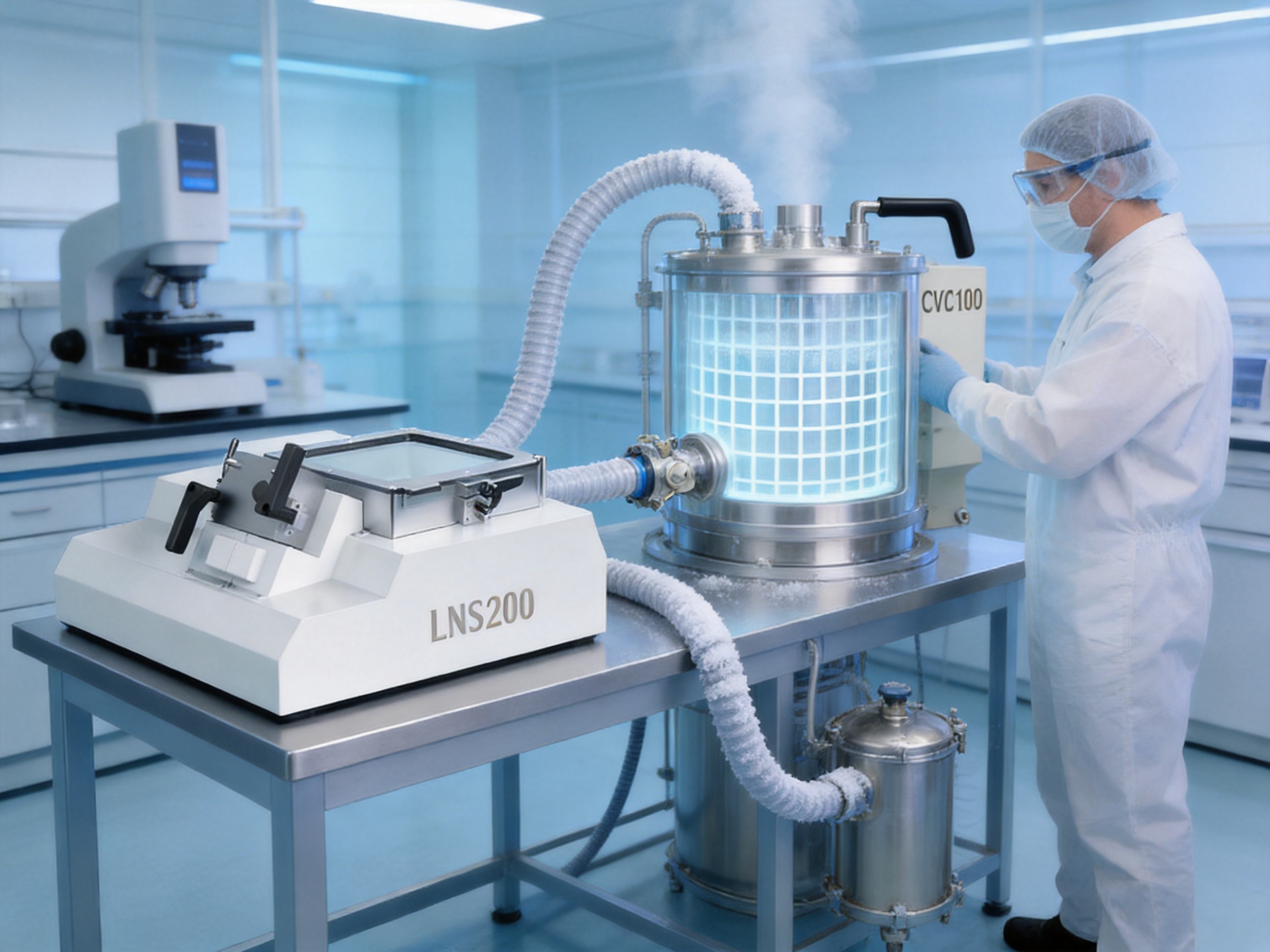
Modern laboratories increasingly require cryogenic equipment that can do more than simply provide a low-temperature environment. Researchers working with hydrated biological specimens, soft materials, polymers, electronic components, and other temperature-sensitive samples need fast freezing, uniform thermal contact, safe sample handling, and reliable integration with downstream analysis systems. The LNS200 Liquid Nitrogen Laboratory Workbench addresses these requirements by combining liquid nitrogen slurry preparation, a vacuum-based cryogenic workspace, and controlled sample transfer capability in one integrated platform.
Designed for rapid preparation of a liquid-solid nitrogen mixture, the LNS200 can produce high-quality liquid nitrogen slurry in approximately five minutes. This slurry provides closer and more uniform thermal contact with the surface of a sample than conventional liquid nitrogen immersion alone. As a result, the system is particularly suitable for cryofixation applications in which the natural hydrated condition, internal structure, and surface characteristics of a specimen must be preserved during freezing.
Beyond its freezing performance, the LNS200 is designed as a practical laboratory workbench. Its rotating or flip-top vacuum chamber cover supports convenient loading and unloading, while an observation window helps operators monitor the process. The chamber provides sufficient space for sample holders, clamps, and customized fixtures. An electrically controlled valve and standard connection port also allow the workbench to connect with a CVC100 vacuum cryogenic sample transfer chamber or compatible systems from other manufacturers.
This combination of rapid slurry generation, controlled handling, adaptable integration, and engineering-focused manufacturing makes the LNS200 a valuable solution for laboratories seeking improved cryogenic workflow efficiency without compromising sample integrity.
1. The Role of Rapid Cryogenic Preparation in Modern Laboratories
Freezing is a critical preparation step in many scientific and industrial applications. Microscopy, material analysis, biological research, polymer evaluation, electronic research, and failure investigation may all require a sample to be stabilized at a very low temperature before observation or testing. The faster and more evenly a sample is frozen, the greater the possibility of preserving its original state.
Hydrated materials present a special challenge. Water-rich specimens may change rapidly during conventional preparation. Slow or uneven freezing can encourage the formation of large ice crystals, distortion of soft structures, migration of moisture, or separation of material phases. These changes may affect the accuracy of later microscopy or analytical work. In biological specimens, they can obscure fine structures. In polymers and soft materials, they may alter morphology. In electronic or composite materials, moisture-related behavior may affect the interpretation of test results.
Conventional liquid nitrogen immersion provides extremely low temperatures and remains useful for many applications. However, direct immersion does not always provide the same degree of continuous thermal contact that a prepared liquid-solid slurry can offer. A slurry can flow around irregular surfaces and reduce gaps between the cryogenic medium and the specimen. The resulting contact may support faster and more uniform heat removal, particularly when the sample geometry is complex or the material contains water.
The LNS200 has been developed around this practical laboratory need. Instead of treating liquid nitrogen only as a storage or immersion medium, the system prepares a cryogenic mixture specifically for rapid freezing and fixation. The preparation cycle is designed to be completed in approximately five minutes, allowing the equipment to support time-sensitive laboratory workflows.
2. Product Overview
The LNS200 is a liquid nitrogen laboratory workbench with integrated cryogenic handling functions. Its main purpose is the rapid preparation of liquid nitrogen slurry for freezing and fixing hydrated samples. The system combines a cryogenic preparation chamber, a cover with observation capability, space for sample holders and clamps, and an electrically controlled sample-transfer interface.
The equipment is suitable for laboratories that need a repeatable method for preparing samples under low-temperature conditions. It can be used as a stand-alone cryofixation station or as part of a wider vacuum cryogenic sample-handling workflow. With appropriate fixtures, laboratories can adapt the internal working space to different sample shapes, sizes, and preparation procedures.
| Item | General Description |
|---|---|
| Product model | LNS200 |
| Product type | Liquid nitrogen laboratory workbench |
| Primary function | Rapid preparation of liquid nitrogen slurry for cryogenic freezing and fixation |
| Slurry preparation time | Approximately five minutes |
| Working environment | Vacuum cryogenic chamber with observation capability |
| Sample handling | Internal space for sample holders, clamps, and customized fixtures |
| Transfer integration | Standard connection for CVC100 vacuum cryogenic sample transfer chamber; customized ports available |
| Primary application areas | Biological samples, soft materials, polymers, hydrated specimens, microscopy, and material analysis |
The workbench is intended to make cryogenic preparation more controlled and convenient. Rather than relying on improvised containers or manually managed transfer steps, operators can use a dedicated chamber designed for visibility, loading access, and connection to related equipment.
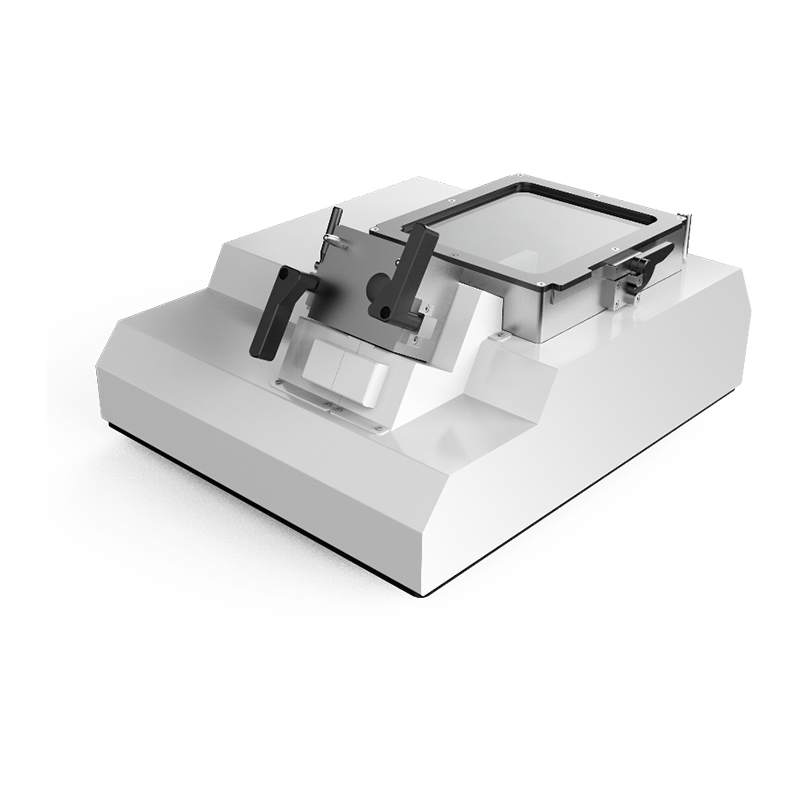
LNS200 Liquid Nitrogen Laboratory Workbench with Integrated Cryogenic Handling
3. Liquid Nitrogen Slurry and Its Thermal Advantages
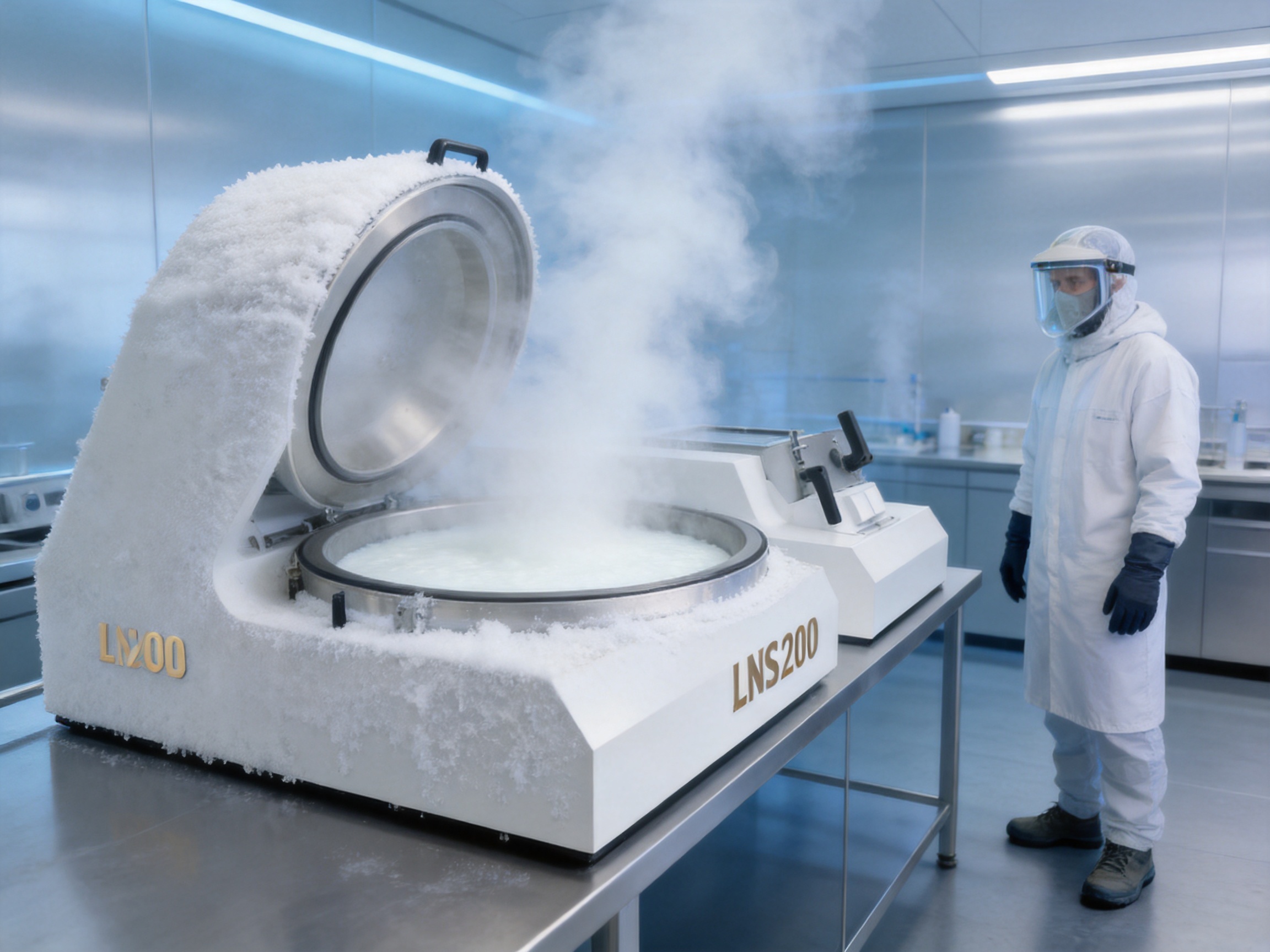
The central technical feature of the LNS200 is its ability to prepare a liquid-solid nitrogen mixture. This cryogenic slurry combines the mobility of a liquid with the high cooling potential of solidified nitrogen particles. The mixture is described as having a temperature of approximately -210°C and is intended to provide enhanced thermal contact during sample freezing.
Thermal contact is essential in cryogenic preparation. When a sample is immersed in a conventional liquid medium, the actual rate of heat transfer may be affected by surface shape, gas layers, bubbles, contaminants, and the physical properties of the specimen. A slurry can reduce the presence of empty spaces between the sample and the cooling medium. Its semi-solid character may also help the cryogenic material conform more closely to irregular surfaces.
For hydrated samples, this can provide several practical benefits:
• Faster heat extraction from water-containing structures.
• More uniform cooling across exposed surfaces.
• Reduced risk of local differences in freezing conditions.
• Improved suitability for delicate, soft, or irregularly shaped specimens.
• Better support for preparation procedures in which natural hydration must be maintained.
The purpose of rapid freezing is not simply to reach a low temperature. It is also to limit the time available for physical or structural changes to take place. A fast and consistent cryogenic process can help preserve the condition of a sample before microscopy, material analysis, or another examination method.
The LNS200 can generate the required slurry in approximately five minutes. This short preparation period is important for laboratories that process multiple samples, work with time-sensitive specimens, or need to minimize waiting between preparation stages. Faster slurry preparation can also make the equipment easier to incorporate into routine research workflows.
3.1 Advantages Compared with Conventional Immersion Methods
Traditional immersion in liquid nitrogen remains a familiar and accessible method, but it may require additional manual steps and may not provide the same degree of surface contact for every specimen. A laboratory may need to select a container, manually position the sample, monitor the immersion process, and then transfer the specimen to another location. Each additional step can increase the risk of warming, contamination, mechanical damage, or inconsistent handling.
The LNS200 provides a purpose-built chamber and a controlled preparation environment. The slurry is prepared in the workbench, and the specimen can be placed into the same cryogenic workspace using holders or clamps. This supports a more organized process and reduces dependence on improvised handling arrangements.
The system is not intended to eliminate the need for sound laboratory procedures. Operators must still use appropriate personal protective equipment, ventilation, sample fixtures, and cryogenic safety practices. However, the dedicated design can make it easier to standardize the preparation sequence and repeat the same general method from sample to sample.
4. Five-Minute Preparation for Greater Workflow Efficiency
Time efficiency is a significant advantage in laboratory equipment selection. A cryogenic workbench that takes too long to prepare may become a bottleneck, particularly when a laboratory performs repeated sample preparation or coordinates with microscopy and analytical instruments. The LNS200 is designed to prepare liquid nitrogen slurry within approximately five minutes, creating a practical balance between preparation speed and controlled operation.
A short preparation cycle can benefit laboratories in several ways. First, it reduces the waiting period before a sample can be frozen. Second, it supports higher throughput when several specimens must be processed in sequence. Third, it reduces the time that a hydrated sample remains exposed to ambient laboratory conditions. Fourth, it can make the cryogenic preparation stage easier to schedule alongside other laboratory operations.
Efficiency is also influenced by equipment layout. The LNS200 incorporates preparation and handling functions in one workbench, reducing the need to move specimens among separate containers or stations. When combined with suitable fixtures and a defined operating procedure, this layout may help laboratories establish a repeatable preparation cycle.
For research teams, repeatability is often as important as speed. A rapid process is only valuable when operators can perform it consistently. The LNS200 supports repeatable operation through a dedicated cryogenic chamber, visible sample access, and integration options for transfer systems. These characteristics can help reduce unnecessary variation between preparation batches.
5. Vacuum Chamber Design and Sample Accessibility
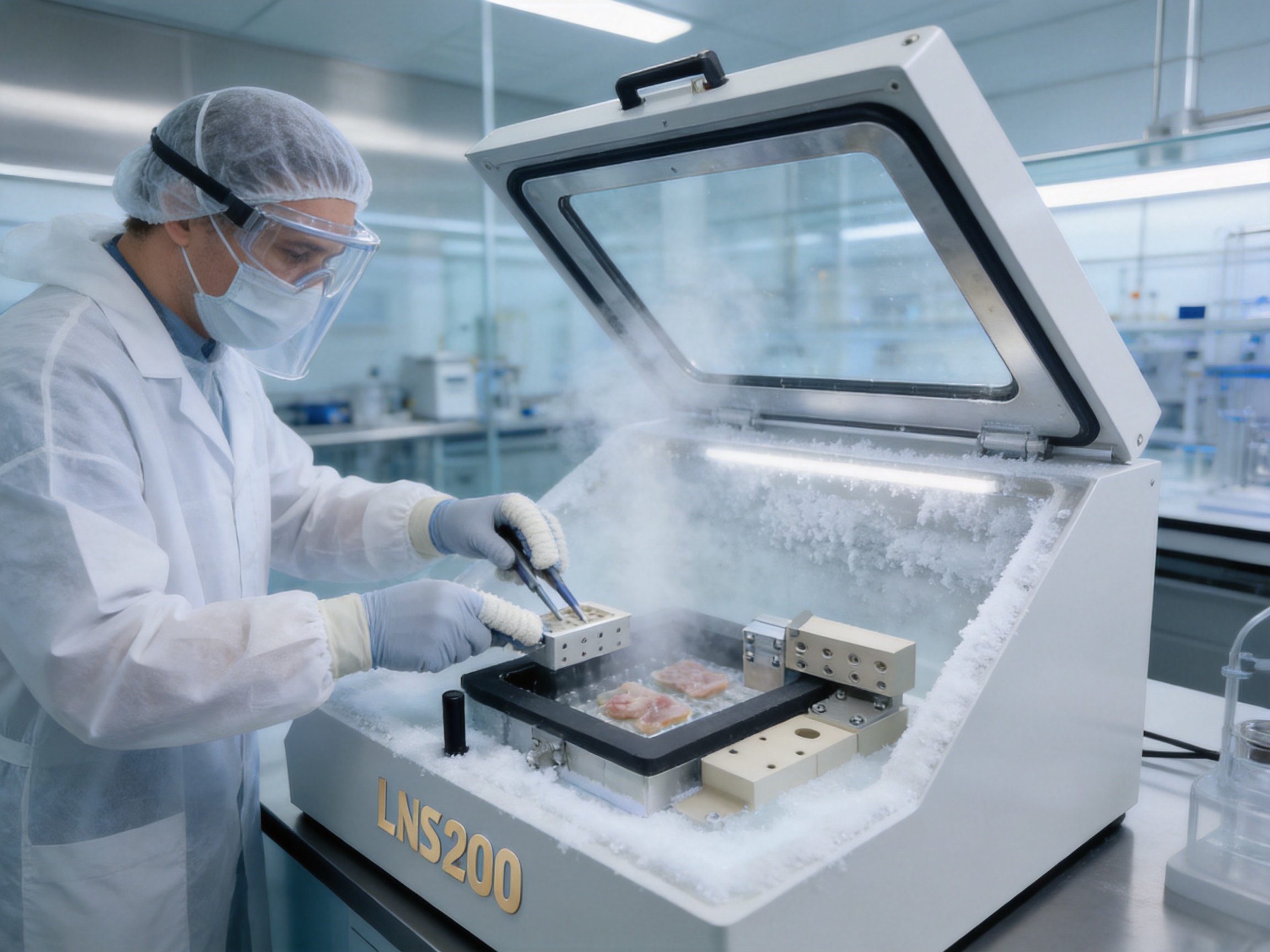
The LNS200 vacuum chamber is equipped with a rotating or flip-top cover and an observation window. This design is intended to improve access to the work area while allowing operators to observe the chamber interior during operation. The cover can be opened for sample loading and unloading, fixture adjustment, and cleaning procedures conducted according to laboratory requirements.
Access is particularly important when samples are delicate or when the laboratory uses specialized holders. A narrow or difficult-to-access chamber may increase the possibility of accidental contact, dropped specimens, or fixture misalignment. By providing ample internal space, the LNS200 is designed to accommodate sample holders and clamps that keep specimens securely positioned during preparation.
The observation window provides an additional operational advantage. Operators can visually confirm the position of a sample, observe the condition of the cryogenic medium, and check the general status of the chamber without repeatedly opening the cover. This can help reduce unnecessary disturbance and support a more controlled process.
A visible and accessible chamber is also useful during method development. Laboratories may need to evaluate different holder designs, sample orientations, or freezing arrangements. The LNS200 provides a practical platform for refining these procedures before they are applied to routine work.
5.1 Support for Different Sample Geometries
Samples used in research and testing may range from small biological specimens to irregular pieces of soft material or polymer. Their surfaces may be flat, curved, porous, fragile, or uneven. A single fixed holder may not be suitable for every application.
The chamber space of the LNS200 allows laboratories to install appropriate holders and clamps. This adaptability can help users position specimens according to their size and geometry. Secure positioning is important because movement during freezing may create inconsistent contact or make subsequent transfer more difficult.
Customized fixtures can also support specialized research protocols. For example, a laboratory may require a holder that exposes one surface while shielding another, or a clamp that maintains a thin specimen in a defined orientation. The ability to configure the work area makes the LNS200 more versatile than a basic cryogenic container designed for only one type of sample.
6. Controlled Transfer to Downstream Analysis Systems
Sample warming during transfer is a common concern in cryogenic workflows. A specimen may be frozen correctly but lose some of the benefits of the preparation process if it is exposed to ambient conditions for too long before analysis. The LNS200 addresses this issue through an electrically controlled valve and an interface for connection with a vacuum cryogenic sample transfer chamber.
The system can be connected to a CVC100 vacuum cryogenic sample transfer chamber through a standard port. Customized ports are also available for integration with other brands of vacuum cryogenic sample transfer systems. This flexibility allows laboratories to consider the LNS200 as part of a broader sample-handling network rather than as an isolated preparation device.
The electrically controlled valve is designed to support safe, efficient, and controlled transfer between the preparation system and the analysis system. Maintaining cryogenic conditions throughout the transfer sequence can help protect the frozen state of a sample and reduce the potential for unwanted thermal exposure.
Integration is especially valuable in microscopy and material analysis. When the preparation station and examination instrument are separated by distance or connected through a dedicated transfer path, a controlled interface can simplify the movement of specimens. It can also make the overall workflow easier to document and repeat.
6.1 Compatibility and Customization
Laboratories often operate a mixture of equipment purchased at different times or from different suppliers. A cryogenic workbench that only connects to one specific system may be difficult to deploy in an established facility. The LNS200 supports a standard connection for the CVC100 system while also allowing customized ports for other vacuum cryogenic transfer equipment.
This approach gives users greater freedom when planning laboratory layouts. It can support new system installations, replacement of older preparation equipment, or expansion of an existing cryogenic analysis line. Custom port development may also be useful when a customer has a particular chamber design, transfer flange, or instrument interface.
Connection planning should be completed before installation. Laboratories should confirm the transfer chamber configuration, required port dimensions, vacuum requirements, sample-holder compatibility, and operating sequence. The manufacturer’s engineering team can then evaluate the proposed arrangement and determine the appropriate customized interface.
7. Application Areas
7.1 Biological and Hydrated Samples
Biological samples frequently contain a high proportion of water and may be sensitive to structural changes during preparation. Rapid cryofixation can help preserve the hydrated condition of such specimens before microscopy or other analytical procedures. The LNS200 is designed to support this type of preparation by producing a high-contact cryogenic slurry and providing a controlled working chamber.
Possible applications include the preparation of soft biological tissues, hydrated research specimens, and other water-rich samples that require rapid stabilization. The actual protocol should be selected according to the sample type, dimensions, sensitivity, and intended analysis method.
7.2 Microscopy and Structural Analysis
Microscopy often depends on the quality of the sample preparation process. Artifacts introduced during freezing may affect the interpretation of fine features, interfaces, or internal structures. The LNS200 can be used as part of a cryofixation workflow for microscopy applications in which rapid and uniform cooling is important.
The observation window and accessible chamber may also help operators refine the position of a sample before it is transferred to the microscope or associated preparation system. When combined with a vacuum cryogenic transfer chamber, the workbench can support a more continuous transition from freezing to observation.
7.3 Soft Materials and Polymers
Soft materials and polymers may deform, collapse, or change phase during preparation. If the material contains moisture or is sensitive to temperature changes, rapid freezing may help preserve its condition for subsequent analysis. The LNS200 provides a flexible platform for using customized holders and clamps with different material geometries.
Researchers may use the system to prepare polymer films, gels, water-rich composites, and other soft specimens. The equipment can support comparative studies in which different freezing conditions are evaluated for their effect on morphology, surface structure, or internal features.
7.4 Electronic and Materials Research
Electronic research may involve materials, components, encapsulants, interfaces, or water-sensitive structures that require low-temperature stabilization before examination. The LNS200 is included within a wider portfolio of laboratory and electronic testing equipment and can contribute to research workflows that combine cryogenic preparation with material or component analysis.
In these applications, controlled handling can be especially important when the sample includes multiple materials with different thermal properties. A stable preparation method and secure holder can help maintain the sample orientation and reduce avoidable handling damage.
8. Advantages Over Basic Cryogenic Workstations
The LNS200 offers several advantages compared with basic cryogenic containers, manually managed immersion setups, or workstations that provide low temperature without integrated transfer capability.
Its first advantage is dedicated slurry preparation. The equipment is designed to prepare a liquid-solid nitrogen mixture rapidly rather than merely holding liquid nitrogen. This supports enhanced contact with the sample and is especially relevant for hydrated or irregular specimens.
Its second advantage is integrated sample access. The flip-top cover, observation window, and internal space for holders and clamps support a more controlled process than a simple open container. Operators can load, position, monitor, and unload specimens within a dedicated chamber.
Its third advantage is transfer integration. The electrically controlled valve allows the workbench to connect with a vacuum cryogenic sample transfer system. This helps laboratories create a continuous low-temperature workflow from preparation to analysis.
Its fourth advantage is customization. The chamber can accommodate different sample fixtures, and custom ports can be developed for compatible transfer systems from other manufacturers. This makes the platform more adaptable to specific laboratory requirements.
Its fifth advantage is workflow efficiency. A preparation time of approximately five minutes can reduce delays and support repeated processing. When a laboratory is working with several specimens or time-sensitive samples, this can make a meaningful difference to productivity.
| Evaluation Area | Basic Immersion Setup | LNS200 Workbench |
|---|---|---|
| Cooling medium | Conventional liquid nitrogen immersion | Prepared liquid-solid nitrogen slurry |
| Thermal contact | May vary with sample shape and handling method | Designed for enhanced contact with irregular and hydrated samples |
| Sample access | Often depends on an external container | Flip-top or rotating cover with observation window |
| Fixture support | May require improvised holders | Internal space for holders, clamps, and customized fixtures |
| Transfer capability | Usually manual or separate from the container | Electrically controlled valve and cryogenic transfer integration |
| Preparation time | Depends on manual procedure and equipment | Approximately five minutes for slurry preparation |
| System flexibility | Limited by container design | Custom ports and adaptable sample-handling arrangements |
The comparison does not mean that every laboratory requires the same equipment. Basic immersion may be appropriate for simple tasks. However, when sample integrity, repeatability, rapid preparation, visibility, and transfer control are priorities, an integrated workbench can offer a more complete solution.
9. Manufacturing Strengths and Engineering Capabilities
The LNS200 is supplied by JIANGSU BAISHENG INDUSTRIAL CO., LTD., a technology-driven enterprise founded in 2010. The company specializes in research, development, and supply of high-end laboratory equipment and safety testing instruments. Its capabilities combine product engineering with international trade experience, allowing it to serve laboratories and industrial customers that require both technical support and dependable supply coordination.
A key strength of the company is its dedicated R&D team. Rather than operating only as a conventional trading company, the organization emphasizes precision design, technical development, and product-line refinement. This engineering orientation is particularly relevant to cryogenic equipment, where chamber design, sample access, transfer interfaces, and operational details must work together.
The company’s development history reflects a gradual expansion from electronic testing expertise into broader laboratory equipment manufacturing. Its predecessor began in 2013 as a research and development studio focused on electronic testing. The founding engineers had technical experience in laboratory equipment and safety compliance testing. In 2016, the organization developed its first independently developed production line and began launching high-end laboratory equipment with independent intellectual property rights.
In 2019, the company adopted a “technology plus trade” development strategy. This approach increased R&D investment, introduced additional technical talent, and expanded overseas markets. For international customers, the combination of engineering capacity and export experience can be valuable because laboratory equipment projects often require product customization, technical communication, packaging coordination, and after-sales support.
By 2022, the company had further improved its quality management system, and its products passed rigorous technical specification certifications. By 2025, the company continued to focus on product innovation and technological upgrading while adapting to increased intelligence, digitalization, and wider product application scenarios.
9.1 Precision-Oriented Product Development
The company’s stated values emphasize precision in craftsmanship and innovation for the long term. These principles are reflected in the development approach for equipment such as the LNS200. A cryogenic workbench must be more than a visually complete enclosure. It must provide a practical chamber arrangement, appropriate access, controlled interfaces, and reliable compatibility with laboratory workflows.
Precision-oriented development includes careful attention to the relationships between the vacuum chamber, cover mechanism, viewing window, sample fixtures, valve, and transfer port. These elements affect how easily an operator can use the equipment and how consistently a specimen can be prepared.
Innovation is also demonstrated through integration. The ability to prepare slurry and connect to a vacuum cryogenic transfer system in the same product reduces the separation between preparation and analysis. This supports the development of more complete cryogenic workflows for specialized laboratories.
9.2 Custom Engineering and Customer Cooperation
Laboratory equipment is often purchased for a specific process rather than for general-purpose use. A customer may require a particular sample holder, transfer interface, chamber arrangement, or connection to equipment already installed in the laboratory. The LNS200’s customizable port options provide a foundation for this type of project.
Customer cooperation typically begins with a review of the sample characteristics and workflow requirements. Important information may include sample size, sample quantity, freezing method, desired transfer sequence, available laboratory space, and downstream instrument configuration. Engineering teams can use these details to evaluate the required fixtures and interface design.
This consultative approach is one of the company’s advantages. Its R&D background allows it to consider technical requirements while its international trade experience supports communication with overseas customers, distributors, and project partners.
10. Manufacturing Process Considerations for Cryogenic Equipment
Although individual production details may vary according to configuration, high-quality cryogenic equipment generally depends on a disciplined manufacturing process. The LNS200’s engineering-focused development model supports several important stages: requirement definition, structural design, component selection, fabrication, assembly, inspection, functional verification, and customer-specific integration.
10.1 Requirement Definition
The first stage is to define the intended use of the equipment. For the LNS200, this includes rapid liquid nitrogen slurry preparation, cryogenic sample handling, visibility during operation, fixture installation, and potential connection to a transfer chamber. A clear requirement definition helps prevent conflicts between chamber size, cover movement, valve placement, and sample access.
10.2 Structural and Interface Design
The chamber and cover must be designed as a coordinated assembly. The cover needs to provide convenient access while supporting observation and safe operation. The transfer port must be positioned so that it can connect to a related system without interfering with internal holders or external laboratory space.
For customized projects, the interface design must account for the customer’s existing transfer chamber, connection dimensions, orientation, and operating sequence. This is where a dedicated R&D team can contribute practical value by reviewing the entire system rather than treating the workbench as an isolated product.
10.3 Component Integration
Integration is central to the LNS200. The slurry preparation function, vacuum chamber, observation window, flip-top cover, sample fixtures, and electrically controlled valve must operate as a coherent system. Component compatibility is important because a change in one area may affect access, sealing, transfer, or operator convenience.
Engineering-led manufacturing helps ensure that these elements are considered together. This is different from assembling unrelated standard components without reviewing their interaction within the laboratory workflow.
10.4 Assembly and Quality Verification
Assembly quality has a direct effect on equipment performance and user confidence. A structured assembly process should include verification of the cover mechanism, chamber arrangement, valve operation, connection points, and sample-holder installation areas. Final inspection should confirm that the completed workbench matches the agreed technical configuration.
The company’s improved quality management system and product certification experience provide a foundation for consistent manufacturing and inspection practices. Customers requiring project-specific documentation should clarify inspection records, technical specifications, and acceptance criteria before production begins.
11. Safe and Effective Operating Practices
Liquid nitrogen and cryogenic slurry require appropriate safety controls. Operators should receive training in cryogenic handling, use suitable personal protective equipment, and follow the laboratory’s ventilation and oxygen-monitoring procedures. The LNS200 is designed to improve handling control, but no equipment can replace proper safety management.
Before operation, users should inspect the chamber, cover, observation window, valve, port, holders, and clamps. Samples should be secured so that they cannot shift unexpectedly during preparation or transfer. Operators should verify that the selected fixture is compatible with the sample and does not obstruct the cover or transfer interface.
The observation window should be kept clean enough to support visual monitoring. The cover should be operated carefully, and users should avoid unnecessary exposure of the chamber to ambient conditions. Transfer procedures should be established in advance when the LNS200 is connected to a vacuum cryogenic sample transfer chamber.
After use, the laboratory should follow an approved procedure for warming, ventilation, cleaning, inspection, and preparation for the next cycle. Any unusual frost pattern, mechanical resistance, valve behavior, or transfer difficulty should be recorded and reviewed by qualified personnel.
12. Installation and Workflow Planning
Successful installation begins with a review of the laboratory environment. The available floor or bench space, ventilation, power supply, access routes, transfer-system position, and operator working area should be evaluated before delivery. A clear installation plan can reduce delays and help ensure that the workbench is positioned for safe and convenient use.
When integration with a vacuum cryogenic transfer system is planned, the two systems should be considered together. The connection path should be as practical as possible, and the operator should be able to access the cover, valve controls, and transfer chamber without awkward movement.
Sample preparation procedures should also be documented. A typical procedure may include sample inspection, holder installation, slurry preparation, sample positioning, freezing, valve or transfer operation, and post-use inspection. Clear documentation helps new operators learn the process and supports consistent results across different shifts or research teams.
13. Selecting the LNS200 for a Laboratory Project
The LNS200 is particularly appropriate when a laboratory has one or more of the following requirements:
• Rapid preparation of liquid nitrogen slurry.
• Cryofixation of hydrated or water-rich specimens.
• More uniform thermal contact than a basic immersion setup can provide.
• A visible chamber with convenient sample access.
• Space for customized sample holders and clamps.
• Connection to a vacuum cryogenic sample transfer chamber.
• Integration with equipment supplied by different manufacturers.
• Engineering support for customized ports or laboratory-specific configurations.
• A supplier with experience in laboratory equipment, safety testing instruments, R&D, and international trade.
Before ordering, customers should provide information about their samples and intended workflow. Relevant details include the dimensions and material of the samples, the required holder type, the number of samples per cycle, the downstream analysis method, and the existing transfer equipment. This information helps determine whether standard configuration is sufficient or whether customized engineering is recommended.
14. Long-Term Value and Laboratory Productivity
The value of a cryogenic workbench should be evaluated over its entire working life rather than only by its initial purchase price. A system that improves sample consistency, reduces manual handling, and connects effectively with analysis equipment may provide productivity benefits over many years.
The LNS200 supports long-term value through its multifunctional design. It combines slurry preparation with cryogenic sample handling and transfer integration. This can reduce the need for separate improvised accessories and help laboratories establish a more organized process.
Its adaptable chamber can also support changing research needs. Laboratories may work with different specimens over time, and the ability to install different holders or clamps can extend the usefulness of the workbench. Custom ports provide another path for future integration as the laboratory adds or replaces downstream equipment.
The manufacturer’s ongoing focus on product innovation and technological upgrading is also important. As laboratories adopt more digital and intelligent workflows, equipment suppliers with active R&D capabilities may be better positioned to develop improved interfaces, customized configurations, and expanded application solutions.
15. Frequently Asked Questions
Q1: What is the main purpose of the LNS200?
The LNS200 is designed to prepare liquid nitrogen slurry rapidly for the freezing and fixation of hydrated samples. It also provides a cryogenic chamber for sample handling and can integrate with vacuum cryogenic transfer equipment.
Q2: How quickly can the system prepare liquid nitrogen slurry?
The stated preparation time is approximately five minutes. Actual operating conditions may depend on the laboratory procedure, sample requirements, and configuration of the equipment.
Q3: Why use liquid nitrogen slurry instead of conventional liquid nitrogen immersion?
The liquid-solid slurry is intended to provide enhanced thermal contact with the sample. This can support faster and more uniform freezing, especially for water-containing, soft, irregularly shaped, or delicate specimens.
Q4: What kinds of samples can be prepared?
The system is suitable for biological samples, soft materials, polymers, hydrated specimens, and selected electronic or material research samples. The appropriate holder and operating procedure should be selected according to the sample’s size, composition, and intended analysis.
Q5: Does the chamber allow operators to observe the sample?
Yes. The vacuum chamber includes a cover with an observation window. This allows operators to monitor the chamber and sample position while supporting controlled loading and unloading.
Q6: Can customized sample holders be used?
Yes. The chamber provides space for sample holders and clamps, and laboratories can configure fixtures according to sample geometry and preparation requirements.
Q7: Can the LNS200 connect to a vacuum cryogenic transfer chamber?
Yes. It can connect to a CVC100 vacuum cryogenic sample transfer chamber through a standard port. Customized ports are also available for compatible systems supplied by other manufacturers.
Q8: What is the function of the electrically controlled valve?
The electrically controlled valve supports controlled transfer of samples between the preparation chamber and a connected vacuum cryogenic transfer system. Its purpose is to improve transfer efficiency and help maintain cryogenic conditions during the process.
Q9: Is the LNS200 suitable for microscopy applications?
Yes. One of its intended applications is rapid cryofixation of hydrated samples for microscopy and material analysis. It can also be combined with a vacuum cryogenic transfer system to support movement toward an analysis instrument.
Q10: What advantages does the manufacturer provide beyond the standard product?
JIANGSU BAISHENG INDUSTRIAL CO., LTD. combines R&D capabilities, laboratory equipment experience, safety testing expertise, manufacturing development, and international trade support. The company can also evaluate customized ports, fixtures, and application-specific configurations.
Q11: What information should be provided when requesting a quotation?
Customers should provide sample type, sample size, expected quantity per cycle, required freezing method, holder requirements, downstream analysis equipment, transfer-system details, available installation space, and any preferred customized interfaces.
Q12: What safety measures are necessary?
Users should follow institutional cryogenic safety procedures, use appropriate protective equipment, ensure adequate ventilation, and receive suitable training. The chamber, cover, valve, and transfer connections should be inspected before operation.
16. Conclusion
The LNS200 Liquid Nitrogen Laboratory Workbench provides an integrated approach to rapid cryogenic sample preparation. Its ability to generate liquid nitrogen slurry in approximately five minutes gives laboratories a fast method for preparing a liquid-solid cryogenic mixture with enhanced thermal contact. This is especially valuable for hydrated samples, soft materials, polymers, biological specimens, and other materials whose structure may be affected by slow or uneven freezing.
The workbench’s rotating or flip-top cover, observation window, spacious chamber, and fixture compatibility improve the practical handling of samples. Its electrically controlled valve and connection options support controlled transfer to the CVC100 vacuum cryogenic sample transfer chamber or compatible equipment from other manufacturers. These features distinguish the LNS200 from basic cryogenic containers and manually managed immersion arrangements.
The product is supported by the engineering and manufacturing strengths of JIANGSU BAISHENG INDUSTRIAL CO., LTD. Founded in 2010, the company combines R&D, precision design, laboratory equipment development, safety testing experience, quality management, and international trade capability. Its history of investment in technical talent, independently developed production lines, product certification, and application expansion provides a foundation for customized laboratory solutions.
For laboratories seeking faster cryofixation, improved sample handling, and better continuity between preparation and analysis, the LNS200 offers a practical and adaptable platform. Its strongest value lies not in one isolated function, but in the way slurry preparation, cryogenic access, fixture flexibility, and controlled transfer are combined into a single laboratory workflow.
References
1. Product technical information for the LNS200 Liquid Nitrogen Laboratory Workbench, including slurry preparation, chamber design, sample handling, and transfer integration.
2. General laboratory practices for the cryogenic preparation and handling of hydrated biological and material specimens.
3. General principles of heat transfer in liquid, solid, and liquid-solid cryogenic media.
4. Laboratory guidance on cryofixation, microscopy preparation, and preservation of hydrated sample structures.
5. Manufacturer information concerning research and development, quality management, product engineering, and laboratory equipment manufacturing history.
6. General occupational safety practices for liquid nitrogen use, cryogenic ventilation, personal protective equipment, and controlled sample transfer.
Product: LNS200 Liquid Nitrogen Laboratory Workbench with Integrated Cryogenic Handling

PREV:No previous article
NEXT:Advanced Multi-Functional Cryogenic Chambers for Precision Laboratory Sample Preparation
NEXT:Advanced Multi-Functional Cryogenic Chambers for Precision Laboratory Sample Preparation
Interested in cooperation or have questions?
Featured Products
Related products
Quick Link
Contact Information
- Tel: +86-13861043568
- E-mail: 1840784112@qq.com
- Add: Tianting District, Changzhou City, Jiangsu Province, China, No. 6 Hecircuit
Scan Code
Copyright © JIANGSU BAISHENG INDUSTRIAL CO., LTD.
All Rights Reserved. Privacy Custom Precision Laboratory Testing Equipment Manufacturers
