 English
 Español

NEWS
NEWS
NEWS
NEWS
NEWS
NEWS
NEWS
NEWS
NEWS
NEWS
NEWS
NEWS
NEWS
NEWS
NEWS
NEWS

Deng Xinyi — Product After-Sales Support Specialist
Home / Author / Deng Xinyi — Product After-Sales Support Specialist / Dual-Layer Explosion-Proof Thermal Test Chamber for High-Risk Temperature Testing
Dual-Layer Explosion-Proof Thermal Test Chamber for High-Risk Temperature Testing
Content
- 1 Why Explosion-Proof Thermal Testing Matters
- 2 Product Overview and Configuration
- 3 Dual-Layer Architecture and Productivity Benefits
- 4 Explosion-Proof Construction and Safety Engineering
- 5 Temperature Performance and Thermal Control
- 6 Applications Across Key Industries
- 7 Manufacturing Strengths and Engineering Approach
- 8 Advantages Compared with Conventional Chambers
- 9 Recommended Installation and Operating Practices
- 10 How to Select the Correct Configuration
- 11 Quality Assurance and Validation
- 12 Q&A: Frequently Asked Questions
- 12.1 What is the main purpose of the U2T(H)-EX150-A?
- 12.2 Can the two compartments operate at different temperatures?
- 12.3 What temperature ranges are available?
- 12.4 Why is a dual-evaporator system useful?
- 12.5 Is the chamber suitable for battery testing?
- 12.6 Does the explosion-proof structure eliminate all testing risks?
- 12.7 What does the explosion-proof viewing window provide?
- 12.8 What is the function of the pressure relief device?
- 12.9 What information should a buyer provide when requesting a quotation?
- 12.10 Can the chamber be customized?
- 12.11 How should the chamber be maintained?
- 12.12 Is the listed 150-liter capacity the total volume of both chambers?
- 13 Conclusion
- 14 References
- 15 Product: U2T(H)-EX150-A Dual-Layer Explosion-Proof Thermal Test Chamber
Modern laboratories and industrial quality departments increasingly need to test products under severe and rapidly changing thermal conditions. Electronics, batteries, automotive components, aerospace assemblies, chemical materials, and advanced polymers may behave reliably at ordinary temperatures but fail when exposed to intense heat, deep cold, rapid transitions, or abnormal operating conditions. Thermal test equipment must therefore deliver accurate temperature control while also protecting operators, facilities, and test articles from fire, smoke, pressure, and other hazards.
The U2T(H)-EX150-A dual-layer explosion-proof thermal test chamber is designed for this demanding class of application. It combines two independent testing compartments with a reinforced explosion-proof structure, automated fire-protection functions, rapid cooling and heating capability, and a dual-evaporator refrigeration concept. The result is a specialized testing platform for organizations that require more than a conventional environmental chamber can provide.
Its principal value lies in the integration of thermal performance and safety engineering. A standard temperature chamber may offer a wide operating range, but high-risk tests involving batteries, flammable materials, chemical samples, or energy-storage components require additional safeguards. This model addresses those risks through an explosion-proof door chain, explosion-proof observation window, smoke detection, fine water mist fire suppression, rapid water injection, and pressure relief protection.
At the same time, the dual-layer configuration enables upper and lower test spaces to operate as separate thermal environments. This arrangement can support simultaneous high- and low-temperature experiments, comparison testing, staged test programs, or increased laboratory productivity without requiring two entirely separate cabinets.
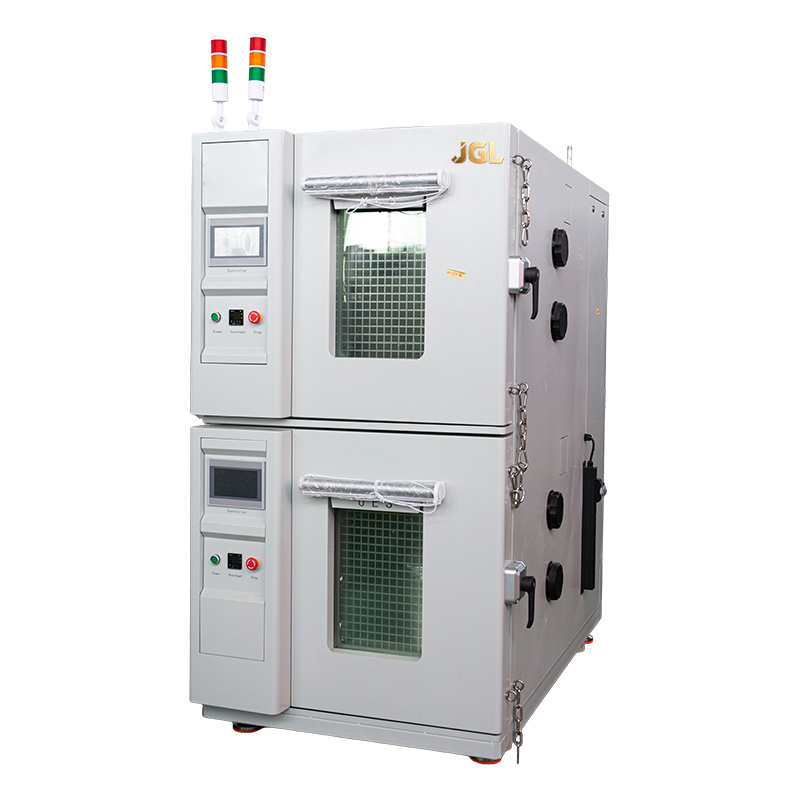
U2T(H)-EX150-A Dual-Layer Explosion-Proof Thermal Test Chamber
Why Explosion-Proof Thermal Testing Matters
Temperature testing is often associated with simple product conditioning: place a specimen in a chamber, select a temperature, and observe the result. In many current industries, however, the test article may contain stored electrical energy, combustible electrolyte, volatile chemicals, pressurized components, or materials that release heat during failure. Under these circumstances, temperature control alone is not sufficient.
A battery cell may experience internal short-circuiting during a low-temperature or high-temperature test. A polymer may decompose and release smoke. A power-electronic assembly may overheat when operated at elevated temperature. A chemical sample may react unexpectedly when the chamber temperature changes quickly. These events can damage ordinary test equipment and expose personnel to secondary hazards.
An explosion-proof thermal chamber is engineered around the possibility that an abnormal event may occur inside the working space. Its protective features do not eliminate every possible hazard, and they do not replace a formal risk assessment, appropriate operating procedures, or site-specific safety systems. They do, however, provide an additional engineered layer of protection compared with a basic environmental chamber.
The U2T(H)-EX150-A is particularly relevant where test programs involve:
• Lithium-ion and other rechargeable battery technologies.
• Electronic modules, power supplies, semiconductors, and circuit assemblies.
• Chemical materials, coatings, plastics, and composite samples.
• Automotive electrical and mechanical components.
• Aerospace and industrial electronics.
• Products that may generate smoke, heat, gas, or pressure during thermal abuse testing.
By combining temperature conditioning with an integrated response strategy, the chamber helps laboratories plan tests with a greater focus on containment, detection, and controlled intervention.
Product Overview and Configuration
The U2T(H)-EX150-A is identified as a dual-layer explosion-proof high- and low-temperature test chamber. Its internal arrangement consists of upper and lower compartments that can be used for separate test conditions. The supplied configuration information lists a 150-liter capacity and working-space dimensions of 500 × 500 × 600 millimeters for each listed chamber section. Because the specification sheet presents paired dimensions and alternative operating ranges, buyers should confirm the final chamber configuration, effective capacity, and selected temperature class during technical quotation.
The chamber is designed to cover demanding temperature conditions. The provided specifications list an operating range of -40°C to +150°C and an alternative range of -70°C to +180°C. These ranges may represent different equipment configurations or performance options. The required range should therefore be confirmed before ordering, particularly when the application involves deep-cold testing, high-temperature exposure, or rapid transitions between extremes.
The overall listed dimensions are approximately 1,100 × 1,750 × 1,800 millimeters. The stated machine weight is 550 kilograms for one configuration and 650 kilograms for another. These values are important for laboratory planning because installation may require floor-load review, delivery-path assessment, ventilation planning, electrical preparation, drainage provisions, and access for service personnel.
| Item | Provided specification | Application significance |
|---|---|---|
| Product type | Dual-layer explosion-proof thermal test chamber | Supports separated thermal test environments with enhanced safety provisions |
| Model | U2T(H)-EX150-A | Reference model for quotation, configuration, and service |
| Listed capacity | 150 L | Useful for compact laboratory and component-level testing |
| Temperature range option | -40°C to +150°C | Suitable for broad general-purpose thermal cycling |
| Alternative temperature range | -70°C to +180°C | For more demanding low- and high-temperature programs, subject to configuration confirmation |
| Working-space dimensions | 500 × 500 × 600 mm × 2 as listed | Allows upper and lower compartment testing; final internal arrangement should be confirmed |
| Overall dimensions | 1,100 × 1,750 × 1,800 mm | Important for room layout, transport, and installation |
| Listed weight | 550 kg or 650 kg depending on configuration | Requires site preparation and suitable handling equipment |
The chamber’s final technical design should be selected according to the test article, thermal range, ramp rate, test duration, electrical loading, risk category, and local safety requirements. A professional supplier should review these conditions before production rather than treating the chamber as a one-size-fits-all product.
Dual-Layer Architecture and Productivity Benefits
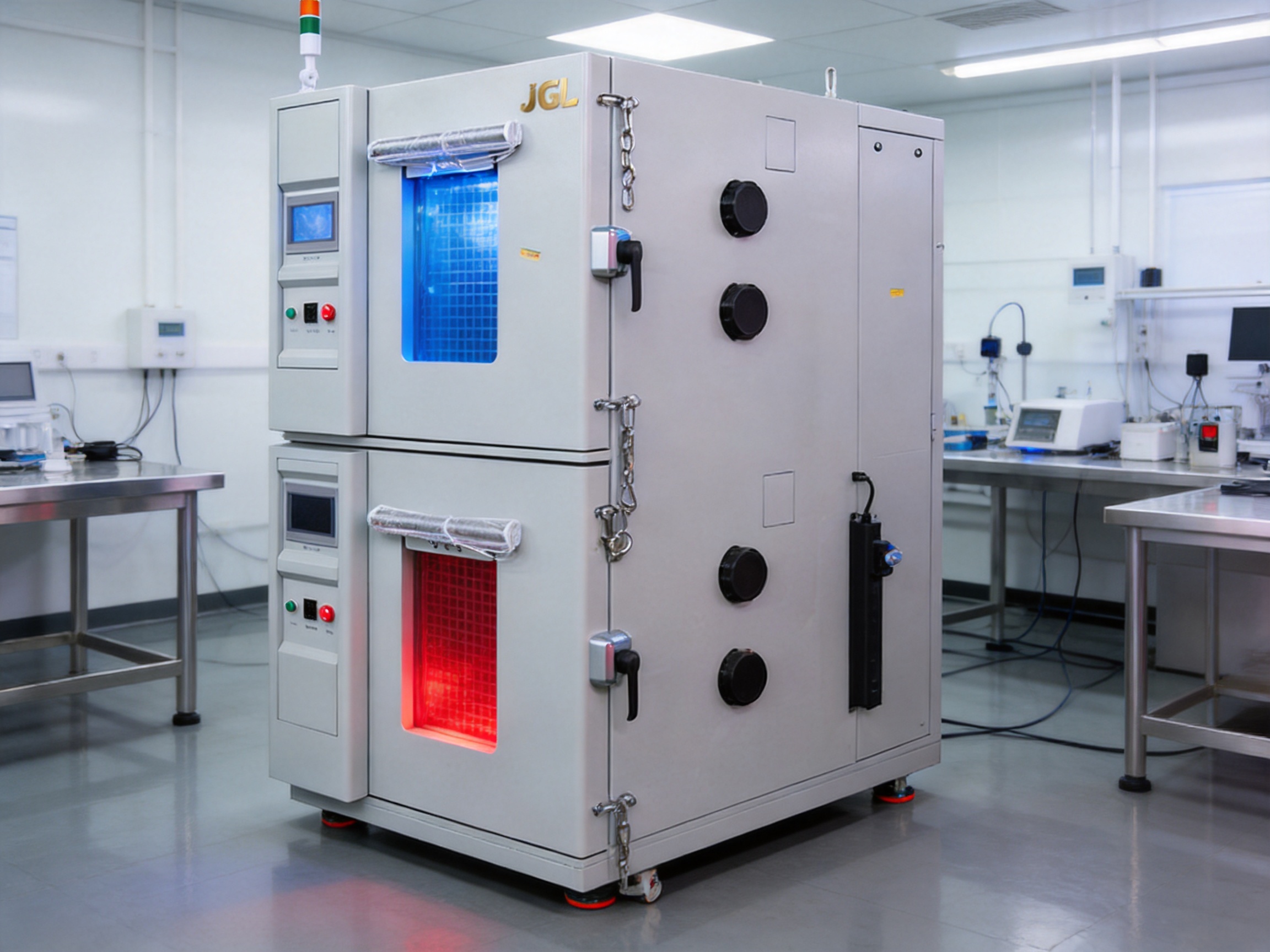
The dual-layer design is one of the chamber’s most important advantages over a conventional single-compartment unit. In a single chamber, a laboratory normally performs one temperature condition at a time. If a product must be compared at high and low temperatures, the operator may need to wait for the chamber to stabilize, change the set point, and repeat the test. This increases cycle time and may complicate comparison between samples.
With separate upper and lower compartments, the laboratory can establish different thermal conditions in each section. For example, one compartment may be used for elevated-temperature endurance while the other is used for low-temperature conditioning. This arrangement can support comparative research, production sampling, accelerated development, and parallel quality-control work.
The two compartments may also be useful when a test program requires different stages. A sample can be conditioned in one environment while another sample is subjected to an active stress test in the second. Research teams can compare a control group and an exposed group at the same time. Production laboratories can use the additional compartment to reduce waiting periods during routine inspection.
Dual-layer architecture does not simply mean placing two boxes on top of each other. The thermal design must address heat transfer, insulation, refrigeration capacity, airflow, control stability, and safety isolation. The stated use of dual evaporators is therefore significant. Separate evaporating elements can help the refrigeration system respond more appropriately to the conditions in each section, reducing the compromises that may occur when a single evaporator serves multiple thermal zones.
For laboratories with limited floor space, two testing environments in one integrated cabinet can also be more practical than installing two independent chambers. The arrangement may reduce duplicated support equipment, simplify operator access, and make better use of available laboratory area. The actual benefit depends on the test schedule and whether both compartments can operate independently under the required conditions.
Independent Thermal Testing
Independent upper and lower compartments allow test engineers to assign different temperature profiles to different samples. This is useful for design verification because products can be evaluated across multiple points in their expected operating envelope. It also helps reduce the temptation to shorten test programs simply because a single chamber is occupied.
When simultaneous operation is required, engineers should confirm the control architecture, independent temperature sensing, airflow arrangement, maximum permissible loading, and any restrictions on operating both zones at their most extreme set points. These details are especially important when the samples generate heat or when a test involves electrical energization.
Space Efficiency and Workflow Improvement
A dual-layer chamber can improve workflow without requiring a proportional increase in laboratory footprint. Instead of moving test articles between separate rooms or waiting for one chamber to complete a cycle, operators can organize work around two accessible test spaces. This can be valuable for prototype development, incoming inspection, failure analysis, and small-batch production qualification.
However, workflow efficiency must always remain secondary to safe operation. The operator should follow the approved loading limits, sample spacing rules, electrical feed-through requirements, and emergency procedures. The presence of two compartments does not mean that any combination of hazardous samples can be tested simultaneously.
Explosion-Proof Construction and Safety Engineering
Safety is the central differentiator of this product. The chamber is equipped with an explosion-proof chain and an explosion-proof viewing window at the door. These components are intended to strengthen the enclosure and provide controlled observation while reducing the risk associated with internal pressure or an abnormal event.
The door chain can help restrain or control door movement under hazardous conditions. A reinforced viewing window allows operators to observe the sample without opening the chamber during testing. This is especially valuable when a specimen may be smoking, swelling, leaking, sparking, or experiencing another abnormal condition. Visual monitoring can support faster decisions while reducing unnecessary exposure.
Explosion-proof construction should be understood as part of a broader safety system rather than as a guarantee that every event will be harmless. The chamber must be installed, commissioned, operated, and maintained according to the manufacturer’s instructions and applicable regulations. The test plan should identify the potential energy of the specimen, likely failure modes, permitted sample mass, gas generation, ignition sources, and emergency response requirements.
Automatic Fire Extinguishing System
The chamber includes an automatic fire extinguishing system intended to respond when a fire-related event is detected. Automatic intervention is important because a thermal failure can develop rapidly, and an operator may not be able to open the door or safely approach the equipment immediately.
Automatic suppression can limit the duration and intensity of a fire inside the chamber. It may also reduce the chance that a localized event will spread to adjacent test articles or external equipment. The suppression system should be treated as an engineered protective function requiring regular inspection, correct consumables, functional checks, and documented maintenance.
Smoke Detection and Fine Water Mist Protection
Smoke detection provides an early indication that a sample or internal component may be undergoing abnormal combustion or thermal decomposition. The supplied product information also identifies a sprinkler system using fine water mist fire extinguishing. Fine water mist can help cool the affected area and suppress combustion while using a controlled amount of water.
The use of smoke detection and fine water mist is particularly relevant to battery and electronics testing. Some failures may begin with off-gassing, smoke, or localized heating before visible flame appears. Early detection enables the protection system to respond sooner and allows personnel to follow the site’s emergency protocol.
Water-based suppression must nevertheless be evaluated against the test article and the electrical configuration. The laboratory should determine how the discharged agent will be contained, drained, cleaned, and safely removed. Sample materials that react with water may require additional engineering review before testing.
Rapid Water Injection
The rapid water injection device is designed to introduce water quickly when the protection strategy requires it. Fast response can be important when a test article is producing significant heat or when cooling is needed to limit escalation.
A rapid injection function may also assist after an event by reducing residual temperature. The exact use, activation method, water quality, storage arrangement, and operating sequence should be confirmed during commissioning. Operators should never improvise manual water injection or bypass the specified control logic.
Explosion-Proof Pressure Relief
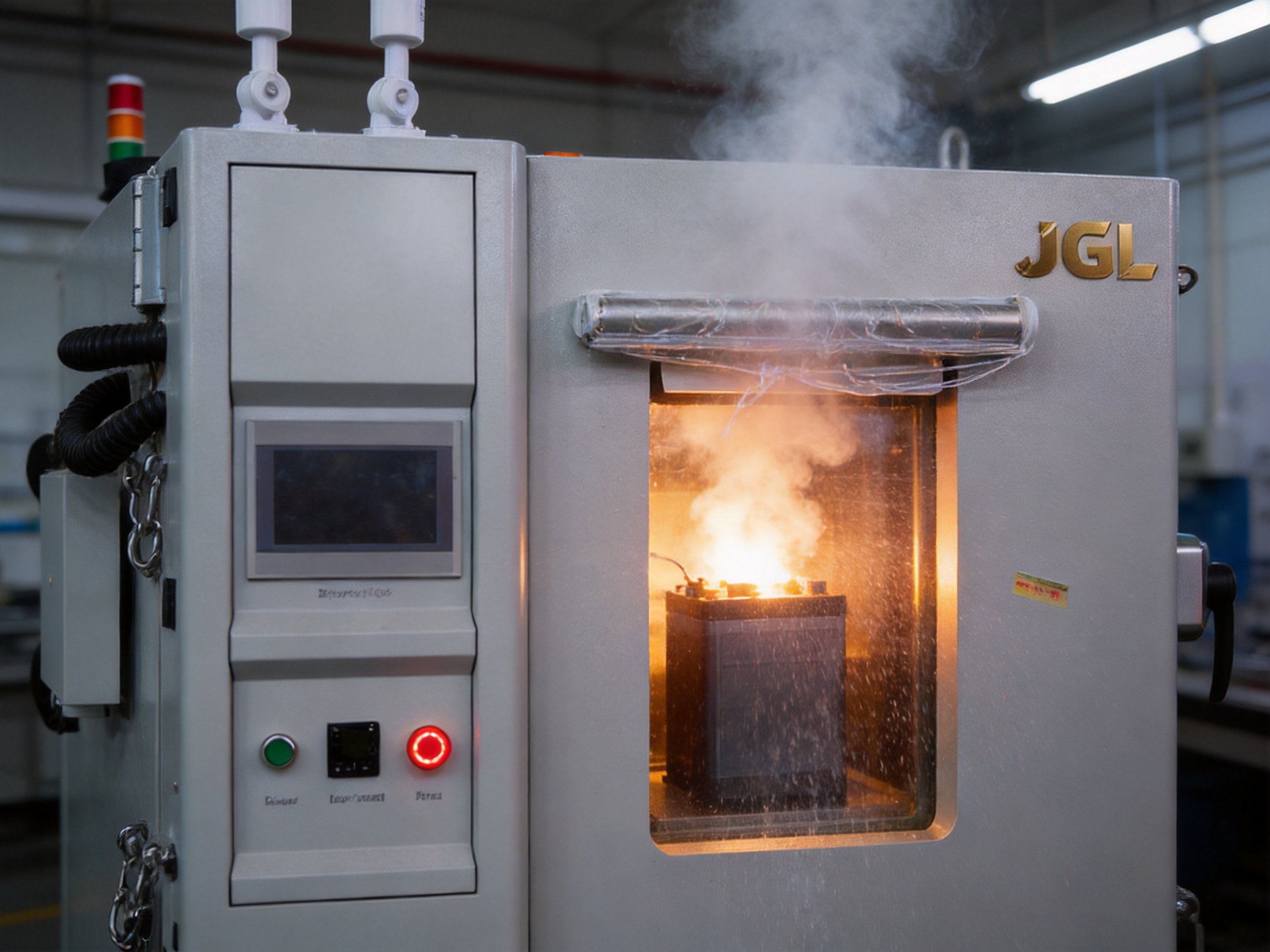
Pressure relief protection is another major safety feature. If a sample releases gas or if combustion occurs inside the chamber, internal pressure can rise. A pressure relief device provides a controlled path or mechanism for managing that pressure rather than allowing uncontrolled structural loading.
The pressure relief system must be installed with suitable clearances and discharge direction. The area around the relief outlet should remain unobstructed, and the facility should assess whether the released gases require ventilation, ducting, filtration, or additional containment. The relief function should be inspected according to a documented schedule.
Temperature Performance and Thermal Control
The chamber is intended for high- and low-temperature testing over a wide range. The listed -40°C to +150°C range covers many common environmental qualification programs, including cold storage, hot storage, temperature endurance, and thermal cycling. The alternative -70°C to +180°C range addresses more demanding applications that require deeper cooling or higher exposure temperatures.
Temperature range alone does not define chamber performance. A complete evaluation should also consider heating rate, cooling rate, temperature uniformity, temperature fluctuation, recovery after door opening, sensor accuracy, load configuration, and the stability of the control system. These values should be confirmed for the intended operating condition rather than assumed from the nominal range.
The chamber’s digital control interface allows users to program temperature profiles and monitor chamber conditions. A programmable controller is valuable for repetitive tests because it reduces manual intervention and improves consistency between runs. Profiles may include dwell periods, ramps, repeated cycles, alarm thresholds, and controlled transitions.
Temperature uniformity is especially important when testing several samples or when a product has sensitive internal components. Air circulation should distribute heat and cold throughout the working space without creating excessive local gradients. Sample placement, obstruction by packaging, and the heat generated by energized devices can all influence the actual temperature experienced by the test article.
The dual-evaporator arrangement supports the two-section concept by providing a refrigeration architecture suited to separate thermal spaces. The supplied product information also emphasizes stable operation throughout the year without frost. Frost accumulation can reduce heat-transfer efficiency, restrict airflow, affect sensor response, and increase recovery time. A frost-resistant design can help maintain more consistent performance during repeated low-temperature operation.
Year-Round Frost-Free Operation
Stable operation in different seasons is important for laboratories that run continuous qualification or production testing. Ambient temperature and humidity can change substantially over the year, influencing refrigeration load and condensation behavior. A design intended to operate without persistent frost can reduce interruptions and maintenance related to ice buildup.
Frost-free performance should still be verified under the actual installation conditions. Room ventilation, ambient humidity, door-opening frequency, sample moisture, and operating set point all affect condensation. Proper installation and routine inspection remain necessary even when the chamber incorporates frost-control technology.
Applications Across Key Industries
Electronics and Semiconductor Testing
Electronic products may be exposed to cold starts, high-temperature operation, storage extremes, and repeated thermal transitions during their service life. Circuit boards, sensors, displays, power supplies, communication modules, and semiconductor assemblies can be evaluated in the chamber to identify solder-joint fatigue, insulation breakdown, component drift, sealing problems, or unexpected shutdown behavior.
The explosion-proof design is valuable when the device under test contains a battery, capacitor bank, combustible coating, or other energy-storage element. Energized testing should be performed only with properly engineered wiring, interlocks, feed-throughs, and external protection. The chamber’s monitoring and suppression features provide support, but they do not replace electrical safety controls.
Battery Research and Energy Storage
Battery testing is one of the clearest applications for an explosion-proof thermal chamber. Cell performance, module capacity, charging behavior, discharge stability, internal resistance, thermal response, and failure behavior can all be affected by temperature. Researchers may need to test batteries at low temperature, elevated temperature, or through repeated transitions.
During abnormal operation, a battery can vent gas, release smoke, ignite, or experience thermal runaway. The chamber’s reinforced door, observation window, smoke detection, fire suppression, water mist, rapid water injection, and pressure relief provisions are designed to address this type of high-risk test environment.
Battery laboratories should establish strict rules for state of charge, sample quantity, spacing, electrical isolation, charging equipment, gas management, data acquisition, and post-test handling. The test chamber should be integrated into the facility’s overall battery safety strategy, including emergency power isolation and room-level fire protection where required.
Automotive Components
Automotive manufacturers and suppliers use environmental testing to qualify sensors, electronic control units, lighting systems, connectors, cables, displays, battery components, and mechanical assemblies. These products may encounter severe temperature changes during vehicle operation, storage, transportation, and charging.
The dual-layer chamber can support parallel testing of components under different environmental conditions. For example, one compartment may be used for cold-start evaluation while the other performs hot-soak conditioning. This can improve development efficiency and help engineers compare performance across multiple points in the qualification matrix.
Chemical and Polymer Materials
Polymers, adhesives, coatings, sealants, composites, and chemical formulations often require controlled thermal exposure to evaluate dimensional stability, aging, decomposition, adhesion, or mechanical performance. Some materials may release smoke or volatile substances when heated, making a protected chamber more appropriate than a standard unit.
Before testing chemical specimens, users should review compatibility with chamber construction, sensors, seals, insulation, suppression media, and ventilation systems. The potential for corrosive vapor, flammable gas, or pressure generation must be considered during test planning.
Aerospace and Industrial Quality Assurance
Aerospace and industrial components are often subject to strict environmental qualification programs. The chamber can support thermal conditioning and cycling for avionics, control units, sensors, power equipment, industrial electronics, and specialized materials.
Quality departments may also use the unit for incoming inspection, process validation, reliability sampling, and failure reproduction. Its programmable control system helps create repeatable profiles, while the dual-layer structure can increase throughput where multiple temperature conditions are required.
Manufacturing Strengths and Engineering Approach
The performance of a safety-critical environmental chamber depends not only on its final appearance but also on how it is engineered and manufactured. Jiangsu Baisheng Industrial Co., Ltd. describes itself as a technology-driven enterprise with a dedicated research and development team specializing in laboratory equipment and safety testing instruments. This technical orientation is important for a product that must integrate refrigeration, controls, structural protection, fire suppression, and pressure management.
The company’s history began with an electronic testing research and development studio in 2013. According to the supplied company information, the founding team had experience in laboratory equipment and safety compliance testing. In 2016, the organization developed an independent production line and introduced laboratory equipment with independent intellectual property rights. In 2019, it adopted a technology-and-trade development strategy, expanded research investment, and increased its international market activity.
This background supports a manufacturing approach that combines product development with application knowledge. A chamber for high-risk thermal testing cannot be designed effectively by considering refrigeration alone. Its structural components, door system, viewing window, sensors, alarms, fire-protection functions, pressure relief, and user interface must work together as one system.
Research and Development Integration
A dedicated R&D structure enables the manufacturer to adapt the chamber to different test conditions. Customers may require a particular low-temperature limit, high-temperature limit, ramp rate, electrical feed-through, sample fixture, control protocol, data output, or safety interlock. A company with in-house engineering capability is better positioned to discuss these requirements before production and identify conflicts between them.
For example, a high heating rate may require greater heater capacity, while a deep-cooling requirement may increase refrigeration demand. A large electrical load from the test article may create additional heat inside the chamber. A chemical sample may require altered ventilation or material compatibility. These issues should be addressed during design review rather than after installation.
Precision-Oriented Production
The company states that its core values include precision in craftsmanship and long-term innovation. For a thermal chamber, precision applies to insulation assembly, sensor placement, airflow paths, door sealing, refrigeration connections, control calibration, and safety-device positioning. Small deviations in any of these areas can affect stability, energy consumption, uniformity, or service life.
Manufacturing quality should include controlled assembly procedures, inspection of critical components, wiring verification, pressure-system checks, control testing, alarm testing, and final performance validation. Buyers should request the applicable factory test records, calibration information, operating manuals, and commissioning requirements for the selected configuration.
Customized Laboratory Solutions
The manufacturer positions itself as a supplier of customized precision laboratory equipment. Customization can be useful where the customer has unusual sample geometry, special electrical connections, a unique test sequence, restricted laboratory dimensions, or specific safety requirements.
Customization should be managed carefully. A modification to the working space can affect airflow and uniformity. A new feed-through can affect sealing and pressure management. A change to the suppression system can affect response time and maintenance. The safest approach is to evaluate each requested change through a documented engineering review.
Advantages Compared with Conventional Chambers
The U2T(H)-EX150-A has several practical advantages over a conventional single-layer, non-explosion-proof thermal chamber.
First, it offers two thermal testing spaces rather than one. This can improve throughput and make comparison testing easier. A conventional chamber may require sequential operation, while the dual-layer arrangement can support simultaneous or staged work.
Second, it incorporates multiple safety functions specifically aimed at abnormal events. The explosion-proof door chain, reinforced viewing window, smoke detection, automatic fire suppression, fine water mist, rapid water injection, and pressure relief system provide a broader protection strategy than the basic over-temperature alarm commonly found on general-purpose equipment.
Third, the dual-evaporator concept is suited to independent thermal zones. A single refrigeration circuit serving two sections may be simpler, but it can create compromises when the compartments have different set points. Separate evaporating elements can support better adaptation to the independent chamber arrangement, subject to the final system design.
Fourth, the chamber is intended for frost-free, stable operation throughout the year. This can reduce the operational disruption associated with ice buildup during extended low-temperature programs.
Fifth, the digital control interface supports repeatable temperature profiles and monitoring. Programmability is especially valuable when the same thermal cycle must be repeated across multiple samples or production lots.
Finally, the product is supported by a manufacturer that presents itself as both an equipment developer and an international technical supplier. This combination can simplify discussions involving application analysis, customization, documentation, export coordination, installation, and after-sales support.
Recommended Installation and Operating Practices
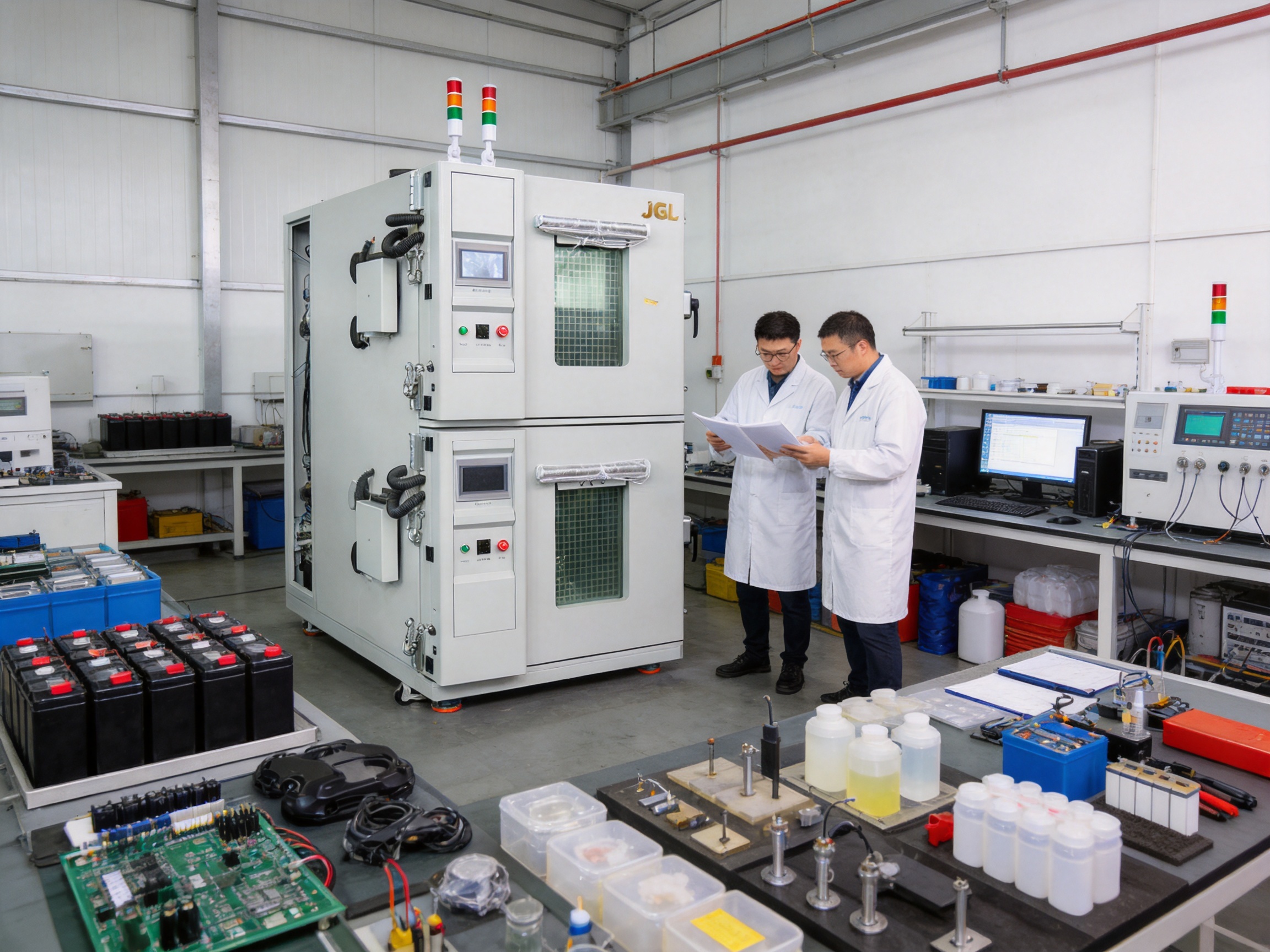
A high-risk test chamber should be treated as a complete engineered system. Before delivery, the customer should confirm the available floor area, floor load, door clearance, transport route, electrical supply, grounding, ventilation, water supply, drainage, environmental conditions, and emergency access.
The chamber should be installed on a stable, level surface with sufficient clearance for heat rejection, door opening, inspection, and maintenance. Pressure relief outlets, ventilation paths, and service panels must not be blocked. The surrounding area should remain free of unnecessary combustible materials.
Operators should receive training on normal operation, sample loading, profile programming, alarm response, emergency shutdown, suppression-system status, and post-event procedures. Written instructions should define who is authorized to initiate a test and who is responsible for reviewing abnormal data.
Test articles should be loaded with sufficient spacing for airflow and observation. Their mass, dimensions, electrical connections, state of charge, and potential heat release should be within the approved limits. Samples that can react with water, release corrosive vapor, or generate large quantities of gas require additional review.
Routine maintenance should include inspection of door seals, viewing-window condition, safety chains, sensors, alarms, smoke detectors, water systems, pressure relief devices, refrigeration components, electrical connections, and control functions. Any sign of leakage, damage, corrosion, abnormal noise, unstable temperature, or repeated alarm activity should be investigated before further testing.
How to Select the Correct Configuration
Customers should begin by defining the test objective rather than selecting a temperature range in isolation. Important questions include whether the test is for storage, operation, cycling, thermal shock, accelerated aging, abuse testing, or failure reproduction. The answer will influence the required ramp rate, uniformity, recovery, sample energization, and safety provisions.
The required temperature range should then be confirmed. The supplied information lists both -40°C to +150°C and -70°C to +180°C options. The higher-performance range may involve different refrigeration, insulation, heating, control, and power requirements. It may also affect installation conditions and maintenance intervals.
The buyer should confirm whether the listed 150-liter capacity refers to one effective chamber volume, the complete product configuration, or a specific variant. The paired working-space dimensions suggest a two-compartment arrangement, but the final usable volume and compartment relationship should be included clearly in the technical quotation.
Test article behavior is equally important. A non-energized metal component presents a different risk profile from a fully charged battery module. The supplier should know the sample’s maximum energy, chemistry, size, weight, electrical load, expected gas release, and potential failure mode.
Finally, the customer should identify documentation needs. Depending on the organization and destination country, requirements may include operating manuals, wiring diagrams, calibration certificates, factory acceptance records, safety-system test reports, spare-parts lists, and installation guidance.
Quality Assurance and Validation
After installation, the chamber should undergo a commissioning process appropriate to its configuration. Temperature verification should confirm that the actual performance corresponds to the selected operating range and that both compartments respond as expected. Sensors and control displays should be compared with calibrated reference instruments where required.
Safety validation should include door-chain inspection, viewing-window inspection, smoke-detection checks, alarm verification, suppression-system status, pressure-relief inspection, rapid water-injection testing, and emergency-stop confirmation. The specific method must follow the manufacturer’s procedures and applicable regulations.
Performance qualification may involve empty-chamber mapping and loaded-chamber testing. Empty mapping provides information about the basic distribution of temperature, while loaded testing shows how actual samples, fixtures, cables, and heat sources affect the environment. The test record should include set point, actual temperature, duration, ramp behavior, sample condition, alarm events, and any deviations.
For regulated industries, the chamber may become part of a larger quality system. In that case, calibration intervals, change control, preventive maintenance, deviation management, and user access should be documented. The equipment should be identifiable through a serial number or asset record, and important maintenance actions should be traceable.
Q&A: Frequently Asked Questions
What is the main purpose of the U2T(H)-EX150-A?
It is designed for high- and low-temperature testing where the samples or test conditions may present elevated fire, smoke, energy, or pressure risks. Its dual-layer structure provides two separate testing spaces, while its explosion-proof and fire-protection features add safety measures beyond those of a basic environmental chamber.
Can the two compartments operate at different temperatures?
The product is described as having independent upper and lower compartments for simultaneous high- and low-temperature testing. The exact independent-control range, permitted combinations, and operating limits should be confirmed for the selected configuration before purchase.
What temperature ranges are available?
The supplied specifications list -40°C to +150°C and an alternative -70°C to +180°C range. These should be treated as configuration options until confirmed in the final technical offer. Heating and cooling rates, uniformity, and recovery performance should also be requested.
Why is a dual-evaporator system useful?
A dual-evaporator design can support the separate thermal requirements of two compartments more effectively than a shared evaporator arrangement. It may improve the system’s ability to maintain different set points, although final performance depends on the refrigeration circuit, controls, insulation, load, and operating conditions.
Is the chamber suitable for battery testing?
It is designed for high-risk thermal testing and includes safety features relevant to battery applications, such as smoke detection, automatic fire suppression, fine water mist, rapid water injection, an explosion-proof structure, and pressure relief. Battery testing must still be planned according to the cell chemistry, state of charge, sample quantity, electrical setup, and applicable safety procedures.
Does the explosion-proof structure eliminate all testing risks?
No. It provides an engineered layer of protection but does not eliminate risk. A complete safety program must include risk assessment, suitable installation, approved test limits, trained operators, emergency procedures, maintenance, and facility-level fire and ventilation provisions.
What does the explosion-proof viewing window provide?
It allows operators to observe the test article while keeping the chamber closed. This can reduce the need to open the door during an abnormal condition and supports visual monitoring of smoke, swelling, flame, leakage, or other changes.
What is the function of the pressure relief device?
It is intended to manage abnormal internal pressure by providing a controlled relief mechanism. Its installation area must remain unobstructed, and the discharge direction and facility ventilation requirements should be reviewed before commissioning.
What information should a buyer provide when requesting a quotation?
The buyer should provide the required temperature range, ramp rate, test profile, sample dimensions and weight, electrical load, battery state of charge if applicable, expected failure mode, desired compartment use, installation site conditions, power supply, documentation needs, and any required customization.
Can the chamber be customized?
The manufacturer describes its business as providing customized laboratory equipment solutions. Possible areas for review may include control profiles, feed-throughs, fixtures, dimensions, sensors, and safety integration. Each modification should be evaluated for its effect on thermal performance, structural integrity, pressure management, and fire protection.
How should the chamber be maintained?
Maintenance should cover temperature sensors, door seals, viewing windows, safety chains, refrigeration components, alarms, smoke detectors, suppression systems, water lines, pressure relief devices, wiring, and the control interface. Inspection frequency should be based on the manufacturer’s instructions, operating hours, test severity, and applicable site requirements.
Is the listed 150-liter capacity the total volume of both chambers?
The supplied data identifies the product capacity as 150 liters while also listing two 500 × 500 × 600 millimeter working spaces. Because these values may relate to different configurations or specification entries, the buyer should obtain written confirmation of the effective capacity of each compartment and the total usable volume.
Conclusion
The U2T(H)-EX150-A dual-layer explosion-proof thermal test chamber is designed for laboratories that require both demanding temperature performance and enhanced protection against abnormal test events. Its upper and lower compartments can support parallel or staged thermal testing, while the dual-evaporator concept is aligned with the need for separate thermal environments.
Its most important distinction is the integration of safety functions. The explosion-proof door chain and viewing window, automatic fire extinguishing system, smoke detection, fine water mist, rapid water injection, and pressure relief device form a coordinated protective platform for higher-risk test applications. Frost-free operating technology and digital control further support stable, repeatable testing.
The product is especially relevant to battery research, electronics qualification, automotive development, chemical materials, aerospace components, and industrial quality assurance. Compared with a conventional single-compartment chamber, it can improve testing flexibility, laboratory productivity, and safety preparedness.
Jiangsu Baisheng Industrial Co., Ltd. supports this product with a stated focus on research and development, precision laboratory equipment, independent engineering capability, and customized technical solutions. Its history of development from an electronic-testing R&D studio into a technology-and-trade enterprise reflects an approach centered on engineering integration rather than simple equipment distribution.
Before purchase, customers should confirm the precise temperature configuration, effective capacity, ramp performance, compartment independence, installation requirements, safety-system details, documentation, and maintenance plan. When correctly specified and operated within approved limits, the chamber can provide a valuable combination of thermal testing capability, dual-zone productivity, and engineered protection for demanding laboratory applications.
References
1. Product specification and application information supplied for the U2T(H)-EX150-A dual-layer explosion-proof thermal test chamber.
2. Company profile and historical information supplied for Jiangsu Baisheng Industrial Co., Ltd.
3. General principles of environmental testing for electronic and electrical equipment.
4. General laboratory practices for temperature-controlled testing and equipment qualification.
5. General fire-protection principles for enclosed test equipment and high-energy test articles.
6. General risk-assessment principles for battery, chemical, electronic, and materials testing laboratories.
Product: U2T(H)-EX150-A Dual-Layer Explosion-Proof Thermal Test Chamber

PREV:No previous article
NEXT:Rapid Thermal and Humidity Test Systems for Precision Environmental Reliability Testing
NEXT:Rapid Thermal and Humidity Test Systems for Precision Environmental Reliability Testing
Interested in cooperation or have questions?
Featured Products
Related products
Quick Link
Contact Information
- Tel: +86-13861043568
- E-mail: 1840784112@qq.com
- Add: Tianting District, Changzhou City, Jiangsu Province, China, No. 6 Hecircuit
Scan Code
Copyright © JIANGSU BAISHENG INDUSTRIAL CO., LTD.
All Rights Reserved. Privacy Custom Precision Laboratory Testing Equipment Manufacturers
